

Introduction: Why This Matters
In an era of fleeting social media trends and evolving search algorithms, one marketing channel has consistently delivered the highest return on investment for over two decades: email marketing. While it may seem traditional, a well-crafted email marketing strategy is the most direct and personal line of communication you have to your audience’s inbox—a space they actively check and value. It’s where you transform anonymous website visitors into subscribers, nurture them into loyal customers, and turn one-time buyers into lifelong brand advocates. Unlike rented land on social media platforms, your email list is a valuable, owned asset that cannot be taken away by an algorithm change. For any business serious about building sustainable growth and maximizing customer lifetime value, mastering email marketing is not just important; it’s essential. It is the glue that holds your entire digital marketing strategy together.
Background/Context
Email marketing dates back to the 1970s, but it became a mainstream marketing tool in the 1990s with the rise of the commercial internet. Initially, it was plagued by spam, leading to regulations like the CAN-SPAM Act of 2003. The 2000s saw the emergence of professional email marketing platforms like Mailchimp and Constant Contact, which made the technology accessible to small businesses.
The 2010s brought a focus on segmentation, automation, and personalization, moving beyond the “batch and blast” approach. The introduction of GDPR in 2018 forced marketers worldwide to adopt stricter permission-based practices. Today, email marketing is more sophisticated than ever. It leverages artificial intelligence for send-time optimization, subject line prediction, and hyper-personalization, making it a powerful engine for automated, one-to-one communication at scale.
Key Concepts Defined
- Email Marketing: The use of email to promote products or services while developing relationships with potential and existing customers.
- Lead Magnet: A free item or service offered to potential customers in exchange for their email address (e.g., ebook, discount code, webinar).
- Segmentation: The process of dividing your email list into smaller groups based on specific criteria like demographics, purchase history, or engagement level.
- Automation: Using software to send automated, targeted emails based on user actions or specific time intervals (e.g., welcome series, abandoned cart emails).
- Open Rate: The percentage of email recipients who open a given email.
- Click-Through Rate (CTR): The percentage of email recipients who clicked on one or more links contained in an email.
- Conversion Rate: The percentage of email recipients who completed a desired action (e.g., made a purchase) after clicking a link in the email.
- A/B Testing: The process of testing two variations of an email (e.g., different subject lines) to see which one performs better.
How It Works (Step-by-Step)
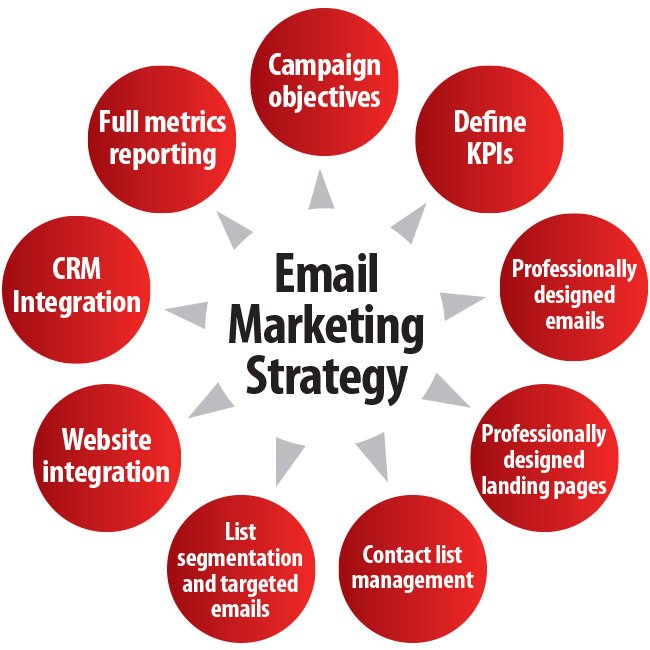
Building a profitable email marketing system is a methodical process:
- Choose an Email Marketing Platform: Select a reputable provider (e.g., ConvertKit, Klaviyo, ActiveCampaign) that fits your budget and needs. This is your operational hub.
- Build Your List with a Valuable Lead Magnet: Your first priority is list growth. Create a high-value lead magnet that solves a specific problem for your target audience. Place opt-in forms strategically across your website and social media profiles, often guided by the traffic from your social media marketing strategy.
- Set Up a Welcome Series: Automate a sequence of 3-5 emails that new subscribers receive immediately after signing up. This series should deliver the lead magnet, set expectations, introduce your brand’s story, and offer a first conversion (e.g., a small purchase or a content recommendation).
- Segment Your Audience: Don’t treat every subscriber the same. Create segments based on:
- Demographics: Location, job title.
- Behavior: Pages visited on your site, products viewed.
- Engagement: Frequent openers vs. inactive subscribers.
- Plan Your Email Content and Cadence:
- Newsletter: A regular email (weekly/monthly) providing consistent value, updates, and curated content.
- Promotional Emails: Clearly marked emails announcing sales, new products, or special offers.
- Nurture Sequences: Automated emails that build trust and educate subscribers about a specific topic or product over time.
- Craft Compelling Emails: Write concise, scannable copy with a clear goal for each email. Use engaging subject lines, personalize where possible, and ensure a strong, single call-to-action (CTA).
- Test, Analyze, and Optimize: Continuously run A/B tests on subject lines, send times, and CTAs. Use your platform’s analytics to track open rates, CTR, and conversion rates. Use this data to refine your strategy and improve performance over time.
Why It’s Important
Email marketing remains a cornerstone of digital marketing for several undeniable reasons:
- Unbeatable ROI: For every $1 spent, email marketing generates an average of $36 in return, making it one of the most cost-effective channels available.
- Direct Access to Your Audience: You own your list. You don’t have to worry about algorithm changes limiting your reach. You can communicate directly with your most engaged audience members whenever you want.
- Drives Conversions and Sales: Email is a powerful channel for prompting immediate action, whether it’s making a purchase, registering for a webinar, or downloading a resource.
- Personalization at Scale: Automation and segmentation allow you to send highly relevant, personalized messages to thousands of people, making each subscriber feel valued.
- Nurtures Customer Relationships: It’s the perfect tool for ongoing communication, allowing you to build trust, provide value, and turn customers into a loyal community.
Common Misconceptions
- Misconception 1: “Email marketing is dead and nobody reads emails anymore.”
- Reality: There are over 4 billion daily email users. When done correctly with permission and valuable content, email is incredibly effective. It’s spam that is dead, not email marketing.
- Misconception 2: “The more you email, the more you’ll sell.”
- Reality: Sending too many emails, especially low-value ones, leads to list fatigue, high unsubscribe rates, and spam complaints. Quality and relevance are far more important than quantity.
- Misconception 3: “It’s only for e-commerce and promotions.”
- Reality: B2B companies, service providers, nonprofits, and bloggers all thrive with email marketing. It’s used for lead nurturing, customer onboarding, event promotion, and delivering valuable content, not just sales.
Recent Developments
Email marketing continues to evolve with technology and consumer expectations:
- Hyper-Personalization and AI: AI tools can now suggest product recommendations, write personalized subject lines, and optimize send times for each individual subscriber.
- Interactive Emails: Emails are becoming more app-like, with features like surveys, quizzes, and add-to-cart buttons embedded directly within the email, increasing engagement and conversion rates.
- Privacy and Data Protection: Apple’s Mail Privacy Protection (MPP) obscures open rates, forcing marketers to focus on more meaningful metrics like clicks and conversions.
- Automation and Behavioral Triggers: Advanced automation based on complex user behavior (e.g., browsing a specific product category multiple times) allows for incredibly timely and relevant messaging.
- Integration with the Entire Customer Journey: Email is no longer a siloed channel. It’s deeply integrated with CRM systems, advertising platforms, and other marketing channels to create a unified customer experience.
Success Stories
The Skimm: This media company built a massive, loyal audience primarily through its daily email newsletter. By delivering curated news in a conversational, digestible format, they provided immense value to their subscribers. This highly engaged email list became their core asset, allowing them to successfully branch into podcasts, e-commerce, and native advertising, leading to a valuation in the hundreds of millions. They proved that an email list, when nurtured with consistent value, can be the foundation of a media empire.
Conclusion & Key Takeaways
Email marketing mastery is not about finding a hack for viral growth; it’s about the disciplined, strategic work of building trust, one inbox at a time. It is a long-term investment in your most valuable business asset: your relationship with your customers.
Key Takeaways:
- Your List is Your Asset: Prioritize building a permission-based list with a high-value lead magnet. Quality over quantity.
- Automation is Your Superpower: Use automated sequences to nurture leads, onboard new customers, and re-engage subscribers without manual effort.
- Segmentation Drives Relevance: Sending the right message to the right person at the right time is the key to high engagement and conversion.
- Value First, Promotion Second: Build a relationship of trust by consistently providing value before you ask for the sale. A good rule is the 90/10 principle: 90% value, 10% promotion.
- Data is Your Guide: Continuously test and measure your campaigns. Let the data, not your assumptions, guide your strategy and optimization efforts.
For more advanced strategies on converting your audience, be sure to read our other articles in the Blog section.
FAQ’s
- What is a good email open rate?
- It varies by industry, but a rate between 15-25% is generally considered decent. Focus on improving your own rate over time by testing subject lines and improving list quality.
- How can I grow my email list quickly?
- Offer an irresistible lead magnet. Use pop-ups and embedded forms on your website. Promote your newsletter on all your social media channels and in your email signature.
- How often should I send marketing emails?
- There’s no one-size-fits-all answer. Test different frequencies. A weekly newsletter is a good starting point. The key is consistency so your audience knows what to expect.
- What is the best time to send an email?
- It depends on your audience. General data suggests Tuesday-Thursday mornings, but the best practice is to A/B test with your own list. Many platforms can now optimize send times for each subscriber automatically.
- What should I do if my unsubscribe rate is high?
- Audit your content. Are you sending too many emails? Is your content not relevant? Survey people who unsubscribe to get direct feedback.
- What’s the difference between a newsletter and a broadcast?
- A newsletter is a regular, scheduled email (e.g., weekly) with a standard format. A broadcast is a one-off email sent to part or all of your list for a specific announcement or promotion.
- How does email marketing fit into a new online business?
- It’s critical from day one. It’s the primary tool for building an audience before you even have a product to sell, a core concept in our guide to starting an online business.
- Can I use email marketing for partnership outreach?
- Absolutely. A well-managed email list demonstrates your influence and provides a direct channel to promote collaborative ventures, making it a powerful tool for forming strategic business alliances.
- Is managing an email list stressful?
- It can be, due to the pressure of constant content creation. Using automation and a content calendar can reduce the burden. It’s also important to manage stress levels for long-term success, a topic covered in this guide to mental wellbeing.
- What’s the first step I should take today?
- Choose an email marketing platform and create your account. Then, brainstorm one high-value lead magnet you can create to start building your list. For foundational knowledge, our resource on digital marketing basics is the perfect companion to this guide.