



Market Research for Business Plans:
You have a brilliant business idea. It keeps you up at night with its potential. The immediate urge is to pour that energy into writing a business plan, designing a logo, and building a website. Stop. What I’ve found, after post-morteming dozens of failed startups, is that the most common fatal flaw isn’t a bad plan; it’s a plan built for a customer who doesn’t exist or a problem that isn’t painful enough. For curious beginners, skipping market research feels like progress, but it’s the fast track to building something nobody wants. For professionals, it’s a reminder to ground grand strategies in gritty, real-world data. In 2025, with consumer attention fragmented and competition global, launching without validation isn’t brave—it’s reckless.
This guide reframes market research from a dry, academic chapter in a business plan to the most exciting and vital phase of your entrepreneurial journey: the search for truth. We’ll move beyond theory to actionable techniques for talking to real people, analyzing competitors, and sizing your opportunity—all before you commit a single sentence to a formal plan.
Introduction: The High Cost of Assumptions
Every business plan is built on a mountain of assumptions. “People will want this.” “They will pay this price.” “Our competitors are doing it wrong.” Market research is the process of testing those assumptions against reality, replacing guesses with evidence. In my experience, founders who dedicate weeks to deep research consistently avoid catastrophic errors and uncover hidden opportunities their competitors miss. A 2025 analysis by Failory found that 38% of failed startups cited “no market need” as their primary cause of death—a failure of validation that almost always precedes the writing of the plan. This phase isn’t about confirming your bias; it’s about having the courage to be wrong early, when the cost of a pivot is near zero.
Background: From Guesswork to Guided Discovery
Historically, “market research” conjured images of expensive focus groups, massive surveys, and inaccessible industry reports. For the modern entrepreneur, this has been democratized. The Lean Startup movement shifted the paradigm from “market research” to “customer discovery”—a continuous, conversational process of learning. Today, it’s a blend of qualitative insights (the “why” from interviews) and quantitative data (the “what” from surveys and analytics), often conducted with little to no budget. The goal is not to write a report, but to achieve “problem-solution fit”: the evidence that a specific group of people has a specific problem that they are willing to pay you to solve.
Key Concepts Defined
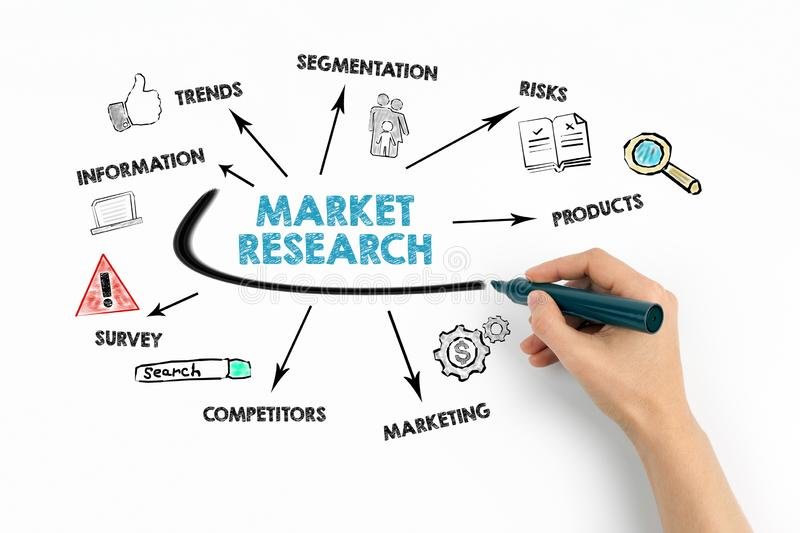
- Primary Research: Information you collect directly from the source (potential customers, industry experts). This is new data specific to your questions. Methods: interviews, surveys, observations.
- Secondary Research: Analysis of existing data collected by others. This provides context and background. Sources: industry reports, government data, academic studies, competitor websites.
- Target Market/Customer Segment: A specific group of people or businesses most likely to buy your product/service, defined by shared characteristics (demographics, psychographics, behaviors, needs).
- Total Addressable Market (TAM): The total revenue opportunity if you achieved 100% market share in your category. Represents the “pie.”
- Serviceable Addressable Market (SAM): The portion of the TAM you can realistically serve, given your geographical, regulatory, or product constraints.
- Serviceable Obtainable Market (SOM): The portion of the SAM you can capture in the first 3-5 years. This is your realistic, initial target.
- Buyer Persona: A semi-fictional, detailed representation of your ideal customer, based on real data and research. It includes goals, challenges, behaviors, and demographic info.
- Competitive Analysis: The process of identifying your competitors and evaluating their strategies to determine their strengths and weaknesses relative to your own.
- Problem-Solution Fit: The stage where you have clear evidence that your target customer has a meaningful problem and that your proposed solution resonates with them.
How It Works: The 5-Step Validation Framework
This is a sequential process. Do not jump to surveying before you’ve done steps 1 and 2.
Step 1: Define Your Core Hypotheses (The Assumptions to Test)
Write down your riskiest assumptions. Be brutally honest.
- The Problem Hypothesis: “I believe [target customer] struggles with [specific problem] and it causes them [specific pain].”
- The Solution Hypothesis: “I believe they would use a product/service that [your core value proposition].”
- The Willingness-to-Pay Hypothesis: “I believe they would pay approximately [price range] for this solution.”
*Example from my work: A founder believed “busy parents struggle to plan healthy meals.” We refined it to: “Working mothers with kids aged 5-10 struggle to find quick, kid-approved dinner recipes, causing them stress and guilt on weeknights.” This specificity is testable.*
Step 2: Conduct Secondary Research (The Landscape Scan)
Before you talk to a single person, understand the terrain.
- Industry Health: Use free tools like Google Trends, Statista, and industry association blogs to see if your category is growing, stagnant, or declining. Read reports from sources like World Class Blogs on global affairs for macro-trends that might affect your sector.
- Market Sizing (TAM/SAM/SOM): Start top-down (e.g., “The global pet food market is $120B”) but focus on bottom-up (e.g., “There are 2M dog owners in my city, they spend $50/month on average = $100M local market”). This shows you’ve thought about scale.
- Initial Competitor Mapping: Simply list every alternative your customer might use, not just direct competitors. (e.g., For a meal-planning app, competitors include: other apps, Pinterest, cookbooks, handwritten notes).
Step 3: Engage in Qualitative Primary Research (The “Why” Dive)
This is the most valuable step. Your goal is deep understanding, not statistics.
- The “Problem Interview”: Conduct 15-25 one-on-one conversations with people in your target segment. Do NOT pitch your solution. Ask open-ended questions about their life, work, and the problem area.
- Sample Questions: “Tell me about the last time you dealt with [problem].” “What was the most frustrating part?” “How do you currently solve this?” “What does that solution cost you in time/money/frustration?”
- My personal rule: If I don’t hear the person express the problem in their own words, unprompted, within the first 10 minutes, the problem might not be acute enough.
- Observation/Ethnography: Watch people in the context of the problem. If it’s a productivity app for students, go to a library. See the workarounds they create.
Step 4: Synthesize and Build Your Personas
Analyze your interview notes. Look for patterns.
- Who had the most intense pain?
- What common language did they use?
- What common behaviors did they share?
Group these patterns into 1-3 distinct Buyer Personas. Give them a name, a job, a goal, and a key quote from your research. This persona is now the “who” for your entire business plan. Understanding your customer deeply is as crucial as understanding your partners; learn about the frameworks that help in our guide to building a successful business partnership.
Step 5: Conduct Quantitative Primary Research (The “What” & “How Many” Check)
Now, and only now, use surveys to test the frequency and quantify the patterns you found.
- Create a Short Survey: Use tools like Google Forms or Typeform. Ask about demographics, problem frequency, current solution spending, and interest in a solution described neutrally.
- Measure Willingness-to-Pay: Use methods like the Van Westendorp Price Sensitivity Meter (four simple questions that reveal an acceptable price range).
- Analyze the Data: How large is your specific segment (SAM/SOM)? What percentage expressed strong interest? What price point clusters emerge?
Why It’s Important: The Foundation of Every Good Decision
Thorough market research does more than inform a business plan—it builds the entrepreneur’s confidence and conviction. It de-risks your venture.
- Prevents Building the Wrong Thing: It ensures you are solving a real, valuable problem.
- Provides Competitive Intelligence: It reveals gaps in the market and weaknesses in competitors’ offerings that you can exploit.
- Guides Product Development: Feature decisions come from customer pain points, not your gut.
- Informs Marketing & Messaging: You learn the exact words your customers use, making your marketing resonate deeply.
- Attracts Investment: A plan backed by primary customer data is infinitely more compelling to investors than one based on market reports alone. It shows you’ve left the building and talked to the market.
Sustainability in the Future: Continuous, Integrated Listening

Market research is no longer a one-time “phase.” The future is continuous customer discovery. Sustainable businesses build feedback loops directly into their products and operations. This means:
- Product Analytics: Using tools to see how customers actually use your product, not just what they say.
- Community Building: Creating spaces (like social media groups or forums) where customers can voice needs and ideas continuously.
- AI-Powered Sentiment Analysis: Monitoring brand mentions and reviews at scale to detect shifting perceptions and emerging problems.
Your initial research validates the launch; continuous research guides evolution. For more on building agile, responsive operations, see our Complete Guide to Start an Online Business.
Common Misconceptions
- Misconception: “Market research is too expensive and time-consuming.” Reality: With free tools and a disciplined approach, you can conduct foundational validation in 2-4 weeks with a budget of $0. The cost of not doing it is far higher.
- Misconception: “I can just survey my friends and family.” Reality: Friends and family are biased. They want to support you and will often tell you what you want to hear. You must talk to strangers who fit your target profile.
- Misconception: “If I ask people what they want, they’ll tell me.” Reality: People are notoriously bad at predicting their own future behavior. They won’t invent your solution for you. Your job is to observe their actions and infer their deepest needs. Don’t ask “Would you buy this?” Ask “Tell me about the last time…”
- Misconception: “A big TAM is all I need to show.” Reality: Smart investors are skeptical of huge TAM numbers. They care more about your specific path to capturing a small, well-defined segment (SOM). It’s better to dominate a small, growing niche than to be irrelevant in a giant market.
Recent Developments: The Rise of Affordable, On-Demand Data
The landscape in 2024-2025 has been revolutionized by platforms that give startups near-instant, affordable access to target customers. Services like Respondent, UserInterviews, and even targeted Facebook/Reddit communities allow you to recruit specific demographics (e.g., “US-based small business owners who use QuickBooks”) for interviews or surveys in days, not months. Furthermore, AI tools can now quickly analyze open-ended interview transcripts to surface common themes and sentiment, turning qualitative data into quantifiable insights faster than ever before.
Success Story: The Pivot from Product to Platform
A client approached me with a plan for a sophisticated analytics dashboard for independent yoga studio owners. Their secondary research showed a growing wellness industry. However, during their problem interviews (Step 3), they discovered a shocking truth: while owners wanted better insights, their most acute, daily pain was the sheer hassle of managing class schedules, payments, and client communications across multiple disjointed apps. The founders’ assumption about the “problem” was wrong. This research led to a complete pivot. They scrapped the dashboard and built an integrated studio management platform. Their first product feature wasn’t analytics; it was a simple, unified booking and payment system. They launched with 10 pilot studios from their interview list and reached $10K MRR within 6 months. The research didn’t kill their idea; it transformed it into something the market desperately wanted.
Real-Life Examples
- B2B Software (SaaS):
- Research Method: Interviews with department heads (e.g., 15 marketing VPs).
- Key Question: “Walk me through your current process for [task]. What tool do you use? Where do the breakdowns happen?”
- Goal: Uncover inefficient processes and budget ownership.
- Direct-to-Consumer (D2C) Product:
- Research Method: Observation in online communities (e.g., Reddit’s r/PlusSizeFashion) + surveys.
- Key Question: “What’s missing from the options currently available to you?”
- Goal: Identify gaps in sizing, style, or brand messaging.
- Local Service Business (e.g., Pet Grooming):
- Research Method: “Man-on-the-street” interviews at dog parks + competitor mystery shopping.
- Key Question: “How do you choose a groomer? What would make you switch?”
- Goal: Understand location convenience, price sensitivity, and trust signals.
Conclusion and Key Takeaways
Writing a business plan before conducting market research is like drawing a map before you know the destination. The research phase is your expedition to discover that destination. It requires humility, curiosity, and a willingness to listen more than you talk. The output is not just data; it’s the profound empathy and evidence that will make every subsequent page of your business plan—your marketing, your product roadmap, your financials—ring with authenticity and purpose.
Key Takeaways:
- Start with Hypotheses: Write down what you believe. This is what you’re testing.
- Talk Before You Survey: Deep, qualitative interviews are the gold standard for uncovering true needs.
- Seek the Problem, Not Praise: Your goal in early conversations is to understand the customer’s world, not to sell your idea.
- Define a Specific “Who”: A well-researched buyer persona is your most strategic asset.
- Research is Continuous: Validation doesn’t stop at launch. Build mechanisms to keep listening.
For more actionable frameworks and templates, always explore the Sherakat Network blog and our full resources category.
Frequently Asked Questions (FAQs)
1. How many people do I need to interview/survey?
For qualitative interviews, aim for 12-20 per distinct persona. You’ll often find patterns (themes, pains, language) repeating by person 8-10, which is a sign of saturation. For quantitative surveys, a minimum of 100 responses from your target audience is needed for statistically significant insights on simple questions.
2. Where do I find people to interview?
Start with your extended network (LinkedIn, alumni groups) but ask for introductions to people who fit your profile, not just friends. Use niche online communities (Slack groups, Reddit, Facebook Groups). Go to places they congregate (trade shows, cafes, online forums). Use recruitment platforms like Respondent.
3. What’s the difference between a target market and a buyer persona?
A target market is a broad demographic or firmographic segment (e.g., “women aged 25-40”). A buyer persona is a detailed, humanized representation of an individual within that segment, with a name, story, goals, and challenges (e.g., “Marketing Mary, a 32-year-old content manager who struggles to prove ROI”).
4. How do I ask for an interview without being salesy?
Be transparent and respectful of their time. “Hi [Name], I’m researching challenges in [their industry/area of life] and I’m trying to learn from experienced people like yourself. Would you be open to a brief 20-minute chat about your experience? I’m not selling anything—just learning.” Offer to share a summary of your findings as a thank you.
5. What if my research proves my idea is bad?
Celebrate. You just saved yourself months or years of effort and significant money. This is a successful outcome. Now, pivot to one of the other problems or needs you uncovered during your interviews.
6. How do I analyze competitive websites and social media effectively?
Go beyond their homepage. Sign up for their newsletter, use their free trial. Analyze: Their value proposition, pricing, customer reviews (look at negative ones!), content strategy, and engagement on social media. Tools like Similarweb can give traffic estimates. The goal is to reverse-engineer their strategy and spot weaknesses.
7. What are some free sources for secondary market data?
- U.S. Government: Census Bureau (data.census.gov), Bureau of Labor Statistics (bls.gov).
- Industry Reports: Statista (free basic stats), IBISWorld (check local library access), Google Scholar for academic papers.
- Public Companies: Search their annual 10-K reports (SEC.gov) for market analysis sections.
- Trends: Google Trends, Exploding Topics, SparkToro.
8. How do I calculate TAM, SAM, SOM?
- TAM: Top-down: Total industry revenue. Bottom-up: (Total # of potential customers) x (Annual revenue per customer).
- SAM: Apply filters to TAM (e.g., only customers in countries you can serve, only SMEs not enterprises).
- SOM: Realistic market share you can capture initially (e.g., 1% of SAM in Year 1, 5% by Year 3). Justify this with your acquisition strategy.
9. Should I create a MVP (Minimum Viable Product) before research?
No. An MVP is for testing your solution. Research (especially problem interviews) should happen before you build anything. You might create a mockup or prototype after research to use in later “solution interviews” to gauge reactions.
10. What questions should I avoid in customer interviews?
Avoid leading questions (“Don’t you hate how complicated X is?”), yes/no questions, and future hypotheticals (“Would you buy…?”). Stick to open-ended questions about past behavior and present realities.
11. How does market research fit with the Business Model Canvas?
It directly informs almost every block. Research defines your Customer Segments, Value Propositions, Channels, Customer Relationships, and helps estimate Revenue Streams and Cost Structure. It’s the activity that fills out the Canvas.
12. What is a “problem statement” and how do I write one?
It’s a concise summary of the problem you’re solving, informed by research. Format: “[Target customer] needs a way to [customer need] because [insight]. Surprisingly, [current alternatives] are [key shortcomings].”
13. How do I research a totally new, innovative product (where no market exists)?
You research the problem and the customer, not the product. Find people who experience the problem acutely. Study how they cope now. The “market” will be defined by your success. Look at analogous markets for behavioral clues.
14. What’s the best way to record and organize interview notes?
Use a template with standard questions. Record calls (with permission!) using tools like Otter.ai or Rev for transcription. After each interview, immediately note your top 3 insights. Use a spreadsheet or affinity mapping to group insights across all interviews.
15. How can I validate demand before building anything?
Create a “smoke test”: a landing page describing your solution and a “Sign Up for Early Access” button. Drive targeted traffic (e.g., with a small Facebook ad budget) and see what percentage click and sign up. This tests messaging and interest. Never take pre-payments unless the product exists.
16. How do I assess the strength of competitors?
Use a Competitive Matrix. List competitors on one axis and key buying factors (price, features, ease of use, support) on the other. Score them. This visually reveals where you can differentiate (e.g., you might be weaker on features but stronger on customer support).
17. What are “jobs to be done” (JTBD) and how is it different?
JTBD is a framework that focuses on the progress a customer is trying to make in a given situation, rather than their demographics. Instead of “marketer aged 25-34,” you’d say “someone trying to grow their Instagram audience reliably.” It’s a powerful lens that often reveals deeper motivations.
18. How important are industry trends versus current customer pain?
Both are critical. Trends (e.g., remote work, AI, sustainability) tell you where the wind is blowing. Customer pain tells you what problem to solve today. The sweet spot is solving a current acute pain in a way that aligns with a long-term trend.
19. Can AI do my market research for me?
AI can be a powerful assistant. It can analyze large sets of reviews, summarize transcripts, suggest interview questions, and help size markets. However, it cannot replace the nuance, empathy, and spontaneous discovery of a human conversation. Use AI for scale and analysis, but not for primary discovery.
20. What if people lie in surveys or interviews?
They often do, unintentionally. That’s why observing behavior (what they do) is more reliable than self-reported data (what they say). Triangulate your data: if interviews, surveys, and observation all point to the same conclusion, you can be more confident.
21. How do I present market research in my business plan?
Summarize key insights, don’t dump data. Include: Your defined target persona(s), key problem insights, quantified market size (SOM), summary of competitive landscape, and key evidence of problem-solution fit (e.g., “In 20 interviews, 85% expressed strong frustration with…”).
22. How much should I budget for market research?
For a bootstrapped startup, $0-$500 is feasible (for survey incentives or transcription services). If you have funding, allocating $2,000-$5,000 for a structured research phase using recruitment platforms is a wise investment.
23. How does mental health relate to this phase?
This phase involves constant rejection (people ignoring interview requests) and potential ego blows (learning your idea is flawed). It’s emotionally taxing. Founders must practice resilience and separate their self-worth from their idea. Resources like this guide to mental wellbeing are invaluable.
24. What is a “focus group” and should I use one?
A focus group is a moderated discussion with 6-10 people. For startups, they are generally not recommended early on. Individuals can be influenced by others in the group. One-on-one interviews yield more honest, deep insights.
25. How do I research international markets?
The principles are the same, but logistics differ. Use local online communities, leverage freelance platforms (Upwork) to find interviewers in-country, and pay meticulous attention to cultural nuances. Secondary research on global culture and society can provide helpful context.
26. What’s the biggest sign I’ve found a good problem to solve?
When people describe it with emotional language (frustration, anxiety, wasted time) and are actively spending time/money on imperfect solutions. They have “workarounds.” This indicates the problem is “hair-on-fire” urgent.
27. How do I handle conflicting research data?
Dig deeper. Conflicting data often means you have two distinct customer segments with different needs. Re-analyze your data to see if the conflicts cluster around different demographics or behaviors. This might mean you need to focus on one segment first.
28. Should I hire a market research firm?
For most early-stage startups, no. The value is in you, the founder, hearing the customer’s voice directly. Later, for large-scale brand studies or entering completely new markets, a firm can provide expertise and resources.
29. How soon after research should I start writing the business plan?
Immediately. The insights are fresh. Your business plan will now be a document grounded in evidence, not speculation. Use our resource library for planning templates.
30. What’s the one non-negotiable rule of good market research?
Listen more than you talk. In interviews, aim for a 90/10 ratio—the customer talks 90% of the time. Your primary job is to ask “why?” and “tell me more.”
About the Author
Sana Ullah Kakar is a customer-obsessed strategist who believes the best business ideas are discovered, not invented. With a background in ethnographic research and product management, they have spent over a decade helping founders step out of their own assumptions and into the lives of their customers. At Sherakat Network, they run “Customer Discovery Sprints,” teaching entrepreneurs how to conduct rigorous, rapid validation that shapes fundable ventures. They are passionate about the notion that entrepreneurship is a service profession—our job is to listen deeply and solve real problems. Their work has been instrumental in pivoting struggling startups and launching new ventures that achieve product-market fit in record time. Connect with our network for guidance via our contact page.
Free Resources
From Sherakat Network:
- Interview & Survey Templates: Get our customizable scripts and templates for problem interviews and validation surveys in our Resource Library.
- From Plan to Launch: Once validated, learn the next steps in our Complete Guide to Start an Online Business.
- Build Your Team: Validating a partnership idea? Understand the models in our deep dive on business partnership types.
External Insights:
- Global Context: Understand how worldwide operations and logistics can impact your market, covered in Global Supply Chain Management.
- Tech-Driven Markets: See how AI and Machine Learning are creating new markets and disrupting old ones.
- Productivity Insights: Learn how modern remote work trends are shaping B2B software markets and consumer behaviors.
Discussion
What’s the most surprising thing you’ve learned from talking to a potential customer? Have you ever had a key assumption completely shattered by research? Share your stories and questions about finding your first customers in the comments below. Let’s build a community that values evidence over intuition.
I don’t think the title of your article matches the content lol. Just kidding, mainly because I had some doubts after reading the article.
I don’t think the title of your article matches the content lol. Just kidding, mainly because I had some doubts after reading the article.
Thank you for your sharing. I am worried that I lack creative ideas. It is your article that makes me full of hope. Thank you. But, I have a question, can you help me?
Thanks for sharing. I read many of your blog posts, cool, your blog is very good.
I don’t think the title of your article matches the content lol. Just kidding, mainly because I had some doubts after reading the article.
Your point of view caught my eye and was very interesting. Thanks. I have a question for you.