


Introduction: Why Putting All Your Eggs in One Basket is the Riskiest Strategy
The journey to financial freedom through passive income is not about finding one “perfect” income stream, but about building a carefully constructed portfolio of complementary revenue sources. Just as wise investors diversify their investment portfolios across different asset classes, successful wealth builders diversify their passive income streams across various categories, risk profiles, and time commitments.
A balanced passive income portfolio protects you from sector-specific downturns, provides multiple growth engines, and creates a resilient financial foundation that can withstand economic turbulence. Whether your goal is financial security, early retirement, or simply reducing financial stress, mastering portfolio construction is the most important skill you can develop. For comprehensive wealth-building resources, explore our Resources category.
Background/Context: The Evolution of Income Diversification
Throughout history, the wealthiest families and most successful individuals have understood the power of diversification. What’s changed in the modern era is the accessibility of multiple income streams to ordinary people:
- Pre-2000: Limited to traditional investments (stocks, bonds, real estate) and small business ownership
- 2000-2010: Emergence of online businesses, early digital products, and peer-to-peer platforms
- 2010-Present: Explosion of creator economy, fractional investing, and automated income streams
The 2008 financial crisis taught millions the danger of relying on a single income source (employment). The 2020 pandemic reinforced this lesson, showing that even “safe” income streams can be disrupted. Today, building a multi-stream income portfolio isn’t just wise—it’s essential for financial resilience.
Key Concepts Defined: The Lexicon of Income Diversification
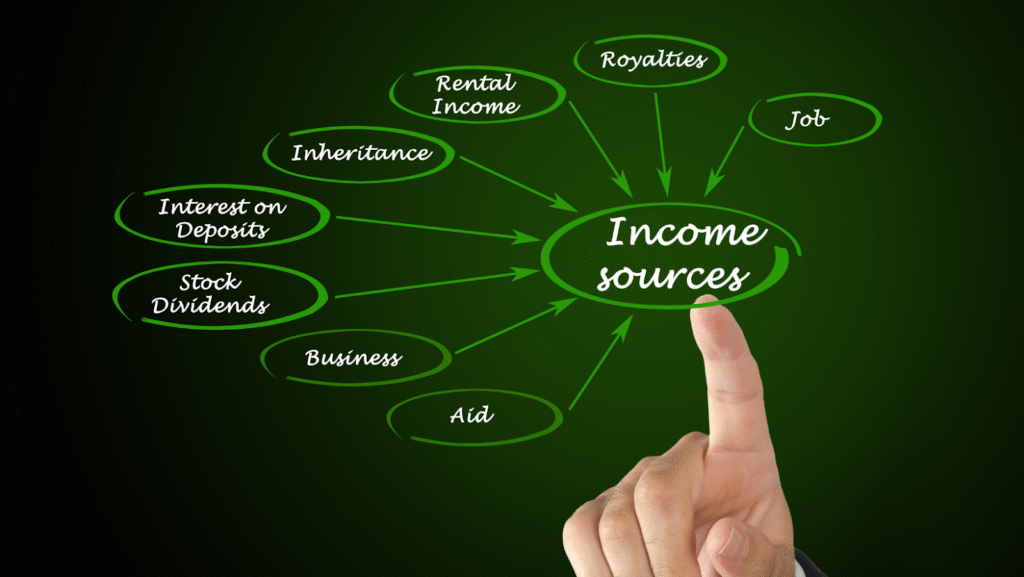
- Income Stream Correlation: How different income sources move in relation to each other during economic cycles.
- Active-Passive Spectrum: The continuum from purely active income (trading time for money) to purely passive income (fully automated systems).
- Cash Flow Timing: The frequency of income distributions (monthly, quarterly, annually) across different streams.
- Scalability Potential: The ability of an income stream to grow without proportional increases in time or effort.
- Barrier to Entry: The initial investment of time, money, or expertise required to launch an income stream.
- Income Stability: The predictability and reliability of cash flows from different sources.
How It Works (Step-by-Step): Building Your Diversified Income Portfolio
Constructing a balanced passive income portfolio follows a systematic approach that matches your resources, goals, and risk tolerance.
Phase 1: Assessment and Planning (Weeks 1-4)
Step 1: Conduct a Personal Resource Audit
Evaluate what you have to work with:
- Financial Capital: Available investment funds
- Time Capital: Hours available weekly for active building phases
- Skill Capital: Expertise that can be monetized
- Network Capital: Relationships that can create opportunities
Step 2: Define Your Income Targets and Timeline
Be specific about your goals:
- Short-term (1-2 years): $500-$1,000 monthly supplemental income
- Medium-term (3-5 years): $2,000-$5,000 monthly lifestyle freedom
- Long-term (5-10+ years): Full financial independence
Step 3: Assess Your Risk Tolerance
Understand your comfort level with different types of risk:
- Market Risk (stocks, real estate values)
- Credit Risk (P2P lending defaults)
- Platform Risk (digital product marketplaces)
- Liquidity Risk (real estate, private investments)
Phase 2: Stream Selection and Allocation (Months 2-6)
Step 4: Choose Your Core Foundation Streams (60-70%)
These should be your most reliable, time-tested income generators:
- Dividend Stocks/ETFs (20-25%): Reliable, liquid, proven track record
- Rental Real Estate (20-25%): Inflation protection, leverage benefits
- Bond Ladders/High-Yield Savings (15-20%): Stability, emergency fund
Step 5: Add Growth and Yield Enhancement (20-30%)
Higher potential returns with moderate risk:
- P2P Lending (10-15%): Attractive yields, monthly cash flow
- Digital Products (5-10%): Scalable, high margins
- REITs (5%): Real estate exposure without management
Step 6: Include Speculative Opportunities (5-10%)
Higher risk, potential for outsized returns:
- Cryptocurrency Staking
- Angel Investing
- Royalty Funds
Phase 3: Implementation and Management (Months 7+)
Step 7: Create Your Implementation Timeline
Phase your stream development logically:
- Months 1-6: Launch 2-3 foundational streams
- Months 7-18: Add growth-oriented streams
- Year 2+: Incorporate speculative opportunities
Step 8: Establish Monitoring Systems
Track key metrics for each stream:
- Monthly cash flow
- Time commitment required
- Performance vs. expectations
- Correlation with other streams
Step 9: Implement Regular Rebalancing
Review your portfolio quarterly and rebalance annually to maintain your target allocation percentages.
Real Life Examples: Balanced Portfolio in Action
Example 1: The Conservative Builder ($50,000 starting capital)
- Dividend Stocks (30%): $15,000 generating 3.5% yield = $525 annually
- Rental Property (40%): $20,000 down payment on $100,000 property, $300 monthly cash flow = $3,600 annually
- P2P Lending (20%): $10,000 earning 7% net = $700 annually
- Digital Products (10%): $5,000 development, generating $200 monthly = $2,400 annually
- Total Annual Passive Income: $7,225 (14.5% return)
Example 2: The Time-Rich, Cash-Poor Professional
- Digital Products (40%): 10 hours/week developing courses and templates
- Dividend Investing (30%): $300 monthly automated investments
- P2P Lending (20%): Initial $2,000 + $100 monthly additions
- Side Business (10%): Affiliate marketing website
- Projected Year 3 Income: $2,500 monthly
Example 3: The Pre-Retirement Accelerator
- Rental Properties (50%): 3 paid-off units generating $4,000 monthly
- Dividend Portfolio (30%): $300,000 generating 4% yield = $12,000 annually
- Pension + Social Security (20%): $2,500 monthly
- Total Monthly Passive Income: $7,500
Why It’s Important: The Power of Multiple Streams
- Risk Mitigation: When one stream underperforms, others compensate
- Compound Growth: Multiple streams growing simultaneously accelerate wealth building
- Psychological Security: Knowing you have diverse income sources reduces financial stress
- Opportunity Capture: Exposure to different asset classes lets you benefit from various economic conditions
- Flexibility and Choice: Multiple streams provide options during life transitions
- Legacy Building: A diversified portfolio can support multiple generations
Common Misconceptions
- “I need to be an expert in everything.” You can start with one stream and gradually add others as you learn. Many streams can be managed with basic knowledge.
- “Diversification means lower returns.” Proper diversification typically improves risk-adjusted returns, not necessarily lowers absolute returns.
- “I need a lot of money to start.” You can begin with small amounts in some streams while building others with time instead of money.
- “Passive means no work ever.” All streams require some initial work and occasional maintenance—the key is the work-to-income ratio.
- “More streams always mean better results.” There’s an optimal number—too many streams can lead to neglect and poor performance.
Recent Developments
The landscape of passive income diversification continues to evolve:
- Fractional Investing: Platforms allowing small investments in previously inaccessible assets like commercial real estate and private equity
- AI-Powered Management: Tools that automate rebalancing and optimization across multiple income streams
- Global Opportunities: Easier access to international income streams through digital platforms
- Tokenized Assets: Blockchain technology creating new forms of income-generating assets
- Integrated Tracking: Apps that consolidate monitoring of diverse income sources
- Sustainable Investing: Growth of ESG-focused income opportunities aligning values with returns
Success Stories
The Teacher Who Retired at 52
A high school teacher started building passive income streams in her 30s. She began with dividend investing, added a rental property in her 40s, and created educational digital products based on her teaching expertise. By 52, her diversified portfolio generated 80% of her teaching salary, allowing her to retire early and focus on educational consulting on her own terms.
The Tech Worker’s Layoff Protection
A software engineer who experienced two tech industry layoffs decided to build redundancy into his income. Over five years, he built dividend investments, a suite of coding tutorial products, and several affiliate websites. When his third layoff came, his passive income streams covered 60% of his expenses, turning a potential crisis into a planned sabbatical.
Conclusion & Key Takeaways
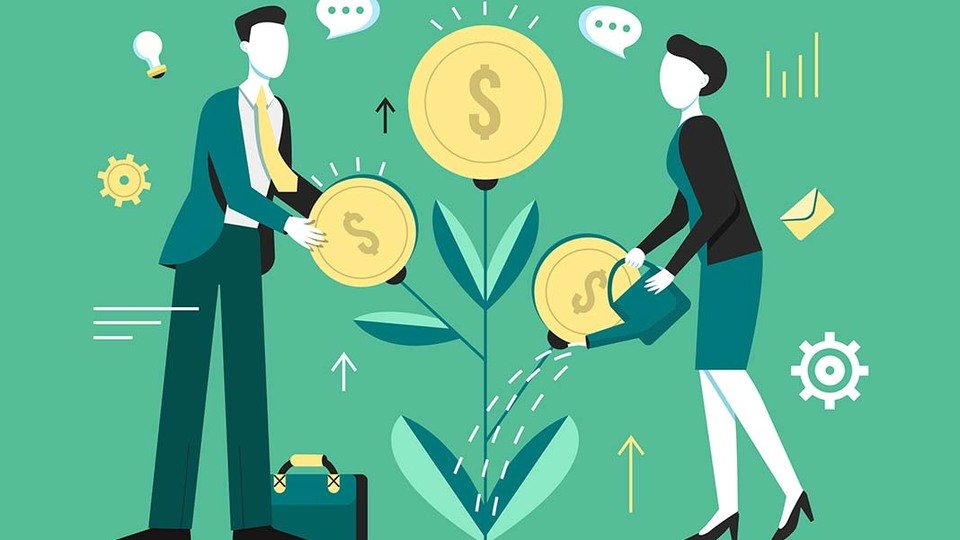
Building a balanced passive income portfolio is both an art and a science—it requires strategic thinking, disciplined execution, and periodic adjustment. The ultimate goal isn’t just financial independence, but financial resilience—the ability to withstand economic shocks and pursue life on your own terms.
Key Takeaways:
- Start Where You Are: Use your current resources—whether time, money, or skills—to begin building your first stream
- Think in Percentages, Not Just Dollars: Allocate by percentage of portfolio rather than fixed dollar amounts
- Balance Correlations: Choose streams that perform differently under various economic conditions
- Reinvest Relentlessly: Plow early income back into building additional streams
- Monitor and Adjust: Regularly review your portfolio’s performance and rebalance as needed
- Patience Pays: Building multiple streams takes time, but the compound effect is powerful
The most successful wealth builders aren’t those who find one magical income source, but those who systematically build and maintain multiple streams that work together in harmony. Your diversified portfolio will become your most valuable asset—not just for the income it generates, but for the freedom and security it provides. For more insights on strategic business development, explore our guide on Building Successful Business Partnerships.
Frequently Asked Questions (FAQs)
1. How many income streams should I aim for?
Most people do well with 3-5 well-developed streams rather than 10+ neglected ones. Quality and proper management matter more than quantity.
2. What’s the ideal allocation between different stream types?
A good starting point: 60-70% foundational, 20-30% growth, 5-10% speculative. Adjust based on your age, risk tolerance, and goals.
3. How much time does managing multiple streams require?
Well-systematized streams might require 2-5 hours weekly total after the initial building phase. The key is automation and delegation.
4. Should I pay off debt or build income streams first?
Generally, pay off high-interest debt first, then build streams while managing low-interest debt.
5. How do I track multiple income streams efficiently?
Use spreadsheets, financial apps like Mint or Personal Capital, or create a simple dashboard showing all streams in one place.
6. What’s the best first income stream for a complete beginner?
Digital products (if you have marketable skills) or dividend investing (if you have capital) are great starting points.
7. How do I know if my portfolio is properly diversified?
If one stream dropping to zero wouldn’t significantly impact your lifestyle, you’re probably well-diversified.
8. Should I include my primary residence in my income portfolio?
No, your primary residence is consumption, not production. Focus on assets that generate cash flow.
9. How often should I add new income streams?
Add new streams only when your existing ones are stable and systematized—typically every 12-18 months.
10. What percentage of my income should be passive?
A good goal is 20% within 3 years, 50% within 10 years. Ultimately, aim for 100% of your essential expenses.
11. How do I handle taxes on multiple income streams?
Work with a tax professional experienced with diverse income sources. Keep meticulous records by stream.
12. What’s the biggest mistake in building multiple streams?
Spreading yourself too thin and not properly maintaining any of them. Better to have 3 well-managed streams than 8 neglected ones.
13. Should all streams be equally passive?
No, a mix of maintenance requirements can work well—some truly passive, some semi-passive that you enjoy managing.
14. How do economic cycles affect different streams?
Understand how each stream performs in growth vs. recession environments and balance accordingly.
15. Can I build streams while working full-time?
Absolutely—this is the recommended approach. Use evenings and weekends to build, then systematize.
16. What role does emergency fund play in income diversification?
Crucial—maintain 6 months of expenses in cash to avoid liquidating income streams during emergencies.
17. How do I value my income streams for net worth calculations?
Use conservative multiples of annual income (3-10x depending on stability and growth potential).
18. Should I include active side hustles in my passive income portfolio?
Only if they’re being systematized toward passivity. Pure active income doesn’t belong in a passive portfolio.
19. How do I decide when to sell or exit an income stream?
When it consistently underperforms, requires disproportionate time, or no longer fits your strategy.
20. Where can I get help designing my income portfolio?
Financial advisors, wealth coaches, and educational resources like our Blog can provide guidance tailored to your situation.
I have been surfing online greater than three hours as of late,
yet I by no means found any fascinating article like yours.
It is pretty value enough for me. In my view, if all website owners and bloggers made just right content material as you probably did, the web will likely be much more helpful than ever before.
I for all time emailed this website post page to all my friends, for
the reason that if like to read it then my contacts will too.