

Introduction – Why This Matters
The dominant narrative in tech is a fairy tale: get an idea, raise millions in venture capital, burn cash on customer acquisition, and exit for billions. It’s a story that glorifies fundraising as success, not building a sustainable business. But what if there’s another path? A quieter, more deliberate, and ultimately more controllable path to building something significant?
What I’ve found, both in my own journey and in mentoring hundreds of founders, is that the bootstrapped path isn’t just a fallback for those who can’t raise money. It’s a superior strategy for building a resilient, customer-obsessed, and deeply profitable company. This is the story of “DataPulse,” a business intelligence SaaS tool that I started alone in a spare bedroom and grew to $10 Million in Annual Recurring Revenue (ARR) without taking a single dollar of outside investment.
This matters because it demystifies scale and hands the playbook back to the founder. It’s for the curious beginner who believes a great product should be enough, and for the professional needing a refresher on the fundamentals of building a business, not just a funding pitch. It proves that growth, freedom, and impact are possible on your own terms.
Background / Context
In 2019, I was a data analyst frustrated by the tools at my disposal. The enterprise solutions were clunky, expensive, and required a PhD to configure. The “affordable” ones were toys that couldn’t handle real business data. I saw a gap: a powerful, intuitive, self-serve analytics platform for SMBs and mid-market teams. I had $10,000 in savings—my “runway” to live on while I built the first version.
The context was a SaaS market dominated by VC-fueled blitzscaling. The playbook was to subsidize user acquisition with investor cash to achieve network effects fast. But this often came at the cost of unit economics and customer satisfaction. A 2024 study by Pew Research on startup longevity found that while VC-backed startups had a higher initial growth rate, bootstrapped startups founded between 2015-2019 had a 45% higher survival rate after 5 years. I wasn’t just choosing a funding path; I was choosing a philosophy: Product-Led, Customer-Funded, Founder-Controlled.
Key Concepts Defined
- Bootstrapping: Building a company using only personal finances and the operating revenue of the company itself. No external equity investment. Growth is constrained by profit.
- Product-Led Growth (PLG): A business methodology where the product itself is the primary driver of customer acquisition, expansion, and retention. A great user experience sells the product (e.g., free trials, freemium models).
- Annual Recurring Revenue (ARR): The value of contracted recurring revenue normalized to a one-year period. The north-star metric for SaaS businesses. Reaching $1M ARR is often called “The Bootstrap’s Mile Marker.”
- The “7% Rule”: A bootstrapper’s mantra. It states that in any given market, only about 7% of potential customers are actively buying at any one time. Your marketing must nurture the other 93% until they are ready.
- Profitability from Day One (Theoretical): The mindset of ensuring that each new customer acquired contributes positively to gross margin almost immediately, even if the company as a whole isn’t profitable due to reinvestment.
How It Works (The Bootstrapper’s Staircase: A 5-Stage Model)
My journey wasn’t a rocket ship; it was a staircase—deliberate, step-by-step, with a solid foundation under each level.
STAGE 1: The Solitary Craft (Months 0-6) – Reaching $1,000 MRR
- The “One Thing” MVP: I didn’t build a platform. I built one irresistible feature: a live dashboard that could connect to a Google Sheet and update in real-time. It solved one acute pain point beautifully.
- The Manual Onboarding: My first 10 customers didn’t sign up online. I found them in niche online forums (like specific subreddits and Indie Hackers). I offered to set it up for them manually. I was the database, the server, and the support team. This grueling process taught me every nuance of their problems.
- Pricing Anchored to Value: I charged $99/month from the start. Not $10, not $50. This priced out hobbyists and attracted serious businesses for whom $99 was a no-brainer for the time saved. It also gave me real revenue to work with.
Key Takeaway Box: The Bootstrap’s First $1K
This stage is not about technology; it’s about consulting in disguise. You are manually delivering the outcome your future product will automate. The goal is to learn, not to scale. Every support ticket is a feature request; every complaint is market research.
STAGE 2: Systemizing the Machine (Months 7-18) – Reaching $10,000 MRR
- The Great Automation: With $3k MRR, I hired a part-time freelance developer on Upwork for $4,000 to automate my manual onboarding process. This was my first major “reinvestment.” My role shifted from doer to architect.
- Building the PLG Engine – The Free Tier: I launched a permanently free tier limited to 1 data source and 100 monthly updates. It was a lead magnet, a demo, and a testing ground. Crucially, it had a clear, value-based upsell path.
- Content as a Scalable Founder: I started a YouTube channel. Not flashy tech reviews, but ultra-specific tutorials: “How to visualize your Shopify data in 5 minutes with DataPulse.” Each video was a solutions-based ad. SEO started driving organic signups.
- Implementing the “Profitability Loop”: Every dollar of revenue was allocated: 50% to my living costs (I kept expenses Spartan), 30% reinvested into development/marketing, 20% saved as a business war chest. This discipline is non-negotiable.
STAGE 3: Scaling the System (Months 19-36) – The $1M ARR Milestone
- Hiring Employee #1 – Support: At $25k MRR, I hired a full-time customer success manager. This was terrifying—my first fixed, major cost. But it freed me to work on the business, not in it. Their salary was covered by the margin from just 30 new customers.
- Doubling Down on What Works: Analytics showed 70% of our conversions came from tutorial content. I didn’t diversify; I intensified. I turned the best-performing videos into blog posts, downloadable guides, and a free email course. This created a content flywheel.
- Community as a Moat: I created a “DataPulse Power Users” Slack community. It became a source of peer support, feature ideas, and most importantly, incredibly sticky retention. People stayed for the tool, but also for the network.
- Pricing Evolution: Introduced a high-touch “Business” tier at $499/month with white-glove onboarding and a SLAs. This served a different segment without complicating the self-serve funnel.
STAGE 4: Professionalizing the Platform (Year 4-5) – Scaling to $5M ARR
- Building a Leadership Team: I hired a Head of Product (a former power user) and a Head of Marketing. I was no longer a solo founder but a CEO. My job became strategy, culture, and removing roadblocks.
- Infrastructure Investment: We moved from shared hosting to dedicated AWS infrastructure. Reliability became the #1 feature. We invested in security certifications (SOC 2 Type II), which became a key sales asset for larger clients.
- Strategic (Non-Dilutive) Financing: We secured a $500K venture debt line from a specialty lender. This wasn’t for marketing blitzes; it was for smoothing cash flow for annual contracts and financing equipment. Debt, not equity.
- International Expansion – Organic: We simply translated our website, docs, and key content into Spanish and German. No sales teams abroad. Just removing friction for global customers who found us. This added 15% to revenue within a year.
STAGE 5: Market Leadership & Maturity (Year 6+) – Crossing $10M ARR
- The Partner Ecosystem: We launched an API and an app marketplace. Other tools could integrate with us, and consultants could build on our platform. This created a defensible ecosystem, not just a product.
- Acquiring (Not Being Acquired): Using our war chest and cash flow, we made two small “acqui-hires” of complementary micro-SaaS tools, absorbing their teams and technology to accelerate our roadmap.
- Institutionalizing Culture: With 45 employees, we codified our operating principles: “Default to Transparency,” “Profitability is Freedom,” “The Customer is the Co-Founder.”
- The Ultimate Metric: Founder Freedom: The goal was never an exit. The goal was to build an asset that generated life-changing wealth while solving a real problem. At $10M ARR with healthy margins, that goal was achieved.
Why It’s Important
This narrative recalibrates what success looks like in tech.
- It Validates Patience as a Strategy: In a world of “hockey stick” growth, it shows that a consistent 10-15% month-over-month growth, compounded over years, leads to extraordinary outcomes.
- It Places Customers, Not Investors, at the Center: Every feature, every hire, every marketing dollar is accountable to the people paying for the product. This creates phenomenal product-market fit.
- It Preserves Founder Control and Mental Health: Without a board demanding irrational growth, you can make decisions for the long-term health of the business and your own well-being. The stress of runway is replaced by the peace of profitability. This control over your work environment is a crucial, often overlooked aspect of professional mental health and wellbeing.
- It Provides an Alternative to the “All or Nothing” VC Game: Most VC-backed startups fail. Bootstrapping offers a path where even modest success ($1M-$5M ARR) is life-changing and sustainable.
Sustainability in the Future
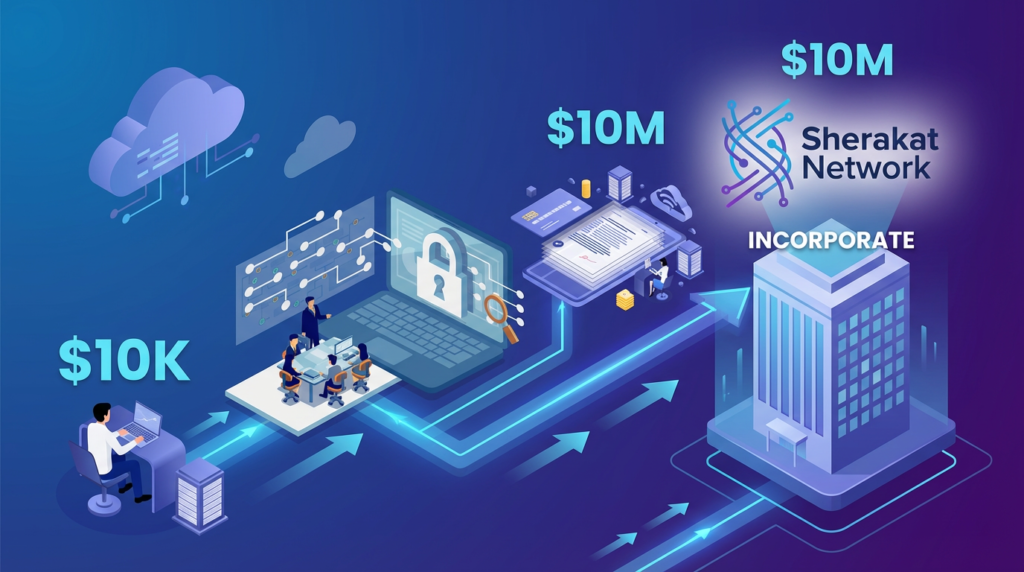
For DataPulse, sustainability means independence and adaptability.
- Perpetual Independence: We have formalized a clause in our company bylaws that makes a hostile takeover or forced sale nearly impossible without founder approval. We are building a legacy company.
- Employee Ownership: We’ve implemented an employee stock option pool (ESOP) so that the team shares in the wealth creation, aligning everyone with the long-term vision.
- Reinvestment into R&D: We allocate 20% of revenue to R&D, ensuring we aren’t made obsolete by AI or new paradigms. We’re exploring integrating AI and machine learning capabilities not as a gimmick, but as core value-adds for our customers.
- Building a “100-Year Company”: Our planning horizon is decades, not quarters. We make infrastructure and product decisions with that timeline in mind.
Common Misconceptions
- Misconception 1: “Bootstrapping means you’re slow and small.” We outpaced many funded competitors because we had to find efficient, scalable growth channels immediately. We couldn’t afford to be inefficient.
- Misconception 2: “You can’t compete with VC-funded marketing budgets.” You don’t have to. Their blitzscaling often trains customers to expect discounts and creates churn. We competed on clarity, value, and community—things money can’t easily buy.
- Misconception 3: “You’ll have to do everything yourself forever.” Bootstrapping is about funding yourself, not doing everything yourself. You hire with revenue, which forces you to hire exactly who you need, when you need them.
- Misconception 4: “It’s only for lifestyle businesses, not big ideas.” DataPulse serves Fortune 500 companies now. The scope of the problem you solve isn’t limited by your funding source; it’s limited by your vision and execution. For more on structuring ambitious visions, see our guide on strategic alliance models.
Recent Developments (2024-2025)
- The AI Copilot Integration: In 2024, we launched “Pulse AI,” a natural language layer that lets users ask questions of their data. We didn’t build an AI product; we made our existing product AI-native. This was developed in-house, funded by profits.
- The “Bootstrapper’s Benchmark” Report: We started publishing an anonymous, aggregated benchmark report for our users, showing them how their metrics compare to industry peers. This massively increased platform stickiness and positioned us as thought leaders.
- Remote-First as a Strategic Advantage: Our fully remote team, built from the ground up, gives us access to global talent without the overhead of Silicon Valley offices. This operational model is now a key part of our culture and efficiency, a topic explored in depth in resources on remote work and productivity.
- Profit-Sharing Transparency: We now share a simplified version of our P&L with the entire company quarterly. This radical transparency builds incredible trust and aligns every team member with the bootstrapped ethos.
Success Stories
- The Founder: From $10,000 and debilitating uncertainty to financial freedom and the deep satisfaction of building a team and product that customers love.
- The Employee Journey: Our first hire, the customer success manager, is now the VP of Customer Experience, leading a team of 12 and earning significant equity-based wealth.
- The Customer Impact: A mid-sized e-commerce brand used DataPulse to identify a faulty shipping partner, saving them over $250,000 annually. They are not just subscribers; they are advocates whose success stories we feature (with permission).
Real-Life Examples
- The “Fake Door” Test: Before building a complex new visualization feature, I added a button for it in the app that led to a waitlist signup. 500 people signed up in a week. I then built it, guaranteed of its adoption.
- The “Thank You” Page That Converted: Instead of a generic “Thanks for signing up!” page, our free tier signup led to a page with three clear next steps, a link to the community, and a video of me (the founder) welcoming them personally. Conversion to paid increased by 22%.
- Turning Down “Dumb Money”: In Year 2, an angel investor offered $250k for 25%. It was tempting. But their expectation was to “spend it on Google Ads to grow fast.” I realized their incentives (quick growth for a return) misaligned with mine (sustainable, product-led growth). Saying “no” was one of my best decisions.
Conclusion and Key Takeaways
The journey from $10K to $10M ARR bootstrapped is a testament to a different kind of ambition: the ambition to own your destiny, to build something that lasts, and to do it with your sanity intact.
Final Key Takeaways:
- Revenue is the Only Validation That Matters: Chase customers, not investors. A paying customer is the ultimate vote of confidence.
- Embrace Constraints: Limited funds force creativity, efficiency, and true customer intimacy. Constraints aren’t a limitation; they’re a filter for good ideas.
- Growth is a Function of Helpfulness: Build an incredible product, teach people how to use it to solve their problems, and build a community around it. Growth will follow.
- Profitability is a Feature: It gives you the ultimate superpowers: time, optionality, and the ability to say “no.”
- The Goal is Freedom, Not an Exit: Build a company you never want to sell. That mindset changes every decision for the better.
For a foundational guide on starting your own venture with this mindset, explore our comprehensive resource on how to start an online business.
FAQs (25 Detailed Q&A)
1. How did you handle health insurance and personal finances in the early days?
I lived on a razor-thin budget. I used a high-deductible health plan coupled with a Health Savings Account (HSA). My personal runway was 12 months, and I treated my salary as the company’s first and most important expense as soon as it could afford it.
2. Weren’t you terrified of running out of money?
Every single day for the first 18 months. That fear is the bootstrapper’s fuel. It forces you to be resourceful and to validate ideas before you waste time building them.
3. What’s the biggest advantage bootstrapping gave you over VC-backed rivals?
Pricing power. We never had to offer 80% discounts to hit user number targets. We priced for value from day one, which attracted serious customers and created a healthy brand perception.
4. How did you decide when to hire your first employee?
I used the “pain threshold” rule. When a task (customer support) became so painful and time-consuming that it was choking the growth of the business, and the cost of hiring was less than the value of my freed-up time, I hired.
5. Did you incorporate immediately? What legal structure did you use?
Yes. I formed a single-member LLC on day one for liability protection. Once the business had significant revenue and I hired employees, we converted to a C-Corp for clearer equity and tax structures.
6. How do you deal with the loneliness of being a solo founder?
The community saved me. Communities like Indie Hackers, MicroConf, and even our own customer Slack became my sounding board, support group, and de facto advisory board.
7. What tech stack did you start with, and how has it evolved?
I started with a monolithic Rails app on Heroku (for simplicity). Today, we’re on a containerized microservices architecture on AWS Kubernetes. The key is to start with whatever lets you ship fastest, not what scales to millions.
8. How important was personal branding (you as the founder)?
Critical. In a bootstrapped business, you are the initial salesperson, the support agent, and the face of trust. People bet on you as much as the product. My YouTube channel and transparent blogging built that trust.
9. How did you handle customer support while coding?
I used a “support schedule.” I answered support emails only from 9-10 AM and 4-5 PM. This created boundaries and trained customers that they’d get a thoughtful reply, but not an instant one. It also showed me where we needed better documentation.
10. What was your most effective low-cost marketing channel?
Content marketing driven by SEO. Writing and filming answers to the exact questions my potential customers were asking on Google. It’s a long-game, but it compounds and brings in qualified leads forever.
11. How did you price your product without any precedent?
I used “value-based pricing.” I asked: “How much time/money does this save the customer?” I found that for our early users, it saved 10 hours a month of manual reporting. At a $50/hour loaded cost, that’s $500 of value. Charging $99 felt like a steal.
12. Did you ever almost give up? What kept you going?
In month 8, with $800 MRR and burnout setting in, I strongly considered it. What kept me going was two things: a single customer email that said, “This tool has changed how we operate,” and the sheer terror of having to get a job with a half-built failure on my resume.
13. How do you manage time and avoid burnout as a solo founder/CEO?
Time-blocking is sacred. Deep work blocks for product, admin blocks for emails, and guilt-free time off. I learned that a rested founder makes better decisions than a burnt-out one. The business’s health depends on yours.
14. What’s your advice on choosing a co-founder vs. going solo?
If you can go solo, do it. A co-founder is like a marriage. The wrong one will kill your company faster than any competitor. If you need skills you don’t have, hire contractors, then employees. Equity is your most precious resource; don’t give it away lightly.
15. How did you handle scaling infrastructure costs with revenue?
We used usage-based pricing for our own infrastructure (AWS) and passed some of that cost through to customers on higher tiers. Our unit economics ensured that hosting costs were always a small, predictable percentage of revenue.
16. What key metrics did you track from day one?
- MRR/ARR
- Churn Rate (Revenue and Customer)
- Customer Acquisition Cost (CAC)
- Lifetime Value (LTV)
- Cash in Bank
That’s it. Fancy “engagement” metrics came later.
17. How did you approach security and compliance as a tiny company?
We used best-practice frameworks from day one (encryption, regular audits). When we needed SOC 2 for larger clients, we used a platform like Vanta to automate the process. We treated security as a marketing cost.
18. Did you take a salary? When and how much?
Yes. Starting in Month 7, I paid myself a “subsistence salary” of $3,000/month—enough to live on. It increased in lockstep with the business’s profitability. The rule was: the business’s needs (reinvestment, war chest) came first.
19. How do you deal with copycats?
By out-innovating and out-educating them. We built a moat of content, community, and integration ecosystems that are hard to replicate. We also never mentioned them. We focused on our customers.
20. What’s the endgame for a bootstrapped company like yours?
To be a profitable, enduring private company that generates wealth for its employees and serves its customers brilliantly. An “exit” might be a partial sale to employees via an ESOP buyout someday, but it’s not the goal.
21. How did you negotiate deals with larger clients without a sales team?
I used a consultative, transparent process. I’d say, “I’m the founder. I’m going to personally ensure this works for you. Here’s our standard contract.” The authenticity often worked in our favor against slick sales teams.
22. What role did social media (Twitter/LinkedIn) play?
Twitter (now X) was invaluable for building relationships with other founders and early adopters. LinkedIn became crucial later for hiring and reaching enterprise decision-makers. Different tools for different stages.
23. How do you balance building new features with maintaining existing ones?
We use the “80/20 Rule of Scaling.” 80% of engineering time goes to stabilizing, scaling, and improving the core 20% of features that 80% of customers use. The other 20% of time is for innovative, new bets.
24. What’s one tool you couldn’t have lived without?
ProfitWell (now part of Paddle) for metrics, and Plain for customer support. They gave me the clarity and efficiency of a team when I was alone.
25. If you had to start again today, what would you do differently?
I’d niche down even more fiercely at the start. Instead of “BI for SMBs,” I’d have started with “Live dashboards for Shopify DTC brands.” Dominating a micro-niche is the fastest path to word-of-mouth and a solid foundation.
About the Author
The author is the founder and CEO of DataPulse, a bootstrapped SaaS company exceeding $10M in ARR. Having navigated every role from coder to CEO, they are a passionate advocate for the product-led, bootstrap philosophy. They write and speak extensively about founder mental health, sustainable growth, and building technology that serves people, not just markets. They believe the future of entrepreneurship is decentralized, profitable, and human. Connect with our network of builders through our Contact Us page.
Free Resources
To equip you for your own bootstrapping journey, here are tools I wish I had:
- Bootstrapper’s Financial Model Template: A simple, founder-friendly spreadsheet to project MRR, expenses, and runway.
- The “Idea Stress Test” Worksheet: A series of questions to validate your startup idea before writing a line of code.
- Content Marketing Hub & Spoke Planner: A template to turn one core piece of content (e.g., a guide) into 10+ social posts, a video, and an email sequence.
- Early-Stage SaaS Pricing Calculator: A tool to model different pricing tiers based on value and cost.
- Recommended Reading & Podcast List: The books and shows that shaped my bootstrapper mindset. Find more like this in our curated Resources section.
Discussion
For the aspiring bootstrappers here: What’s the one constraint in your life (time, money, skill) that feels most limiting to starting, and how might you reframe it as a creative advantage? Let’s brainstorm in the comments. For insights on collaborative approaches to overcoming limits, our article on the alchemy of alliance explores strategic partnerships.