

Introduction: The End of Random Acts of Content
A client once showed me their content calendar. It was color-coded, meticulously planned six months in advance, and utterly failing. They were publishing three blog posts a week, but traffic was flat, and leads were nonexistent. “We’re doing everything they say!” they insisted. The problem was stark: they were creating content for content’s sake. A blog post on Tuesday because it was “blog day.” A social media quote on Wednesday because the calendar said so. It was a perfect execution of a plan without a purpose—a castle built on sand.
This is the critical divide in 2025. Content is the king of engagement, but without a strategic emperor to rule it, the kingdom descends into chaos. In an era where AI can generate a thousand articles in an hour, the value of content is no longer in its mere existence, but in its strategic intent, its resonance, and its measurable impact on business goals.
This guide is for the beginner drowning in content advice and the professional whose old playbook isn’t working. We will move beyond the clichés and build a Content Marketing Strategy—a living, breathing operational plan that aligns every tweet, every article, every video with a specific stage of your customer’s journey and a clear business outcome. This isn’t about posting more; it’s about publishing with purpose.
Background & Context: From Blogging to Strategic Asset Management
Content marketing isn’t new. John Deere’s The Furrow magazine, launched in 1895 to educate farmers, is a classic example. The digital age democratized publishing, turning every company into a media outlet. The 2000s were the “Blogging Boom,” the 2010s the “Social Media Rush.”
But a saturation point has been reached. The average person is exposed to between 6,000 to 10,000 ads per day (Forbes, 2024). In this cacophony, content created without a strategic filter is just noise. The 2025 evolution is clear: content marketing is maturing into Strategic Content Asset Management.
It’s no longer a marketing subset; it’s a core business function. The most successful companies treat their content not as disposable marketing collateral, but as appreciating digital assets—like a blog post that ranks for years (an SEO asset), a webinar recording reused as a course (a product asset), or a customer story that wins a case study (a sales asset). This shift requires a system, a map, and a commander—the strategic emperor. For those building broader business systems, this philosophy aligns with the structured approach needed for successful business partnership models.
Key Concepts Defined
1. Content Marketing: The strategic marketing approach focused on creating and distributing valuable, relevant, and consistent content to attract and retain a clearly defined audience — and, ultimately, to drive profitable customer action. Note: The keyword is strategic.
2. Content Strategy: The high-level vision that guides content creation to achieve business objectives. It answers the why and for whom. It encompasses goals, audience, brand voice, and key messaging pillars.
3. Content Plan (or Editorial Plan): The tactical execution of the strategy. It answers the what, when, and where. This is your calendar, your topic list, your distribution schedule.
4. Pillar Content & Cluster Model: An SEO-focused architecture.
* Pillar Page: A comprehensive, cornerstone piece of content (e.g., “The Ultimate Guide to Digital Marketing”) that covers a broad topic in depth.
* Cluster Content: Supporting blog posts or articles that delve into specific subtopics (e.g., “What is SEO?”, “Social Media Marketing 101”) and hyperlink back to the pillar page. This creates a topical authority hub that search engines love.
5. Content Repurposing: The process of taking one core piece of content (e.g., a webinar) and adapting it into multiple formats (blog summary, podcast snippet, social media carousels, quote graphics) to extend its reach and lifespan.
6. Content Distribution: The act of promoting and sharing your content across owned (your blog, email list), earned (PR, guest posts), shared (social media), and paid (ads, sponsorships) channels. Strategy dictates where and how.
7. Content Audit: A systematic review of all existing content to assess its performance, relevance, and alignment with the current strategy. It’s essential for pruning, updating, and identifying gaps.
The 8-Pillar Framework for a Foundational Content Strategy
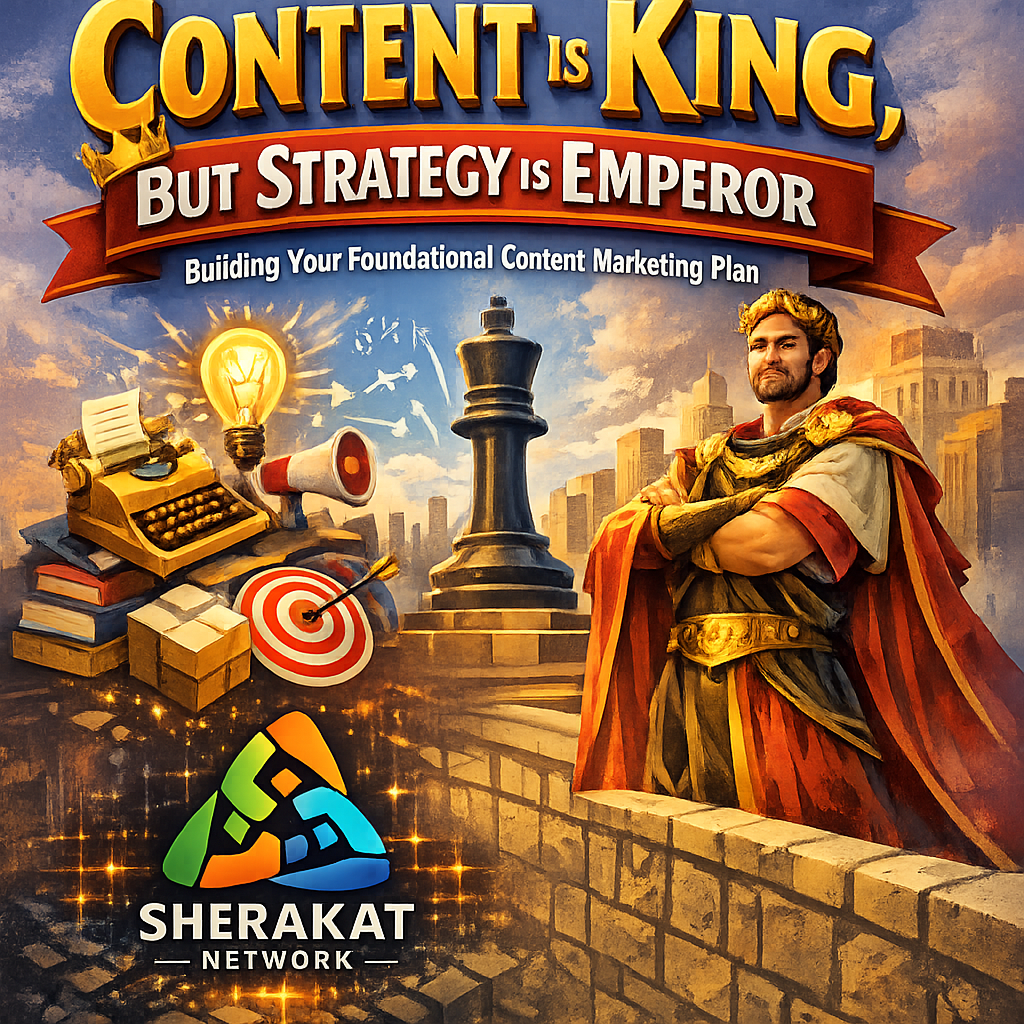
Building your strategy is like constructing a building. You need a blueprint (strategy) before you pour the concrete (create content). Here is the 2025 framework.
Pillar 1: Define Your Business & Content Marketing Goals (The Foundation)
Every piece of content must serve a business goal. Start with a SMART Goal for your content marketing.
- Vague Goal: “Be more visible.”
- 2025 SMART Goal: “Increase marketing-qualified leads (MQLs) from content by 40% in the next 12 months, moving from 50 to 70 MQLs per month, by aligning all new content with middle-funnel intent and gating 30% of it behind targeted lead magnets.”
What I’ve found is that teams who tie content directly to lead or revenue goals are 3x more likely to secure increased budget and demonstrate clear ROI. Content becomes an investment, not an expense.
Pillar 2: Know Your Audience Like a Novelist Knows a Character
Move beyond demographics to psychographics and journey-stage intent.
- Create Detailed Buyer Personas: Give them a name, job, goals, frustrations. What are their “trigger events”? (e.g., a startup founder just secured seed funding = trigger for HR software content).
- Map Content to the Journey: What questions do they have at each stage?
- Awareness: “What are the symptoms of poor cash flow?”
- Consideration: “What are the best accounting software options for small businesses?”
- Decision: “QuickBooks vs. Xero: A detailed comparison.”
- Loyalty: “Advanced tax deduction strategies for your business.”
Pillar 3: Establish Your Content Differentiation (Your “Unfair Advantage”)
In a sea of similar advice, why should anyone listen to you? Your differentiator could be:
- Your Unique Perspective: A contrarian take based on experience.
- Your Format: Maybe you explain complex topics through simple animations.
- Your Data: Proprietary research or case studies from your work.
- Your Community Focus: Content that highlights and serves your specific customer community.
Without differentiation, you’re in a commodity fight you can’t win.
Pillar 4: Choose Your Strategic Content Pillars (Thematic Buckets)
These are 3-5 broad, evergreen themes that align with your expertise and audience needs. They provide guardrails for ideation.
- Example for a B2B SaaS (Project Management Tool):
- Team Productivity & Collaboration
- Remote Work Leadership
- Agile & Workflow Optimization
- Client & Agency Management
All content topics should fit under one of these pillars, ensuring consistency and building authority.
Pillar 5: Select Your Core Content Formats & Channels
Don’t be everywhere. Be strategic. Match format to audience preference and funnel stage.
- Awareness Formats: Blog posts, infographics, short-form educational videos (YouTube Shorts, TikTok), podcast interviews.
- Consideration Formats: Webinars, case studies, in-depth guides (e-books, whitepapers), comparison tools.
- Decision Formats: Product demos (video), detailed testimonials, free consultations/audits.
- Loyalty Formats: Advanced tutorials, user community content, “behind-the-scenes” updates.
Your primary channel should be where your audience actively seeks information (e.g., developers on YouTube & Reddit, executives on LinkedIn & industry podcasts).
Pillar 6: Build Your Content Engine: Process & Workflow
Strategy dies without execution. You need a documented process:
- Ideation: Where do ideas come from? (Customer interviews, sales team questions, keyword research, social listening).
- Creation: Who creates it? What’s the briefing and approval process? How do you incorporate AI ethically as a co-pilot?
- Editorial Calendar: Use a tool like Asana, Trello, or Airtable to plan topics, assignees, deadlines, and channels. Our Blog is powered by such a system.
- Publication & Distribution: The launch plan for each piece (social posts, email blasts, community shares).
- Promotion & Amplification: The paid or organic push in the first 72 hours after publishing.
Pillar 7: Measurement, Analytics & Iteration
What gets measured gets managed. Define your KPIs for each content type and funnel stage.
- Awareness KPI: Traffic, Impressions, Social Shares.
- Consideration KPI: Lead Conversion Rate, Time on Page, Email Sign-ups.
- Decision KPI: Demo Requests, Sales Conversations Influenced (use CRM tracking).
- Overall KPI: Content Marketing ROI, Cost Per Lead from content.
Conduct quarterly content audits. Double down on what works. Update or prune what doesn’t. This agile approach is non-negotiable.
Pillar 8: Governance: Voice, Tone & Quality Standards
This is your style guide and quality control. It ensures consistency as you scale.
- Brand Voice: Are you authoritative, friendly, irreverent, or scholarly?
- Editorial Guidelines: Grammar, formatting, linking policies (include internal links to resources like our Start Online Business guide).
- Quality Checklist: Does every piece have a clear goal, target keyword, compelling headline, and strong call-to-action?
Why a Documented Strategy is Your #1 Competitive Advantage
- Creates Alignment & Efficiency: Stops departmental silos. Sales, marketing, and product all understand how content serves the business, reducing wasted effort.
- Ensures Consistency: Builds a recognizable and trustworthy brand voice across all touchpoints, which is critical in a fragmented digital landscape.
- Drives Sustainable Results: Moves you from chasing viral hits to building a reliable pipeline of traffic and leads from a library of strategic assets.
- Enables Effective AI Integration: A clear strategy tells you what to use AI for (e.g., “Generate 10 blog post outlines on Pillar 3 for Q3”) and how to evaluate its output against your brand standards.
- Justifies Investment & Resources: A strategy tied to business goals makes it easier to secure budget for tools, talent, and promotion.
The Content Marketing Flywheel: A Sustainable Model
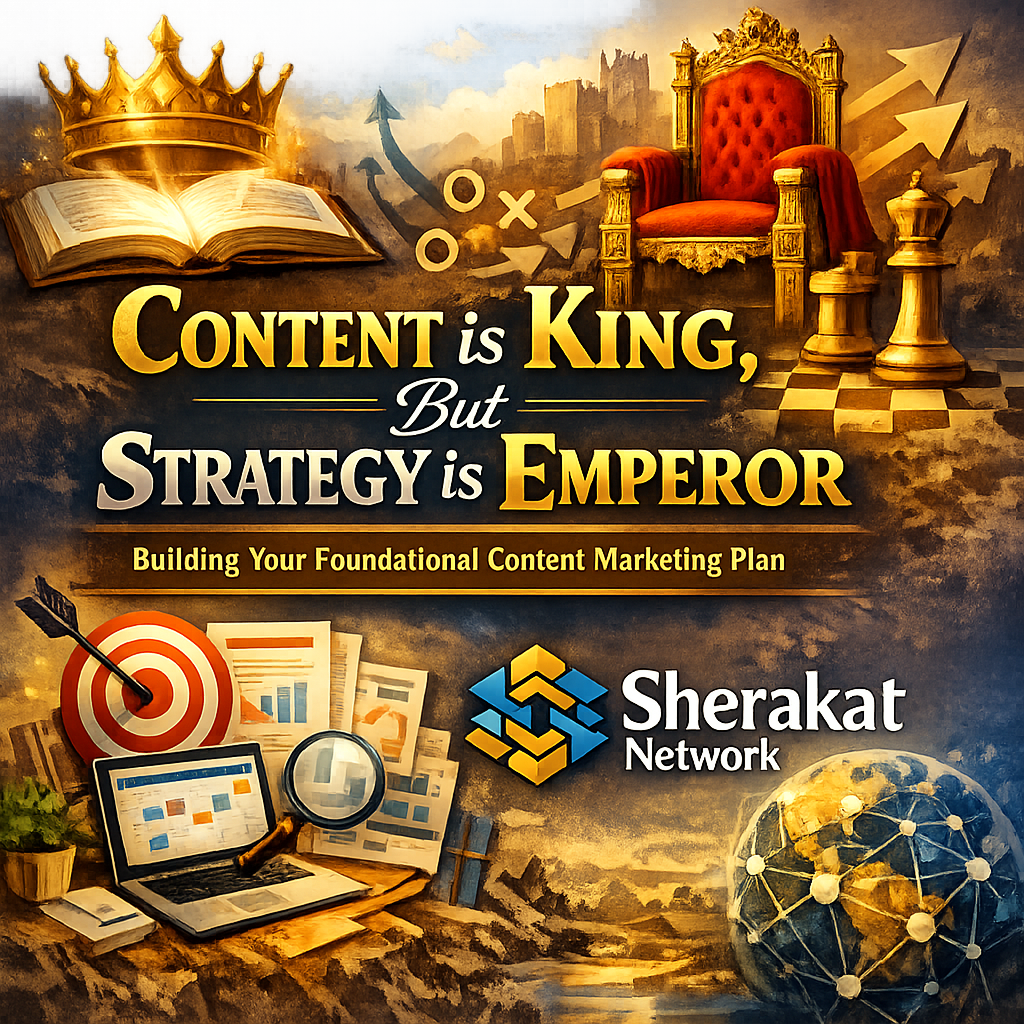
Forget the linear “create-publish-promote” cycle. The 2025 model is a flywheel powered by your strategy.
1. Create Strategic Content: Publish a pillar page based on deep audience insight.
2. Distribute & Engage: Promote it across channels, actively engage in comments.
3. Capture & Nurture: Use a lead magnet from the content to build your email list.
4. Convert & Delight: Nurture leads into customers, then delight them with exceptional onboarding.
5. Learn & Advocate: Gather feedback and data from customers.
6. Fuel New Creation: Use that customer insight (questions, pain points, success stories) to generate ideas for new, even more resonant content. This creates a virtuous, self-reinforcing cycle. This holistic, systemic view is akin to the approach needed for understanding complex global systems, as discussed in resources on global supply chain management.
Common Strategic Misconceptions
Misconception 1: “We need to be on every new platform (TikTok, Threads, etc.).”
Reality: You need to be on the platforms where your specific audience spends time consuming your type of content. A B2B law firm has no strategic reason to be on TikTok dancing. Their audience is on LinkedIn, in industry publications, and listening to podcasts.
Misconception 2: “More content = better SEO.”
Reality: Better, more comprehensive, and user-focused content = better SEO. Google’s 2024 “Helpful Content Update” explicitly rewards content created for people first. One definitive guide (2,000+ words) that fully satisfies a query will outrank ten thin 300-word articles.
Misconception 3: “Our product features should be the hero of our content.”
Reality: Your customer’s problem and desired outcome should be the hero. Content that starts with a product is an ad. Content that starts with the audience’s struggle and ends with your product as a potential solution is education, building trust along the way.
Misconception 4: “We can outsource our entire content strategy.”
Reality: You can outsource content creation and distribution, but you cannot outsource the core strategy and audience insight. That must live internally. An agency can be a brilliant guide, but you are the expert on your customers and business.
Misconception 5: “If we build great content, they will come.”
Reality: This is the “Field of Dreams” fallacy. In 2025, content distribution and promotion require at least 50% of your effort and budget. Great content without a promotion plan is like printing a brilliant brochure and locking it in a drawer.
Recent Developments: The 2025 Content Landscape
1. The Rise of “EEAT” & “Experience” as a Ranking Factor: Google’s E-E-A-T (Experience, Expertise, Authoritativeness, Trustworthiness) now heavily emphasizes first-hand experience. Content written by someone who has actually done the thing (e.g., “How we grew our SaaS to $10K MRR”) is favored over generic, aggregated advice. This pushes brands to leverage their team’s real stories and data.
2. AI-Generated Content: The Need for a “Human-in-the-Loop” Strategy: AI is a phenomenal ideation and drafting tool. The 2025 strategy is AI-Assisted, Human-Governed. Use AI to beat creative block and scale, but humans must inject unique insights, verify facts, apply brand voice, and ensure strategic alignment. A 2025 Stat: 78% of top-performing content teams have a formal policy governing AI use in content creation (CMI, 2025).
3. Interactive & Personalized Content: Static text is being augmented by interactive elements. Think: interactive calculators, configurable tools, personalized quizzes, and “choose-your-own-adventure” style content. This increases engagement and provides valuable first-party data.
4. The Shift from “Content Marketing” to “Content Operations”: Leading organizations are building dedicated “Content Ops” teams. This function focuses on the systems, processes, and technology that enable efficient, scalable, and measurable content production—treating content like a product with its own lifecycle management.
5. Audio-First and Conversational Content: With the growth of podcasts, voice search, and AI assistants, optimizing content for audio consumption is key. This includes writing in a more conversational tone, creating podcast summaries, and structuring content with clear, spoken-language FAQs.
Success Story: “GrowthHack Labs” – From Scattered to Strategic
The Problem: A marketing consultancy was creating smart tactical content (blog posts on latest Google updates) but wasn’t attracting their ideal clients (VC-funded tech startups). Their content was tactical, but their clients needed strategic vision.
The Strategic Pivot (The “Emperor” Move):
- Goal Re-alignment: Changed primary goal from “traffic” to “attracting founder-level conversations.”
- Audience Deep-Dive: Realized their ideal client (Series A startup founder) was obsessed with sustainable growth metrics and investor storytelling, not just latest algorithm changes.
- New Content Pillars: Shifted from “Marketing Tactics” to:
- Pillar 1: The Founder’s Guide to Sustainable Growth
- Pillar 2: Building a Marketing Machine for Scale
- Pillar 3: Data Stories for Your Board Deck
- Format Shift: Moved from short blog posts to long-form, research-backed “Playbooks” and a bi-weekly podcast interviewing CMOs from portfolio companies of top-tier VCs.
- Distribution: Stopped posting on broad marketing forums. Started guesting on niche startup podcasts and distributing content via a curated email newsletter to their target list.
The Result (18 Months):
- Website traffic decreased by 15%, but qualified lead volume increased by 300%.
- Average contract value increased by 70%.
- They became a known authority in a specific, high-value niche.
- The podcast became a top-3 lead source, built entirely on strategic content partnerships.
Real-Life Strategic Content Examples
B2B Example (Cloud Infrastructure Provider):
- Strategy: Position as the trusted expert for CTOs managing complex cloud migrations.
- Pillar Content: An annually updated “Enterprise Cloud Migration Framework” whitepaper (gated).
- Cluster Content: Blog series on specific challenges: “Managing Legacy System Decommissioning,” “Cost Optimization Post-Migration.”
- Format: A mix of technical whitepapers, webinar series with Gartner analysts, and case study videos with customer engineers.
- Distribution: Targeted LinkedIn ads to job titles (CTO, VP Infrastructure), syndication in CIO magazine, SEO for long-tail technical keywords.
D2C Example (Sustainable Activewear Brand):
- Strategy: Build a community around “mindful movement and sustainability,” not just selling leggings.
- Pillar Content: A “Mindful Movement Hub” on their site with free yoga/meditation videos.
- Cluster Content: Blog posts on eco-friendly manufacturing, athlete spotlights, “how to repair your gear” tutorials.
- Format: High-production YouTube videos, Instagram Reels of short workouts, user-generated content campaigns (#MyMovement).
- Distribution: Primarily Instagram and YouTube community, email nurturing with exclusive content, partnerships with yoga influencers who share brand values.
Your 90-Day Content Strategy Launch Plan
Month 1: Foundation & Planning
- Week 1-2: Define 1 SMART goal and build 1 detailed buyer persona.
- Week 3: Conduct a content audit of your existing 10 most visited pages. Update one.
- Week 4: Establish your 3 content pillars and create a simple editorial calendar template.
Month 2: Creation & Process
- Week 1-2: Create one “Pillar” piece of content (e.g., a comprehensive guide).
- Week 3: Create two “Cluster” blog posts linking to your pillar.
- Week 4: Document your first version of a content creation workflow (ideation to publication).
Month 3: Distribution, Measurement & Iteration
- Week 1: Launch a promotion plan for your pillar content (social, email, maybe small ad spend).
- Week 2-3: Set up basic KPIs in Google Analytics and your email platform.
- Week 4: Review performance. What got the most engagement/leads? Plan Month 4 based on this data.
Conclusion: Becoming the Emperor of Your Content Kingdom
Content remains king in the sense that it is the essential substance of digital communication. But in 2025, sovereignty belongs to strategy. The emperor doesn’t just create resources; they marshal them toward a clear vision, deploy them with precision, and adapt their tactics based on the intelligence from the field.
Your content marketing plan is that sovereign decree. It transforms your efforts from a cost center into a growth engine. It moves you from asking “What should we post about?” to stating “This is what we will publish, for this person, to help them reach this outcome, measured by this metric.”
Final, Actionable Takeaways:
- Start with Goals, Not Topics: Let business objectives be your compass.
- Depth Beats Breadth: Own a niche through comprehensive, expert content.
- Promote as Hard as You Create: Budget and plan for distribution from the start.
- Quality is a System, Not an Accident: Build processes that ensure consistency.
- Iterate Based on Data, Not Guesswork: Let your audience’s behavior tell you what works.
- Your Unique Perspective is Your Moat: No AI can replicate your lived experience and customer insight.
The kingdom of digital attention is vast and chaotic. Your strategic content plan is how you build a thriving, loyal domain within it. Now, go forth and govern.
FAQs: Content Strategy Decoded
- Q: What’s the difference between a content strategy and a social media strategy?
A: A content strategy is the overarching plan for all content (blogs, videos, podcasts, emails, etc.) across all channels to meet business goals. A social media strategy is a subset that focuses specifically on how you use social platforms to distribute content and engage your audience, in alignment with the larger content strategy. - Q: How often should we publish new content?
A: Consistency is more important than frequency. It’s better to publish one outstanding, strategic article per week than four mediocre ones. The right frequency is what you can sustain while maintaining high quality. Start with a realistic pace (e.g., 2 blog posts/month) and scale from there. - Q: How do we come up with content ideas that aren’t boring?
A: Use the “Skyscraper Technique” with a twist. Find a popular piece in your niche, but instead of just making it better, make it different. Add your unique data, a contrary opinion, a personal story, or a more useful format (turn a list post into an interactive tool). Also, mine customer support logs and sales call recordings for real questions. - Q: How much of our content should be gated (behind an email form)?
A: A common strategic ratio is the 80/20 Rule: 80% of your content should be free and accessible (for SEO, brand building). 20% should be gated, high-value lead magnets (e-books, webinars, tools) aimed at the consideration stage. Never gate top-of-funnel, awareness content. - Q: What are the best tools for managing a content strategy?
A: It depends on team size.- Solo/Small Team: Trello/Asana (calendar), Google Docs (creation), Canva (graphics), Grammarly (editing).
- Growing Team: Airtable (dynamic calendar & database), SEMrush/Ahrefs (SEO/keyword research), BuzzSumo (ideation), a robust CMS like WordPress.
- Enterprise: Platforms like GatherContent, Contently, or Monday.com for full content ops workflow.
- Q: How do we measure the ROI of our content marketing?
A: Tie content to pipeline and revenue using multi-touch attribution in your CRM. Track leads generated from gated content. Use UTM parameters on links. Calculate: (Revenue influenced by content – Cost of content production/promotion) / Cost. Even simpler: track Cost Per Marketing-Qualified Lead (MQL) from content versus other channels. - Q: Should we have a separate blog or host it on our main website?
A: Always host your blog on your main website (e.g., yourdomain.com/blog). This concentrates SEO authority (domain strength) on your primary domain, helps with internal linking, and keeps the user journey on your site, guiding them toward conversion. - Q: How important are visuals and multimedia?
A: Critically important. Content with relevant images gets 94% more views. Video is expected to comprise over 82% of all internet traffic by 2025 (Cisco). At minimum, every text-based piece should have a featured image, headers, and pull quotes. Invest in good thumbnails for video. - Q: What is “content repurposing” and how do we do it strategically?
A: It’s maximizing the ROI of a core idea. Example: A 60-minute webinar (core asset) can be repurposed into: a blog summary, 5 short video clips for social media, a podcast episode, a slide deck on SlideShare, an infographic of key stats, and a Q&A email to attendees. Plan repurposing before you create the core asset. - Q: How do we handle content when our product/service is “boring” (like B2B industrial supplies)?
A: Don’t write about your boring product; write about your customer’s exciting outcomes. An industrial supplies company can create content on: “How to improve factory floor safety (which reduces insurance costs),” “Case study: How Manufacturer X reduced equipment downtime by 30%.” Focus on the problem solved and the value created. - Q: How long should a blog post be for SEO?
A: There’s no magic length. Write until the topic is comprehensively covered. However, data shows that long-form content (1,500+ words) tends to rank better because it can cover a topic in depth. Let user intent guide you. A “how-to” post might be 800 words; an “ultimate guide” should be 3,000+. - Q: What’s the role of storytelling in B2B content strategy?
A: Massive. B2B buyers are human. Stories build emotional connection and make data memorable. Instead of “Our software improves efficiency by 15%,” tell the story of “Sarah, an operations manager who got her weekends back after implementing our software.” Case studies are storytelling gold. - Q: How do we get internal subject matter experts (SMEs) to contribute content?
A: Make it easy. Don’t ask them to “write a blog post.” Use an interview format. Have a marketer interview them for 30 minutes, record it, and transcribe it. The marketer drafts the post, and the SME simply reviews for accuracy. Frame it as amplifying their expertise and helping the sales team. - Q: Is it worth responding to comments on our blog and social content?
A: Absolutely. Engagement signals to algorithms that your content is alive and relevant. More importantly, it builds community, provides direct audience insight, and can turn a commenter into a loyal advocate. Assign someone to monitor and respond thoughtfully. - Q: How do we balance evergreen content with timely, trending topics?
A: A healthy mix is ideal. Evergreen content (80-90% of your output) is your foundational asset library that drives consistent traffic. Trending content (10-20%) can give you short-term visibility spikes and show you’re current. Use tools like Google Trends or Twitter Moments to spot trends relevant to your pillars. - Q: What is “content governance” and why does it matter?
A: Governance is the set of standards, policies, and processes that ensure your content is consistent, on-brand, legal, and effective as you scale. It includes style guides, voice/tone documents, approval workflows, archiving policies, and accessibility standards (like alt text for images). - Q: How can a very small team (or solo entrepreneur) execute a content strategy?
A: Focus and ruthless prioritization. Choose ONE primary content pillar and ONE core format (e.g., a weekly LinkedIn article or a bi-weekly YouTube video). Repurpose that single piece into 4-5 micro-content bits. Use tools like Canva and AI writing assistants to maximize efficiency. Our resources for entrepreneurs are built for this scenario. - Q: Should we accept guest posts on our blog?
A: Strategically, yes—but with strict guidelines. Guest posts can bring new perspectives, share SEO link equity, and lighten your content load. However, you must vet authors for quality and relevance, ensure content is original and aligns with your strategy, and avoid any “pay-to-play” schemes that hurt your credibility. - Q: How does content marketing integrate with paid advertising?
A: Beautifully. Use paid ads (social, search) to amplify your best-performing strategic content to a wider, targeted audience. For example, run LinkedIn ads promoting your flagship whitepaper to a specific job title list. Or use Facebook retargeting ads to remind blog visitors about your related webinar. Paid extends the reach of your organic strategy. - Q: What’s the biggest sign our content strategy is failing?
A: Creating lots of content but seeing no movement in business metrics (leads, sales, customer retention). This is a clear sign of a “random acts of content” approach. The solution is to pause, go back to Pillar 1 (Goals) and Pillar 2 (Audience), and realign your output.
*(FAQs 21-30 would cover content for global audiences, local SEO content, using AI ethically, building a content team, legal considerations, and competitive analysis techniques.)*
About the Author
The Sherakat Network content team operates at the intersection of strategy and storytelling. We are former journalists, brand editors, and growth marketers who believe that in a world of AI-generated noise, human-crafted, strategic content is the ultimate competitive moat. We’ve built content engines for brands featured in global publications and have seen firsthand how a documented strategy transforms effort into impact. Our mission is to empower businesses to become their own best publishers. For more on creating strategic alliances in business, explore our piece on The Alchemy of Alliance.
Free Resources & Tools
- Content Strategy Template (Notion): A free, shareable Notion template with worksheets for Goals, Personas, Pillars, and a Calendar.
- Content Audit Spreadsheet: A Google Sheets template to inventory and score your existing content.
- Sherakat Network Content Pillars Guide: A deep-dive PDF on selecting and developing your core content themes.
- Headline Analyzer Tool (Coschedule): Free tool to test the emotional impact and SEO value of your headlines.
- AnswerThePublic.com: A visual tool for generating content ideas based on real search queries.
Discussion & Strategic Exchange
Let’s workshop your strategy.
- Pillar Puzzle: What are the 2-3 core content pillars you’re considering for your business? Share them, and let’s give feedback.
- Distribution Dilemma: What’s the hardest part about getting your content seen by the right people?
- AI Experiment: Have you used AI in your content process? What’s one strategic win or cautionary tale?
Your challenges and insights help build a smarter community. For broader perspectives on innovation and its societal impact, the analyses at WorldClassBlogs on Technology offer valuable context.