
Introduction – Why This Matters
We live in a world of staggering contradiction: while nearly one-third of all food produced globally is wasted, the fashion industry voraciously consumes virgin resources, accounting for 10% of global carbon emissions. What if the solution to one problem was hidden in the waste stream of another? This isn’t just a theoretical question—it’s the foundation of a revolutionary business model that is redefining both agriculture and haute couture.
In my experience working with impact-driven entrepreneurs, I’ve found that the most groundbreaking solutions don’t come from inventing something entirely new, but from seeing invisible connections in our existing systems. This is the story of “Re-Nueva,” a luxury accessories brand founded by Dr. Elara Vance, a former environmental scientist. Starting with a question—”What if waste was just a resource in the wrong place?”—she built a brand that transforms agricultural byproducts like pineapple leaves, mushroom mycelium, and mango seeds into exquisite handbags, wallets, and shoes, achieving over $1.2 million in revenue in 2024.
This matters because it’s a tangible blueprint for a post-extractive economy. It’s not just about being “less bad”; it’s about being regenerative by design. For the curious beginner, it opens a world where entrepreneurship is a force for ecological repair. For the professional, it’s a masterclass in building a resilient, mission-locked supply chain that turns ethical sourcing into a powerful competitive moat.
Background / Context
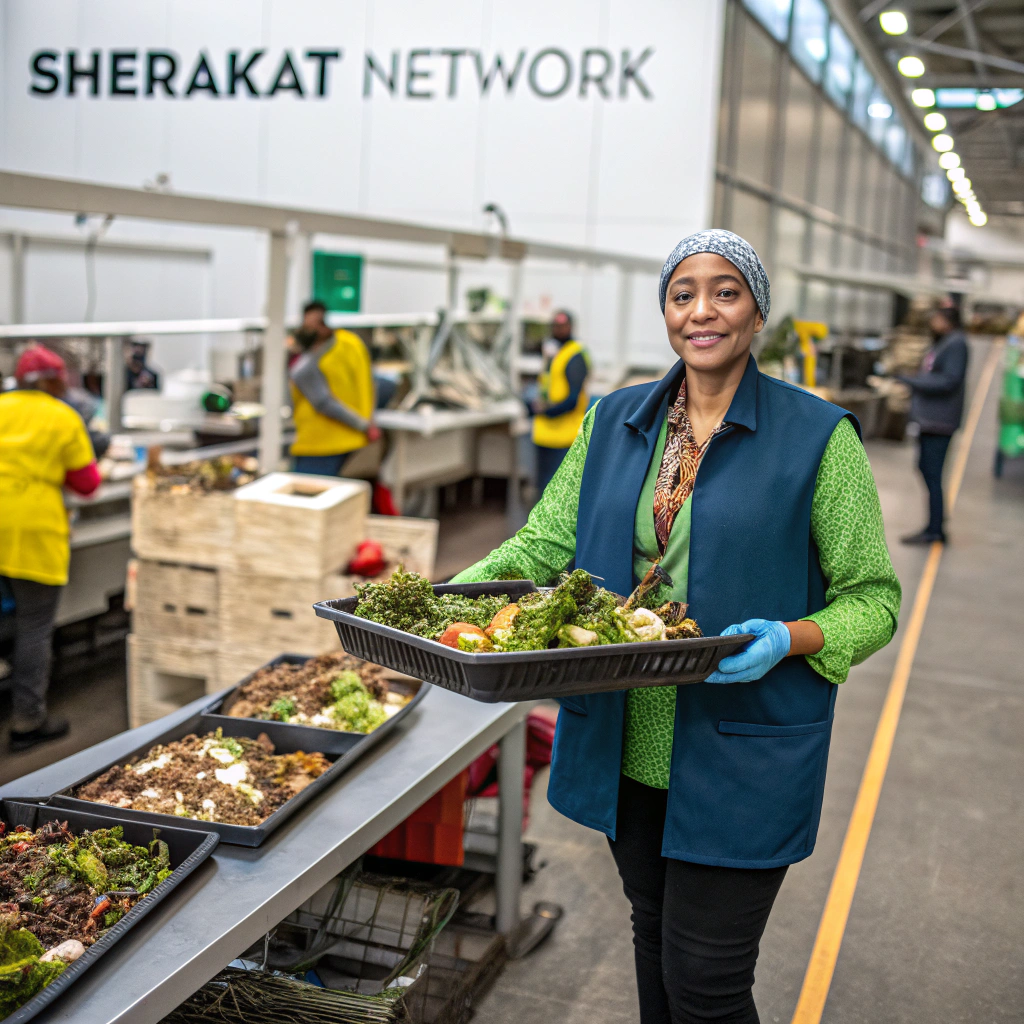
In 2020, Dr. Elara Vance was conducting field research in Costa Rica, studying soil health in pineapple plantations. She was struck by two things: the beauty of the spiky, fibrous pineapple leaves (called pencas) left to rot in massive piles after harvest, and the economic precarity of the farming communities. Each hectare of pineapples yields about 25 tons of leaf waste annually—a disposal headache for farmers and a source of methane emissions.
Simultaneously, the global fashion industry was facing a credibility crisis. Consumers, especially Millennials and Gen Z, were demanding radical transparency and sustainability. A 2025 report by the Fashion Revolution Network indicated that 78% of consumers in key markets would switch to a brand with a verified circular model, even at a premium. Yet, most “sustainable” fashion still relied on recycled plastics or conventional, albeit organic, cottons—materials that still had significant footprint and end-of-life issues.
Elara saw the nexus: an undervalued, abundant biomaterial with unique properties, a social need, and a market hungry for authentic stories of regeneration. Re-Nueva was born not from a design sketchbook, but from a scientific paper and a deep sense of systemic justice.
Key Concepts Defined
- Circular Economy: An economic system aimed at eliminating waste and the continual use of resources. It contrasts with the traditional linear economy (take-make-dispose) by employing reuse, sharing, repair, refurbishment, remanufacturing, and recycling to create a closed-loop system.
- Biomaterial: A material derived from living organisms or their byproducts. In this context, it refers to non-food, plant-based waste streams that can be processed into durable, textile-like materials (e.g., Piñatex from pineapple leaves, Mycelium leather).
- Upcycling vs. Recycling: Upcycling creates a new product of higher value or quality than the original waste material (pineapple leaf to luxury leather). Recycling typically breaks down a material to create something of equal or lesser value (plastic bottle to polyester fiber).
- Regenerative Agriculture: Farming practices that reverse climate change by rebuilding soil organic matter and restoring degraded soil biodiversity. Re-Nueva’s model incentivizes such practices by creating a new revenue stream from farm “waste.”
- Triple Bottom Line (TPL): An accounting framework with three parts: social, environmental (or ecological), and financial. Re-Nueva is built on the principle that all three must be positively impacted.
How It Works (The Circular Blueprint: From Farm to Fashion)
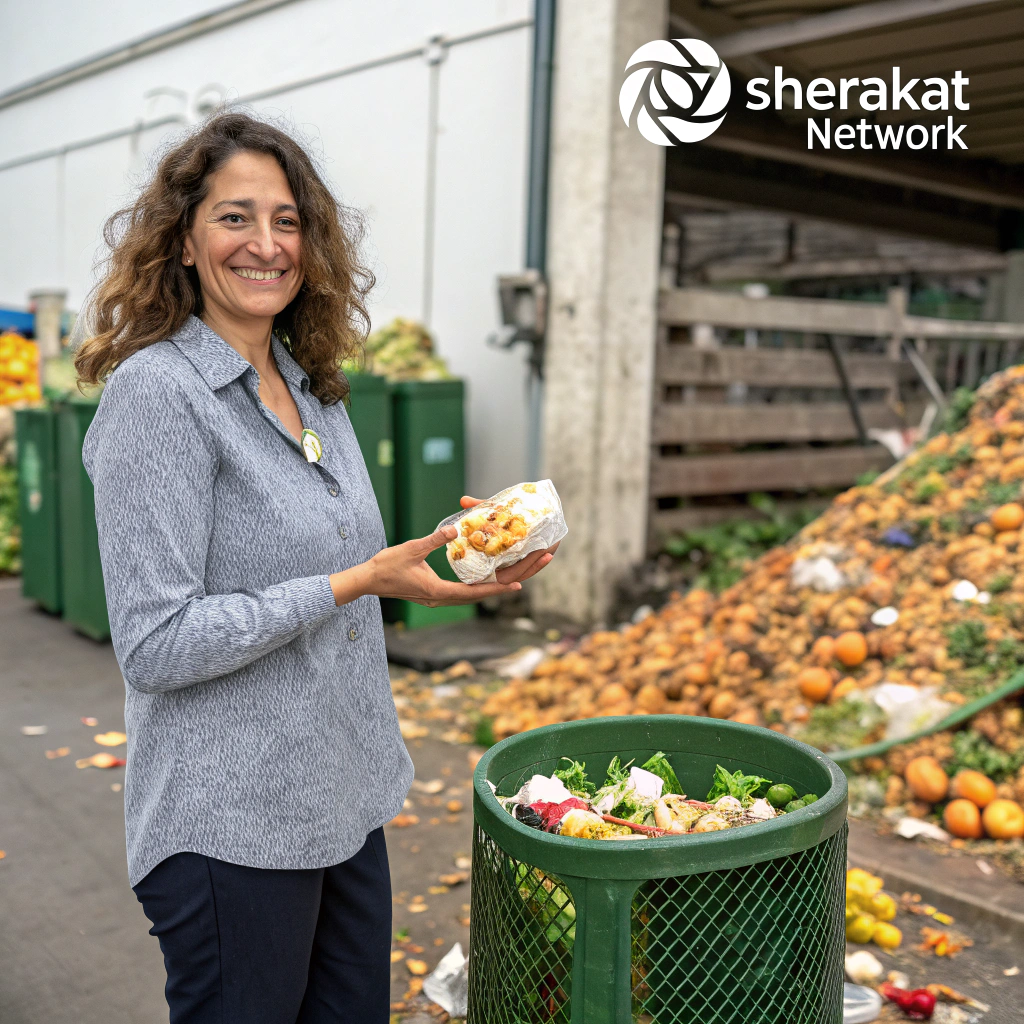
Re-Nueva’s model is a meticulously engineered loop. Here is the step-by-step breakdown of their revolutionary process.
Phase 1: Sourcing & Social Fabric (The Foundation)
- Identifying the Stream: Elara didn’t start with pineapples. She started with a map of agricultural regions and their primary waste streams. She assessed for volume, fiber strength, and seasonal availability. Pineapple leaves, mushroom substrate waste, and mango pits were her top three candidates.
- Building Farmer Partnerships: This wasn’t a purchase order. She co-designed “Waste Harvesting Agreements” with smallholder cooperatives. The agreement guaranteed:
- A fixed, fair price per kilogram of collected leaves (creating supplemental income).
- Training on safe, non-disruptive leaf collection post-fruit harvest.
- A premium for farms practicing regenerative techniques (e.g., no-till farming, polycultures).
- Decentralized Primary Processing: To reduce transport emissions and invest in local economies, she helped set up small, solar-powered “fibre hubs” near farming clusters. Here, leaves are decorticated (fibers separated from the pulp) and dried. This creates local skilled jobs, mainly for women.
Key Takeaway Box: The Power of “And”
Re-Nueva’s sourcing doesn’t extract value; it multiplies it. A single pineapple farm now generates value from: 1) The Fruit (sold to supermarkets), 2) The Leaves (sold to Re-Nueva), 3) The Bio-pulp (from decortication, composted back into the farm’s soil). This is a closed-loop system at the micro-level.
Phase 2: The Alchemy of Transformation (R&D & Production)
- Material Science Lab: Elara’s first hire was a biomaterials engineer. Their lab focused on developing proprietary binding agents derived from plant cellulose and natural latex to turn the raw fibers into a durable, flexible, and waterproof “leather” alternative. The goal was performance parity with high-grade animal leather.
- The “Recipe” Development: Each waste stream required a unique recipe. Pineapple leaf fiber produced a grainy, textured leather. Finely ground mango pit, when mixed with a binder, created a smooth, pebbled finish. Mycelium (mushroom roots) was grown on a substrate of other agricultural wastes to form sheets of ultra-soft, supple material.
- Collaborative Manufacturing: Rather than owning a factory, Re-Nueva partners with a B-Corp certified artisan workshop in Portugal with expertise in leatherworking. They trained these master craftspeople on the specific handling and sewing techniques for the new biomaterials. This preserved artisanal skills while innovating the medium.
Phase 3: Story-Driven Brand & Market Creation
- The “Origin Story” Product Tag: Every Re-Nueva bag has a digital NFC tag. Tapping it with a phone reveals the product’s journey: the farmer who collected the leaves (with a photo and quote), the GPS coordinates of the fibre hub, the artisan who assembled it, and the product’s carbon footprint vs. a leather equivalent.
- Pricing for Value, Not Cost: Items are priced as luxury goods ($300-$1200). The narrative isn’t “cheap because it’s made from waste.” It’s “precious because it embodies a new relationship with our planet.” This attracted a discerning, values-driven clientele.
- Content as Education: Their marketing is 90% education. Blog posts explain soil science. Instagram stories feature farmers. YouTube documentaries detail the material R&D process. They are selling a worldview where fashion is an act of participation in a circular system. For more on crafting compelling narratives for modern audiences, explore insights on culture and society.
Phase 4: Closing the Loop (End-of-Life & Evolution)
- The “Renewal” Program: Customers can return a worn Re-Nueva item. In return, they receive a 20% credit. The returned item is either: a) Refurbished and resold as “Re-Crafted,” b) Deconstructed, with materials ground down to be used as filler in new products, or c) If truly beyond repair, industrially composted, with the customer sent a video of it becoming soil.
- Open-Sourcing (Selectively): In 2024, Re-Nueva open-sourced their mango seed leather “recipe” for non-commercial use by artists and designers. This built immense goodwill, positioned them as leaders, and spurred innovation they could later learn from.
- Supply Chain as a Service (SCaaS): Their latest evolution (2025) is licensing their “Circular Sourcing Platform” to other brands—managing the farmer relationships, fibre hubs, and material processing for a fee. This diversifies revenue and amplifies impact.
Why It’s Important
Re-Nueva’s model is a lighthouse for the future of industry.
- It Decouples Growth from Resource Extraction: Their scalability is tied to the abundance of agricultural waste, not the scarcity of virgin resources. This is a fundamental re-wiring of industrial logic.
- It Creates Distributed, Climate-Resilient Economies: By building value-adding infrastructure (fibre hubs) in farming regions, they reduce rural poverty and create economies less vulnerable to global shocks. This approach aligns with forward-thinking principles of global supply chain management focused on resilience.
- It Makes Sustainability Tangible and Desirable: By creating beautiful, high-status objects from “waste,” they shift the cultural narrative. Sustainability is no longer about sacrifice, but about sophistication and innovation.
- It Provides a Playbook for Intersectoral Innovation: The most complex global challenges—waste, climate, inequality—exist at the intersection of sectors. Re-Nueva demonstrates how to operate in that intersection, blending agri-science, material engineering, fashion design, and community development.
Sustainability in the Future
For Re-Nueva, sustainability is an ever-ascending standard.
- Net-Positive by 2030 Goal: They are moving beyond carbon-neutral to carbon-negative. This involves planting agroforestry trees on partner farms (funded by a per-product surcharge) that sequester more carbon than their entire value chain emits.
- Biological Nutrient Certification: Developing a third-party standard to certify that all their materials, at end-of-life, will safely and completely biodegrade into non-toxic biological nutrients within 180 days in industrial compost.
- AI for Stream Optimization: Piloting AI models to predict regional agricultural waste yields, allowing for dynamic sourcing and production planning to minimize overstock and underutilization.
- The “Living Product” Challenge: Aspiring to meet the rigorous standards of the International Living Future Institute’s Living Product Challenge, which assesses a product’s impact across its entire lifecycle.
Common Misconceptions
- Misconception 1: “Products from waste must be rough, brown, or ‘hippie-ish.'” Re-Nueva’s designs have been featured in Vogue and Elle. Their materials accept dyes brilliantly and can achieve high-gloss, embossed, and textured finishes that rival the finest calfskin.
- Misconception 2: “It’s just a niche for tree-huggers.” The luxury market is driving this shift. LVMH and Kering have dedicated venture arms investing in exactly these types of biomaterial startups. It’s becoming a mainstream supply chain imperative.
- Misconception 3: “You need to be a scientist to start this.” Elara was, but her first partner was a designer, and her second was a supply chain manager. The core skill is systems thinking—the ability to connect dots across domains. You can partner for the technical expertise.
- Misconception 4: “Circular models are inherently less profitable.” Re-Nueva’s gross margins are superior to many conventional fashion brands. Why? Their raw material cost is stable and low (paying for collection labor, not scarce hide), and their story commands a premium price without heavy spending on traditional advertising.
Recent Developments (2024-2025)
- The “Climate Beneficial” Collection: In collaboration with the Rodale Institute, they launched a line where the specific farms use regenerative practices that are scientifically verified to increase soil carbon. Each product comes with a soil carbon certificate.
- Mycelium Breakthrough: Their R&D team, in partnership with a university bio-lab, has developed a method to “guide” mycelium growth to form specific woven patterns and thicknesses, moving from sheets to truly grown-to-shape materials, reducing cutting waste to near zero.
- Policy Advocacy & Standards: Elara now spends 30% of her time advising the EU Commission on the forthcoming “Ecodesign for Sustainable Products Regulation (ESPR),” helping shape policies that will mandate circular principles for all textiles sold in the EU.
- Investment from Strategic Partners: In late 2024, they closed a $3M strategic round not from traditional VCs, but from a consortium including a major Italian leather tannery looking to pivot, and a global food processing corporation with a massive waste stream. This is validation from the very industries they aim to transform.
Success Stories
- The Farmer: Maria’s Story (Costa Rica): Maria, a single mother and pineapple farmer, saw her income increase by 40% from the leaf collection premiums. She used the extra money to put a solar panel on her home and send her daughter to technical college. “The leaves were a nuisance. Now they are a blessing,” she says.
- The Artisan: Giovanni’s Story (Portugal): Giovanni, a third-generation leatherworker, feared his craft was dying. Partnering with Re-Nueva, he learned to work with new materials. “At first, I was skeptical. Now, I am teaching my son that our future is not in the past, but in reimagining it.”
- The Customer & The Ecosystem: A customer’s composted handbag contributed to soil that grew vegetables. This “waste-to-food” story, documented and shared, became their most powerful marketing asset, creating emotional investment far beyond a transactional purchase.
Real-Life Examples
- The Failed Experiment: Their first attempt with banana tree stems failed spectacularly; the fibers degraded too quickly. Instead of hiding it, they published a “Failure Report” on their site, detailing the lessons on lignin content and microbial activity. This radical transparency increased trust exponentially.
- The Supply Chain Crisis That Wasn’t: During the 2023 global logistics crunch, while brands reliant on Chinese vinyl and Italian leather faced months of delays, Re-Nueva’s decentralized, regional model kept production steady. Their resilience became a sales point.
- The “Trash to Treasure” Pop-Up: They held a pop-up store in London where the entrance was through a tunnel filled with pineapple leaves and mushroom waste. The sensory experience—the earthy smell, the texture—immediately communicated the brand’s essence before a single product was seen.
Conclusion and Key Takeaways
Re-Nueva’s journey from a pile of rotting leaves to a million-dollar luxury brand is a parable for our time. It proves that the most innovative business models are those that heal, rather than exploit, the systems they touch.
Final Key Takeaways:
- See Systems, Not Silos: The biggest opportunities lie in the waste streams, inefficiencies, and externalized costs of existing industries. Map the flows of materials and money to find them.
- Design the Loop Before the Product: A circular business is architected from the end backwards—what happens at end-of-life?—not from the start forwards. This dictates material choice, design for disassembly, and customer engagement.
- Authenticity is Your Hard Currency: In a world of greenwashing, verifiable, data-backed stories of impact are your most defensible asset. Invest in traceability technology.
- Profitability and Regeneration are Synergistic: A model that internalizes environmental and social costs (by paying for waste collection, fair wages) can achieve superior margins by creating unparalleled brand loyalty and operational resilience.
- Be a Platform, Not Just a Product: The ultimate scale of your impact may come from enabling others to adopt your model. Think of your systems and knowledge as a future revenue stream.
For entrepreneurs inspired to build ventures with deep partnerships at their core, understanding different business partnership models is essential.
FAQs (Frequently Asked Questions)
1. How do you ensure a consistent supply of waste material with seasonal harvests?
We work across hemispheres and with multiple crop types. When pineapple is out of season in Costa Rica, we scale up mango seed collection from India and mycelium production (which is year-round in controlled environments). Diversification is key.
2. What are the biggest regulatory hurdles for new biomaterials?
Classification. Is it a textile? A composite material? A new substance? We had to work with regulators to create a new product category. Building relationships with standards bodies (like ASTM International) early on is crucial.
3. How do you conduct durability and safety testing?
We subject our materials to the same ISO standards as conventional leather: abrasion resistance, colorfastness, tensile strength, and chemical safety (REACH compliance). We also do accelerated biodegradation testing.
4. What does the cost breakdown look like for a $500 bag?
Approximately: 15% Farmer & Fiber Hub Costs, 25% Material Processing & R&D, 35% Artisan Manufacturing, 15% Marketing, Operations & Logistics, 10% Profit Reinvestment. The raw material cost is a tiny fraction compared to conventional leather.
5. How did you fund the initial, capital-intensive R&D phase?
A combination of a grant from the Ellen MacArthur Foundation’s Circular Design Challenge, prize money from the Global Change Award, and pre-selling our first 100 “Pioneer Edition” bags at a 50% discount to fund the first production run.
6. How do you handle scalability with artisanal production?
We don’t see it as a bottleneck, but as a brand pillar. We scale by adding more artisan partner workshops in different regions, each serving a local market and utilizing local waste streams, maintaining quality and reducing shipping.
7. What’s your approach to IP? Do you patent your processes?
We use a hybrid model. We patent specific, novel chemical binders. But we keep our farmer engagement model and supply chain logistics as open trade secrets, protected by the deep, trust-based relationships we’ve built.
8. How do you communicate the value to a luxury customer used to Italian leather?
We don’t disparage leather. We present a new choice. We talk about innovation, exclusivity (each piece’s unique origin story), and the modern luxury of conscious consumption. It’s an additive narrative, not a subtractive one.
9. Have you faced skepticism from the fashion industry establishment?
Initially, yes. Buyers would say, “It’s interesting, but our customers want real leather.” Our breakthrough was partnering with a forward-thinking boutique in Copenhagen that curated a whole window around “Material Futures.” It sold out in a week, and the data changed minds.
10. How do you measure your social impact quantitatively?
Metrics per farming cooperative: % increase in household income, number of new jobs created (by gender), funds invested in community projects from our premium pool. We report this in our annual Impact Ledger.
11. What happens if a material fails in a customer’s hands?
Our warranty is robust. We replace the item and the returned product becomes our most valuable R&D sample. We perform a forensic analysis to understand the failure point—whether it’s a material flaw, a manufacturing glitch, or extreme use—and improve the system.
12. How do you manage the carbon footprint of shipping globally?
We use 100% carbon-neutral shipping partners, but more importantly, we are building regional micro-factories. Our goal is “grown, made, and sold within a 1000km radius” for key markets like the EU, US, and Asia.
13. What’s the end-of-life infrastructure challenge?
Most cities lack industrial composting. So, for our Renewal program, we provide a prepaid shipping label back to our partner facility. We’re also advocating for municipal textile composting streams and building alliances with waste management companies.
14. How do you stay ahead of “greenwashing” accusations?
By being radically transparent. Our Life Cycle Assessment (LCA) is conducted by a third party and published on our website. We show the negatives alongside the positives. We invite scrutiny, knowing our model is complex but honest.
15. What role does certification play?
We are B Corp Certified, our materials are GOTS-certified for organic processing, and we’re working on Cradle to Cradle certification. These are signals of credibility in a noisy market, but they are a starting point, not the finish line.
16. How do you engage your customers in the circular loop?
Through the digital NFC tag, which is a living interface. It doesn’t just tell the origin story; it allows the customer to initiate the return/renewal process, see the impact of their purchase in real-time, and connect with other owners.
17. What’s your hiring philosophy?
We look for “T-shaped” people: deep expertise in one area (e.g., chemistry) but a broad curiosity and understanding of other disciplines (agriculture, design, ethics). Systems thinkers only.
18. How do you price the waste material for farmers fairly?
We use a formula: Local Minimum Wage + a Premium for Regenerative Practices + a Community Development Surcharge. It’s not tied to the volatile commodities market, providing income stability.
19. What has been the reaction from the conventional leather industry?
A mix of fear, dismissal, and partnership offers. The smart players see the regulatory and consumer tide turning. We’ve had two tanneries approach us to help them develop plant-based lines using our sourcing platform.
20. How do you handle inventory risk with a seasonal, variable supply chain?
We’ve moved to a hybrid model. 70% of our products are made-to-order based on pre-commitments from our retail partners and a waiting list. 30% is “core collection” stocked from our most predictable, year-round streams (like mycelium).
21. What’s your advice for someone wanting to start in a different industry (e.g., construction, packaging)?
The principles are identical. 1) Identify a high-volume, low-value waste stream. 2) Understand its material properties. 3) Find the industry that needs those properties. 4) Build the partnerships to connect the two.
22. How important is the founder’s personal story?
It’s everything in the early days. Elara’s PhD and field experience gave her instant credibility with farmers, scientists, and impact investors. It wasn’t a marketing gimmick; it was her lived reality, which made the mission unshakably authentic.
23. Do you work with food manufacturers directly?
Yes, this is our new frontier. We are in talks with a large juice company to take their mango seed and peel waste directly from their processing plant, creating a symbiotic industrial relationship.
24. How do you balance innovation with commercial viability?
We have a “70/20/10” R&D budget: 70% on incremental improvements to existing materials, 20% on adjacent innovations (e.g., new binding agents), 10% on “moonshots” (e.g., growing a fully formed bag from mycelium).
25. What’s the biggest threat to your business model?
Policy inertia. If governments don’t internalize the environmental cost of linear models through carbon taxes or extended producer responsibility laws, it remains harder for circular models to compete on price alone with polluting incumbents.
26. How do you think about competition from other biomaterial startups?
We welcome it. A rising tide lifts all boats. We’re part of a biomaterials consortium where we share non-competitive research. The enemy is the linear, extractive model, not each other.
27. What’s a key lesson in building trust with farming communities?
Time on the ground, listening. We spent the first six months without a single contract, just living in the communities, understanding their needs and fears. Trust cannot be expedited or outsourced.
28. How do you use data in your supply chain?
IoT sensors in our fibre hubs track moisture content, yield, and energy use. Satellite imagery helps predict crop yields. This data optimizes logistics, ensures quality, and provides verifiable proof points for our impact claims.
29. What personal habit has been most important for your leadership in this space?
Radical humility. I am a scientist, not a omniscient savior. The farmers know their land, the artisans know their craft. My job is to connect, facilitate, and learn.
30. What’s your ultimate vision for Re-Nueva?
To make the concept of “waste” obsolete in fashion. To become the backbone of a new materials economy—not just a brand, but the platform upon which thousands of other beautiful, regenerative products are built.
About the Author
The author is a circular economy strategist and writer for Sherakat Network, specializing in deconstructing regenerative business models. With a background in environmental policy and having advised multiple startups at the intersection of agriculture and technology, they are passionate about storytelling that makes systemic solutions relatable and actionable. They believe the next decade belongs to businesses that are architected as forces of restoration. Join the conversation via our Contact Us page.
Free Resources
To help you explore circular principles:
- Circular Business Model Canvas: An adapted version of the BMC focusing on material flows, end-of-life, and stakeholder partnerships.
- W Stream Mapping Toolkit: A simple guide to mapping waste streams in your local area or industry to identify opportunities.
- Biomaterial Innovator Database: A curated list of global startups, research labs, and suppliers in the biomaterials space.
- Impact Measurement Framework Template: A starter kit for defining and tracking your social and environmental KPIs.
- Regenerative Agriculture 101 Primer: Key concepts and resources to understand the foundation of truly sustainable sourcing. Dive deeper into our curated Resources for more.
Discussion
What’s one “waste stream” you encounter daily (at home, work, or in your community) that you could envision being transformed into something of higher value? What would it become, and who would the partners be in that transformation? Share your ideas below. For a foundational look at starting any new venture, review our guide on starting an online business, which emphasizes lean, iterative development.