



Introduction: The Imperative of Value-First Monetization in a Cluttered Digital World
We exist in a digital economy saturated with noise. Every scroll through social media, every search query, is met with a barrage of ads, sponsored posts, and influencer promotions. Consumer skepticism is at an all-time high; ad-blocker usage is ubiquitous. In this environment, the blunt instruments of traditional advertising—interruptive, impersonal, and often irrelevant—are failing. This creates a profound opportunity for a smarter, more sustainable model: the strategic fusion of content and affiliate marketing.
This is not merely a tactic for making side income. It is a foundational business philosophy for the modern era. It answers the critical question: How do you build a profitable enterprise in a world where trust is the scarcest and most valuable commodity? The answer lies in reversing the traditional sales funnel. Instead of finding customers for your products, you find products for your audience. You build a platform—a blog, a YouTube channel, a podcast—dedicated to solving specific problems, providing genuine education, and offering curated entertainment. Within that trusted environment, you recommend tools, services, and products that you have vetted and believe will further help your audience. When they purchase through your unique link, you earn a commission.
This guide, crafted with the depth and strategic insight characteristic of the Sherakat Network Blog, is your comprehensive blueprint. We will move beyond superficial “top 10 tips” and delve into the operational, psychological, and technical layers of building a business at this intersection. We will ensure every strategy aligns with Google’s ranking factors, particularly E-E-A-T (Experience, Expertise, Authoritativeness, Trustworthiness), and adheres to the strictest protocols of platforms like Google AdSense. This is a 5000-word journey into building not just traffic, but authority; not just clicks, but community; and not just revenue, but a resilient, future-proof digital asset.
Background & Context: The Historical Convergence of Publishing and Performance
To understand the power of this model, we must examine its evolution. Affiliate marketing, born in 1994 with the first clickable banner for PC products, was initially a direct, often clumsy, performance channel. It was the domain of tech-savvy marketers and was frequently associated with spammy email lists and low-quality “review” sites. Content marketing, by contrast, has ancient roots—John Deere’s The Furrow magazine, launched in 1895, is a classic example—but its digital incarnation often struggled to prove direct ROI, seen by many as a “soft” brand-building exercise.
The seismic shift began in the late 2000s and accelerated through the 2010s, driven by three forces:
- Google’s Algorithmic Enlightenment: Updates like Panda (2011) penalized thin, scraped content. Penguin (2012) attacked spammy links. The “Medic” Update (2018) and the subsequent emphasis on E-E-A-T rewarded websites demonstrating real expertise, especially in “Your-Money-Your-Life” (YMYL) topics. This made high-quality, in-depth content a prerequisite for visibility, creating the perfect soil for ethical affiliate marketing to grow.
- Consumer Behavior Evolution: The rise of the “informed buyer.” Today’s consumers complete 70-90% of their buyer’s journey before contacting a seller. They consult reviews, watch comparison videos, and seek tutorials. They don’t want to be sold to; they want to be guided.
- The Creator Economy Boom: Platforms empowered individuals to build audiences around passion and expertise. These creators needed monetization models beyond platform ad shares, leading to a natural and authentic embrace of affiliate partnerships.
This historical convergence has created the present reality: Content is the vehicle, trust is the fuel, and affiliate marketing is the engine that drives sustainable revenue. It’s a model that perfectly aligns with the principles of strategic partnership we advocate for in resources like The Alchemy of Alliance: A Comprehensive Guide to Building a Successful Business Partnership.
Key Concepts Defined: The Foundational Lexicon of Your Business
Before building, we must define our bricks and mortar with precision.
- Content Marketing: A strategic discipline focused on consistently creating and distributing valuable, relevant, and non-promotional content to attract, acquire, and engage a clearly defined and understood target audience, with the objective of driving profitable customer action. It is a pull strategy, building a gravitational field of trust around your brand.
- Affiliate Marketing: A performance-based revenue model structured on partnerships. There are three core actors:
- The Merchant/Advertiser: The company that creates the product or service (e.g., Shopify, Bluehost, Amazon).
- The Affiliate/Publisher: You—the content creator who promotes the merchant’s offer to your audience.
- The Consumer: The customer who clicks your unique tracking link and completes a desired action (a sale, a lead).
The affiliate network (e.g., ShareASale, CJ Affiliate) often acts as the intermediary, handling tracking, payments, and reporting. This structure mirrors various business partnership models we analyze, particularly the revenue-sharing model.
- SEO (Search Engine Optimization): The technical and creative process of improving your website’s visibility in the “organic” (unpaid) results of search engines. For affiliate marketers, SEO is the primary channel for attracting a consistent, intent-driven audience. It’s not about tricking Google; it’s about making your valuable content the most obvious answer to a user’s query.
- The Buyer’s Journey & The Content-Affiliate Funnel: This is the core strategic map. Your content must serve each stage:
- Awareness (Top of Funnel – TOFU): The user realizes a problem. Content: Broad blog posts, “what is” guides, educational videos. Affiliate Role: Minimal. Focus on building trust and capturing emails. Example post: “Understanding Home Automation: A Beginner’s Guide.”
- Consideration (Middle of Funnel – MOFU): The user researches solutions. Content: Product comparisons, “best of” lists, in-depth reviews. Affiliate Role: Core. Contextual, helpful recommendations are key. Example post: “Nest vs. Ring vs. Arlo: 2026 Smart Home Ecosystem Comparison.”
- Decision (Bottom of Funnel – BOFU): The user is ready to buy. Content: Specific product reviews, discount/coupon pages, “how to set up” tutorials. Affiliate Role: Direct. Clear calls-to-action and links to purchase. Example post: “My Hands-On Review of the Arlo Pro 6: 6-Month Performance Report.”
- E-E-A-T (Experience, Expertise, Authoritativeness, Trustworthiness): Google’s qualitative guideline for assessing content quality. It’s the north star for affiliate content.
- Experience: Do you have firsthand, life experience with the topic? “I’ve used this coffee grinder daily for a year.”
- Expertise: Do you have formal or demonstrated knowledge? Showcasing certifications, deep technical explanations.
- Authoritativeness: Are you and your site cited as a source by others? Earning backlinks from reputable sites.
- Trustworthiness: Is your site secure (HTTPS), transparent about authorship, and clear about affiliate disclosures? This is non-negotiable.
How It Works: The 10-Step Operational Blueprint from Zero to Authority
This is your action plan. Each step is a chapter in building your business.
Step 1: The Strategic Foundation – Niche Selection & Validation
Your niche is your universe. Choosing wrong means swimming upstream forever.
- The Passion & Profit Venn Diagram: The intersection of a topic you know/love, an audience with a problem, and products with affiliate programs. Use tools: Google Trends (for interest over time), Amazon Best Sellers (for product demand), Ahrefs’ Keywords Explorer (for search volume and difficulty), and affiliate network directories.
- The “Micro-Niche” Advantage: Instead of “fitness,” consider “home kettlebell workouts for men over 40.” Less competition, higher audience loyalty, easier to establish authority. This focused approach is as critical as choosing the right legal structure, a topic we cover in our guide to Starting an Online Business in 2026.
Step 2: Deep-Dive Audience & Keyword Research
Know your audience better than they know themselves.
- Create Audience Personas: Give them a name, job, goals, frustrations, and where they hang out online (specific subreddits, Facebook groups, forums).
- Keyword Research Matrix: Build a spreadsheet. For each keyword, note: Search Volume, Keyword Difficulty (KD), Search Intent (Informational, Commercial, Transactional), and Content Idea.
- Target the “Money” Pages: Prioritize creating cornerstone “pillar” content for commercial and transactional intent keywords. These are your primary revenue drivers.
Step 3: Platform & Technical Setup
Your digital homestead must be sturdy.
- Website: Self-hosted WordPress.org is the industry standard for flexibility and control. Avoid free platforms (WordPress.com, Blogger) that limit monetization and ownership.
- Hosting: Invest in quality, fast hosting (e.g., SiteGround, WP Engine). Site speed is a direct ranking factor and user experience imperative.
- Essential Plugins: SEO (Rank Math or Yoast SEO), link management (Pretty Links or ThirstyAffiliates), caching (WP Rocket), and security (Wordfence).
Step 4: Content Creation – The Art of the Ultimate Guide
This is where you out-help everyone else.
- The “Skyscraper Technique 2.0”: Find a top-ranking article for your target keyword. Create something that is (a) Longer (aim for 3,000+ words for competitive topics), (b) More Updated (2026 data, latest models), (c) Better Designed (more images, tables, FAQs), (d) More Authoritative (include original data, expert quotes, your own testing photos).
- Structural Perfection:
- Introduction: Hook with the reader’s pain point. State the promise of the article.
- Table of Contents: With jump links for easy navigation.
- Detailed Body: Use H2s and H3s logically. Compare products in dedicated comparison tables.
- Conclusion & Verdict: Summarize key findings. Give a clear, justified “winner” or “best for X” recommendation.
- FAQ Section: Anticipate and answer all related questions. This captures “People Also Ask” snippets.
- On-Page SEO Mastery:
- Title Tag & Meta Description: Include primary keyword, evoke curiosity or benefit.
- URL Slug: Clean, descriptive, contains keyword.
- Header Tags: Semantic structure (H1 for title, H2 for main sections, H3 for subsections).
- Image Optimization (CRITICAL): Every image must be compressed. Use descriptive, keyword-rich file names and alt text.
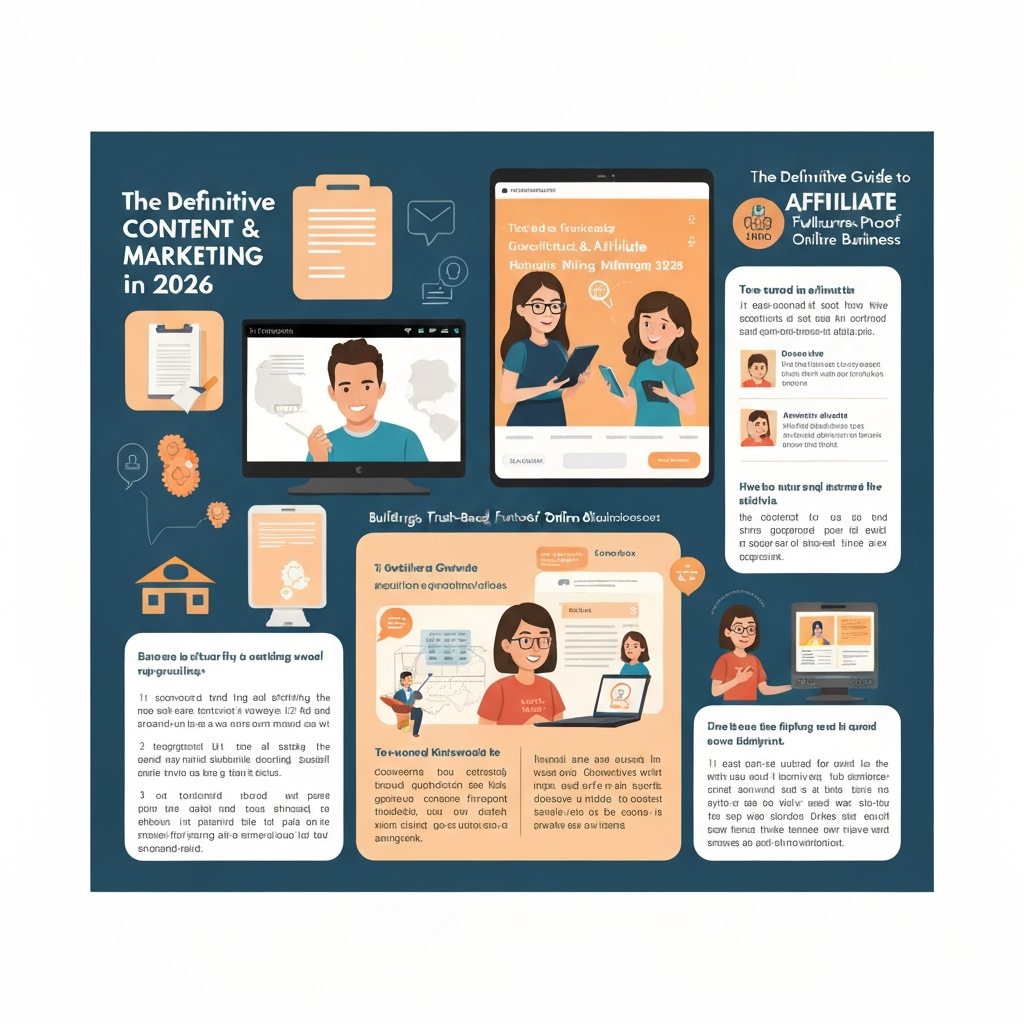
Image: Anatomy of a High-Converting Affiliate Blog Post
- Image File Name: anatomy-high-converting-affiliate-blog-post-infographic.jpg
- Image Alt Text: Infographic breaking down the sections of a successful affiliate marketing article including title, intro, comparison table, product reviews, and conclusion.
- Image Title: Deconstructing a Perfect Affiliate Marketing Blog Post Structure
- Image Caption: Figure 2: Visual breakdown of the essential components that make an affiliate-focused blog post both user-friendly and SEO-optimized.
- Image Description: An infographic divided into sections representing parts of a blog post. It shows a compelling headline (H1), an engaging introduction that addresses the reader, a comparison table with product specs and ratings, detailed review sections with pros/cons for individual products, a clear “winner” or “top pick” section, an FAQ, and a conclusion with a call-to-action. Icons represent SEO elements like meta tags and internal links.
Step 5: Ethical & High-Converting Affiliate Integration
The seamless weave of value and recommendation.
- Disclosure Placement: The FTC requires clear and conspicuous disclosure. Place a brief, unambiguous notice at the VERY TOP of the post: “Disclosure: I may earn a commission if you purchase through links on this page, at no extra cost to you. I only recommend products I have personally used or thoroughly researched.”
- Contextual Linking: The link should feel like a natural next step. Bad: “Buy this camera here.” Good: “After testing in low-light conditions, the Sony A7IV’s autofocus was remarkably accurate, making it my top choice for event photographers [Link to Sony A7IV on Amazon].”
- Use Comparison & “Best For” Tables: This is incredibly user-friendly and promotes transparency. Include columns for Product, Key Features, Price, Our Rating, and “Best For” description.
Step 6: Building Authority Through Promotion & Networking
Publishing is only half the battle.
- Email List Building: From day one, offer a lead magnet (a checklist, a beginner’s guide PDF) related to your niche. This is your owned audience, immune to algorithm changes.
- Strategic Outreach: Practice “ego-bait” outreach. Email influencers or websites you mentioned in your article: “Hi [Name], I just published an ultimate guide on [topic] and included your fantastic product/resource. I thought you might find it interesting.” This can earn social shares and backlinks.
- Community Engagement: Be an active, helpful member in relevant online communities (Reddit, niche forums). Share your content only when it’s a perfect, non-promotional answer to a question.
Step 7: The Analysis & Optimization Flywheel
What gets measured gets managed.
- Google Search Console: Monitor your ranking positions, click-through rates, and indexation status.
- Google Analytics 4: Track user behavior. Which pages have the highest engagement? What’s the affiliate link click-through rate?
- Affiliate Network Reports: Analyze which products and merchants are converting. Double down on what works.
- Content Refreshing: Every 6-12 months, update old posts. Update prices, add new products, refresh screenshots, and improve the content based on new data.
Why It’s Important: The Multifaceted Value Proposition
This model’s importance transcends revenue generation. It represents a paradigm shift in digital business:
- Democratization of Entrepreneurship: It drastically lowers the financial barrier to starting a business, shifting the required capital from money to knowledge, time, and effort.
- Creation of Digital Real Estate: Your content library is an appreciating asset. A single, well-ranking article can generate passive income for years, much like a rental property.
- Alignment with Ethical Commerce: It incentivizes honesty. Your long-term success depends on your audience’s trust, which is destroyed by promoting poor products. You become a curated filter for quality.
- Risk Distribution: As a publisher, you carry no inventory, handle no logistics, and have no customer service overhead. Your primary risk is time investment.
- Foundation for Expansion: A successful affiliate site is a springboard. It can lead to creating your own digital products, coaching services, or sponsored partnerships, using the audience and authority you’ve built. This strategic scaling is similar to the principles discussed in our analysis of joint venture and equity partnership models.
Sustainability in the Future: Navigating the 2026 Landscape and Beyond
The future is bright for those who adapt. Here are the key trends shaping sustainability:
- The AI-Assisted, Human-Authored Imperative: AI tools (like GPT-4, Claude) will become powerful research assistants, outline generators, and editors. However, Google’s algorithms are increasingly sophisticated at detecting—and devaluing—content lacking human experience and expertise. The future-winning content will be AI-informed but human-created, infused with personal stories, unique testing methodologies, and nuanced opinions. Your firsthand experience becomes your ultimate competitive moat.
- Video & Interactive Content as Primary Channels: YouTube is the world’s second-largest search engine. Platforms like TikTok are integrating e-commerce seamlessly. Your written blog post should be part of a content ecosystem—the transcript and SEO anchor for a detailed YouTube review video, which in turn drives traffic back to your site for the affiliate links. Interactive content (e.g., “Which blender is right for you?” quizzes) will drive high engagement and qualified leads.
- Hyper-Personalization & First-Party Data: With the death of third-party cookies, your email list and community data are gold. Use them to segment your audience and provide hyper-personalized product recommendations, increasing conversion rates exponentially.
- Increased Regulatory Scrutiny: Disclosure requirements will become stricter globally. Proactive, unambiguous ethics will be a brand advantage. Sites that hide disclosures in footnotes or use vague language will face penalties from regulators and search engines.
- The Rise of “Conscious Commerce”: Audiences will increasingly align with creators whose values match their own. Sustainability, ethical manufacturing, and data privacy will become important factors in product recommendations. Your content must reflect this conscious curation.
Common Misconceptions Debunked: Separating Myth from Reality
- “It’s Saturated.” While popular, true saturation is in low-quality content. The market for exceptional, detailed, trustworthy content is perpetually undersupplied. There’s always room for a new authoritative voice.
- “You Need a Massive Social Media Following.” False. Social media is a promotional channel, not the foundation. Sustainable traffic comes from search engines (SEO). A site with zero social followers but great SEO can generate thousands of visits daily.
- “All You Do Is Paste Links.” This is the fastest path to failure. Modern affiliate marketing is about context creation, audience building, and systems management. It’s a multifaceted business operation.
- “Amazon Associates is Enough.” Relying solely on Amazon (with its low 1-4% commissions) is a fragile strategy. Diversify with higher-commission programs from software (SaaS), digital products, and direct merchant partnerships. Explore the variety of distribution and revenue-sharing partnership models available.
- “It’s Passive Income.” It is scalable and automated income, but not passive. It requires upfront work (creating content, building links) and ongoing maintenance (updates, promotion). The “passive” part is that this work continues to pay dividends long after it’s done.
Recent Developments & Innovations Shaping the Field
- Ad Blockers & Privacy-First Browsers: The proliferation of tools like Brave browser and sophisticated ad blockers is making traditional display advertising less effective, further increasing the value of native, content-integrated affiliate recommendations.
- Google’s “Product Reviews” Update: This series of updates specifically rewards in-depth, firsthand product review content that provides “insightful analysis and original research.” Simply summarizing manufacturer specs will no longer rank.
- Affiliate Program Sophistication: Merchants are offering smarter commissions (recurring commissions for subscriptions, higher payouts for top performers), better tracking technology, and richer creative assets (3D models, demo videos) for affiliates.
- The “LinkedIn for Affiliates” – Impact.com: Networks like Impact are moving beyond simple tracking to become partnership management platforms, facilitating deeper collaboration between brands and content creators.
- Voice Search Optimization: As smart speakers proliferate, optimizing content for conversational, question-based queries (“Alexa, what’s the best robot vacuum for pet hair?”) will become increasingly important.
Success Stories & Real-Life Case Studies
1. The Authority Site: “Backlinko” by Brian Dean
While not a traditional “affiliate site,” Backlinko masterfully uses affiliate marketing. Brian’s legendary “SEO That Works” training course is promoted almost exclusively through his immensely valuable, free blog content on advanced SEO techniques. He built unparalleled trust and authority first, making his high-ticket affiliate recommendation a natural, welcomed next step for his audience. This demonstrates the “value first” principle at its pinnacle.
2. The Niche Site Empire: “The Wirecutter” (A New York Times Company)
The quintessential case study. Founder Brian Lam applied a journalistic ethos to product reviews: buy everything, test it rigorously, be transparent about methodology. They prioritize the user’s need to make the best purchase over optimizing for the highest commission. This uncompromising focus on E-E-A-T led to massive trust, allowing them to scale into a vast content empire covering countless niches, ultimately leading to a $30+ million acquisition. It proves that integrity is the ultimate business model.
3. The Community-Driven Creator: “Graham Stephan” (YouTube)
A real estate agent turned finance YouTuber, Graham built a multi-million dollar business largely through affiliate marketing for financial products (credit cards, investing apps). His success stems from transparently sharing his own income and expenses, making finance relatable. He discloses affiliate relationships clearly and maintains a reputation for giving honest advice, even if it means recommending a product with a lower commission. His community trusts him because he’s one of them.
Conclusion & Key Takeaways: Your Journey Begins Now
The integration of content and affiliate marketing is more than a monetization strategy; it is a blueprint for building a meaningful, resilient, and influential business in the 21st century. It rewards patience, integrity, and a genuine desire to serve an audience.
Your Key Takeaways for Immediate Action:
- Start with Strategy, Not a Link: Your niche, audience, and content plan are the bedrock. Invest more time here than anywhere else.
- Quality is Your Only Marketing Plan: Create content so comprehensive and helpful that it becomes the de facto resource on its topic. This is your single most important task.
- Trust is Non-Transferable & Non-Negotiable: Guard it with your life. Disclose, be honest about flaws, and only promote what you believe in. This builds the psychological safety for your audience to buy through you, much like the foundational trust needed in any strategic alliance.
- Embrace the Marathon Mindset: This is a 2-3 year journey to meaningful results. Celebrate small wins (first click, first sale) but keep your focus on the long-term asset you are building.
- Systems Over Goals: Don’t just set a revenue goal. Build systems for weekly content creation, keyword research, email nurturing, and performance analysis. The systems will achieve the goals.
The digital landscape is noisy, but the demand for clarity, honesty, and expert guidance has never been higher. You have the opportunity to be that guide. Begin by solving one small problem for one well-defined audience. Document your journey, be relentlessly helpful, and build with integrity. The path outlined in this guide, combined with the broader entrepreneurial wisdom found in our Sherakat Network Resources hub, provides the map. The first step is yours to take.
For continued learning and support on your entrepreneurial journey, including managing the mental demands of building a business, we recommend exploring external resources like The Daily Explainer’s Complete Guide to Psychological Wellbeing. And as always, for direct engagement, visit our Contact Us page.
FAQs: Answering Your Critical Content & Affiliate Marketing Questions
Q1: What is the minimum budget required to start an affiliate marketing site?
A: You can start for under $150/year. This covers a domain name (~$12/year), basic shared hosting (~$100/year), and a premium WordPress theme (one-time ~$50). Your primary investment will be time, not money.
Q2: How do I choose between Amazon Associates and other affiliate networks?
A: Use Amazon for its vast product range and high trust factor, especially when starting. However, actively seek out higher-commission programs (often 20-50%) for digital products, software, and direct brand partnerships. A diversified portfolio protects your income.
Q3: Can I get banned from AdSense for using affiliate links?
A: No, using affiliate links does not violate Google AdSense policies. However, you must ensure your site complies with all other policies: have sufficient original content, avoid deceptive layouts (mixing ads and content to confuse users), and adhere to general webmaster guidelines. Your affiliate content should be primary; AdSense is a secondary, complementary revenue stream.
Q4: What’s the single biggest SEO mistake new affiliate sites make?
A: Keyword cannibalization. Creating multiple posts targeting the same or very similar primary keywords, causing your own pages to compete against each other in search results. Solve this by carefully mapping one primary keyword to one definitive “pillar” page.
Q5: How do I write a product review when I can’t afford to buy the product?
A: Never fake a review. If you can’t purchase it, you have options: 1) Write a “roundup” based on exhaustive research from expert sources, customer reviews, and spec comparisons, clearly stating it’s a “research-based” guide. 2) Start with products you can afford or access. 3) Apply for review units from smaller brands as your site grows.
Q6: Is it better to have a broad site or a very narrow niche site?
A: For beginners, narrow is nearly always better. It’s easier to become an authority, build a loyal audience, and understand the product landscape. You can always expand into adjacent niches later (a site on “kettlebell training” can expand to “home gym flooring” and “protein for strength”).
Q7: How often should I publish new content?
A: Consistency trumps frequency. A sustainable schedule you can maintain for years (e.g., one high-quality, 2500+ word post per week) is far better than publishing daily for a month and then burning out. Google rewards sites with a steady, growing stream of quality content.
Q8: What are “dofollow” vs. “nofollow” links, and what should I use for affiliates?
A: A dofollow link passes “SEO juice” (ranking authority) to the linked site. A nofollow link (rel="nofollow") tells search engines not to pass authority. You should add rel="nofollow" to all affiliate links. This is an SEO best practice and a clear signal to Google that the link is commercial/paid, maintaining the integrity of your site’s link profile.
Q9: How can I speed up the time it takes to get traffic from Google?
A: Focus on low-competition, long-tail keywords initially. These have lower search volume but are much easier to rank for, allowing you to get traffic and build authority signals faster. Also, build a few quality backlinks through guest posting or resource link outreach to trusted sites like our Sherakat Network Blog.
Q10: Should I create a separate “Buyer’s Guide” page or integrate reviews into blog posts?
A: Both. Have detailed, individual review posts (targeting “Product X review”). Then, create a comprehensive “Best [Category] Buyer’s Guide” that summarizes and links to your individual reviews. This internal linking structure is powerful for SEO and user experience.
Q11: What is an “affiliate disclaimer,” and where exactly should it go?
A: It’s a statement disclosing your financial relationship with merchants. It must be “clear and conspicuous.” The best practice is to place a short, bold disclaimer at the very top of the post, before the content, so no user can miss it. You can also have a more detailed legal disclaimer page linked in your footer.
Q12: Can I use affiliate marketing on a podcast?
A: Absolutely. It’s highly effective. Mention the product/service naturally during the conversation, and provide your unique affiliate link in the show notes. Verbally disclose the relationship to your listeners during the episode.
Q13: How do I track which content is actually making money?
A: Use your affiliate network dashboard to see which links/clicks convert. Use Google Analytics to track which pages drive the most traffic to those product pages. Combine this data. A plugin like Pretty Links can also help you track clicks on your own domain before redirecting to the merchant.
Q14: What should I do if an affiliate program I promote suddenly changes its terms or commission structure?
A: This is common. Diversification is your hedge. If a program becomes unfavorable, update your content to reflect the change, consider replacing it with a better alternative, and focus on promoting your other affiliate partners.
Q15: Is it worth paying for an SEO tool like Ahrefs or SEMrush as a beginner?
A: Initially, you can use free tools (Google Keyword Planner, Ubersuggest’s free queries, AnswerThePublic). However, once you are serious and have a small budget, investing in a professional tool is one of the best decisions you can make. The data quality and efficiency gains are immense.
Q16: How do I write compelling product descriptions that aren’t just copied from Amazon?
A: Write from the user’s experience. Instead of listing specs (“500 watts”), describe the benefit (“Powerful enough to crush ice and frozen fruit in seconds for smooth, creamy smoothies”). Compare it to everyday objects (“Its footprint is about the size of a sheet of printer paper”). Use sensory language.
Q17: What’s the role of social media Pinterest for an affiliate site?
A: Pinterest is a visual search engine and can be a massive traffic driver for niches like home decor, fashion, food, and DIY. Create stunning vertical pins for your articles and link them back to your site. It’s a long-term, evergreen traffic source.
Q18: How do I handle commenting on my affiliate blog?
A: Enable comments to build community. Use a plugin like Akismet to filter spam. Engage with comments thoughtfully. If someone asks for a recommendation not in the article, consider updating the article to include it, which helps future readers.
Q19: What is “link cloaking,” and is it ethical?
A: Link cloaking (using a plugin to make yoursite.com/recommends/xyz redirect to a long affiliate link) is primarily for aesthetics and tracking. It is ethical only if the redirect is immediate and the user still ends up on the merchant’s site, and you still disclose the affiliate relationship. It does not hide the destination.
Q20: When should I consider hiring help for my affiliate business?
A: When administrative tasks (formatting posts, basic graphic design, editing) are taking more than 20-30% of your time and preventing you from doing high-value work (strategy, writing, promotion). Start with a part-time virtual assistant.
Q21: How does page speed specifically affect affiliate conversions?
A: A 1-second delay in page load time can lead to a 7% reduction in conversions. Users are impatient. If your site with “Buy Now” links is slow, they will leave before clicking. Use tools like GTmetrix and PageSpeed Insights to optimize.
Q22: Can I promote competing products from the same niche on my site?
A: Yes, and you often should. Providing fair comparisons builds trust. Just ensure each recommendation is justified and tailored to different user needs (e.g., “Best for Budget,” “Best for Professionals”).
Q23: Where can I learn about the legal and tax implications of affiliate income?
A: This is crucial. Income is taxable. Rules vary by country and state. Consult a local accountant or tax professional who understands online business. Keep meticulous records of your earnings and expenses from day one. For broader business legality context, our resource on types of business partnerships may provide useful parallels.
This is a topic that’s near to my heart… Cheers! Exactly where are your contact details though?
What’s up Dear, are you actually visiting this website on a regular basis,
if so then you will without doubt take fastidious knowledge.
Hello, i think that i saw you visited my web site so i
came to “return the favor”.I’m attempting to find things
to enhance my web site!I suppose its ok to use a
few of your ideas!!
Hmm it appears like your site ate my first comment (it was super long) so I guess I’ll just sum it up what I submitted and say, I’m thoroughly enjoying
your blog. I too am an aspiring blog blogger but I’m still new to the whole thing.
Do you have any recommendations for beginner blog writers?
I’d certainly appreciate it.
With havin so much content do you ever run into any problems of
plagorism or copyright infringement? My blog has a lot of exclusive content I’ve
either written myself or outsourced but it looks
like a lot of it is popping it up all over the web without my
permission. Do you know any methods to help protect against content from being ripped off?
I’d certainly appreciate it.