



Introduction: The Trust Crisis and the Ethical Imperative
We are at an inflection point in digital commerce. Consumer trust, the most fragile yet valuable currency online, is eroding. A 2025 Edelman Trust Barometer revealed that nearly 60% of consumers default to distrust until a brand proves itself otherwise. This crisis is fueled by data scandals, opaque influencer marketing, and a lingering perception of affiliate marketing as a realm of biased reviews and hidden agendas.
In this environment, ethics are no longer a virtuous ideal but a critical business strategy. For the affiliate marketer, this means that building a sustainable, future-proof business is inextricably linked to operating with radical transparency, genuine fairness, and a long-term commitment to audience welfare over short-term commissions. This is the “Trust-First” model.
This fourth article in our Sherakat Network series moves beyond tactics and into philosophy and framework. We will construct a robust ethical engine for your affiliate business—one that powers sustainable growth, fosters unshakeable loyalty, and ensures compliance in an era of increasing regulation and AI complexity. This 5000-word guide is for the builder, the creator, and the entrepreneur who understands that the highest ROI comes from integrity.
Background: From Spammy Links to Stewardship – The Maturing of an Industry
The affiliate marketing industry’s journey mirrors the broader digital awakening:
- The Wild West (1990s-2000s): Characterized by spam emails, pop-up ads, “get rich quick” schemes, and little regard for user experience or disclosure. The model was purely transactional.
- The Content Renaissance (2010s): The rise of quality bloggers and creators merged content with affiliate links. However, ethical gray areas persisted—hidden disclosures, biased “best of” lists based on highest commission, and a focus on volume over value.
- The Regulatory & Algorithmic Reckoning (2020s): The FTC cracked down on inadequate disclosures. Google’s E-E-A-T framework began rewarding trust and expertise. GDPR and CCPA reshaped data collection. Consumers became savvier and more demanding.
- The Trust-First Era (2025+): We are now entering a phase where ethical operation is the primary competitive moat. Success belongs to those who view their audience not as a “monetizable asset,” but as a community to serve and protect. This aligns with the principles of enduring value explored in our guide on building a successful business partnership, where mutual benefit and transparency are paramount.
Core Ethical Principles for the Modern Affiliate
These principles form the foundation of your ethical engine:
- Radical Transparency: Going beyond legal minimums in disclosure. Being open about business models, revenue sources, and potential biases.
- Audience-First Prioritization: Placing the needs, questions, and best interests of your audience above all else, including commission potential.
- Fairness & Objectivity: Striving to present balanced viewpoints, acknowledging product flaws, and comparing options fairly, even if it means promoting a lower-commission product that is a better fit.
- Data Stewardship: Treating audience data (email, analytics) with respect, obtaining clear consent, and prioritizing security and privacy.
- Sustainable Value Creation: Focusing on creating content and recommendations that have long-term utility, reducing digital waste, and building a business that can thrive for decades, not just quarters.
The Ethical Framework in Action: A Step-by-Step Implementation Guide
Phase 1: Foundation – Your Ethical Code of Conduct
Step 1: Draft a Public-Facing Ethics Policy.
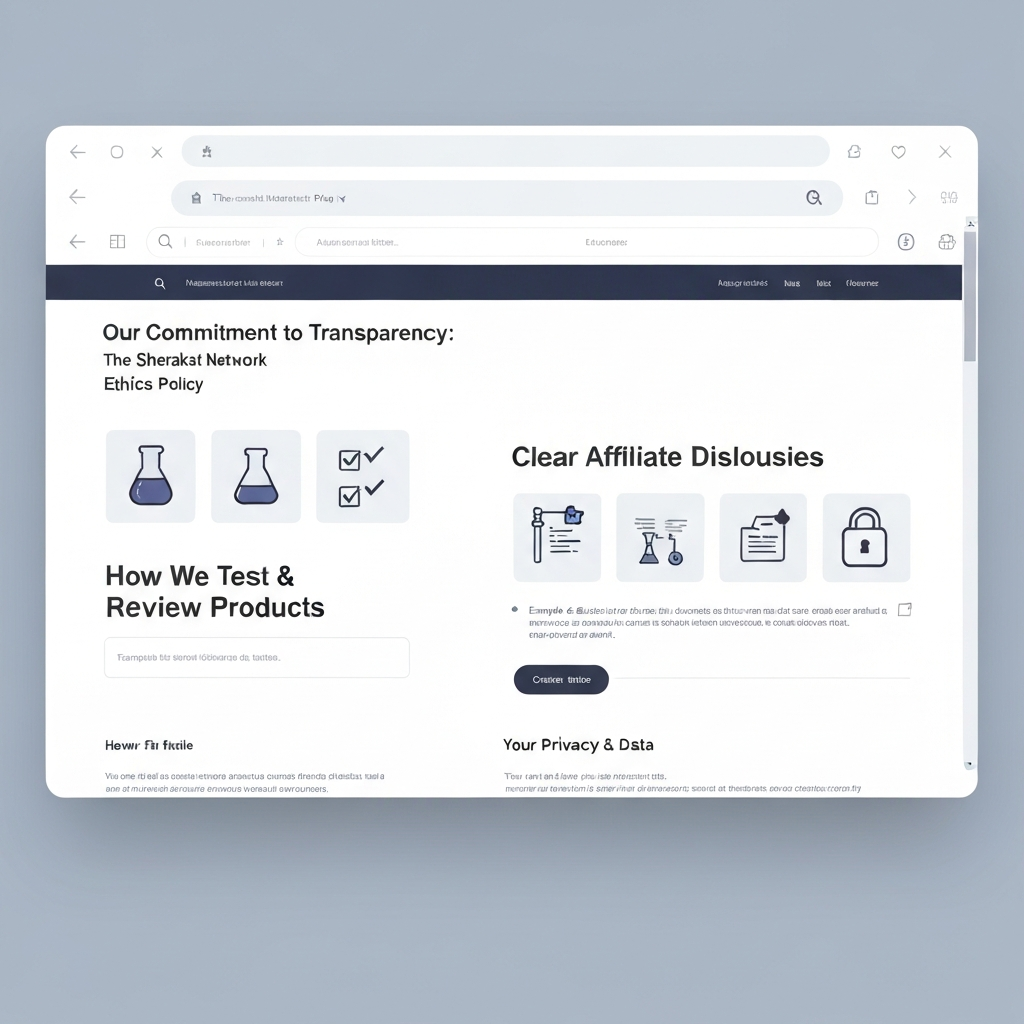
This isn’t just internal. Publish a page on your site titled “Our Ethics” or “How We Make Money & Maintain Trust.” It should detail:
- Our Review Philosophy: How you select, test, and rate products.
- Our Disclosure Promise: A clear statement on how and where you disclose affiliate relationships.
- Our Privacy Pledge: How you handle user data.
- Our Conflict of Interest Policy: How you handle gifts, free products, or owned brands.
- Our Update Policy: Your commitment to keeping content accurate.
Phase 2: Content Creation – The Heart of Ethical Practice
Step 2: Implement Unmistakable, Proximate Disclosure.
The FTC mandates clear and conspicuous disclosure. “Clear and conspicuous” means:
- Proximity: The disclosure must be before the affiliate link, ideally at the very beginning of the article or video.
- Clarity: Use unambiguous language. Avoid “partner links” or “supported by.” Use: “Disclosure: We may earn a commission if you make a purchase through links on this site, at no extra cost to you. We only recommend products we have independently tested and believe in.”
- Multi-Format Reinforcement: Use it in text, verbally in videos, and in podcast show notes.
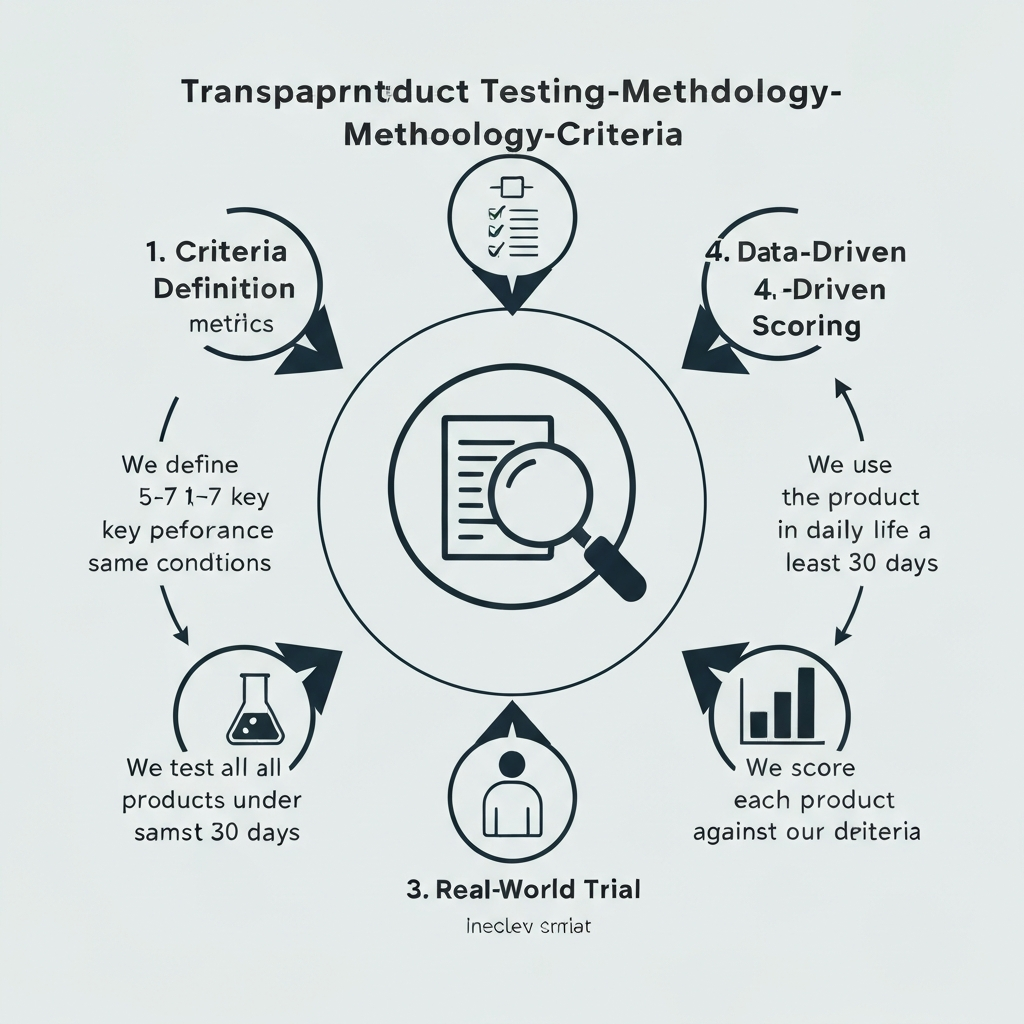
Step 3: Adopt a Rigorous, Documented Review Methodology.
Move beyond subjective opinion to a documented process.
- Create a “Testing Methodology” Page: Detail your testing criteria. For a camera site: “We evaluate based on: 1) Image Quality in Low Light (lab scores), 2) Autofocus Speed & Accuracy (real-world tracking tests), 3) Ergonomics (user panel feedback).”
- Show Your Work: Use photos of you using the product, screenshots of data, video clips of tests. This proves Experience.
- Create Standardized Comparison Tables: Use the same criteria to compare all products in a category. This forces objectivity.
Step 4: Prioritize “Best Fit” Over “Best” or “Highest Commission.”
- Use “Best For” Framing: Instead of one “best” product, categorize: “Best for Beginners,” “Best for Budget,” “Best for Professionals.”
- Explain the “Why”: For each recommendation, explicitly state which user profile it suits. “While Product A has more features, its complex interface makes it a poor choice for beginners, who would be better served by Product B.”
Phase 3: Technology & Data – Ethical Use of AI and Privacy
Step 5: Establish an Ethical AI Use Policy.
AI is a powerful tool, but its use must be transparent.
- Disclose AI Assistance: If you use AI for research, outlining, or editing, state it. A simple note: “This article was crafted with the assistance of AI research tools, but all testing, conclusions, and recommendations are based on our own expert analysis and experience.”
- Never Use AI to Fake Experience: AI should not be used to generate fictional first-person reviews, fake testing data, or impersonate expertise you lack. This is a fundamental breach of trust and violates Google’s E-E-A-T guidelines.
- Human-in-the-Loop: The final editorial judgment, nuanced insight, and ethical framing must always be human.
Step 6: Implement a Privacy-First Data Strategy.
With the demise of third-party cookies, first-party data is key—but must be handled ethically.
- Clear Consent for Email Lists: Use double opt-in. Clearly state what subscribers will receive and how often.
- Limit Data Collection: Only collect what you need. Don’t ask for excessive personal information in exchange for a lead magnet.
- Be Transparent About Tracking: In your privacy policy, explain in simple language what affiliate tracking cookies do (e.g., “These cookies allow our partners to know you came from our site if you make a purchase”).
- Prioritize Security: Use HTTPS, keep software updated, and consider privacy-focused analytics tools.
Why an Ethical Foundation is Your Ultimate Business Advantage
- Superior Google Rankings: Google’s systems are designed to identify and reward trustworthy, expert sources. A demonstrably ethical site strongly satisfies the T (Trustworthiness) in E-E-A-T, giving you a ranking edge over less transparent competitors.
- Higher Conversion Rates: Trust translates directly to sales. An audience that believes you have their best interests at heart is more likely to act on your recommendations. This builds long-term customer value, a concept central to sustainable business models like certain revenue-sharing partnership structures.
- Crisis Resilience: When mistakes happen (e.g., a promoted product has a recall), an established reputation for ethics gives you the goodwill to address the issue openly without destroying your brand.
- Attraction of Better Partnerships: Ethical brands want to work with ethical publishers. You’ll attract higher-quality affiliate programs and potential strategic alliances that align with your values.
- Personal Fulfillment & Brand Legacy: Building a business you are proud of, that genuinely helps people, provides a deeper sense of purpose and creates an asset with lasting positive impact.
Sustainability: Building a Business for the Next Decade
An ethical business is inherently a sustainable one. Here’s how to future-proof your operation:
- Diversify Revenue Thoughtfully: Don’t rely on one network or product category. Build a portfolio of affiliate partnerships, your own digital products, and perhaps select sponsorships. This mirrors the risk mitigation found in diversified business partnership models.
- Invest in Evergreen Content: Focus on creating cornerstone content that answers fundamental questions in your niche. This “evergreen” content continues to attract traffic and generate revenue for years, providing a stable foundation.
- Focus on Community, Not Just Traffic: Build an engaged community via email, comments, or a forum. A community is less susceptible to algorithm changes than passive search traffic and provides direct feedback and loyalty.
- Plan for Exit or Succession: Even if you don’t plan to sell, structure your business as a sellable asset. Clear ethics, documented processes, and diversified traffic make your site far more valuable on the marketplace. For inspiration on structuring for longevity, see our guide on how to Start an Online Business in 2026 with a legacy mindset.
Navigating Common Ethical Dilemmas
- The Free Product Dilemma: Should you accept free products for review? If you do, it must be disclosed (“The manufacturer provided this unit for testing, but did not influence our review”). Better yet, state a policy: “We purchase all products ourselves to ensure complete editorial independence,” which is a powerful trust signal.
- The Negative Review Dilemma: What if you must publish a negative review of a product from a major affiliate partner? Publish it. Your loyalty is to your audience. A fair negative review often builds more trust than a dozen positive ones. Frame it constructively: “Who this product is NOT for…”
- The Data Monetization Dilemma: Should you sell your email list? Absolutely not. This is a profound breach of trust. Your list is a direct channel to your community, not a commodity.
The Future: Ethics in the Age of Hyper-Automation
- Blockchain for Transparency: Future affiliate networks may use blockchain to provide immutable, transparent records of clicks and conversions, reducing fraud and increasing trust between publishers and merchants.
- AI-Driven Personalization vs. Privacy: Advanced AI will allow for hyper-personalized recommendations, but will raise privacy concerns. The ethical affiliate will use these tools only with explicit, informed consent and clear opt-out controls.
- Regulation of Algorithmic Bias: As AI curates more content, regulations may emerge to ensure affiliate recommendations aren’t unfairly biased by hidden algorithms. Proactive ethical auditing of your own tech stack will be crucial.
Success Story: “The Wirecutter” – An Ethical Case Study in Scale
We cited The Wirecutter before for authority; their ethical framework is equally instructive. Founded by Brian Lam, their core ethic was: “Spend the time to get it right, and when you do, tell everyone.”
- Radical Transparency: They buy all products themselves. Their testing methodologies are published. They are brutally honest in reviews.
- Audience-First: They famously have turned down millions in advertising revenue to preserve editorial independence. They prioritize what’s best for the reader, full stop.
- Sustainable Value: Their content is built to last. A single review is the result of hundreds of hours of testing and research, intended to be the final word for years. This created a business valuable enough for The New York Times to acquire for over $30 million. It proves ethics and profitability are not just compatible—they are synergistic.
Conclusion & Key Takeaways: The Path of the Ethical Builder
In a digital landscape rife with shortcuts and hidden agendas, choosing the ethical path is a declaration of strength and a commitment to legacy. It is the hardest path initially, demanding more rigor, more transparency, and sometimes passing on easy revenue. But it is the only path that leads to a business that is respected, resilient, and truly rewarding.
Your Ethical Builder’s Checklist:
- Codify Your Ethics: Write them down and publish them. Make them your non-negotiable standards.
- Disclose, Disclose, Disclose: Err on the side of over-disclosure. Make it impossible for anyone to miss your affiliate relationships.
- Methodology Over Opinion: Build your content on a foundation of documented process and verifiable data.
- Serve the Human, Not the Algorithm: Write for your audience’s deepest needs, even if it conflicts with a trending keyword or high-commission product.
- View Technology as a Tool for Good: Use AI and data to enhance your ethical service, not to replace human judgment or exploit privacy.
The future belongs to trustworthy guides. By installing an ethical engine at the core of your affiliate business, you become one. For further resources on principled business growth, explore the Sherakat Network Blog, and remember that maintaining this integrity requires personal resilience, a topic well-covered in external resources on psychological wellbeing.
FAQs: Navigating the Complexities of Ethical Affiliate Marketing
Q1: What is the absolute minimum required by the FTC for affiliate disclosures?
A: The disclosure must be clear and conspicuous. It should be placed close to the affiliate link, use unambiguous language like “affiliate link” or “commission,” and be understandable to the average reader. It cannot be buried in a terms of service page or hidden in a footer. Proximity and clarity are key.
Q2: Do I need to disclose affiliate links in social media posts?
A: Yes. On platforms like Instagram or TikTok, you must use the platform’s built-in disclosure tools (e.g., “Paid partnership” label) and include a clear text disclosure like “#ad” or “#affiliate” at the beginning of your caption. In stories, superimpose the text “Ad” or “Affiliate” clearly on the visual.
Q3: Is it ethical to use an affiliate link to a product I haven’t personally used?
A: It is a high-risk practice that erodes trust. If you haven’t used it, you cannot speak to its experience. You can, however, create a “roundup” based on rigorous research of expert reviews and specifications, but you must clearly state: “This guide is based on comprehensive research and expert consensus, not firsthand testing.” Never imply personal experience where none exists.
Q4: How do I handle affiliate programs that use cookie-stuffing or other shady tracking practices?
A: Avoid them immediately. Partnering with unethical merchants reflects poorly on you and risks your reputation. Research networks and merchants. Stick with reputable networks (ShareASale, CJ, Impact) and be wary of programs promising unusually high commissions with vague tracking.
Q5: My audience is global. Which privacy laws (GDPR, CCPA) do I need to comply with?
A: If you have visitors from the European Union or California, you are subject to GDPR and CCPA respectively. Best practice is to implement a global privacy-first approach: get explicit consent for cookies (via a banner), have a detailed privacy policy, and allow users to access or delete their data. Consult a legal professional for specific compliance.
Q6: Is it okay to edit or update an old positive review if the product quality declines?
A: It is not only okay, it is your ethical duty. Add a prominent update at the top of the review: “Update [Date]: After 18 months of use, we’ve noticed significant battery degradation. We are lowering our score from 4.5 to 3 stars and can no longer recommend this model.” This demonstrates ongoing stewardship.
Q7: What should I do if I discover an error in a review after it’s published?
A: Publish a correction promptly. Add a clear note at the top or within the relevant section: “Correction: An earlier version of this article stated the product had feature X. It does not. We regret the error and have updated the review.” Handling mistakes openly increases trust.
Q8: Can I have both affiliate links and display ads (like AdSense) on the same page?
A: Yes, but carefully. Ensure ads are not intermingled with or designed to look like your content or affiliate recommendations (this is a “native advertising” violation of AdSense policy). Maintain clear visual distinction. The user should never be confused about what is an ad and what is your editorial content.
Q9: How specific should my disclosure statement be?
A: More specific is better. Instead of “contains affiliate links,” say “We earn a commission from partner links on this page, at no extra cost to you. This supports our testing and research.” The latter explains the “why” and reinforces value.
Q10: Is it ethical to rank for “best [product]” if I have an affiliate relationship with only some of the products listed?
A: Yes, but transparency is critical. State clearly: “Of the products listed here, we have affiliate relationships with X, Y, and Z. This does not influence our ranking; see our testing methodology.” Consider also including worthy products that don’t have affiliate programs to demonstrate impartiality.
Q11: What are “nofollow” vs. “sponsored” link attributes, and which should I use?
A: For standard affiliate links, use rel="nofollow sponsored". The nofollow tells search engines not to pass ranking authority, and sponsored explicitly identifies it as a commercial/affiliate link. This is the current best practice for SEO and transparency.
Q12: How do I ethically promote high-ticket items versus low-cost impulse buys?
A: For high-ticket items, your ethical burden is higher. Your content must be exceptionally deep, comparative, and cautionary. Include sections like “Considerations Before You Buy” and “Alternatives to Consider.” For low-cost items, the principle is the same (be honest), but the depth of research expected by the audience may be less.
Q13: Should I participate in affiliate networks that promote gambling, crypto, or payday loans?
A: This is a personal and brand decision, but these are “High-Risk” verticals with significant potential for consumer harm. Most ethical builders avoid them due to the potential for negative impact on their audience and the heightened regulatory scrutiny. Align your partnerships with your values.
Q14: How can I ethically use user data (like email) to improve affiliate conversions?
A: With explicit consent and added value. Segment your list based on expressed interests (e.g., “beginners,” “professionals”). Send targeted recommendations only to segments for whom the product is highly relevant. Always provide an easy unsubscribe option.
Q15: What’s the ethical response to a merchant changing their product after my review?
A: Contact the merchant for clarification. Then update your review with a prominent notice: “Manufacturer Update: The company has informed us that Model v2 now uses a different component. Our review is of v1. We are testing v2 and will update this post shortly.” This shows diligence.
Q16: Can I write a positive review because a product is popular, even if I don’t love it?
A: No. Your review must reflect your genuine, expert assessment. You can acknowledge popularity (“This is a best-seller on Amazon”) but then provide your balanced take: “While popular, we found its interface clunky compared to less-known alternatives.”
Q17: How do I ethically deal with negative comments accusing me of being biased for affiliate revenue?
A: Respond calmly and point to your public ethics policy and testing methodology. Invite a substantive discussion: “I understand your concern. As per our methodology linked above, we score all products on the same five criteria. Could you specify which product you feel scored unfairly and on which criterion?” This turns criticism into a demonstration of your process.
Q18: Is it ethical to create content targeting “best [product] for [problem]” if I’m not a medical/legal/financial expert?
A: Tread extremely carefully in “Your-Money-Your-Life” (YMYL) niches. You can create informational content (“Understanding Your Options for [Problem]”) but must avoid giving direct advice. Always include a disclaimer: “This is informational only. Consult a licensed [professional] for personal advice.” Your role is to educate, not prescribe.
Q19: How does ethical affiliate marketing align with sustainability values?
A: You can promote sustainable, durable, and repairable products. You can create content on “Buy It For Life” items, reducing consumerism. You can disclose a product’s environmental credentials (if verified). This attracts a values-aligned audience.
Q20: What should I do if a product I heavily promoted has a safety recall?
A: Act immediately. Publish a standalone news article, update every piece of content linking to it, and email your list. Your prompt action to protect your audience is the ultimate ethical act and will be remembered.
Q21: Is using urgency or scarcity tactics (“24-hour sale!”) ethical in affiliate marketing?
A: Only if the urgency is real and verified. Faking scarcity is deceptive. If a merchant’s sale is genuinely ending, you can mention it. But base your primary recommendation on the product’s merit, not the time pressure.
Q22: How can I ethically collaborate with other affiliates?
A: Through transparent co-creation. Co-write an ultimate guide, host a joint webinar, or interview each other. Disclose the collaboration. Avoid shady “link-sharing rings” or private blog networks (PBNs), which are against Google’s guidelines and erode trust.
Q23: Where can I learn more about the legal specifics of disclosure and compliance?
A: Start with the FTC’s Endorsement Guides. For international matters, seek legal counsel familiar with digital marketing law in your jurisdiction. The Sherakat Network Resources page may also provide foundational business compliance context as part of a holistic strategic alliance or operational framework.
Opt for neutral colors and natural fabrics that last longer.
I truly appreciate your technique of writing a blog. I added it to my bookmark site list and will
I appreciate you sharing this blog post. Thanks Again. Cool.
I appreciate you sharing this blog post. Thanks Again. Cool.
Nice post. I learn something totally new and challenging on websites
Добрый день!
Взять займ под залог птс онлайн — надёжный способ получить деньги. С взять займ под залог птс онлайн ваша машина остаётся у вас. Взять займ под залог птс онлайн оформляется через интернет. Деньги по взять займ под залог птс онлайн поступают быстро. Взять займ под залог птс онлайн — безопасно и выгодно.
Более подробно на сайте – https://zaym-zalog-avto.ru/
где взять займ под залог авто, займ под залог авто, займ под птс онлайн
деньги под залог спецтехники займ, займ под залог авто условия, займ для поддержки бизнес
Удачи и выгоды в жизни!
Thanks for sharing. I read many of your blog posts, cool, your blog is very good.
Your article helped me a lot, is there any more related content? Thanks!
Your point of view caught my eye and was very interesting. Thanks. I have a question for you.
Can you be more specific about the content of your article? After reading it, I still have some doubts. Hope you can help me.