


Introduction – Why This Matters
The story of Pakistani technology has transformed. Once viewed primarily as a destination for outsourced IT services, Pakistan is now a vibrant crucible of deep-tech innovation, producing founders whose software-as-a-service (SaaS) platforms, AI models, and fintech solutions are addressing core challenges for businesses from Silicon Valley to Singapore. This evolution matters because it moves the national narrative from “service providers” to “solution architects.” For the curious beginner, it’s a masterclass in how technical skill, when paired with global market insight, can create immense value. For the professional, it’s a strategic blueprint on navigating cross-border product development, remote team management, and scaling a tech business from an emerging market to worldwide adoption. In my experience mentoring tech teams in Karachi and Lahore, the most profound shift has been in mindset: from solving for local cost-arbitrage to solving for global scalability and user delight.
Background / Context
Pakistan’s foundation in technology was undeniably built on its engineering talent. With a large, young, and English-speaking population graduating from strong technical universities, the country became a powerhouse for backend development, quality assurance, and IT services. For decades, this was the dominant model: Pakistani engineers building products for other companies.
However, a confluence of factors ignited a paradigm shift. The global rise of cloud computing (AWS, Google Cloud) lowered infrastructure costs to near-zero for startups. Remote work tools dissolved geographical barriers. Diaspora Pakistani founders in tech hubs began investing back home, bringing not just capital but crucial networks and market understanding. Critically, a new generation of Pakistani tech founders, having cut their teeth on complex global projects, began asking, “Why build for someone else’s vision when we can build our own?” They started identifying recurring pain points in global industries and architecting elegant, scalable software solutions. This transition from service contractors to product owners marks one of the most exciting entrepreneurial journeys in the region.
Key Concepts Defined
- Deep-Tech: Technological solutions based on substantial scientific or engineering challenges (e.g., advanced AI, machine learning, blockchain, robotics, quantum computing).
- SaaS (Software-as-a-Service): A software licensing and delivery model where applications are hosted in the cloud and accessed via subscription, typically on a monthly or annual basis.
- B2B (Business-to-Business): A model where a company’s primary customers are other businesses, as opposed to individual consumers (B2C).
- Product-Market Fit (PMF): The degree to which a product satisfies strong market demand. It’s the “holy grail” for any tech startup.
- Global Scalability: The ability of a business model or technology platform to expand across international markets with minimal incremental cost.
- Emerging Market Tech Hub: A geographical concentration of tech startups, talent, and investors in a developing economy, like Pakistan, Indonesia, or Nigeria.
- Remote-First Company: An organization built with distributed teams as the default, using digital tools for collaboration, as discussed in depth on World Class Blogs.
How It Works: The Pakistani Tech Founder’s Global Playbook (Step-by-Step)

Step 1: Problem Identification Through Global Exposure
Founders leverage their experience working on international projects to spot inefficiencies. A developer for a US logistics firm sees a flawed tracking system; a data scientist for a European bank identifies a gap in fraud detection. The problem is global, not local.
Step 2: Building the “10x Better” MVP with Lean Resources
Using Pakistan’s cost-advantage in engineering talent, they build a minimum viable product that is not just a clone, but a significant improvement. The focus is on core functionality that solves the identified pain point with elegant code. Capital efficiency is paramount.
Step 3: Initial Traction with “Micro-Multinational” Clients
They don’t start by trying to sell to Pakistan. They use their networks—former employers, diaspora contacts, LinkedIn outreach—to secure 3-5 early-adopter clients in North America or Europe. A success story begins with a small German manufacturer or a Canadian e-commerce store.
Step 4: Iteration Based on Global Feedback
Feedback from these demanding, sophisticated international users is ruthlessly incorporated. This rapidly improves the product to meet global standards of UX, security, and compliance (like GDPR).
Step 5: Product-Led & Community-Led Growth
With a solid product, they employ strategies like free tiers, viral referral loops, and creating content (blogs, webinars) that establishes them as thought leaders in their niche globally. They build a community, not just a customer list.
Step 6: Strategic Funding for Hyper-Growth
Having proven PMF with international revenue, they attract smart capital—often from international SaaS investors or venture capital firms familiar with B2B tech—to fuel sales, marketing, and further R&D. What I’ve found is that this late-stage funding is exponentially more effective than early, speculative capital.
Step 7: Building a Remote-First, Talent-Optimized Team
The core engineering and product team remains in Pakistan, leveraging deep local talent pools. Sales, marketing, and customer success roles are hired in key target markets, creating a truly global operation.
Why It’s Important
This model is a powerful engine for national economic transformation. It creates high-value export earnings (software exports crossed $2.6 billion in 2024, a significant portion now from products), fosters world-class technical and product management talent at home, and positions Pakistan as a source of innovation, not just labor. For the individual entrepreneur, it offers access to larger, more liquid markets and the potential to build a category-defining company.
Sustainability in the Future
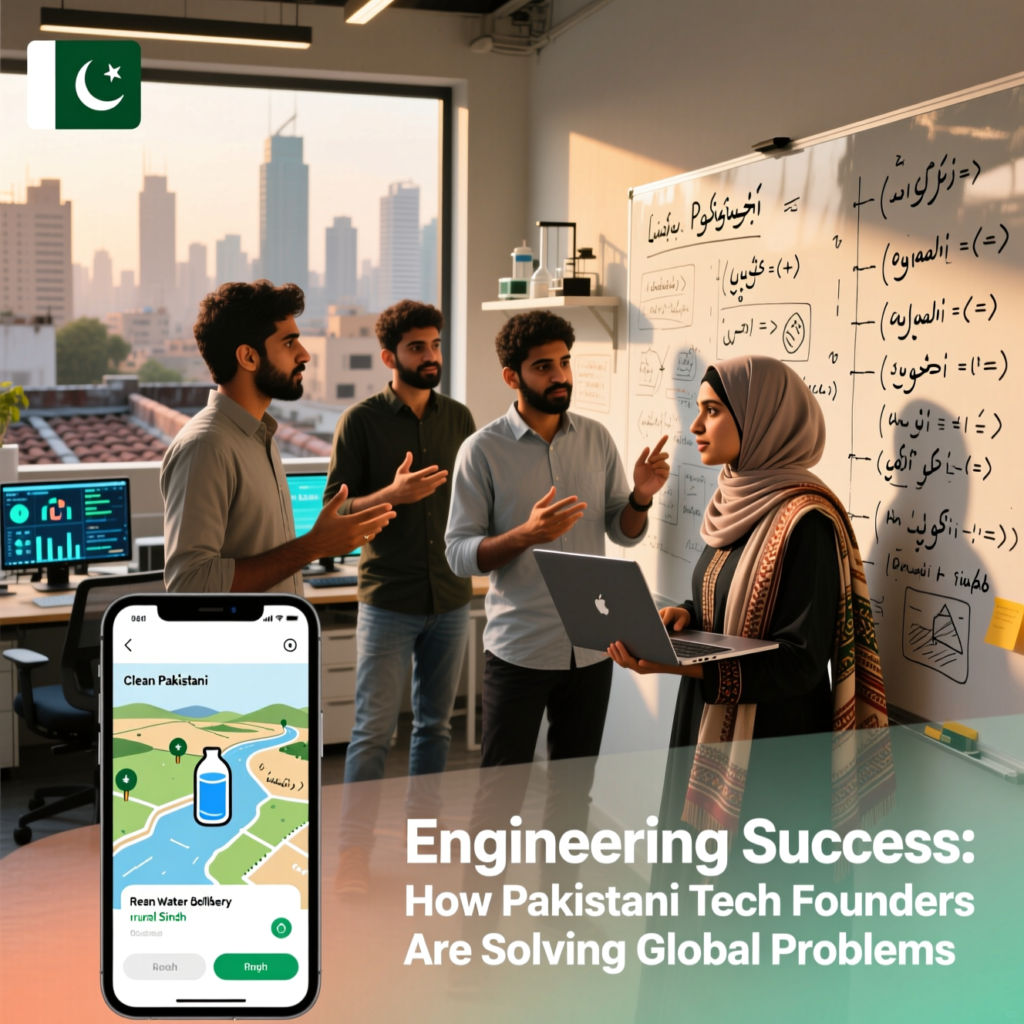
The future is exceptionally bright. The global demand for B2B SaaS and AI solutions is insatiable. Pakistan’s demographic dividend ensures a steady pipeline of engineering talent. The key to sustainability lies in moving up the value chain: from applications to platforms, and from platforms to foundational technologies (like AI models). Continued investment in tech education and digital infrastructure, as well as supportive government policies for tech exports, will be critical. Understanding global operational frameworks, such as those outlined in this Global Supply Chain Management Guide, becomes crucial even for digital products.
Common Misconceptions
- Misconception 1: You need to be based in Silicon Valley to build a global tech company.
- Reality: The remote-first revolution has decoupled innovation from geography. Pakistani founders can build from Lahore and sell to London.
- Misconception 2: Pakistani tech is only good for low-cost, undifferentiated work.
- Reality: Companies like Educative, Bazaar Technologies, and Airlift (in its time) proved Pakistani teams can build complex, market-leading product architecture.
- Misconception 3: It’s all about consumer apps.
- Reality: The most sustainable and funded ventures are B2B and enterprise SaaS, solving complex problems for other businesses, where Pakistan has a strong talent pool.
- Misconception 4: You need massive funding to start.
- Reality: As seen in our previous article on Bootstrapping (internal link), many started with modest capital, leveraging the cost advantage to build an MVP and get to revenue quickly.
Recent Developments (2024-2025)
- AI & LLM Specialization: A new wave of Pakistani founders are launching startups focused on applying Large Language Models (LLMs) to specific verticals like legal tech, medical transcription, and content moderation, leveraging both local language capabilities and global AI expertise.
- Climate Tech Emergence: Pakistani engineers are applying IoT and data analytics to build solutions for water management, smart agriculture, and carbon tracking, aligning with global Climate Policy trends.
- Formalized “Launchpad” Programs: International accelerators and VC firms are establishing structured programs to specifically scout and groom Pakistani tech talent for global product development.
- Rise of Product Management Roles: A clear recognition that engineering excellence alone isn’t enough. There’s a surge in dedicated product manager roles, ensuring products are built for user needs and market fit.
Success Stories & Real-Life Examples

1. Fahad Raza & RocketBoost (SEO SaaS Playbook):
Fahad identified a gap in scalable, white-label SEO reporting tools for digital agencies. Building a remote team across Pakistan, he developed RocketBoost, a SaaS platform that automated technical audits and reporting. Starting with freelance networks, he secured his first paying clients in the US and UK. Through relentless product iteration based on user feedback, he achieved strong product-market fit. By 2024, RocketBoost was serving over 500 agencies worldwide, a classic example of a Pakistani founder solving a global B2B problem.
2. Tazah (Agri-Tech Deep Dive):
While addressing a local supply chain issue, Tazah’s founders built a technology stack for agricultural produce distribution that had global applications. Their data platform on crop yields, quality, and logistics represents a deep-tech approach to a traditional industry. Their model attracted significant funding and attention from international agri-tech investors, demonstrating how solving a hard local problem can yield a globally scalable platform.
3. Sherakat Network (The Enabler’s Story):
Platforms like Sherakat Network itself are success stories in this ecosystem. By providing the knowledge framework—through resources like our Complete Online Business Guide and Partnership Guides—they lower the barrier to entry, enabling more Pakistani tech founders to structure their global ambitions effectively.
Key Takeaway Box:
The Global Builder’s Mindset: Successful Pakistani tech founders don’t ask “What can Pakistan buy?” They ask “What does the world need to fix?” They then leverage world-class engineering talent at home to architect the software solution, using the internet as their distribution highway to global markets.
Conclusion and Key Takeaways
The narrative is unequivocal: Pakistani engineers are no longer just the builders; they are the architects, the product managers, and the CEOs of tomorrow’s global tech enterprises. Their journey from service to product is a powerful template for any high-skilled talent pool in an emerging market.
Final Takeaways:
- Spot Global Problems Locally: Your experience working on international projects is your biggest insight repository.
- Build for the Most Demanding User First: Aim for clients in mature markets to force yourself to meet the highest standards.
- Leverage Asymmetric Advantages: Pakistan’s deep, cost-effective engineering talent is a formidable competitive moat for product development.
- Embrace Remote-First from Day One: Structure your company to access global talent and global markets seamlessly.
- Think Platform, Not Just Product: Build technology that can become an ecosystem.
For those ready to architect their own solution, begin by immersing yourself in global industry conversations and validating your idea. Our Blog is continually updated with insights to guide you.
FAQs (20 Detailed Q&A)
1. What’s the difference between an IT services company and a SaaS product company?
An IT services company sells developer hours to build or maintain software for other companies. A SaaS product company builds and owns a standardized software application that it sells via subscription to many customers.
2. Do I need an international degree or work experience to start a global tech company from Pakistan?
While extremely helpful for network and market insight, it’s not mandatory. Deep customer research, active participation in global online communities (like GitHub, niche forums), and a relentless focus on the problem can compensate.
3. Which tech stack is best for building a globally scalable SaaS from Pakistan?
Focus on modern, cloud-native, and widely-adopted stacks (e.g., JavaScript/Node.js + React, Python/Django, Ruby on Rails) to ensure access to talent and long-term maintainability. Avoid niche or legacy technologies.
4. How do I handle customer support across different time zones?
Use a combination of robust in-app guides/chatbots, a detailed knowledge base, and a follow-the-sun support model by hiring or partnering with freelancers in key time zones.
5. What are the biggest legal hurdles for a Pakistani SaaS selling globally?
Data privacy laws (like GDPR in EU, CCPA in California), payment processing (using platforms like Stripe Atlas or partnering with local payment gateways), and terms of service that are enforceable internationally. Consult a lawyer specializing in tech.
6. How do I price my SaaS for international markets?
Research competitors in your target market and price based on value delivered, not Pakistani cost structures. Use tiered pricing (Basic, Pro, Enterprise) and quote in USD/EUR.
7. Can I get into Y Combinator or other top accelerators from Pakistan?
Absolutely. Several Pakistani-founded startups have been accepted into top accelerators. A strong, demonstrable prototype, clear growth metrics, and a compelling global vision are key.
8. What is the role of AI in the future of Pakistani tech startups?
AI is a foundational technology. Pakistani founders can excel by applying AI to specific, data-rich domains (finance, healthcare, logistics) where they have or can access deep expertise.
9. How important is open-source contribution for a Pakistani tech founder?
Extremely valuable. It builds global credibility, showcases technical prowess, and can be the foundation of a commercial open-core product model.
10. Should I incorporate my startup in Pakistan or offshore (e.g., Delaware, USA)?
For a globally-focused SaaS, an offshore incorporation (like a US Delaware C-Corp) is often preferred by international investors and simplifies contracts, banking, and IP ownership. It’s a complex decision requiring legal advice.
11. How do I build a sales team for international markets?
Start with founder-led sales. Your first 10-20 customers should be sold by you. Then, hire your first salesperson in or familiar with your primary target market. Consider a strategic alliance with a complementary sales agency, as detailed in our Partnership Models article.
12. What are the best industries for Pakistani B2B SaaS?
Fintech, developer tools, e-commerce enablement, marketing automation, HR tech, and vertical SaaS for industries like logistics, construction, and healthcare.
13. How do I protect my intellectual property (IP) as a software company in Pakistan?
Ensure all employee/contractor agreements have clear IP assignment clauses. File for copyright (automatic for code) and consider patents for novel, non-obvious algorithms (consult a patent attorney). Maintain rigorous version control and documentation.
14. Is the local Pakistani market a good testing ground?
It can be for certain B2C or hyper-local B2B ideas, but for most global SaaS, the customer needs, willingness to pay, and competition are so different that it may give false signals. Test with your true target customer.
15. How do I manage the mental load of building across cultures and time zones?
It’s a significant challenge. Prioritize asynchronous communication (Loom videos, detailed docs), set clear boundaries, and build a strong co-founding team for support. Founder mental health is critical, as explored in this guide: Mental Health: The Complete Guide.
16. What metrics do global investors look for in a Pakistani SaaS startup?
Monthly Recurring Revenue (MRR), Gross Margin, Net Revenue Retention (NRR), Customer Acquisition Cost (CAC) payback period, and burn rate. Demonstrable traction in a developed market is the ultimate metric.
17. How can I stay updated on global tech trends from Pakistan?
Follow key tech publications (TechCrunch, The Information), listen to podcasts (e.g., “The Twenty Minute VC,” “SaaS Revolution Show”), and engage with global communities on Twitter/LinkedIn and World Class Blogs – AI & Innovation.
18. Are there grants available for deep-tech research in Pakistan?
Yes, organizations like the Ignite National Technology Fund, the Higher Education Commission (HEC), and some provincial authorities offer research grants for innovative tech projects.
19. How do I handle equity for an international co-founder or early employee?
Use a standard vesting schedule (typically 4 years with a 1-year cliff) with a clear shareholders’ agreement. Consider using tools like Carta or a local legal expert to manage your cap table professionally.
20. What’s the first step I should take today if I have a global SaaS idea?
- Write a one-page problem/solution summary.
- Identify 5 potential customers in your target market (not friends or family).
- Use LinkedIn or email to ask for a 15-minute call to interview them about the problem. Don’t pitch your solution yet—just listen.
About the Author
Sana Ullah Kakar is a product leader and former software engineer with over a decade of experience building B2B SaaS platforms for markets in North America and Europe. Currently based in Karachi, they advise several Pakistani tech startups on product strategy and global go-to-market execution. They are passionate about bridging the gap between Pakistan’s exceptional engineering talent and global market opportunities.
Free Resources
- Global SaaS Pricing Model Calculator (Spreadsheet): A tool to model tiered pricing in USD and project revenue.
- Checklist: Legal & Compliance Prep for Selling SaaS Internationally.
- List of International Accelerators Actively Sourcing from South Asia (2025).
- Template: “Interview Script for Validating a B2B Problem” with potential customers.
(Note: Access these resources by contacting us via the Sherakat Network Contact Us page).
Discussion
We want to hear from you!
- Are you a Pakistani tech founder building for a global market? What’s your biggest challenge in scaling?
- Which global industry do you think is most ripe for disruption by Pakistani engineering talent?
- What support systems or resources do you wish existed to help more Pakistani product companies go global?
Share your insights and connect with fellow builders in the comments below.