



Introduction: The End of the Click-Through and the Rise of the “See It, Want It, Buy It” Economy
Remember the old dance? See a cool product on Instagram, click the link in bio, search for the product on the website, add to cart, enter shipping details… a process where customers often got lost, distracted, or frustrated. That friction-filled journey is becoming obsolete. Welcome to the era of Social Commerce—the seamless integration of shopping directly within social media platforms. It’s the realization of the “See It, Want It, Buy It” impulse, reducing the path to purchase from multiple clicks and pages to literally two taps.
For businesses, this isn’t just a new feature; it’s a fundamental shift in the digital sales paradigm. Social commerce turns your social media presence from a brand-building billboard into a dynamic, interactive storefront. It leverages the power of community, influencer trust, and immersive content (like live video) to drive sales in the very moment inspiration strikes. This guide is your deep dive into the why, the how, and the advanced strategies for dominating social commerce in 2024. We’ll move beyond basic setup to explore the psychology, content, and analytics that separate the hobbyists from the high-volume sellers, all while ensuring a safe, compliant environment for your customers and your AdSense account.
Background/Context: From Catalogs to Checkout: The Evolution of Shopping Discovery
Commerce has always been social. We sought recommendations from friends, browsed physical stores, and trusted the advice of knowledgeable shopkeepers. Mass media (print catalogs, TV shopping networks) scaled discovery but removed the social element. The first wave of e-commerce (Amazon, eBay) brought scale and convenience but often felt transactional and isolating.
Social media re-injected the “social” into discovery. We saw what our friends liked and bought. Influencers became the new trusted shopkeepers. But the disconnect between discovery (on social apps) and transaction (on separate websites) remained a major hurdle. Platforms recognized this multi-billion dollar opportunity. Pioneered by companies like Pinterest with “Rich Pins” and supercharged by Instagram’s “Shopping” tags, the infrastructure for native checkout was built. The 2020s accelerated this trend exponentially, with live streaming shopping (a digital QVC) taking off in Asia and now gaining global traction. Today, social commerce is a mature, essential sales channel, blending the trust of word-of-mouth with the convenience of one-click buying. For businesses looking to integrate new revenue streams, understanding this is as crucial as understanding different business partnership models.
Key Concepts Defined: The Language of Social Selling
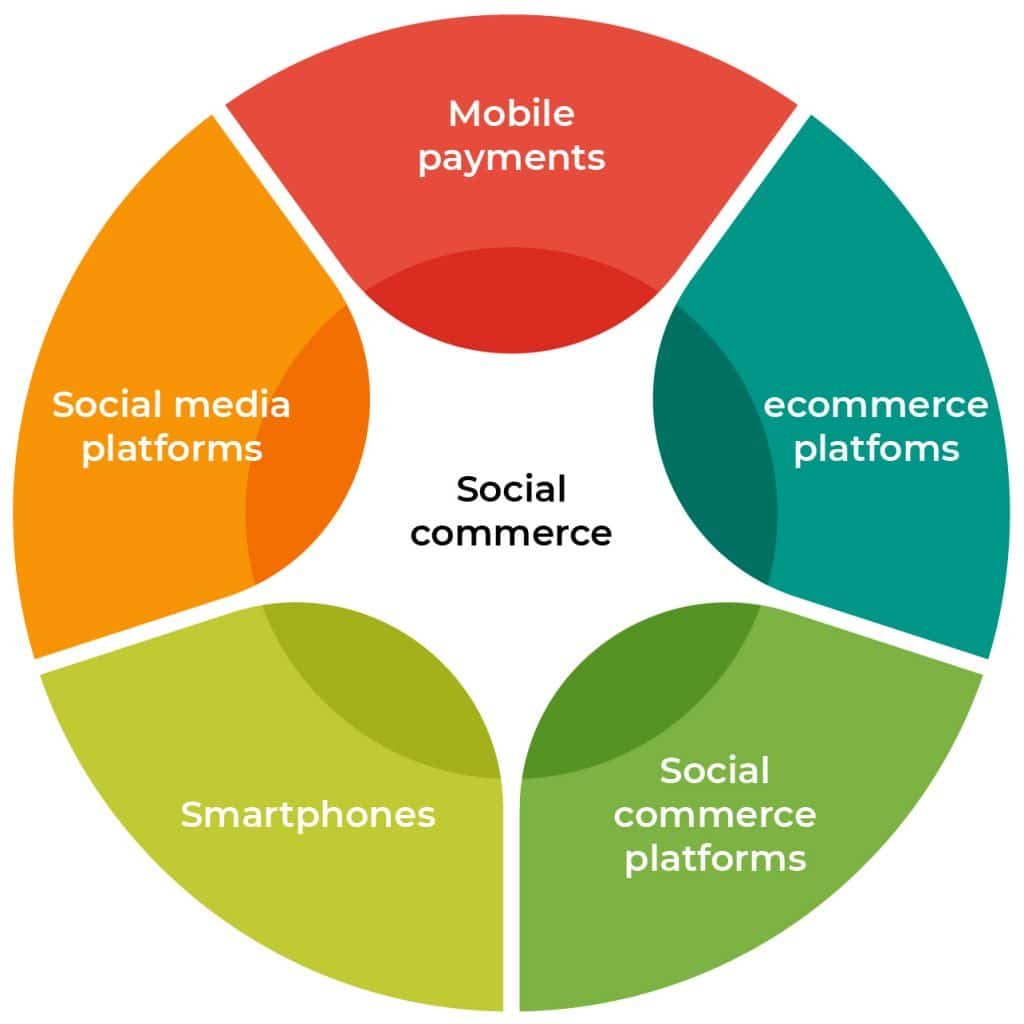
- Social Commerce: The entire process of researching, discovering, and buying products or services directly within a social media platform’s ecosystem.
- Shoppable Posts/Content: Any social media post (image, video, carousel, Reel, Story) that contains interactive product tags. Clicking a tag reveals product details and a direct purchase option.
- Instagram Shopping / Facebook Shops: The native storefront features within Meta’s apps that allow businesses to upload a product catalog, tag products, and facilitate checkout.
- In-App Checkout: The ability for a user to complete a purchase—entering payment and shipping info—without being redirected to an external website.
- Live Shopping: A real-time video broadcast where a host showcases products, answers live questions, and offers exclusive deals, with purchasable product links displayed during the stream.
- Creator/Influencer Commerce: The process where influencers tag shoppable products from brands in their own content, earning a commission on sales they drive.
- Product Catalog: The digital file (often managed via Facebook’s Commerce Manager) that contains all your product data: images, titles, descriptions, prices, and inventory.
- Social Proof in Commerce: The influence created when users see others buying, reviewing, or engaging with a product (e.g., “Lindsay and 50 others bought this”).
- AR Try-On: Augmented Reality features that allow users to virtually “try” products like glasses, makeup, or furniture via their phone’s camera.
Building Your Social Commerce Engine: A Step-by-Step Implementation Guide

Success requires a solid technical foundation paired with a compelling content strategy.
Phase 1: Foundation & Setup
Step 1: Platform Selection & Prerequisites
- Where is your audience? Instagram/Facebook dominate for B2C lifestyle, fashion, home. TikTok Shop is explosive for trend-driven, viral products. Pinterest is ideal for planning and discovery (home decor, weddings, recipes).
- Prerequisites: You must have a business account, link to a Facebook Business Page (for Meta), and often need approval for shopping features (requiring a website with a clear privacy policy and terms of service).
Step 2: Commerce Manager & Catalog Setup (Meta)
- Go to Facebook Commerce Manager. This is your central hub.
- Create a Catalog. Choose “E-commerce” if you sell physical goods.
- Add products manually, use a partner platform integration (like Shopify, WooCommerce), or upload a data feed file. Quality is key: Use high-resolution images (min. 500×500 px, white background recommended), clear titles, and compelling descriptions.
- Submit your account for review. This can take from a few hours to several days.
Step 3: Activate Shopping on Your Social Profiles
- Instagram: Go to Settings > Business > Shopping. Connect your Facebook catalog. Once approved, a “Shopping” tab will appear on your profile.
- Facebook: Add a “Shop” section to your Facebook Page. Your catalog will populate it.
- TikTok Shop: Apply through the TikTok Seller Center. The process is more involved, often requiring demonstration of other social/ sales activity.
- https://via.placeholder.com/800×450/5D737E/FFFFFF?text=Shoppable+Post+vs.+Standard+Post+Visual+Comparison
- Image Caption: Figure 2: Visual difference between a standard post and a shoppable post. Note the shopping bag icon and interactive product tags.
- Image Alt Text: A side-by-side comparison showing a regular Instagram post and an Instagram post with shoppable product tags.
- Image Description: This comparison highlights the key UI elements of social commerce. The left shows a standard photo with a caption. The right shows the same photo with a small shopping bag icon and tap-to-view product tags over the items, illustrating the direct path to purchase.
Phase 2: Content Strategy for Conversion
Step 4: Create Content That Sells, Not Just Tells
Move beyond static product shots.
- Lifestyle in Action: Show your product being used in real, desirable scenarios. A dress at a picnic, a tool in a workshop, a mug in a cozy morning routine.
- Problem/Solution Reels: Create short videos highlighting a common pain point and how your product solves it in seconds.
- User-Generated Content (UGC): Repost customer photos/videos with shoppable tags. This is the most powerful form of social proof.
- How-To & Tutorials: Demonstrate value. A makeup brand shows a tutorial using their shoppable palette.
Step 5: Master the Format Mix
- Feed Posts & Carousels: For detailed storytelling. Use the first image to grab attention, subsequent images to show features/benefits, and tag multiple products in a carousel.
- Stories: Perfect for urgency. Use the product sticker for flash sales, limited stock alerts, or “Swipe Up” (or “See More”) to shop.
- Reels/TikTok Videos: For broad discovery. Use trending audio, quick cuts, and end with a strong call-to-action (“Tap the product link to shop!”).
- Live Shopping: The ultimate conversion tool. Host weekly or monthly live sales. Show products dynamically, answer Q&A in real-time, and offer live-only discounts.
Step 6: Optimize Your Shoppable Profile
- Highlight Shopping Stories: Create permanent Story Highlights for “Best Sellers,” “New Arrivals,” or “How to Style.”
- Link in Bio: Use a link-in-bio tool (Like Linktree, Shorby) that can integrate your shoppable products alongside other important links, like your Sherakat Network Contact page.
Why Social Commerce is Non-Negotiable for Modern Business
- Shortens the Customer Journey Dramatically: Reduces friction by up to 70%. Fewer steps mean fewer abandoned carts and higher conversion rates.
- Leverages Impulse Buying: Captures purchase intent at the peak moment of inspiration, when the emotional desire is highest.
- Amplifies Authentic Marketing: Shoppable UGC and influencer tags feel like a friend’s recommendation, not an ad. Trust translates directly into sales.
- Provides Rich, Actionable Data: You gain insights into which products are tagged most, saved most, and drive the most revenue from social traffic—far beyond what standard analytics provide.
- Creates a Unified Brand Experience: Your marketing (content) and sales (checkout) happen in the same environment, creating a cohesive brand story.
- Levels the Playing Field: Small businesses and solo entrepreneurs can compete with giants by leveraging authentic storytelling and niche community trust, much like the principles in our guide to starting an online business.
Common Misconceptions and Pitfalls
- “It’s just for big brands or fashion.” False. Anyone selling a physical (and increasingly, digital) product can benefit. Success stories include artisans, bakers, gadget makers, and plant shops.
- “If I tag it, they will buy.” Tagging is the tool, not the strategy. Poor content, high prices, or bad product-market fit will still result in no sales. The product and presentation must be compelling.
- “I can ignore customer service.” The opposite! Quick, public responses to pre-purchase questions in comments build trust. Post-purchase, you must manage returns/refunds professionally through your connected systems.
- “Live shopping is too complicated/expensive.” You can start with a simple smartphone, a ring light, and a passionate host (you!). The production value is less important than the authenticity and value offered.
- “Social commerce replaces my website.” It complements it. Your website remains your owned asset for deeper storytelling, SEO, email capture, and complex transactions. Social commerce is a top-of-funnel discovery and conversion channel.
Recent Developments & The Future: AI, AR, and the “Shoppable Everything” Feed
- AI-Powered Personalization: Platforms are using AI to show users shoppable products from creators and brands they don’t follow but are predicted to love, based on their visual and engagement history.
- Advancements in Augmented Reality (AR): Virtual try-on for makeup, sunglasses, and sneakers is becoming standard. IKEA’s Place app lets you see furniture in your room. This drastically reduces purchase uncertainty.
- TikTok Shop’s Meteoric Rise: TikTok has baked shopping into its DNA of viral trends. The “TikTok Made Me Buy It” phenomenon is a powerful sales engine, with creators driving trends that directly link to purchasable products.
- Live Shopping 2.0: More interactive features like gamification (flash giveaways during streams), multi-guest hosting (brand + influencer), and integrated quizzes.
- Conversational Commerce via Chatbots: Direct buying through Messenger or Instagram DMs, guided by AI chatbots that can answer questions and process orders.
- Focus on Creator Economy: Platforms are heavily incentivizing creators to become shopkeepers, offering higher commissions and better tools to tag products from multiple brands in their content.
Success Stories: Social Commerce in Action
Case Study 1: The Small-Batch Skincare Brand
“Glow Craft” used Instagram as its primary storefront.
- Strategy: They focused on stunning, ingredient-focused Reels showing the making process. Every post was shoppable. They ran weekly Live Shopping sessions on Sunday evenings where the founder demonstrated products, answered skin care questions, and offered a live-only discount code.
- Community Integration: They encouraged customers to post reviews with a specific hashtag and reposted the best as UGC, tagging the products.
- Result: 85% of their total revenue came through Instagram Shopping in-app checkout. Their Live Shopping events consistently sold out new product launches within minutes.
Case Study 2: The Home Decor Reseller on Facebook
“Vintage Finds Co.” used Facebook Shops and Groups.
- Strategy: They listed unique items in their Facebook Shop. But their secret weapon was a “VIP Sneak Peek” Facebook Group. New inventory was posted in the group first with shoppable links, creating immense urgency and exclusivity.
- Content: They created “Style Idea” carousel posts showing how to mix and match their vintage items in a modern home.
- Result: The group of 5,000 members generated over 70% of their monthly sales. The sense of community turned customers into collectors who would buy items weekly.
Case Study 3: The Fitness Influencer & Supplement Partnership
An influencer in the wellness space partnered with a supplement brand via TikTok Shop.
- Strategy: The influencer created a series of “Day in My Life” and “Pre-Workout Routine” TikToks, authentically using the products. She enabled TikTok’s Affiliate Program, adding shoppable links to the videos.
- Transparency: She was upfront about the partnership and shared her genuine results.
- Result: One viral TikTok driving to the shoppable product generated over $40,000 in sales in 48 hours for the brand, with the influencer earning a significant commission. This showcases a powerful modern strategic alliance model.
Conclusion & Key Takeaways: Building Your Social Storefront
Social commerce is the logical culmination of social media’s evolution: a place where connection and transaction merge. It rewards authenticity, agility, and a deep understanding of your community’s desires.
- Takeaway 1: Setup is foundational. Take the time to get your Commerce Manager, catalog, and approvals in order. Quality product images are non-negotiable.
- Takeaway 2: Content is your sales floor. Create content that showcases value, tells a story, and integrates your products naturally into the user’s aspirational lifestyle.
- Takeaway 3: Embrace the formats. Utilize the full arsenal—shoppable posts, Stories, Reels, and especially the high-conversion power of Live Shopping.
- Takeaway 4: Leverage social proof. User-generated content and influencer partnerships are your most credible salespeople.
- Takeaway 5: Analyze and adapt. Use platform insights to see which products and content types drive sales. Double down on what works and iterate on what doesn’t.
The future of retail is social, interactive, and immersive. By building your social commerce presence today, you’re not just setting up a new sales channel; you’re future-proofing your business for the way the next generation loves to shop. For more insights on optimizing all aspects of your digital business, explore our curated Sherakat Network Resources.
Frequently Asked Questions (FAQ)
Q1: What are the fees for selling via social commerce?
A: Platforms charge a selling fee for transactions using their in-app checkout. For Meta (Facebook/Instagram), it’s typically 5% per shipment or a flat fee of $0.40 for shipments of $8.00 or less. TikTok Shop fees vary but are generally competitive. Always check the latest commerce policies on each platform.
Q2: Do I need a website to use Instagram Shopping?
A: Technically, yes, for initial approval. You must link to a website that has a clear privacy policy, return policy, and terms of service. However, after approval, you can drive most sales through in-app checkout without sending users to your site.
Q3: How do I handle shipping, taxes, and returns for social commerce sales?
A: This is crucial. You can manage it manually, but it’s best to use an e-commerce platform (like Shopify, BigCommerce) that integrates with Facebook/Instagram Shopping. These platforms sync inventory, automate tax calculations, and provide return management tools, treating social sales like any other online order.
Q4: My product catalog has hundreds of items. Is this manageable?
A: Yes, but use a data feed or e-commerce platform integration. Manually uploading hundreds of items is unsustainable. An integration automatically updates prices, inventory, and adds new products to your social catalog.
Q5: Can I run paid ads on my shoppable posts?
A: Absolutely. This is a powerhouse strategy. You can boost a high-performing shoppable post or create a dedicated ad campaign in Ads Manager with the “Conversions” objective, optimizing for “Purchase.” The shoppable tags remain active in the ad.
Q6: What’s the difference between a “Shop Now” button and a product tag?
A: A “Shop Now” button (usually in the bio or on a Profile) takes users to your full storefront. A product tag is specific to an item within a single piece of content. Tags are more direct and context-driven.
Q7: How do I deal with negative comments on my shoppable posts?
A: Respond professionally and promptly, ideally moving the conversation to direct messages to resolve the issue. Publicly, you can say, “So sorry to hear you’re having an issue! Please check your DMs so we can resolve this for you.” This shows other potential buyers you provide support.
Q8: Is social commerce safe from a customer’s perspective?
A: Platforms have invested heavily in secure, encrypted payment systems. Purchases are often covered by platform purchase protection policies. As a seller, you must be reputable and transparent with your business info to build this trust.
Q9: How does social commerce fit into a global sales strategy?
A: It allows for localized product tagging and promotions. However, be mindful of international shipping logistics, taxes (like VAT/GST), and platform availability (e.g., TikTok Shop isn’t in every country). It requires planning akin to managing a global supply chain.
Q10: What are the biggest AdSense compliance concerns with social commerce content?
A: Ensure all claims about products are truthful and not misleading. Have clear disclaimers for partnerships (#ad, #affiliate). Do not use deceptive “clickbait” tactics to drive sales. Your linked website (required for approval) must also comply with AdSense policies.
Q11: How mentally taxing is managing live shopping events?
A: They can be high-pressure but highly rewarding. Preparation is key: have a script/run-of-show, a co-host to monitor comments, and pre-set your lighting and tech. View it as a performance. Balancing this high-energy work requires attention to mental wellbeing.
Q12: Can I sell digital products or services via social commerce?
A: Increasingly, yes. While focused on physical goods, some platforms allow digital product catalogs (e.g., printable art, e-books). For services (consulting, coaching), you can use shoppable posts to link to booking pages or sell gift certificates.
Q13: How do I track the ROI of my social commerce efforts?
A: Use Facebook’s Commerce Manager reports and TikTok Shop Seller Center analytics. Track key metrics: Total Revenue, Number of Orders, Conversion Rate (from product link clicks to purchases), and Top Selling Products. Connect this data to your overall business analytics.
Q14: Where can I get more creative ideas for my social commerce content?
A: Follow your competitors and leading brands in your space. More importantly, follow creators in your niche on Sherakat Network’s Blog for inspiration. Observe what formats and storytelling styles resonate with your target audience.