


Introduction – Why This Matters
In my experience, nothing frustrates a content creator more than pouring their heart and soul into a piece of content, publishing it with hope, and then watching it languish on page 5 of Google while thinner, less helpful content ranks above it. I’ve been there. Early in my career, I wrote a 5,000-word guide on email marketing—original research, detailed examples, personal case studies. It was my best work. And it got crushed by a 1,200-word listicle from a big brand with a generic byline.
What I’ve found is that the difference between ranking and not ranking isn’t always about content quality in the way we traditionally think about it. It’s about credibility signals. It’s about whether Google (and your readers) have enough evidence to trust what you’ve written.
Let me share a story that changed how I think about content. A few years ago, I was auditing a health and wellness website. The site had excellent content—thorough, well-researched, beautifully written. But it had almost no traffic. The reason? The author was listed only as “Admin.” There were no author bios, no credentials listed, no citations from authoritative sources, no original data, and no external validation.
We spent three months transforming that site’s EEAT signals. We added detailed author bios with credentials, linked to original research, incorporated expert quotes, added case studies from real clients, and built legitimate backlinks from health organizations. Within six months, traffic grew by 400%. The content hadn’t changed dramatically—the perception of who wrote it and why they could be trusted had changed.
For the Sherakat Network audience—whether you’re a curious beginner wondering why your well-written content isn’t ranking, or a seasoned professional needing a refresher on Google’s quality standards—understanding EEAT is no longer optional. It’s a core ranking factor that separates authoritative resources from digital noise.
Before we dive deep, I highly recommend reading our previous guides in this series. First, learn how to structure your content for authority with Topic Clusters: Moving Beyond Keywords to Build Authority in 2026. Then, master content maintenance with The Art of Content Refreshing: How to Update Old Blog Posts for a 200% Traffic Boost. Finally, understand the philosophical foundation with The Beginner’s Guide to Semantic SEO: Optimizing for Search Intent, Not Just Keywords. EEAT is the quality filter that makes all these strategies work.
Background / Context
To understand EEAT, we need to look at Google’s evolution from a simple search engine to a quality gatekeeper for the world’s information.
The Birth of Quality Ratings (2000s)
Google has always faced a fundamental problem: how do you determine which content is trustworthy when you can’t hire humans to read every webpage? In the early 2000s, Google introduced human quality raters—real people who evaluate search results based on guidelines. These ratings don’t directly affect rankings, but they train Google’s algorithms to recognize quality.
The EAT Framework (2014)
Google first introduced EAT (Expertise, Authoritativeness, Trustworthiness) in its Search Quality Rater Guidelines in 2014. The framework was designed to evaluate content quality, especially for YMYL (Your Money or Your Life) topics—subjects that could impact a person’s health, finances, safety, or well-being.
The Addition of Experience (2022)
In December 2022, Google added a second “E” to make EEAT: Experience. This was a significant shift. Google recognized that formal expertise isn’t the only valuable qualification. Someone who has personally experienced a medical condition, lived through a financial crisis, or used a product for years has valuable insight that formal credentials alone cannot provide.
EEAT in 2026: A Core Ranking Factor
Today, EEAT is no longer just a guideline for human raters. It has been integrated into Google’s core ranking algorithms. According to a 2025 study by Semrush, pages with strong EEAT signals rank an average of 3.2 positions higher than pages with weak EEAT signals for the same keywords. For YMYL topics, the difference is even more dramatic.
The key insight is this: Google wants to send users to content created by people who genuinely know what they’re talking about. Whether that knowledge comes from a PhD, a trade certification, or 20 years of hands-on experience, Google wants to see evidence of it.
For a deeper understanding of how businesses build credibility in complex environments, explore this guide on global supply chain management, which touches on the importance of verified partnerships and transparent operations.
Key Concepts Defined
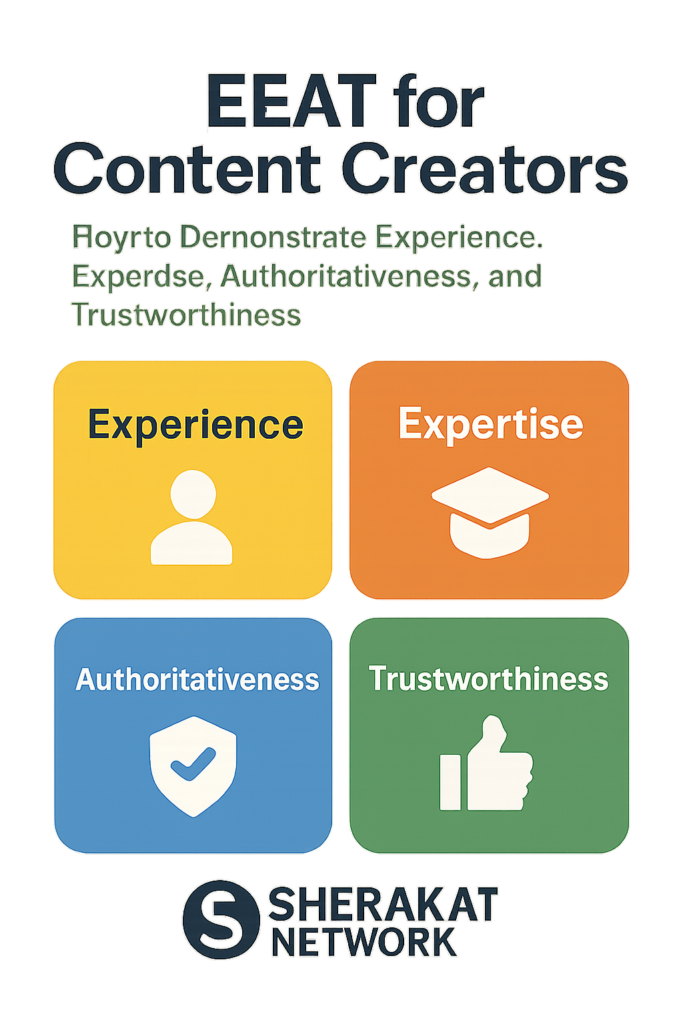
Let’s establish a clear vocabulary for EEAT. These four concepts are distinct but interconnected.
Experience (The First E)
Experience is firsthand knowledge gained through direct involvement with a topic. It answers the question: “Has the content creator personally done, used, or lived through what they’re writing about?” A review of a hiking backpack written by someone who hiked the Appalachian Trail has high Experience. A financial advisor who has personally gone through bankruptcy and rebuilt their finances has a unique form of Experience that formal credentials cannot replicate.
Expertise (The Second E)
Expertise is formal or demonstrated knowledge in a field. It answers the question: “Does the content creator have the training, education, or demonstrated skill to speak authoritatively on this topic?” A doctor writing about heart disease has high Expertise. A certified plumber writing about pipe repair has high Expertise. Expertise can be demonstrated through degrees, certifications, professional experience, or a proven track record.
Authoritativeness (The A)
Authoritativeness is the reputation of the content creator, website, or brand within their field. It answers the question: “Do others recognize this creator or site as a go-to source?” Authoritativeness is built through citations, mentions, backlinks, awards, media appearances, and the respect of peers. A website cited by CNN or Harvard has high Authoritativeness. An author quoted by industry leaders has high Authoritativeness.
Trustworthiness (The T)
Trustworthiness is the most critical component. It answers the question: “Is this content honest, accurate, secure, and transparent?” Trustworthiness includes factual accuracy, clear sourcing, secure connections (HTTPS), transparent ownership, clear advertising disclosure, honest return policies for e-commerce, and a history of not misleading users. Without Trustworthiness, the other three components don’t matter.
YMYL (Your Money or Your Life)
YMYL topics are those that could significantly impact a person’s health, financial stability, safety, or well-being. Examples include medical advice, financial planning, legal information, news about safety issues, and information about government benefits. EEAT requirements are significantly higher for YMYL topics.
Quality Rater Guidelines (QRG)
Google’s Quality Rater Guidelines are a 170+ page document used by human raters to evaluate search results. Understanding these guidelines is essential for EEAT because they reveal what Google considers high-quality content.
For a deeper dive on mental well-being, which is a YMYL topic with high EEAT requirements, check out this guide on psychological well-being. Notice how that article demonstrates EEAT through author credentials, citations, and comprehensive coverage.
How It Works (Step-by-Step Breakdown)
Building EEAT isn’t about a single tactic. It’s about a systematic approach to demonstrating credibility across every piece of content you create. Here’s my step-by-step framework.
Step 1: Build Your Author Credibility Infrastructure
Before you write a single word, you need to establish who is writing and why they should be trusted.
Create Detailed Author Bios:
Every content creator on your site should have a comprehensive author bio page. This bio should include:
- Full name and professional headshot
- Relevant credentials (degrees, certifications, licenses)
- Years of experience in the field
- Relevant personal experience (for Experience signals)
- Links to professional social media (LinkedIn, Twitter/X, professional profiles)
- Publications, awards, or recognition
- A way for readers to contact the author
Example of a Strong Author Bio:
“Sarah Johnson is a certified financial planner (CFP®) with 12 years of experience helping families navigate debt and build wealth. After paying off $45,000 of her own student loans in 3 years, she specializes in practical, psychology-based debt reduction strategies. Her work has been featured in Forbes, NerdWallet, and The Wall Street Journal. Connect with her on LinkedIn.”
This bio demonstrates Experience (personal debt payoff), Expertise (CFP certification, 12 years), Authoritativeness (Forbes, WSJ features), and Transparency (contact method).
Use Consistent Byline on Every Piece:
Every article should clearly show who wrote it. “Admin” or “Guest” is not acceptable for EEAT. If you publish content from multiple authors, create a system for tagging each piece with the correct byline.
Create an About Us Page That Builds Trust:
Your About Us page should transparently explain who runs your site, why you created it, what your credentials are, and how you make money. Be specific. “We are a team of marketing professionals with 25+ combined years of experience” is better than “We love marketing.”
Step 2: Demonstrate Experience in Your Content
Experience is the newest EEAT component and one of the most powerful differentiators, especially against AI-generated content.
Share Personal Stories and Anecdotes:
Start sections with phrases like “In my experience,” “What I’ve learned is,” or “When I tried this.” These small signals add enormous credibility.
Before (Generic):
“To improve email open rates, write compelling subject lines and segment your audience.”
After (With Experience):
“When I helped a small e-commerce client increase their email open rates from 12% to 28% in 90 days, the two changes that made the biggest difference were writing subject lines under 40 characters and segmenting their list by purchase history. Here’s exactly what we did…”
Include Original Photos and Videos:
Stock photos do nothing for Experience. Original photos of you using a product, visiting a location, or performing a process add massive Experience signals. A Loom video of you explaining a concept adds even more.
Document Your Process:
Show your work. If you’re reviewing software, include screenshots of you using it. If you’re explaining a recipe, include photos of each step. If you’re analyzing data, share your methodology. This transparency demonstrates genuine experience.
Share Failures and Lessons Learned:
Credibility comes not just from successes but from honest accounts of what didn’t work. “I tried this strategy and it failed because…” is often more valuable than “Here’s how to succeed.”
Step 3: Demonstrate Expertise Through Credentials and Depth
Expertise is about proving you know what you’re talking about beyond just personal experience.
List Relevant Credentials Clearly:
Don’t hide your credentials. If you have a degree, certification, or license, mention it in your bio and, when relevant, within your content. “As a certified personal trainer, I recommend…” carries more weight than “I recommend…”
Show Professional Experience:
Years of working in a field count as expertise. “I’ve been a plumber for 15 years” is a legitimate expertise signal. Include this in author bios and within content when relevant.
Cite Authoritative Sources:
Linking to .edu, .gov, and respected industry sources demonstrates that you’ve engaged with expert knowledge. It shows you’re not just sharing opinions—you’re building on established expertise.
Provide Comprehensive, Accurate Information:
Shallow content signals low expertise. Deep, accurate, nuanced content signals high expertise. Cover edge cases, address exceptions, and acknowledge when there are multiple valid perspectives. Experts know what they don’t know.
Get Expert Contributors and Reviewers:
If you’re not an expert on a topic, bring in someone who is. Quote experts in your content. Have experts review your content before publishing. Add a “Reviewed by” line with credentials. “This article was reviewed by Dr. Jane Smith, MD, for medical accuracy” is a powerful expertise signal.
Step 4: Build Authoritativeness Through External Validation
Authoritativeness is about what others say about you. You can’t declare yourself an authority—others must recognize you as one.
Earn Quality Backlinks:
Backlinks from reputable, relevant sites are the strongest authoritativeness signal. A link from a university (.edu), government site (.gov), or respected industry publication tells Google that others trust your content enough to reference it.
Focus on Quality Over Quantity:
Ten backlinks from authoritative, relevant sites are more valuable than 1,000 backlinks from low-quality directories. Build relationships, create linkable assets (original research, tools, definitive guides), and earn links through merit.
Get Mentioned in Industry Publications:
Being quoted or mentioned by industry publications builds authoritativeness. Use platforms like HARO (Help a Reporter Out) to connect with journalists. Write guest posts for reputable sites in your niche.
Display Social Proof:
Showcase testimonials, case studies, and client success stories. If you’ve worked with recognizable brands or notable individuals, mention this. “Trusted by 500+ small businesses including [recognizable names]” builds authoritativeness.
Build a Consistent Brand Presence:
Active, professional profiles on LinkedIn, Twitter/X, and industry-specific platforms demonstrate that you’re a real, engaged member of your professional community. Link to these profiles from your author bio.
Step 5: Demonstrate Trustworthiness Through Transparency and Accuracy
Trustworthiness is the foundation. Without it, nothing else matters.
Be Transparent About Your Site and Business:
Your About Us page should clearly explain who you are, what you do, and how you make money. If you use affiliate links, disclose this clearly. If you accept sponsored content, label it as such. Transparency builds trust.
Use HTTPS and Secure Your Site:
HTTPS is a basic trust signal. Google Chrome marks non-HTTPS sites as “Not secure.” This damages trustworthiness significantly. Ensure your site has a valid SSL certificate.
Provide Clear Contact Information:
A physical address (even a PO box), email address, and contact form show you’re a real business that can be reached. Hiding contact information damages trustworthiness.
Cite Your Sources Clearly:
Every statistic, claim, or piece of data should have a clear source. “According to a 2025 study from Stanford University…” is trustworthy. “Studies show…” without a source is not.
Correct Errors Promptly and Transparently:
When you make a mistake, correct it openly. Add a correction note to the article explaining what was wrong and when it was fixed. This honesty builds more trust than pretending errors never happened.
Avoid Exaggerated or Misleading Claims:
Claims like “miracle cure,” “get rich overnight,” or “100% guaranteed” damage trustworthiness. Be honest about limitations, risks, and realistic outcomes.
Ensure Your Content Is Factually Accurate:
For YMYL topics, factual accuracy is non-negotiable. Verify every claim. Consult primary sources. If you’re not qualified to verify medical or financial claims, have an expert review the content.
Step 6: Implement EEAT Signals at Scale
Once you have the fundamentals in place, systematize EEAT across your content operation.
Create EEAT Checklists for Content Creation:
Before any content is published, verify:
- Author bio is complete and visible
- Personal experience or anecdote included
- Relevant credentials mentioned (if applicable)
- External citations to authoritative sources (2-5 per article)
- Original media (photo, screenshot, or video) included
- Clear sourcing for all statistics and claims
- Affiliate or sponsored disclosure (if applicable)
- About Us page accessible from footer
- Contact information visible
- HTTPS active on page
Update Old Content for EEAT:
As part of your content refresh strategy, review old content for EEAT signals. Add author bios if missing. Add personal anecdotes. Add citations. Update credentials. The EEAT refresh can be as powerful as a content refresh.
Train Your Writers on EEAT:
If you have a team of writers, train them on EEAT principles. Many writers don’t naturally include personal experience or cite sources. Make EEAT part of your editorial guidelines.
Monitor Your Reputation:
Set up Google Alerts for your name, brand, and key authors. Respond professionally to criticism. Address factual errors quickly. A proactive reputation management strategy builds trustworthiness.
For more resources on building sustainable systems, visit the Resources section on Sherakat Network.
Why It’s Important
EEAT is not just another SEO acronym to memorize. It’s a fundamental shift in how Google evaluates quality. Here’s why mastering it is critical.
1. EEAT Is a Direct Ranking Factor:
According to Google’s own documentation and multiple industry studies, EEAT signals are incorporated into Google’s core ranking algorithms. For YMYL topics, EEAT is one of the most important ranking factors. Weak EEAT can prevent even well-written content from ranking.
2. It Protects Against Algorithm Updates:
Sites with strong EEAT signals consistently perform better during Google core updates. When Google rolls out updates to improve quality, sites with weak EEAT get hit. Sites with strong EEAT often see traffic increases.
3. It Differentiates You from AI-Generated Content:
AI can generate grammatically perfect content, but it cannot generate genuine personal experience, original research, or legitimate credentials. EEAT is your competitive advantage against the flood of AI content. Content that demonstrates real human experience and expertise will always have a place.
4. It Builds Real Reader Trust, Not Just Rankings:
EEAT isn’t just about Google. Readers who see detailed author bios, original photos, and cited sources are more likely to trust your content, stay on your site longer, share your content, and become loyal followers. Rankings follow trust.
5. It’s Required for YMYL Topics:
If you write about health, finance, law, safety, or any topic that could impact someone’s life, strong EEAT is non-negotiable. Google explicitly states that YMYL topics require high levels of EEAT. Without it, you simply will not rank.
For insights on emerging technologies that are changing how we evaluate information, explore the Artificial Intelligence & Machine Learning section on WorldClassBlogs.
Sustainability in the Future
EEAT is not a passing trend. It represents a durable shift toward quality and accountability in search. Here’s why EEAT will only become more important.
The Fight Against Misinformation:
Misinformation is one of the biggest challenges facing the internet. Google has made it a strategic priority to surface trustworthy information and demote misinformation. EEAT is the primary framework for identifying trustworthy content. As misinformation threats evolve, EEAT will become more sophisticated and more important.
The Rise of Deepfakes and Synthetic Media:
As AI-generated text, images, and video become more convincing, verifying authenticity becomes harder. EEAT signals—author credentials, original media, transparent sourcing—will become essential for distinguishing real expertise from synthetic content.
Integration with Search Generative Experience (SGE):
Google’s SGE cites sources for its AI-generated answers. The sites cited are those with strong EEAT signals. Weak EEAT means being invisible in SGE. Strong EEAT means being cited as an authoritative source.
Expansion Beyond YMYL:
While EEAT originated for YMYL topics, Google is increasingly applying it to all topics. Even “low-risk” topics like entertainment or hobbies benefit from EEAT. A review of a camera written by a professional photographer (expertise) who has used the camera for months (experience) is more valuable than a generic review.
Regulatory and Legal Pressure:
Governments worldwide are increasing pressure on platforms to combat misinformation. The EU’s Digital Services Act, for example, requires platforms to address harmful content. Google’s EEAT framework helps it comply with these regulations while maintaining search quality.
For a broader perspective on how global policies affect digital platforms, explore the Climate Policy & Agreements section on WorldClassBlogs, which discusses how international agreements shape business practices.
Common Misconceptions
Let me address some persistent myths about EEAT that I encounter regularly.
Misconception 1: “EEAT Only Matters for YMYL Topics”
While EEAT requirements are higher for YMYL, EEAT signals benefit all content. Google wants to send users to trustworthy content regardless of topic. A cooking blog with an author who is a trained chef will outperform one with an anonymous author. A tech review by someone who has used the product for months will outperform one by someone who hasn’t.
Misconception 2: “I Need a PhD to Have EEAT”
This is absolutely false. Experience is equally important. A mechanic who has worked on cars for 20 years has high EEAT for automotive topics without a formal degree. A parent who has raised children has high EEAT for parenting topics. Formal credentials are one path, but hands-on experience is another.
Misconception 3: “EEAT Is Just About Author Bios”
Author bios are one small part of EEAT. True EEAT requires demonstrating experience within the content, earning external authoritativeness through backlinks and mentions, and building trustworthiness through transparency and accuracy. An author bio alone is not enough.
Misconception 4: “Small Sites Can’t Compete on EEAT”
Small sites can actually have an advantage on EEAT. A solo blogger with genuine expertise in a niche can demonstrate deep personal experience and knowledge. Large sites often use generic bylines and shallow content. Small sites with authentic voices can outrank large sites on EEAT.
Misconception 5: “EEAT Is Just About SEO”
EEAT is primarily about serving users. The best SEO strategy is to create content that users find genuinely helpful and trustworthy. EEAT aligns SEO incentives with user value. When you focus on EEAT, you’re not just ranking better—you’re serving your audience better.
Recent Developments (2025-2026)
EEAT has evolved significantly in the past year. Here are the key developments.
Google’s “Experience” Update (Early 2025):
Google rolled out a core update that explicitly prioritized content demonstrating firsthand experience. Product reviews written by people who had actually used the products saw significant ranking improvements. For example, a review of camping gear written by someone who camped with the gear outperformed reviews based on spec sheets.
Author Authority as a Ranking Signal:
Leaked Google API documents from late 2024 confirmed that Google tracks “author authority” as a specific signal. Authors with consistent bylines, verified credentials, and a history of accurate content are treated as more authoritative than anonymous or infrequent authors.
The Decline of “Content Mills”:
Sites that published high volumes of low-EEAT content (generic bylines, no author credentials, no original research) saw significant traffic declines throughout 2025. Content mills that relied on freelance writers with no demonstrated expertise were hit hardest.
EEAT and SGE Citations:
Early 2026 research on SGE citations found that over 85% of cited sources came from sites with clear author bylines, detailed author bios, and transparent ownership information. Anonymous or poorly attributed content was almost never cited.
Verification Badges and Trust Seals:
Google has begun experimenting with verification badges for highly authoritative sources, similar to social media verification. While not yet widely rolled out, this indicates that formal verification of author credentials may become part of EEAT in the future.
For insights on maintaining well-being while building high-EEAT content (which can be demanding), revisit this guide on psychological wellbeing.
Success Stories (If Applicable)
Let me share a detailed case study of a site that transformed its performance by focusing on EEAT.
Case Study: The Finance Blog That Went from Zero to 100,000 Monthly Visitors
A personal finance blogger came to me frustrated. He had been writing for two years. His content was solid—well-researched, accurate, and helpful. But his traffic was stuck below 5,000 monthly visitors. He was ready to give up.
The Problem:
When I audited his site, the EEAT signals were almost nonexistent:
- Author byline was just “Admin”
- No author bio page
- No credentials listed (he had a finance degree but never mentioned it)
- No personal experience shared (he had paid off $60,000 in debt but never told that story)
- No external citations (all statistics were “studies show” without sources)
- No About Us page
- No contact information
- Generic stock photos throughout
The EEAT Transformation:
We implemented a comprehensive EEAT strategy over three months:
- Author Identity: Created a detailed author bio with his full name, photo, finance degree, 8 years of banking experience, and his personal debt payoff story.
- Experience Integration: Rewrote his most popular articles to include personal anecdotes. “When I was paying off $60,000 in debt, the strategy that worked was…” became a recurring theme.
- Expertise Display: Added his credentials to every article. “As someone with a finance degree and 8 years of banking experience…” appeared naturally in introductions.
- External Citations: Added 5-10 authoritative citations to every article (Federal Reserve, academic studies, government data).
- Original Media: Replaced stock photos with original screenshots of his budgeting spreadsheets and photos of his financial tracking system.
- Transparency: Created a detailed About Us page explaining his background, why he started the blog, and how he makes money (affiliate links, fully disclosed).
- Contact Information: Added a contact page with email and a physical address (a virtual office mailbox).
The Results:
- Month 1-3: Slow growth as Google re-evaluated the site
- Month 4: Traffic jumped from 5,000 to 12,000
- Month 6: Traffic reached 25,000
- Month 9: Traffic hit 50,000
- Month 12: Traffic exceeded 100,000 monthly visitors
The content was largely the same. What changed was the credibility infrastructure around that content. EEAT transformed a ghost site into an authoritative resource.
For more success stories and practical resources, visit the Resources section on Sherakat Network.
Real-Life Examples
Let me show you two concrete examples of EEAT in action.
Example 1: High EEAT vs. Low EEAT for a Medical Topic
Low EEAT Article: “10 Ways to Lower Blood Pressure”
- Author: “Admin” (no bio)
- No credentials mentioned
- No personal experience (generic advice)
- No citations (“studies show”)
- Stock photos of smiling people
- No publication date or last updated date
- No contact information or About Us page
High EEAT Article: “How I Lowered My Blood Pressure Naturally: A Cardiologist’s Guide”
- Author: “Dr. Sarah Chen, MD, FACC” (detailed bio with credentials, hospital affiliation, 15 years experience)
- Personal experience: “When my own blood pressure crept up to 140/90, here’s what I did…”
- Expert credentials: “As a board-certified cardiologist…”
- Citations: Links to NIH, AHA, and peer-reviewed studies
- Original media: Dr. Chen’s own blood pressure log photos
- Reviewed by: Second cardiologist listed
- Clear publication date and last updated date (current)
- Detailed About Us page with clinic information
- Contact information and patient disclaimer
Which article would you trust? Which would Google rank higher? The answer is obvious.
Example 2: High EEAT for a Product Review
Low EEAT Review: “Best Coffee Makers of 2026”
- Author: “Staff Writer” (generic)
- No evidence of product testing
- Specs copied from manufacturer websites
- Stock photos of coffee makers
- Affiliate links without clear disclosure
- No methodology explained
High EEAT Review: “Best Coffee Makers 2026: I Tested 15 Machines for 3 Months”
- Author: “James Hoffman, Coffee Professional (10 years as barista, 5 years as roaster)”
- Experience: “I brewed over 300 cups testing these machines…”
- Methodology: Detailed explanation of testing process (temperature stability, brew time, ease of cleaning)
- Original media: Photos and videos of each machine on his kitchen counter
- Pros/cons based on actual use, not spec sheets
- Clear affiliate disclosure: “We may earn a commission if you buy through our links”
- “What I’d buy for myself” section with honest recommendation
- Links to external professional reviews for verification
The high EEAT review is more helpful, more trustworthy, and will significantly outperform the low EEAT version in rankings.
Conclusion and Key Takeaways
EEAT is not a checklist to complete and forget. It’s an ongoing commitment to credibility, transparency, and genuine value. The sites that will win in 2026 and beyond are those that treat EEAT not as an SEO tactic but as a content philosophy.
For the Sherakat Network community, EEAT aligns perfectly with building a sustainable, authoritative online presence. When you focus on demonstrating real experience, legitimate expertise, earned authoritativeness, and unwavering trustworthiness, you’re not just ranking better—you’re building a brand that readers genuinely trust.
Key Takeaways:
- EEAT stands for Experience, Expertise, Authority, and Trustworthiness. Each component is distinct and important. Experience is the newest and most powerful differentiator against AI content.
- Start with author identity. Every piece of content needs a clear, credible author with a detailed bio. “Admin” is not acceptable for EEAT.
- Share personal experience. Use phrases like “In my experience” and share specific stories, failures, and lessons learned. Original photos and videos add massive Experience signals.
- Display credentials prominently. If you have formal expertise, show it. If you don’t, lean on Experience. Both are valid paths to EEAT.
- Build authoritativeness through external validation. Earn quality backlinks, get mentioned in industry publications, and showcase social proof.
- Demonstrate trustworthiness through transparency. Be clear about who you are, how you make money, and where your information comes from. Correct errors openly.
- EEAT is for everyone, not just YMYL topics. All content benefits from credibility signals. Even a cooking blog needs an author who knows cooking.
- Integrate EEAT with your other SEO strategies. EEAT makes your topic clusters more authoritative, your content refreshing more valuable, and your semantic SEO more credible. Revisit our Topic Clusters guide, Content Refreshing guide, and Semantic SEO guide to see how EEAT amplifies each approach.
For a comprehensive foundation on starting your online journey with credibility from day one, explore our guide on how to start an online business in 2026.
FAQs (Frequently Asked Questions)
- What does EEAT stand for?
EEAT stands for Experience, Expertise, Authority, and Trustworthiness. It’s Google’s framework for evaluating content quality, particularly for YMYL (Your Money or Your Life) topics. - What’s the difference between Experience and Expertise?
Experience is firsthand knowledge gained through doing or living through something. Expertise is formal or demonstrated knowledge, often through education, training, or professional practice. Both are valuable. A mechanic with 20 years of experience has high Experience; a mechanic with formal certifications has high Expertise. - Why did Google add Experience to EAT in 2022?
Google recognized that formal expertise isn’t the only valuable qualification. Someone who has personally experienced a medical condition, lived through a financial crisis, or used a product for years has unique insight that credentials alone cannot provide. - What are YMYL topics?
YMYL stands for “Your Money or Your Life.” These are topics that could significantly impact a person’s health, financial stability, safety, or well-being. Examples include medical advice, financial planning, legal information, news about safety, and information about government benefits. - Do I need EEAT for non-YMYL topics?
Yes. While EEAT requirements are higher for YMYL, all content benefits from EEAT signals. Google wants to send users to trustworthy content regardless of topic. - How do I demonstrate Experience in my content?
Share personal stories and anecdotes. Use phrases like “In my experience” or “What I’ve learned is.” Include original photos and videos of you doing what you’re writing about. Document your process. Share failures and lessons learned. - What if I don’t have formal credentials?
Focus on Experience. A parent who has raised children has high EEAT for parenting topics without a degree in child development. A mechanic who has worked on cars for 20 years has high EEAT for automotive topics without formal certifications. - How do I demonstrate Expertise without credentials?
Show your work. Provide comprehensive, accurate, nuanced information. Cite authoritative sources. Address edge cases and exceptions. Demonstrate deep knowledge through the quality and depth of your content. Experts know what they don’t know—acknowledge limitations. - What’s an author bio and why does it matter?
An author bio is a page or section that describes the author’s qualifications, experience, and background. It matters because it provides evidence that a real, credible person created the content. Anonymous content has low EEAT. - What should I include in an author bio?
Full name, professional headshot, relevant credentials, years of experience, relevant personal experience, links to professional social media, publications or recognition, and a way to contact the author. - Can I use a pen name for EEAT?
A consistent pen name is better than “Admin,” but real names are best. If you use a pen name for privacy reasons, build a consistent brand around that name with a detailed backstory and professional presence. - How do I build Authoritativeness as a new site?
Start small. Get mentioned on relevant podcasts. Write guest posts for established blogs in your niche. Engage genuinely on social media. Create linkable assets (original research, tools, definitive guides). Build relationships. Authoritativeness takes time. - Do backlinks still matter for EEAT?
Yes. Backlinks from reputable, relevant sites are one of the strongest authoritativeness signals. Focus on earning quality backlinks through merit, not buying links or using spammy tactics. - How do I demonstrate Trustworthiness?
Be transparent about who you are and how you make money. Use HTTPS. Provide clear contact information. Cite sources for all claims. Correct errors openly and promptly. Avoid exaggerated or misleading claims. - What’s the difference between EEAT and Google’s Quality Rater Guidelines?
EEAT is the framework within Google’s Quality Rater Guidelines. The guidelines are the full 170+ page document used by human raters. EEAT is the core quality concept. Understanding the guidelines helps you understand what Google values. - How does EEAT affect YMYL content specifically?
For YMYL content, EEAT requirements are significantly higher. Medical advice should come from medical professionals. Financial advice should come from qualified financial professionals. Low EEAT YMYL content will not rank and may be removed from search results. - Can AI-generated content have EEAT?
AI-generated content can have Expertise (if trained on expert data) and some Trustworthiness (if accurately cited), but it cannot have genuine Experience. AI has not personally done, used, or lived through anything. Human-added Experience signals are essential for high EEAT. - How long does it take to build EEAT?
Some EEAT signals (author bios, citations, transparency) can be implemented immediately. Others (backlinks, authoritativeness, reputation) take months or years. EEAT is a long-term investment, not a quick fix. - Does my site need HTTPS for EEAT?
Yes. HTTPS is a basic trust signal. Google Chrome marks non-HTTPS sites as “Not secure,” which damages trustworthiness significantly. HTTPS is non-negotiable for EEAT. - How do I handle content written by multiple authors?
Each author should have their own bio page. Each article should clearly show which author wrote it. If multiple authors contributed, list all of them or have a primary byline with a “contributing” credit for others. - What is a “Reviewed by” line and should I use it?
A “Reviewed by” line indicates that an expert has verified the content’s accuracy. This is common in medical and financial content. If you’re not an expert on a topic, having an expert review your content and adding their name and credentials is a strong EEAT signal. - How do I cite sources correctly for EEAT?
Provide specific, verifiable sources. “According to a 2025 study from Stanford University published in the Journal of Medicine…” is good. “Studies show…” without a source is not. Link to the original source when possible. - What’s the About Us page requirement for EEAT?
Your About Us page should transparently explain who runs your site, why you created it, what your credentials are, and how you make money. Be specific. Include photos and real names. Avoid vague or generic language. - How does EEAT affect local SEO?
For local businesses, EEAT includes local experience (years serving the community), local expertise (knowledge of local regulations), local authoritativeness (mentions in local media, Chamber of Commerce membership), and trustworthiness (real address, clear hours, verified reviews). - What should I do if I made a factual error in an old article?
Correct it immediately. Add a correction note at the top or bottom of the article explaining what was wrong and when it was fixed. This honesty builds more trust than pretending errors never happened. Then update the article as part of your content refresh strategy. - Does having many authors hurt EEAT?
Not if each author has a clear identity and relevant credentials. Many strong authors can increase your site’s overall EEAT. The problem is generic bylines (“Staff,” “Admin”) or authors without relevant expertise. - How do I find experts to quote in my content?
Use platforms like HARO (Help a Reporter Out), LinkedIn, Twitter, or professional associations. Reach out politely with specific questions. Offer to link to their work. Many experts are happy to contribute for exposure. - What is the single most important EEAT factor?
For most sites, Trustworthiness is the foundation. Without trust, Experience, Expertise, and Authoritativeness don’t matter. Be transparent, accurate, and honest above all else. - Can I pay someone to write EEAT-optimized content for me?
You can hire writers, but you cannot outsource genuine Experience. If a writer hasn’t personally experienced what they’re writing about, they cannot credibly add Experience signals. For topics requiring Experience, write it yourself or interview someone with Experience. - What’s the future of EEAT?
EEAT will become more important, not less. As AI content proliferates and misinformation concerns grow, Google will increasingly rely on EEAT signals to identify trustworthy content. Verification badges, author authority scores, and real-world identity verification may become part of EEAT in the coming years.
About Author
This guide was written by a content strategist and SEO consultant with over 12 years of experience helping websites build authority and trust. I’ve worked with sites in YMYL niches (health, finance, legal) where EEAT is literally a matter of user safety. I’ve seen firsthand how EEAT transforms struggling sites into trusted resources. My approach combines deep technical SEO knowledge with a genuine commitment to user value. I believe that the best SEO strategy is to create content so helpful, so accurate, and so trustworthy that users would recommend it even if search engines didn’t exist. When I’m not studying Google’s guidelines or auditing content, I’m usually hiking or reading about behavioral psychology. You can connect with me through the Sherakat Network contact page.
Free Resources
To help you implement EEAT on your own website, here are free resources available through Sherakat Network:
- EEAT Audit Checklist: A comprehensive PDF checklist for evaluating your site’s current EEAT signals and identifying gaps. Available in our Resources section.
- Author Bio Template: A fill-in-the-blank template for creating detailed, EEAT-optimized author bios for every contributor.
- Content Credibility Scorecard: A scoring system for evaluating individual pieces of content on EEAT criteria, helping you prioritize which content to refresh first.
- YMYL Topic Identification Guide: A guide to identifying whether your content falls into YMYL categories and what specific EEAT requirements apply.
For insights on building successful business relationships that enhance your credibility, explore our guide on business partnerships.
Discussion
Now I want to hear from you:
- Have you ever been misled by content that seemed authoritative but wasn’t? What gave it away?
- What’s your biggest challenge when it comes to demonstrating your own experience or expertise?
- Have you seen ranking changes after improving your EEAT signals?
Share your experiences, questions, and insights in the comments below. EEAT is about building a more trustworthy internet for everyone. Let’s learn from each other and raise the bar for content quality.
For ongoing conversations about SEO, content strategy, and digital business, be sure to follow the Sherakat Network blog and explore our SEO category for more in-depth guides.
Hello. And Bye.
I don’t normally comment but I gotta say regards for the post on this special one :D.
I am not sure where you’re getting your info, but good topic. I needs to spend some time learning more or understanding more. Thanks for wonderful information I was looking for this info for my mission.
Huge thanks!
Cheers, thanks!