

Introduction – Why This Choice Matters
Every great venture begins with a blueprint. But in today’s fast-paced, iterative business environment, choosing the right type of blueprint is your first critical strategic decision. Should you spend months crafting a exhaustive, 50-page traditional business plan, or can you capture your entire strategy on a single page using a Business Model Canvas?
In my experience mentoring over a hundred early-stage founders, I’ve seen more ventures stall from “analysis paralysis” induced by overly complex planning than from a lack of planning itself. What I’ve found is that the choice between these two tools isn’t about which is universally “better”—it’s about selecting the right tool for your venture’s current stage, audience, and purpose.
This guide will dissect both approaches, providing you with a clear, actionable framework to choose and implement the planning methodology that will give your business the strongest foundation for growth. Whether you’re a curious beginner taking your first step or a professional needing a quick refresher, understanding this modern planning landscape is non-negotiable.
Background / Context: The Evolution of Business Planning
The traditional business plan, with its roots in mid-20th-century corporate strategy, was designed for an era of stability, linear growth, and predictable markets. It was a document primarily for external validation—to secure bank loans or attract large-scale institutional investment. Its length and formality were signals of rigor and due diligence.
The turn of the 21st century, particularly with the rise of the internet and software startups, exposed its weaknesses. Markets became volatile, customer preferences shifted rapidly, and the cost of launching a product plummeted. The “build it and they will come” assumption behind many lengthy plans often led to spectacular, expensive failures.
Enter the Lean Startup methodology, pioneered by Eric Ries, and the Business Model Canvas, created by Alexander Osterwalder. This movement championed agility, customer discovery, and iterative development. The Canvas emerged as a visual, living document designed for internal alignment and rapid testing, not just static external presentation. A 2024 survey by the Global Entrepreneurship Monitor found that 68% of tech startups now begin their formal planning process with a tool like the Business Model Canvas, while traditional plans are increasingly reserved for specific, later-stage milestones.
Key Concepts Defined
Traditional Business Plan
A formal, comprehensive written document that details a company’s objectives, strategies, market analysis, financial projections, and operational plans. It typically follows a standardized structure and can range from 20 to 50+ pages. It is often considered a “finished” document at a point in time.
Business Model Canvas (BMC)
A strategic management and lean startup template for developing new or documenting existing business models. It is a visual chart with nine building blocks that describe a firm’s value proposition, infrastructure, customers, and finances. It is designed to be dynamic and constantly evolving.
Lean Planning
An agile approach to business planning that focuses on brevity, flexibility, and action. It emphasizes tracking key metrics and regularly updating the plan based on real-world feedback, often encapsulated in tools like the BMC and a one-page lean plan.
Value Proposition
The core mix of products, services, and benefits that a company offers to meet the needs of its customer segments. It is the central component of the Business Model Canvas and a critical section of any traditional plan.
How It Works: A Side-by-Side Breakdown
Let’s deconstruct each method to understand their mechanics.
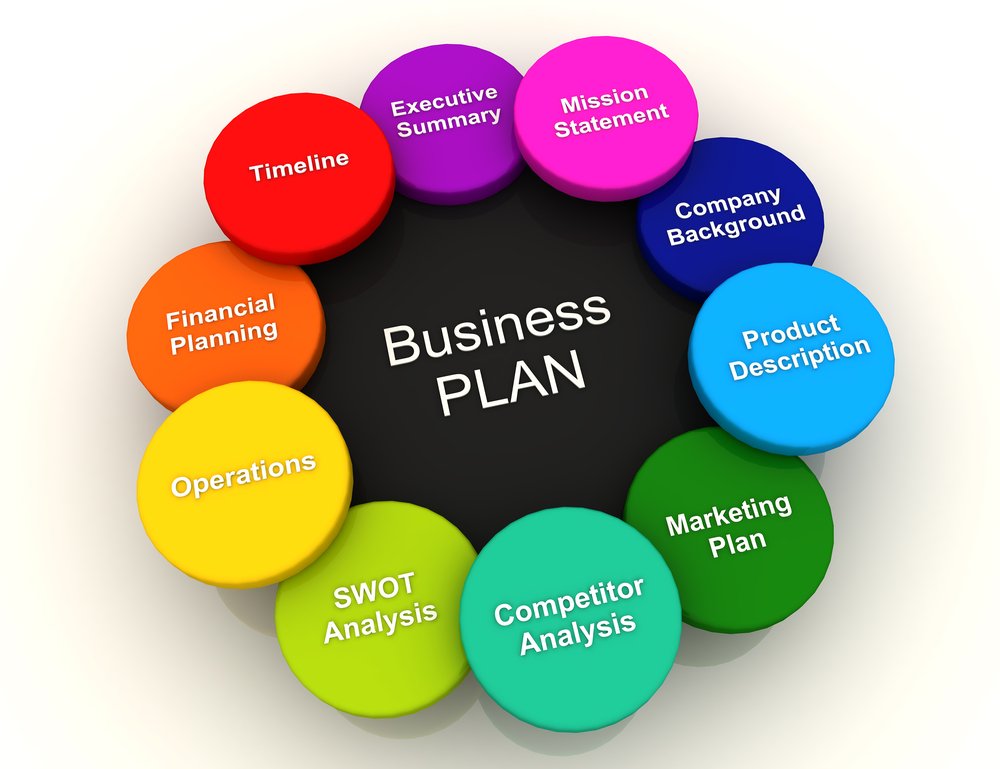
The Anatomy of a Traditional Business Plan (Step-by-Step)
- Executive Summary: A one-page summary of the entire plan.
- Company Description: Legal structure, history, mission, and vision.
- Market Analysis: Industry outlook, target market size, competitor analysis.
- Organization & Management: Company structure, biographies of leadership.
- Service or Product Line: What you sell, the lifecycle, and intellectual property.
- Marketing & Sales Strategy: How you acquire and retain customers.
- Funding Request (if applicable): Amount needed and its allocation.
- Financial Projections: Profit & Loss, Cash Flow, Balance Sheet (3-5 years).
- Appendix: Supporting documents, resumes, permits, etc.
*In my experience, the most common pitfall here is spending 80% of the time on sections 1-6 while hastily assembling financials. This creates a beautiful narrative built on a shaky financial foundation.*
The Nine Building Blocks of the Business Model Canvas (Step-by-Step)
The Canvas forces you to see the interconnections between all parts of your business on one page.
- Customer Segments: Who are you creating value for?
- Value Propositions: What problem do you solve? What bundle of value do you deliver?
- Channels: How do you reach and communicate with customers?
- Customer Relationships: What type of relationship does each segment expect?
- Revenue Streams: How does value translate into cash?
- Key Activities: What crucial things must you do to make the model work?
- Key Resources: What unique assets do you need (people, capital, IP)?
- Key Partnerships: Who are your suppliers, allies, and collaborators?
- Cost Structure: What are the major costs inherent in the model?
What I’ve found is that the magic happens in the conversations sparked by filling out each block. A team debating the precise “Value Proposition” for a specific “Customer Segment” achieves more strategic alignment in an hour than in a month of writing a formal document in silos.
Comparison Table: BMC vs. Traditional Business Plan
| Feature | Business Model Canvas | Traditional Business Plan |
|---|---|---|
| Format | Visual, one-page chart | Text-heavy, multi-page document |
| Purpose | Internal alignment, hypothesis testing, iteration | External fundraising, detailed roadmap, formal commitment |
| Flexibility | High, designed to be changed weekly | Low, treated as a static, “final” document |
| Creation Speed | Hours to days | Weeks to months |
| Focus | Business model viability & assumptions | Comprehensive operational & financial detail |
| Best For | Startups, innovative projects, pivoting | Securing bank loans, detailed grant applications, large investor due diligence |
| Narrative | Snapshot of interconnections | Linear, chronological story |
Why Choosing the Right Tool Is Important
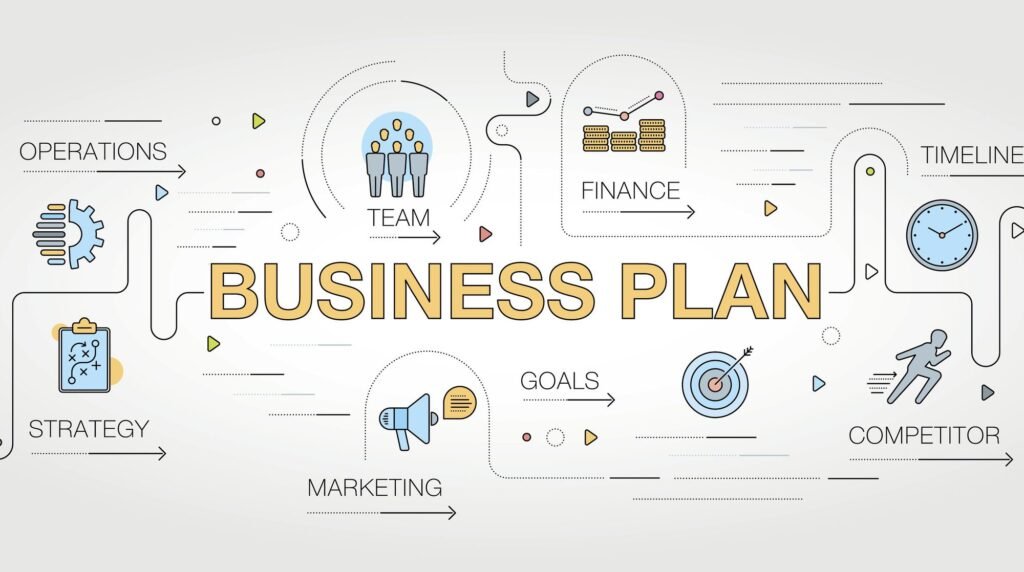
Using a Business Model Canvas when a bank demands a traditional plan will result in a rejected loan application. Using a 40-page business plan to guide a weekly sprint in a tech startup will stifle agility and blind you to market feedback.
The right tool:
- Saves Precious Time & Resources: For early-stage validation, the Canvas is vastly more efficient.
- Improves Strategic Clarity: The Canvas visually exposes gaps (e.g., a high-touch Customer Relationship that isn’t reflected in the Cost Structure).
- Facilitates Communication: A one-page Canvas is infinitely more discussable than a dense document.
- Manages Risk: The iterative nature of lean planning allows you to “fail fast and cheap,” correcting course before betting the company.
As you develop your strategy, consider the legal and operational frameworks you’ll need, which we cover in our guide to building a successful business partnership.
Sustainability in the Future: The Hybrid Model
The future of business planning is not a binary choice but a hybrid, staged approach. The most sustainable methodology is to start with the Business Model Canvas to map, test, and validate your core assumptions in the real world.
Once you have found a repeatable and scalable model (Product-Market Fit), you then translate that validated knowledge into a more formal, traditional business plan to secure growth capital, build detailed operational playbooks, or align a larger organization. This plan is now built on evidence, not just conjecture.
In 2025, we’re seeing the rise of “Living Business Plans”—digital documents that link directly to live data dashboards (e.g., CRM, accounting software), allowing the financial projections in a traditional plan to update semi-automatically based on real performance.
Common Misconceptions Debunked
Misconception 1: “The Business Model Canvas replaces the need for financials.”
Reality: The Canvas has “Cost Structure” and “Revenue Streams” blocks, but these are high-level. You must still build detailed financial projections. The Canvas ensures your financial assumptions are logically connected to the rest of your model.
Misconception 2: “A traditional business plan is obsolete.”
Reality: It is still the gold standard for specific, high-stakes scenarios. Try getting a seven-figure SBA loan or entering a Harvard Business School competition without one.
Misconception 3: “The Canvas is only for tech startups.”
Reality: I’ve successfully used it with brick-and-mortar retail stores, non-profits, and even to redesign internal departments within large corporations. It’s a framework for any model that creates, delivers, and captures value.
Misconception 4: “Once the plan is written, the work is done.”
Reality (The Biggest Pitfall): Both tools are useless if shelved. The Canvas must be tested; the traditional plan must be used to track milestones and variance. Planning is a process, not an event.
Recent Developments and Integration with AI
The planning landscape in 2024-2025 is being shaped by AI. Tools like ChatGPT and specialized business planning software can now:
- Generate draft content for traditional plan sections based on prompts.
- Analyze a filled-out Business Model Canvas to suggest potential risks or overlooked competitors.
- Create preliminary financial models from descriptions of your business logic.
However, the human touch remains irreplaceable. AI can assemble data, but it cannot replace the deep customer empathy, creative value proposition design, and strategic intuition of the founder. Use AI as a research and drafting assistant, not a strategist.
For more on leveraging modern technology in your operations, explore our resources on Artificial Intelligence and Machine Learning.
Success Story: From Canvas to Series A
Company: “EcoPack” (a hypothetical composite based on real cases)
Challenge: Develop a sustainable packaging alternative for e-commerce businesses.
Process:
- Phase 1 (Months 1-3): The founding team used the Business Model Canvas. They physically printed it and used sticky notes. Their first “Key Activity” was customer interviews, which immediately shifted their “Customer Segment” from large retailers to direct-to-consumer brands.
- Phase 2 (Months 4-6): They ran cheap, small-batch tests (Key Activities) to validate production costs (Cost Structure) and pricing (Revenue Streams). The Canvas was updated weekly.
- Phase 3 (Month 7): After securing pilot customers, they needed a $500k seed round. They created a 15-page “lean business plan,” essentially a narrative built around their validated Canvas, with supporting financials.
- Phase 4 (Year 2): For a $2M Series A round, they developed a full, 30-page traditional business plan. Because it was built on the foundation of their tested Canvas, their financial projections were credible and their strategy was robust. They successfully closed the round.
Real-Life Example: A Local Service Business
Let’s apply this to a non-tech idea: “Sherakat Home Organizers.”
- Using the Canvas: The owner would map out Customer Segments (busy professionals, downsizing seniors), Value Propositions (stress reduction, time savings, aesthetic results), and Key Resources (her organizing skills, a van, a website). She might test two different Revenue Streams: hourly rate vs. package pricing, by offering both to her first 10 clients.
- When a Traditional Plan Makes Sense: If she wants to take out a $50k loan to lease a dedicated studio space and hire a first employee, the bank will require a traditional plan with 3-year financial projections. She can now create those projections based on her actual client data from her Canvas-testing phase.
Conclusion and Key Takeaways
Your business plan is the narrative of your future success. Choosing the right format is the first chapter in writing that narrative effectively.
Key Takeaways Box
- Start with the Business Model Canvas to map, test, and validate your core business model assumptions quickly and visually.
- Graduate to a Traditional Business Plan when you need formal external funding, detailed long-term roadmaps, or complex operational planning.
- The Hybrid Approach is King. Use the Canvas for discovery and the traditional plan for execution and investment.
- No Plan is Set in Stone. The greatest value comes from the act of planning and the constant adaptation it informs, not from the document itself.
- Let Purpose Guide Your Choice. Ask: “Who is this for, and what decision do I need it to facilitate?”
Embrace planning as a dynamic skill. For ongoing learning and resources, always revisit the Sherakat Network blog and our comprehensive resources category.
Frequently Asked Questions (FAQs)
H3: 1. I’m a solo founder with just an idea. What should I do first?
Start with a Business Model Canvas. Spend an afternoon filling it out with your best guesses. Then, immediately focus on testing the blocks with the highest uncertainty, usually “Value Proposition” and “Customer Segments.”
H3: 2. Do investors really read 40-page business plans?
For early-stage startups (pre-seed, seed), many angels and VCs prefer a concise pitch deck and a solid, tested narrative. However, for later-stage rounds, institutional investors will have associates conduct deep due diligence, and a thorough business plan is a critical part of that. Always ask potential investors what format they prefer.
H3: 3. How detailed should the financials be in a Lean Plan/Canvas?
Start with a simple, monthly 12-month forecast. Focus on the key drivers: number of customers, average revenue per customer, and your top 5 costs. Fancy, multi-tab spreadsheets come later. The goal is to understand your unit economics.
H3: 4. Can I use both tools at the same time?
Absolutely. Many software tools (like LivePlan) integrate a Canvas-like visual with a more traditional plan structure. You can also use the Canvas as the “table of contents” or strategic core from which you expand into a longer document.
H3: 5. What’s the biggest mistake people make with the Business Model Canvas?
Treating it as a one-time exercise. It’s designed to be messy, edited, and updated. The biggest mistake is filling it out once, putting it on the wall, and never changing it as you learn.
H3: 6. Is there a “right” order to fill out the Canvas?
While you can start anywhere, a common logical flow is: Customer Segments -> Value Propositions -> Channels & Relationships -> Revenue Streams -> Key Activities -> Resources & Partners -> Cost Structure. It’s an iterative process, so you’ll jump around.
H3: 7. How do I validate the assumptions on my Canvas?
Get out of the building! Talk to potential customers (Value Prop), interview potential partners, build a minimum viable product (MVP) to test Key Activities and Revenue Streams. Each block contains hypotheses that need testing.
H3: 8. What are the key sections a banker looks for in a traditional plan?
The Executive Summary, Management Bio, and Financial Projections (especially cash flow) are scrutinized most heavily. They want to know who you are, if you can repay, and if you understand your numbers.
H3: 9. How often should I update my business plan?
A lean plan or Canvas should be reviewed weekly or bi-weekly. A traditional plan used for internal guidance should be reviewed quarterly against actual performance. A plan for investors is a snapshot for a specific fundraising round.
H3: 10. Where can I find templates for both?
For the BMC, download the official template from Strategyzer.com. For traditional plans, the U.S. Small Business Administration (SBA) website offers excellent free templates. We also curate templates in our resources section.
About the Author
Sana Ullah Kakar is a seasoned entrepreneurship educator and business strategist with over 15 years of experience launching and scaling ventures across the Middle East and North Africa. As a lead mentor for the Sherakat Network, he has directly guided more than 150 early-stage founders from ideation to revenue, with a special focus on practical, lean business planning methodologies.
His background blends hands-on operational experience as a former startup COO with academic rigor, holding an MBA in Strategic Management. He is a certified practitioner in Lean Startup and Business Model Innovation from leading global institutions.
What I’ve found is that the most common gap for new entrepreneurs isn’t passion, but process. My mission is to demystify the frameworks that turn ideas into sustainable, systematic businesses. I believe a well-understood business model is the entrepreneur’s most powerful tool for reducing risk and creating real impact.
You can connect with me and continue the conversation through the Sherakat Network contact page.
Free Resources & Further Reading
Internal Links from Sherakat Network:
- Dive deeper into launching your idea with our Complete Guide to Start an Online Business in 2026.
- If your model involves co-founders, our guide to Business Partnership Models is essential reading.
- Explore all our foundational articles in the Blog.
External Links for Broader Context:
- Understand the importance of founder wellbeing with this guide on Mental Health and Psychological Wellbeing.
- For businesses dealing with physical products, learn about Global Supply Chain Management.
- Explore trends in Remote Work Productivity and global Climate Policy to inform your operational and strategic decisions.
Recommended Tools & Templates:
- Strategyzer: The home of the Business Model Canvas and Value Proposition Canvas.
- SCORE.org: Free, expert business mentoring and traditional plan templates.
- The Lean Startup: The foundational book by Eric Ries.
Let’s Discuss!
What’s your biggest challenge in business planning? Are you a fan of the Lean Canvas approach, or do you find comfort in the detail of a traditional plan? Share your experiences and questions in the comments below. Let’s learn from each other’s journeys in building resilient, well-planned businesses.