


Introduction – Why This Matters
You have that spark—an idea that feels like the next big thing. The temptation is to dive headfirst into writing a 40-page business plan, designing a logo, and building a full product. But in today’s fast-paced, customer-centric landscape, this classic approach is a fast track to wasted time, money, and passion. The brutal truth is that most startups fail not from a lack of execution, but from building something nobody truly wants or will pay for.
In my years guiding founders at the Sherakat Network, I’ve seen this pattern repeat: excitement builds around an untested assumption, resources are poured in, and the market responds with a deafening silence. The antidote to this heartbreak is systematic validation. It’s the process of de-risking your idea by gathering real-world evidence before you make significant investments. Think of it as a scientific experiment for your business. This guide will provide you with a modern, actionable playbook to pressure-test your concept, find your first true believers, and build on a foundation of certainty, not just hope.
Background / Context
The era of the static, five-year business plan as a starting document is over. It was a product of a slower time, often used to secure bank loans rather than to discover truth. The rise of the Lean Startup Methodology, popularized by Eric Ries, shifted the paradigm towards agility and learning. The core tenet: treat your startup as a series of hypotheses to be tested, not a plan to be executed.
Today, validation tools are more accessible than ever. From no-code landing page builders and social media ad platforms to AI-driven market research, entrepreneurs can gather critical data with minimal cost. A 2024 report by the Global Entrepreneurship Monitor highlighted that founders who engaged in pre-launch validation activities were 3x more likely to survive past the 2-year mark. Validation isn’t just a step; it’s a survival skill for the modern entrepreneur.
Key Concepts Defined
- Problem-Solution Fit: The initial validation that you are solving a meaningful, urgent problem for a specific group of people. It confirms the “why” of your business.
- Product-Market Fit (PMF): The stage where your product satisfactorily solves that problem for a large enough market, resulting in strong demand, retention, and organic growth. It’s the “holy grail” of early-stage validation.
- Minimum Viable Product (MVP): The simplest version of your product that allows you to collect the maximum amount of validated learning about customers with the least effort. It is a test vehicle, not a final product.
- Customer Discovery: The process of interviewing potential users to understand their problems, workflows, and needs without pitching your solution.
- Value Proposition: A clear statement that explains how your product solves customers’ problems, what specific benefits it delivers, and why it’s better than the alternatives.
- Pivot: A structured course correction designed to test a new fundamental hypothesis about the product, strategy, or engine of growth. It’s a change in direction, not a failure.
- Assumptions Map: A visual layout of all the critical, untested beliefs your business model rests upon (e.g., “Customers are frustrated with X,” “They will pay $Y,” “They will find us through Z channel”).
How It Works: A Step-by-Step Validation Framework
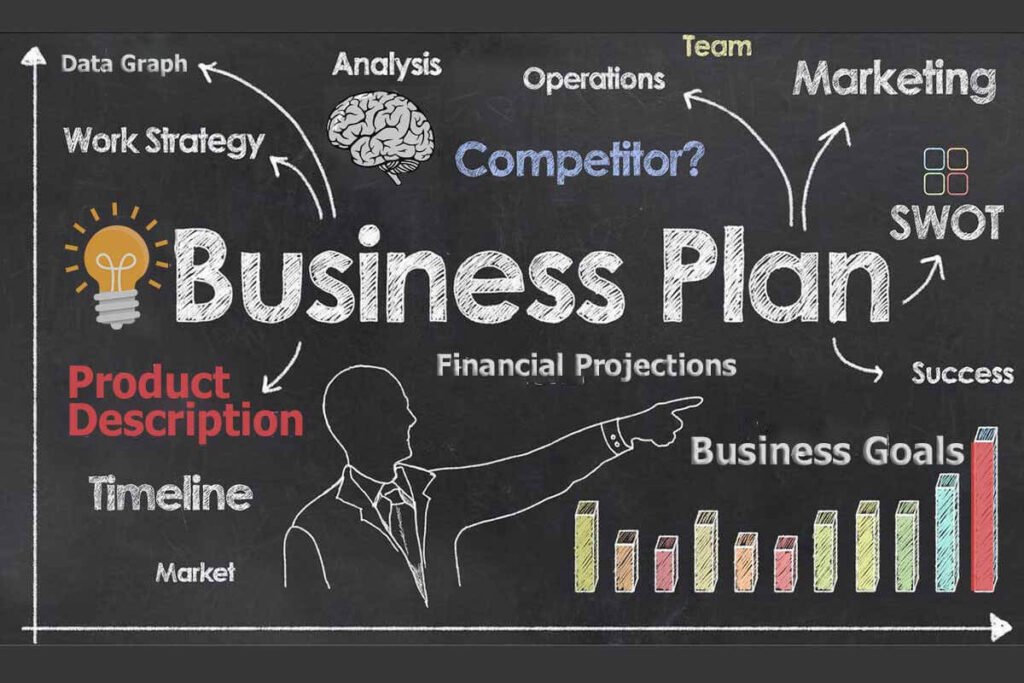
Step 1: Map Your Riskiest Assumptions.
Before you talk to anyone, write down everything you believe to be true. Who is your customer? What is their deepest frustration? What are they currently using? How much would they pay? Which of these assumptions, if wrong, would cause the business to fail? Start by testing those.
Step 2: Go from Opinions to Evidence (The “Get Out of the Building” Phase).
- Conduct Problem Interviews: Find 15-20 people in your target market. Ask open-ended questions about their experiences, pains, and current solutions. Your goal is to hear them describe the problem you suspect exists in their own words. Do not sell.
- Seek Contradiction: Talk to people you think will say “no.” Their feedback is often more valuable than easy validation.
Step 3: Develop a “Smoke Test” MVP.
Create the lowest-fidelity artifact to test demand for your solution.
- The Landing Page Test: Build a simple webpage describing your solution and its benefits. Include a call-to-action (CTA) like “Join the Waitlist” or “Get Early Access.” Drive targeted traffic (e.g., with a small Facebook/Google Ads budget) and measure the click-through rate. This tests your value proposition and messaging.
- The Explainer Video: Create a short video (using tools like Canva or Loom) showing how your product solves the problem. Gauge interest through views, shares, and sign-ups.
- The Concierge MVP: Manually deliver the service your product would automate for your first few “customers.” You learn the exact workflow and what’s truly valuable before writing a line of code.
Step 4: Validate Willingness to Pay.
This is the ultimate test. Methods include:
- Pre-sales/Waitlist with Intent: Offer a discount for early commitment. A “Notify Me” button tests interest; a “Pre-order for 50% Off” button tests willingness to pay.
- The Fake Door Test: On your landing page, include pricing plans and a “Select Plan” button. When clicked, a message says, “Coming Soon! Enter your email to be the first to know.” You track how many people clicked which plan. (Important: Do not actually charge without delivering.)
- Direct Ask: In later customer interviews, ask, “If I had a solution that did X, would you be willing to pay $Y for it? What would make it a must-buy?”
Step 5: Analyze, Learn, and Iterate (or Pivot).
Synthesize your data. Are people describing the problem you thought? Did they click? Did they try to pay? If the evidence is weak, you have a clear signal: pivot or persevere. A pivot might mean changing the target customer, the core feature, or the pricing model. This is a win—you’ve saved months of misguided effort.
Why It’s Important

Skipping validation is the single greatest self-inflicted risk an entrepreneur can take. Systematic validation:
- Saves Time and Capital: It prevents you from building a polished solution to a non-existent or minor problem.
- Creates Customer-Centricity: It forces you to listen first, building deep empathy and ensuring your solution is anchored in real needs.
- Generates Early Traction and Evidence: A list of waitlisted users or early pre-sales is powerful social proof. It makes your startup more attractive to co-founders, hires, and even future investors.
- Builds Founder Confidence: Making decisions based on data, not guesswork, reduces anxiety and provides a clear, objective path forward.
Comparison: The Old Way vs. The Modern Validation Path
| Stage | Traditional Business Plan Approach | Modern Validation Approach |
|---|---|---|
| Step 1 | Write detailed plan based on internal assumptions. | Map and prioritize risky assumptions. |
| Step 2 | Build full product in isolation. | “Get out of the building” for problem interviews. |
| Step 3 | Launch big, hope for market adoption. | Build a low-fidelity MVP (landing page, video, concierge). |
| Step 4 | Set price based on costs + desired margin. | Test willingness to pay with pre-sales, fake doors, interviews. |
| Step 5 | Success/Failure is binary and determined at launch. | Continuously learn, measure, and pivot based on evidence before major investment. |
Sustainability in the Future
The future of validation is increasingly automated, predictive, and integrated.
- AI-Powered Market & Sentiment Analysis: Tools can now scrape forums, reviews, and social media to identify emerging, unaddressed customer pains at scale, helping you spot problems worth solving. This aligns with broader trends in AI and machine learning for business intelligence.
- Crowd-Validated Ideation: Platforms will allow founders to test multiple value propositions and feature sets against simulated audiences to predict market response before any human interaction.
- Embedded Validation in No-Code Tools: The rise of no-code platforms means building a functional prototype to test is faster than ever, blurring the line between MVP and actual product launch. For a deeper look at launching in the digital age, see our complete online business guide.
Common Misconceptions
- “Validation means asking friends and family if they like my idea.” False. Friends and family are biased toward encouragement. You need objective, critical feedback from strangers in your target market.
- “If I build it, they will come.” The “Field of Dreams” fallacy is responsible for countless startup graves. Demand must be proven, not assumed.
- “Talking to people will cause me to lose my unique vision.” Validation is not about letting customers design your product by committee. It’s about ensuring your vision solves a real problem. It provides guardrails, not a blueprint.
- “A high waitlist count means I have product-market fit.” Not necessarily. It indicates interest, but true PMF is measured by retention, repeated use, and organic growth after people have experienced the actual product.
Recent Developments (2024/2025)
- The Micro-Validation Trend: Founders are breaking down validation into even smaller, cheaper experiments. Instead of building a whole landing page, they might test value propositions via poll ads on Instagram Stories or Twitter.
- Community-as-a-Validation-Tool: Building a niche community (e.g., a Discord server, LinkedIn group) around a problem space before launching a product. This creates a dedicated audience for research and a built-in base of early adopters.
- Increased Focus on “Problem Validation” Over “Solution Validation”: The smartest founders now spend 80% of their early time validating the problem’s intensity and frequency, knowing that a well-understood problem makes finding a successful solution far easier. This requires deep psychological insight, akin to understanding user mental models and behaviors.
Success Stories & Real-Life Examples
- The Pivot to Fit: “Instagram” Started as “Burbn,” a complex location-based app with photo-sharing features. Through user validation, the founders noticed people only used the photo-sharing part. They pivoted, stripped everything else away, and focused solely on mobile photos. The result was product-market fit and a billion-user platform.
- The Concierge MVP: “Zappos” Founder Nick Swinmurn didn’t build a massive e-commerce platform. He went to local shoe stores, took pictures of their inventory, posted them online, and when someone ordered, he went back to the store, bought the shoes, and shipped them. This manually-intensive process validated that people were willing to buy shoes online before any major tech investment.
- The Problem-Interview Master: “Dollar Shave Club” Michael Dubin’s famous launch video worked because it was the culmination of deep problem validation. He understood men’s frustration with overpriced razors and the inconvenient shopping experience. The video’s messaging directly attacked those validated pain points with humor and clarity, leading to 12,000 orders in 48 hours.
What I’ve found is that founders who embrace validation develop a kind of “evidence-based confidence.” They move slower at the start but with tremendous momentum later, because every step is confirmed by the market. The most common feedback I get post-validation is, “I feel like I’m cheating—I know exactly what to build next.”
Conclusion and Key Takeaways
Your startup idea is a hypothesis. Validation is the experiment that proves it. Moving from an idea you believe in to a solution you have evidence for is the most important transition an entrepreneur can make.
Key Takeaways:
- Start with the problem, not the solution. Fall in love with the problem, and let the market guide you to the right solution.
- Your goal is to be proven wrong, quickly and cheaply. Each invalidated assumption is a precious piece of learning that steers you toward truth.
- Quantitative data (clicks, sign-ups) and qualitative data (interview stories) are both crucial. Numbers show what is happening; conversations explain why.
- Validation never really stops. Even after launch, you should continuously test new features, pricing, and messaging.
- Embrace the pivot. A pivot based on clear evidence is a sign of strategic intelligence, not failure.
Treat your first $1,000 and 100 hours as a research budget, not a development budget. The insights you buy with that small investment will be worth more than any line of code written in the dark.
For more on building a resilient venture from the ground up, explore our Sherakat Network blog and foundational resources.
FAQs (Frequently Asked Questions)
1. Q: How many customer interviews are enough for problem validation?
A: A good rule of thumb is 15-20 interviews, or until you stop hearing new problems and pain points. You’re looking for patterns, not statistical significance. If 12 out of 15 people describe the same core frustration, you have strong signal.
2. Q: What’s the best way to find people to interview if I have no network?
A: Use LinkedIn Sales Navigator to filter by industry/job title and send personalized, low-pressure messages. Post in relevant Reddit communities, Facebook Groups, or niche forums offering a short, anonymous “feedback chat.” Offer a small gift card as a thank you.
3. Q: Is a “Coming Soon” landing page with an email signup a valid MVP?
A: Yes, it’s a classic “smoke test” MVP. However, to make it truly valuable, you must drive targeted traffic to it (not just friends) and track the conversion rate (visitors to sign-ups). The email list becomes an asset for future communication.
4. Q: How do I ask good customer discovery questions?
A: Use open-ended questions that start with “What,” “How,” or “Tell me about…” Avoid leading questions. Examples: “Tell me about the last time you dealt with [problem].” “How do you currently solve this?” “What’s the most frustrating part of that process?” “How much does this problem cost you in time/money/stress?”
5. Q: What if people are polite and say they like my idea, but then don’t sign up or pay?
A: This is the “politeness bias.” It’s why your key metrics must be actions, not opinions. Don’t ask, “Would you use this?” (opinion). Measure: Did they click the pricing button? Did they enter an email? Did they give you money? (action).
6. Q: Can I validate a physical product idea this way?
A: Absolutely. Use a 3D render or a prototype photo on a landing page for pre-orders (via Shopify). Run a Kickstarter campaign, which is essentially a massive public validation test. Create a video demonstrating the prototype’s function. The principles are the same: demonstrate the solution and gauge willingness to pay.
7. Q: How much should I spend on ad-driven validation tests?
A: Start with a small, focused budget—$20-$50 per day for 3-5 days on a single platform (e.g., Facebook targeting a specific interest/job title). Your goal isn’t to acquire customers cheaply yet, but to buy learning. Track your cost per click (CPC) and, more importantly, cost per landing page conversion (email signup).
8. Q: What does it mean to “pivot”?
A: A pivot is a structured change in one part of your business model based on learning. Examples: Zoom-in Pivot: Your initial app had 10 features, but users only loved one. You ditch the other 9 and build a company around that single feature. Customer Segment Pivot: You built for small businesses, but find passionate adoption from educators. You pivot to serve schools.
9. Q: When is it time to stop validating and start building?
A: When you have consistent, compelling evidence across multiple channels: 1) Qualitative: Customers vividly describe the problem and get excited about your solution frame. 2) Quantitative: You have a strong conversion rate (>5-10%) from targeted traffic to a meaningful action (waitlist signup, pre-order intent). 3) Crucially: You have evidence of willingness to pay.
10. Q: How do I validate a two-sided marketplace or network-based idea?
A: This is a “chicken and egg” problem. The best approach is to manually simulate the network (the “Concierge MVP” on steroids). Be the intermediary yourself. For example, if building a freelance platform, manually recruit 5 great freelancers and 5 clients, and manage their projects. This validates demand on both sides and teaches you the real workflow.
11. Q: What tools should I use for validation?
A: Landing Pages: Carrd, Leadpages, Unbounce. Surveys/Forms: Typeform, Google Forms. Email Collection: Mailchimp, ConvertKit. Ad Testing: Facebook Ads Manager, Google Ads. Interview Scheduling: Calendly. Prototyping: Figma, Canva. Analytics: Google Analytics, Mixpanel.
12. Q: My idea is simple and low-risk. Do I still need to validate?
A: Yes, but your validation can be proportionate. At a minimum, have 10 conversations with potential users. The risk isn’t just financial; it’s the opportunity cost of your time spent on an idea with weak demand.
13. Q: How do I handle negative feedback during validation?
A: Celebrate it. Negative feedback is pure, high-quality data. It tells you what’s wrong. Thank the person, ask clarifying questions (“What specifically didn’t work for you?”), and use it to refine your hypothesis. The only bad feedback is vague or non-existent feedback.
14. Q: Can validation help me find a co-founder or attract team members?
A: 100%. Showing a potential co-founder that you’ve done the hard work of talking to customers, have a list of 500 waitlisted emails, or have pre-order revenue is infinitely more compelling than just an idea. It demonstrates execution capability and reduces their perceived risk.
15. Q: Where can I learn more about specific validation techniques?
A: Excellent books: The Mom Test by Rob Fitzpatrick (for interviewing), Lean Startup by Eric Ries. Online: Y Combinator’s Startup Library, the Sherakat Network Resources page. Podcasts: The Startup Chat, How I Built This (for post-validation stories).
Free Resources & Downloadables
To put this guide into practice, here are tools I’ve created and refined with Sherakat Network founders:
1. The Assumptions Mapping Worksheet:
A guided template to identify and prioritize your business’s riskiest assumptions, turning vague worries into testable hypotheses.
2. The Customer Discovery Interview Script & Tracker:
A proven script of open-ended questions and a spreadsheet to log interviews, track patterns, and synthesize insights.
3. Landing Page & Smoke Test Launch Checklist:
A step-by-step list covering copy, design, analytics setup, and ad targeting to ensure your validation test generates clean, actionable data.
4. Validation Metrics Dashboard (Google Sheets):
A simple dashboard to track the key numbers from your tests: Interview Count, Problem Pattern Strength, Landing Page Visits, Conversion Rate, Cost per Conversion.
Download these resources now. Go to our Sherakat Network Resources page and enter the code: VALIDATEIDEA at the top.
Join the Discussion
Validation is a journey best taken with a community. Sharing your struggles and insights makes everyone stronger.
We invite you to:
- Share Your Validation Experiment: What test did you run? What was your most surprising finding? What did you pivot on?
- Ask for a Critique: Post your landing page URL or your interview questions in the comments for constructive feedback from fellow founders.
- Debate the Ethics: Where is the line between a “fake door” test and deception? How transparent should you be with interview subjects?
Your real-world experience is the most valuable data point for other readers. Let’s build a living library of validation case studies together.
If you’re facing a particularly tricky validation challenge, feel free to reach out through our contact form. We may feature anonymized case studies (with your permission) to help others.
About the Author
Sanaullah Kakar is the Head of Venture Science at the Sherakat Network. With a PhD in Behavioral Psychology and experience as a former product lead at a Silicon Valley unicorn, sanaullah specializes in applying rigorous research methodologies to de-risk startup ideas. He has designed validation programs for over 500 early-stage founders.
“I see too many brilliant minds building in a vacuum. My passion is turning the art of entrepreneurship into a science of evidence. The most powerful tool a founder has is not a line of code, but a humble, curious question asked to a potential customer. That conversation is where true innovation begins.”
Sanaullah’s work has been cited in several business journals, and she is a sought-after workshop facilitator on customer discovery.
Comment on “Beyond the Business Plan: The Modern Guide to Validating Your Startup Idea Before You Invest”