

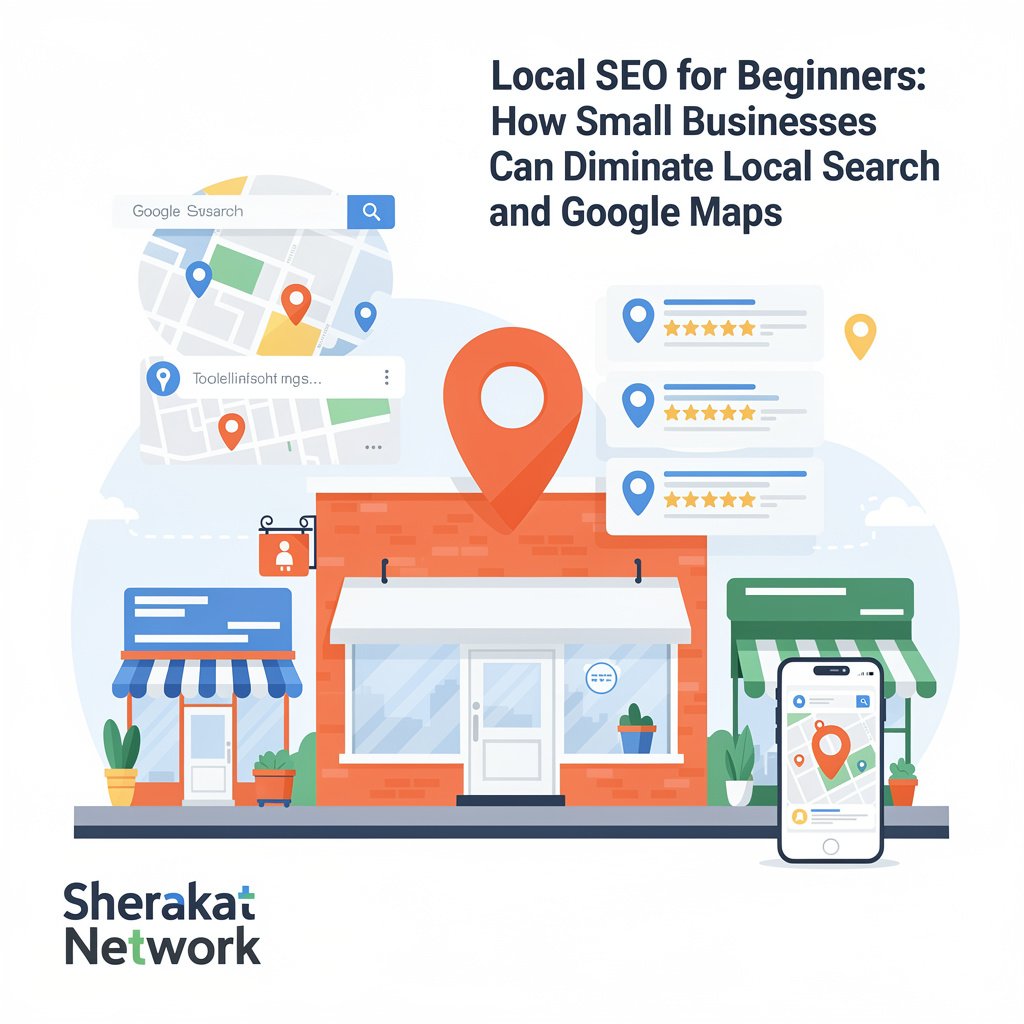

Introduction – Why This Matters
In my experience, there’s a moment of realization that every local business owner has. They’ve built a website. They’ve maybe even dabbled in some of the SEO fundamentals. But when they search for their own business on Google, something confusing happens. Their website shows up, sure. But above it, there’s a map with three local businesses listed—and they’re not on it. Their competitors are. And those competitors are getting the phone calls, the directions, and the customers.
What I’ve found is that local SEO is the great equalizer for small businesses. You might not be able to out-rank a national chain for broad terms like “plumber” or “dentist.” But you absolutely can dominate searches like “plumber near me,” “emergency dentist in [your city],” or “best coffee shop in [your neighborhood].” And here’s the critical truth: those “near me” and location-specific searches are exactly what your potential customers are using to find businesses like yours.
According to recent 2025 data, 46% of all Google searches have local intent. That means nearly half of everyone searching is looking for something nearby. Even more striking: 76% of people who search for something nearby on their smartphone visit a related business within 24 hours, and 28% of those searches result in a purchase. Local SEO isn’t just about visibility—it’s about driving real foot traffic and revenue.
Local SEO is also fundamentally different from “global” SEO in several key ways. It involves managing your Google Business Profile (formerly Google My Business) just as much as your website. It requires building local citations (mentions of your business on other websites). It depends heavily on customer reviews. And it means optimizing for “near me” searches and voice queries that are often conversational: “Hey Siri, where’s the closest pizza place?”
In this guide, we’re going to demystify local SEO. We’ll cover everything from setting up and optimizing your Google Business Profile to building local citations, managing reviews, and creating location-specific content. By the end, you’ll have a complete roadmap for dominating local search in your area.
Background / Context
To understand local SEO, we need to look at how local search evolved. In the early days of the internet, local search was essentially just regular search with a city name added. You’d search for “plumber Chicago” and get results for plumbing companies that happened to have those words on their website.
Then Google introduced Google Local in 2004, which later became Google Places, then Google My Business, and now Google Business Profile. This was a game-changer. For the first time, businesses could create a dedicated profile that would appear directly in search results, complete with address, phone number, hours, photos, and reviews. The “local pack”—those three businesses that show up on a map—became prime real estate.
Google’s algorithm for local search uses three main factors:
- Relevance: How well does your business profile match what someone is searching for?
- Distance: How far is your business from the searcher’s location?
- Prominence: How well-known and reputable is your business? (This is where reviews and citations come in.)
Today, in 2026, local SEO is more sophisticated than ever. Voice search has exploded, with people asking their phones and smart speakers for “the best Thai restaurant near me” or “a plumber open now.” Google’s algorithms are better at understanding local intent, even when the location isn’t explicitly stated (they use the searcher’s device location). And the local pack has evolved to include features like “curbside pickup,” “delivery,” and “appointment booking” directly in the search results.
Local SEO also intersects heavily with the E-E-A-T principles we covered in our E-E-A-T guide. For local businesses, trust is everything. A complete, accurate, and well-managed Google Business Profile signals trustworthiness. Genuine, positive reviews build authority. Consistent name, address, and phone number (NAP) information across the web demonstrates reliability.
Key Concepts Defined
Before we dive into the how-to, let’s establish the key vocabulary of local SEO.
- Google Business Profile (GBP) : A free tool that allows businesses to manage their online presence across Google, including Search and Maps. It’s the most important local SEO asset you have. Previously called Google My Business.
- Local Pack: The block of three local business listings that appears at the top of Google search results for local queries, often accompanied by a map. Example: searching for “coffee shop near me” shows a map and three coffee shops.
- Local Finder: The expanded local results that appear when you click “More places” at the bottom of the local pack. It shows a longer list of local businesses with additional details.
- NAP Consistency: Your business Name, Address, and Phone number appearing exactly the same way across all online platforms (your website, Google Business Profile, social media, directories, etc.). Inconsistent NAP information confuses Google and hurts your local rankings.
- Local Citations: Any online mention of your business’s NAP information on other websites, even if there’s no link. Examples include business directories (Yelp, Yellow Pages), local chamber of commerce sites, and industry-specific platforms. Citations help Google verify that your business is legitimate and established.
- Reviews: Customer feedback left on your Google Business Profile, Yelp, Facebook, and other platforms. Review quantity, quality, and recency are significant local ranking factors.
- Localized Content: Website content that specifically targets your local area. Examples include blog posts about “Best Things to Do in [Your City]” or service pages like “Plumber in [Your Neighborhood].”
- Near Me Searches: Searches that imply local intent without specifying a location, relying on the searcher’s device location. Example: “pizza near me.” Optimizing for these is a key local SEO skill.
- Local Link Building: Earning backlinks from other local businesses, organizations, news sites, and community platforms. A link from your city’s chamber of commerce is a powerful local authority signal.
- Geo-Targeted Keywords: Keywords that include a specific location. Example: “dentist in Austin” rather than just “dentist.”
- Service Area Business (SAB) : A business that serves customers at their locations rather than having a physical storefront customers visit. Examples include plumbers, electricians, mobile dog groomers. SABs have different optimization needs than brick-and-mortar businesses.
- Google Guaranteed / Local Services Ads: A special type of ad that appears above the local pack for certain service categories. Businesses are screened and background-checked by Google, and they display a “Google Guaranteed” badge. While these are ads, they’re closely related to local SEO.
- Map Pack: Another term for the local pack, emphasizing the map component.
How It Works (Step-by-Step Breakdown)
Local SEO success comes from a combination of optimizing your Google Business Profile, your website, and your presence across the web. Here’s a step-by-step breakdown.
Step 1: Claim and Verify Your Google Business Profile
This is the absolute foundation of local SEO. If you haven’t done this, nothing else matters.
How to do it:
- Go to google.com/business and click “Manage now.”
- Enter your business name. If it appears, you can claim it. If not, you’ll create a new listing.
- Enter your business address. If you’re a service area business (you go to customers), you have the option to hide your address and define a service area.
- Select your business category. This is crucial—choose the most specific and accurate category possible.
- Add your phone number and website URL.
- Google will then verify your business. Verification is typically done by postcard (Google sends a code to your physical address), but other options (phone, email, video) are available for some businesses. Complete verification as soon as possible.
Pro tip from experience: Use the exact same business name, address, and phone number that you use everywhere else. Don’t abbreviate “Street” as “St.” in one place and spell it out in another. Consistency is critical.
Step 2: Complete and Optimize Your Google Business Profile
Once verified, your profile needs to be as complete and compelling as possible. An incomplete profile looks untrustworthy and ranks poorly.
Essential information to add:
- Business hours: Include regular hours and special holiday hours. Keep them updated.
- Photos and videos: Add high-quality photos of your storefront (inside and out), your team, your products or services, and videos if possible. Businesses with photos get 42% more requests for directions and 35% more clicks through to their websites.
- Services and products: List your specific services or products with descriptions and prices if applicable.
- Attributes: Add relevant attributes like “Wheelchair accessible,” “Free Wi-Fi,” “Outdoor seating,” “Curbside pickup,” etc.
- Appointment link: If you use a booking system, link it so customers can book directly from search.
- Q&A section: Monitor and answer questions customers ask here. You can even pre-populate it with common questions and answers.
- Posts: Use Google Posts to share updates, offers, events, and new content. Posts appear in your profile and can drive engagement.
Pro tip: Regularly update your profile. Add new photos, respond to reviews, and post updates. Active profiles are seen as more reliable.
Step 3: Ensure NAP Consistency Across the Web
Your business name, address, and phone number need to be identical everywhere they appear online. Inconsistent NAP information confuses Google and can hurt your local rankings.
Where to check for consistency:
- Your website (especially the footer and contact page)
- Google Business Profile
- Social media profiles (Facebook, Instagram, LinkedIn, etc.)
- Online directories (Yelp, Yellow Pages, Bing Places, etc.)
- Local chamber of commerce sites
- Industry-specific directories
- Data aggregators (services like Infogroup, Acxiom, and Factual that distribute business data to multiple directories)
How to fix inconsistencies:
- Create a standard version of your NAP. Decide exactly how you’ll write it (e.g., “123 Main St.” vs. “123 Main Street”).
- Update all your profiles and listings to match exactly.
- Use tools like Moz Local, Yext, or BrightLocal to help manage citations and identify inconsistencies (these are paid tools but can save enormous time).
Step 4: Build Local Citations
Citations are mentions of your business on other websites. They help Google verify that your business is real, established, and located where you say it is.
Types of citations:
- Major directories: Yelp, Yellow Pages, Bing Places, Facebook, Foursquare.
- Local directories: Your city’s chamber of commerce, local business associations, local news sites.
- Industry-specific directories: If you’re a restaurant, directories like Zomato or TripAdvisor. If you’re a doctor, health-specific directories.
- Data aggregators: Services like Infogroup, Acxiom, and Factual that supply business data to hundreds of other directories. Getting listed with them can multiply your citations.
How to build citations:
- Start with the major directories. Claim and complete your profiles on Yelp, Bing Places, and Facebook.
- Search for “[your city] business directory” or “[your industry] directory [your city]” to find local opportunities.
- Check your competitors—see which directories they’re listed on and get listed there too.
- Consider using a citation building service if you have the budget (Moz Local, BrightLocal, Yext). They can distribute your information to dozens of directories at once.
Important: Focus on quality over quantity. A citation on a reputable, relevant directory is worth far more than dozens of spammy, low-quality directory listings.
Step 5: Implement Local On-Page SEO
Your website needs to send clear signals to Google about your location and local relevance. This builds on the on-page SEO checklist you’ve already mastered.
Key on-page elements for local SEO:
- Title tags and meta descriptions: Include your city or region in title tags and meta descriptions for relevant pages. Example: “Emergency Plumber in Austin | 24/7 Service | Sherakat Plumbing.”
- H1 and content headers: Use location-specific headers on your pages. Example: “Serving Austin and Surrounding Areas” as an H2.
- NAP in footer: Your name, address, and phone number should be in the footer of every page on your website. Use structured data (schema markup) to help Google understand it.
- Local landing pages: If you serve multiple locations, create a dedicated page for each location. Each page should have unique content about that location, not just copied text with the city name changed.
- Embedded Google Map: Embed a Google Map showing your location on your contact page and local landing pages. This is a strong local signal.
- Local business schema: Add structured data markup (LocalBusiness schema) to your website. This helps Google understand your business type, location, hours, and more. If you use an SEO plugin like Yoast or Rank Math, they can often add this automatically.
Step 6: Create Localized Content
Content that specifically targets your local area builds relevance and authority. This is where your keyword research skills come into play, but with a local twist.
Local content ideas:
- Blog posts about local events: “Best Things to Do in [City] This Weekend.”
- Guides to local attractions: “A Visitor’s Guide to [Local Park or Attraction].”
- Interviews with local business owners or community figures: Builds relationships and local relevance.
- Posts about your involvement in the community: Charity events, sponsorships, local partnerships.
- “Best of [City]” lists: “Best Coffee Shops in [City]” (even if you’re a coffee shop, this can attract local readers).
- FAQ pages answering local questions: “What’s the average cost of [service] in [city]?” or “How long does it take to get a permit in [city]?”
Pro tip: Local content is also great for link building. Other local businesses and organizations may link to your useful local guides.
Step 7: Manage and Generate Customer Reviews
Reviews are a major local ranking factor and heavily influence customer decisions. A business with many recent, positive reviews will almost always outrank a similar business with few or no reviews.
Review best practices:
- Ask for reviews: Train your staff to ask happy customers to leave a review. Make it easy by sending a direct link (use a tool like a URL shortener to create goo.gl/[yourbusiness] that redirects to your Google review page).
- Respond to all reviews: Respond to every review, both positive and negative. Thank positive reviewers. For negative reviews, apologize sincerely, address their concerns professionally, and take the conversation offline if appropriate. This shows you care about customer feedback.
- Never buy fake reviews: Google is very good at detecting fake reviews, and getting caught can result in severe penalties, including removal from the local pack.
- Monitor review platforms: Check Google, Yelp, Facebook, and industry-specific platforms regularly for new reviews.
- Feature reviews on your website: With permission, showcase positive reviews on your site. This builds trust with potential customers.
How to get more reviews:
- Send a follow-up email after a purchase or service, thanking the customer and asking for a review.
- Create a simple flyer or card with a QR code that links directly to your Google review page.
- Offer a small incentive (like entry into a drawing) for leaving a review—but be careful, as some platforms prohibit incentivizing reviews. Check each platform’s policies.
Step 8: Build Local Links
Backlinks from other local businesses, organizations, and news sites are powerful authority signals for local SEO. They tell Google that you’re an established part of your local community.
Local link-building strategies:
- Sponsor local events: Many event websites will link to sponsors.
- Join the local chamber of commerce: Chambers often have member directories with links.
- Partner with complementary local businesses: A wedding photographer might partner with a florist and a venue, and they can link to each other’s sites.
- Offer to write guest posts for local blogs or news sites: Share your expertise on local topics.
- Get involved in local charities: Charity websites may link to business supporters.
- Create locally useful resources: A “Guide to [Local Park]” or “Map of [City] Historic Sites” might attract links from local schools, tourism sites, and community organizations.
Step 9: Optimize for Voice Search and “Near Me”
With the rise of smart speakers and mobile voice search, optimizing for conversational, location-based queries is essential.
Voice search optimization tips:
- Target long-tail, conversational keywords: People speak differently than they type. Instead of “plumber Austin,” they might say “who’s the best plumber near me?” or “find a plumber open now.” Use your keyword research skills to find these natural language phrases.
- Create FAQ pages: Answer common questions conversationally. “How much does it cost to unclog a drain in Austin?” followed by a clear, concise answer.
- Optimize for “near me”: Ensure your Google Business Profile is complete and verified, as “near me” searches rely heavily on GBP data. Also include phrases like “near you” or “in your area” in your content.
- Focus on local intent keywords: Terms like “open now,” “24 hour,” “delivery,” “takeout,” and “curbside pickup” are increasingly important for voice and mobile searches.
Step 10: Track and Measure Local SEO Performance
You can’t improve what you don’t measure. Use the measurement techniques you’ve already learned, with a local focus.
Key local SEO metrics to track:
- Google Business Profile insights: Google provides data on how customers find your profile (search vs. maps), what actions they take (website visits, direction requests, phone calls), and where they’re located. Check this regularly.
- Local pack rankings: Track your position in the local pack for your key terms. Tools like BrightLocal, Whitespark, or even manual incognito searches can help.
- Local organic rankings: Track your rankings for geo-targeted keywords (e.g., “dentist in Austin”).
- Website traffic from local searches: In Google Analytics, segment your organic traffic by location to see how many visitors come from your local area. Also look at traffic to your local landing pages.
- Phone calls and direction requests: If possible, track phone calls from organic search (using call tracking) and monitor direction requests in your GBP insights.
- Review metrics: Track the number and average rating of your reviews over time.
Why It’s Important
Local SEO isn’t just a nice-to-have for businesses with physical locations—it’s essential for survival in today’s search landscape.
- It Drives Real-World Foot Traffic: Local searches are incredibly commercial. People searching for local businesses are often ready to visit or buy. Ranking well in local results directly translates to more customers walking through your door.
- It’s Where Your Customers Are Looking: When someone needs a plumber, a dentist, or a coffee shop, they don’t open a phone book. They pull out their phone and search. If you’re not visible in that moment, you don’t exist to them.
- It Levels the Playing Field: You can’t outspend a national chain on broad advertising. But you can out-local them. A well-optimized local business with great reviews can rank above a national chain for local searches because Google prioritizes relevance and proximity.
- It Builds Trust and Credibility: A complete, active Google Business Profile with positive reviews signals to potential customers that you’re a legitimate, trustworthy business. People trust local businesses they can see on a map and read reviews about.
- It Complements Your Other SEO Efforts: Local SEO doesn’t replace the fundamentals, on-page work, technical optimization, link building, and E-E-A-T you’ve already learned. It builds on them, adding a local layer that makes your overall SEO strategy more powerful.
Sustainability in the Future
Local SEO will continue to evolve, but the core principles will remain. Here’s what the future looks like.
- The Primacy of Google Business Profile: GBP will only become more central to local search. Google is constantly adding new features (like appointment booking, messaging, and more detailed attributes). Staying on top of these features and using them actively will be essential.
- Voice Search Dominance: As voice search becomes more accurate and more common, optimizing for conversational, question-based local queries will be critical. “Hey Google, find a pizza place open now near me” is the future of local search.
- Visual Search: Google Lens and similar visual search tools allow users to search with their camera. For local businesses, this means optimizing photos (with descriptive filenames and alt text) and ensuring your business appears in image search for local queries.
- Hyperlocal Intent: Searches are becoming more granular. Instead of “coffee shop in Austin,” people search “coffee shop in Hyde Park neighborhood, Austin.” Optimizing for neighborhoods and micro-communities will become more important.
- Reviews as a Trust Signal: Reviews will continue to grow in importance, both for rankings and for customer decision-making. Managing your online reputation will be an ongoing, essential task.
Common Misconceptions
Let’s clear up some myths that can waste your time and effort in local SEO.
- Myth: “Local SEO is just about Google Business Profile.”
- Reality: GBP is the most important piece, but it’s not the only piece. Your website, local citations, reviews, local content, and local links all play crucial roles. A complete local SEO strategy addresses all of these.
- Myth: “I need to be #1 in the organic results, not just the local pack.”
- Reality: For local searches, the local pack is often the most visible and most clicked part of the results. Being in the top three of the local pack can drive more business than being #1 in the organic results below it. Aim for both, but don’t neglect the pack.
- Myth: “More reviews are always better, even if they’re fake.”
- Reality: Fake reviews are a terrible idea. Google is getting very good at detecting and removing them, and getting caught can lead to serious penalties. Focus on earning genuine reviews from real customers.
- Myth: “I can use the same content for all my location pages.”
- Reality: Duplicate content across location pages (just changing the city name) is a bad practice. It provides little value to users and can be seen as thin content by Google. Each location page should have unique, valuable content about that specific location.
- Myth: “Local SEO is a one-time setup.”
- Reality: Local SEO requires ongoing maintenance. You need to monitor and respond to reviews, update your GBP posts, keep your hours accurate, track your rankings, and continue building citations and links. It’s an ongoing process, not a one-time project.
- Myth: “If I hide my address (as a service business), I can’t rank locally.”
- Reality: Service area businesses can absolutely rank locally. You’ll define a service area in your GBP, and Google will show you for searches within that area. Just be sure to hide your address if you don’t want customers visiting you.
Recent Developments
Local SEO in 2026 is shaped by several key developments.
- Google Business Profile Messaging: Google now allows customers to message businesses directly through their GBP listing. Responding promptly to these messages is a new engagement signal.
- Products and Services on GBP: Google has expanded the ability to list specific products and services directly on your profile, with prices and descriptions. This makes your listing more informative and can improve relevance.
- Enhanced Attributes: Google continues to add more detailed attributes (like “LGBTQ-friendly,” “Black-owned,” “Women-led”) that help businesses connect with specific audiences and improve relevance.
- AI-Generated Profile Summaries: Google is experimenting with using AI to generate summaries of businesses based on reviews and other information. This makes managing your online reputation even more important.
- Integration with Local Services Ads: The line between organic local results and Local Services Ads (with the “Google Guaranteed” badge) is blurring. For eligible businesses, running these ads can complement organic local SEO efforts.
Success Stories
The Family Restaurant That Became a Local Institution
A few years ago, I worked with a small family-owned Italian restaurant in a medium-sized city. They had been in business for 20 years, had great food, and a loyal customer base. But they were invisible online. Their Google Business Profile was unclaimed and incomplete. They had no website to speak of. Younger customers searching for “Italian food near me” were finding newer, trendier places instead.
We started with the basics:
- Claimed and fully optimized their Google Business Profile with photos of their dishes, their family, and their cozy interior.
- Built a simple website with their menu, hours, and a contact form, following the on-page SEO checklist.
- Encouraged happy customers to leave reviews (they had decades of goodwill to draw on).
- Created local citations on Yelp, TripAdvisor, and local directories.
- Added local content: blog posts about the history of their family recipes, their involvement in local food festivals, and their support for local schools.
Within six months, they were in the local pack for “Italian restaurant [city]” and “best pasta near me.” Their website traffic from local searches increased by 400%. More importantly, they saw a noticeable increase in new customers—especially younger families—who had found them online. They didn’t change their food or their service. They just made themselves visible to the people searching for exactly what they offered.
The Plumber Who Dominated Local Service Areas
A plumbing company served multiple cities in a metropolitan area. They were struggling to rank for “plumber” in any of them because they were competing with larger, more established companies.
We created dedicated service area pages for each city they served. Each page had unique content about plumbing issues common in that area (based on the age of homes, local water quality, etc.), testimonials from customers in that city, and clear calls-to-action. We optimized their Google Business Profile as a service area business, defining all the cities they served.
We also focused on local link building—getting listed on local chamber of commerce sites, sponsoring little league teams in different cities, and partnering with local real estate agents who would recommend them to new homeowners.
Within a year, they were ranking in the local pack for multiple cities. Their organic leads increased by 300%, and they hired two additional plumbers to handle the workload. The key was treating each location as a unique market with its own optimization strategy, not just a one-size-fits-all approach.
Real-Life Examples
Example 1: The Coffee Shop That Optimized for “Near Me”
Scenario: A locally-owned coffee shop in a busy downtown area wants to attract more foot traffic from people searching on their phones.
Poor Local SEO:
- Google Business Profile is unclaimed, showing incorrect hours and old photos.
- Website has no mention of the neighborhood or nearby landmarks.
- No effort to get reviews.
Good Local SEO:
They do the following:
- Claim and fully optimize their Google Business Profile with current hours, dozens of high-quality photos of the interior and their coffee, and accurate attributes (“Outdoor seating,” “Free Wi-Fi,” “Dogs allowed”).
- Respond to every review, thanking customers and addressing any concerns.
- Create a website with local content: “Best Coffee in [Neighborhood Name]” and “A Guide to Remote Work-Friendly Cafes in [City].”
- Ensure their NAP is consistent across Yelp, Foursquare, and local directories.
- Add a simple “Click for Directions” button on their mobile site.
Result: When someone searches “coffee near me” while in the neighborhood, their fully optimized profile appears in the local pack, complete with photos, hours, and positive reviews. They get more foot traffic from people who were just passing by and searched on impulse.
Example 2: The Dental Practice That Built Trust Through Reviews
Scenario: A new dental practice opens and needs to establish trust and attract patients.
Poor Local SEO:
- No Google Business Profile.
- No reviews.
- Website has no information about the dentists or their credentials.
Good Local SEO:
They do the following:
- Create and verify their Google Business Profile immediately.
- Add detailed information about their services, hours, and the dentists (with photos and bios, building E-E-A-T).
- Implement a system to ask every happy patient for a review (email follow-up with a direct link).
- Respond to every review professionally and gratefully.
- Add local content: “What to Expect at Your First Visit to a [City] Dentist” and “Common Dental Issues in [City/Region].”
Result: Within a year, they have dozens of 5-star reviews. Their profile stands out in the local pack. Potential patients see the positive reviews and the professional, detailed profile and feel confident choosing them over competitors with fewer or no reviews.
Example 3: The Multi-Location Business That Avoided Duplicate Content
Scenario: A regional home services company (HVAC, plumbing, electrical) has 5 locations across the state.
Poor Local SEO:
- Creates 5 nearly identical location pages, just changing the city name. All pages have the same generic content.
- Has a single Google Business Profile for their main office, ignoring the other locations.
Good Local SEO:
They do the following:
- Create a separate, verified Google Business Profile for each location, with accurate address and phone number for each.
- Create unique location pages for each office on their website. Each page includes:
- Specific information about that location (address, local phone number, map).
- Testimonials from customers in that area.
- Information about local events or partnerships.
- Photos of the local team.
- Content about common HVAC/plumbing issues specific to that area (based on climate, housing stock, etc.).
- Ensure NAP consistency for each location across all directories.
- Build local citations for each location in relevant local directories.
Result: Each location can rank in its own local pack. A customer searching for “plumber near [Suburb]” finds the location closest to them, with relevant local information. The company dominates local search across their entire service region.
Conclusion and Key Takeaways
Local SEO is the practice of making your business visible to the people searching for exactly what you offer, in exactly the place you serve. It’s the bridge between the digital world of search and the physical world of customers walking through your door.
You’ve now built a complete SEO foundation. You understand the fundamentals. You can research keywords that matter. You know how to optimize pages. You can fix technical issues. You understand link building and E-E-A-T. You can measure your success. And now, you know how to apply all of that to dominate local search.
Key Takeaways:
- Google Business Profile is your most important local asset. Claim it, verify it, complete it, and keep it active.
- NAP consistency is critical. Your name, address, and phone number must be identical everywhere online.
- Reviews matter enormously. Ask for them, respond to them, and never, ever fake them.
- Build local citations on relevant directories. Focus on quality and consistency.
- Create localized content on your website. Unique, valuable content for each location you serve.
- Optimize for voice search and “near me.” Think conversationally and locally.
- Build local links through community involvement. Sponsorships, partnerships, and local resources all help.
- Track your local performance. Use GBP insights, local rank tracking, and Google Analytics to measure what matters.
Remember, local SEO is about connecting with your community. It’s about making it easy for the people right around you to find you, trust you, and choose you. When you do it right, you’re not just optimizing for Google—you’re becoming a more visible, trusted part of your local community. And that’s good for business in every possible way.
FAQs (Frequently Asked Questions)
1. What is local SEO?
Local SEO is the practice of optimizing your online presence to attract more business from relevant local searches. These searches happen on Google and other search engines, and often include location-specific terms like “near me” or city names.
2. What’s the difference between local SEO and regular SEO?
Regular SEO focuses on ranking in the main search results nationally or globally. Local SEO focuses on ranking in location-specific results, especially the local pack (the map with three listings) and for geo-targeted keywords. It involves unique elements like Google Business Profile, local citations, and reviews.
3. What is a Google Business Profile?
It’s a free listing that allows you to manage how your business appears on Google Search and Maps. It includes your business name, address, phone number, hours, photos, reviews, and more. It’s the most important tool for local SEO.
4. How do I create a Google Business Profile?
Go to google.com/business and click “Manage now.” Follow the steps to add your business information and verify your ownership. Verification is typically done by postcard, but other methods are available.
5. What is NAP consistency?
NAP stands for Name, Address, and Phone number. Consistency means your business information appears exactly the same way across your website, Google Business Profile, social media, and all online directories. Inconsistent NAP confuses Google and hurts rankings.
6. What are local citations?
Local citations are any online mentions of your business’s NAP information on other websites, even if there’s no link. They help Google verify your business is legitimate. Examples include directory listings (Yelp, Yellow Pages) and mentions on local chamber of commerce sites.
7. How important are reviews for local SEO?
Very important. Review quantity, quality, and recency are significant local ranking factors. Reviews also heavily influence customer decisions. A business with many positive, recent reviews will almost always outrank a similar business with few or no reviews.
8. How do I get more reviews?
Ask happy customers directly (in person, by email, or with a follow-up text). Make it easy by providing a direct link to your Google review page. Never buy fake reviews—it’s risky and can lead to penalties.
9. How should I respond to negative reviews?
Apologize sincerely, address their concerns professionally, and offer to take the conversation offline to resolve the issue. Never get into an argument. A thoughtful response to a negative review can actually build trust with potential customers who see it.
10. What’s the difference between a brick-and-mortar business and a service area business (SAB) for local SEO?
A brick-and-mortar business has a physical location customers visit (like a store or restaurant). A service area business serves customers at their locations (like a plumber or mobile dog groomer). SABs can hide their address in Google Business Profile and define a service area instead.
11. Do I need a website for local SEO?
Yes. While your Google Business Profile is crucial, a website is still essential. It’s where you provide detailed information, build authority with content, and give customers a place to learn more and convert. Your website and GBP work together.
12. What should I include on local landing pages?
Include: location-specific NAP, a map, unique content about that location (not copied from other pages), testimonials from customers in that area, local photos, and calls-to-action (like “Call Now” or “Get Directions”).
13. What is the local pack?
The local pack is the block of three local business listings that appears at the top of Google search results for local queries, often accompanied by a map. It’s prime real estate for local businesses.
14. How do I rank in the local pack?
Ranking in the local pack depends on relevance (how well your profile matches the search), distance (how far you are from the searcher), and prominence (how well-known and reputable you are, based on reviews, citations, and links).
15. What are geo-targeted keywords?
Keywords that include a specific location, like “dentist in Austin” or “plumber near me.” Optimizing for these is a core part of local SEO.
16. How do I optimize for “near me” searches?
Ensure your Google Business Profile is complete and verified. Use phrases like “near you” or “in your area” in your content. Optimize for mobile and voice search. Focus on local intent keywords like “open now” and “delivery.”
17. What is local business schema?
It’s a type of structured data markup you can add to your website to help Google understand your business information (name, address, phone, hours, etc.). It can improve how your site appears in search results. SEO plugins like Yoast or Rank Math can often add it automatically.
18. How long does local SEO take to show results?
It varies, but you can often start seeing improvements in 3-6 months with consistent effort. Some elements, like claiming your GBP, can have immediate impact. Others, like building citations and earning reviews, take time.
19. Do I need to be listed on every directory?
No. Focus on quality over quantity. Get listed on the major directories (Google, Yelp, Facebook, Bing Places) and on relevant local and industry-specific directories. Avoid spammy, low-quality directories.
20. What if my business has multiple locations?
Create a separate, verified Google Business Profile for each location. Create unique location pages on your website for each one, with original content. Build local citations for each location. Each location needs its own local SEO strategy.
21. How do I track local SEO performance?
Use Google Business Profile insights (in your GBP dashboard) to see how customers find you. Track your local pack rankings with tools like BrightLocal or manual searches. In Google Analytics, segment traffic by location and look at traffic to local landing pages.
22. What are Local Services Ads?
They’re a type of ad that appears above the local pack for certain service categories (like plumbers, electricians, lawyers). Businesses are screened by Google and get a “Google Guaranteed” badge. They’re paid ads, but they complement organic local SEO.
23. Can I do local SEO myself, or do I need to hire someone?
You can absolutely do local SEO yourself, especially for a single location. The steps in this guide are all actionable by a motivated business owner. As you grow to multiple locations or find you lack time, hiring a specialist can be worthwhile.
24. What’s the most important thing for local SEO?
Claiming and fully optimizing your Google Business Profile is the most important first step. From there, focus on earning genuine reviews and ensuring NAP consistency across the web.
25. How does local SEO fit with E-E-A-T?
Local SEO is a powerful way to demonstrate E-E-A-T. A complete, accurate GBP shows trustworthiness. Genuine reviews build authority. Detailed “About” pages and author bios for local content demonstrate expertise. Local involvement and partnerships show experience in the community.
About Author
Sana Ullah Kakar is a seasoned digital marketing strategist and SEO consultant with over a decade of experience helping businesses establish and scale their online presence. As the lead content contributor for the Sherakat Network, Sana specializes in translating complex digital marketing concepts into actionable strategies for entrepreneurs and professionals across the Middle East and beyond. His approach is rooted in data-driven decision-making and a deep understanding of how evolving search technologies impact real-world business growth. When he’s not analyzing search trends or mentoring the next generation of marketers, Sana is exploring the intersection of technology and human behavior to build more authentic and effective online experiences.
Free Resources
To help you implement everything we’ve covered, here are valuable free resources:
- Google Business Profile: Claim and manage your listing. (https://www.google.com/business/)
- Google’s GBP Help Center: Official guides and troubleshooting. (https://support.google.com/business/)
- Bing Places for Business: Don’t forget Bing! (https://www.bingplaces.com/)
- Yelp for Business: Claim your Yelp listing. (https://biz.yelp.com/)
- Facebook Business: Create and manage your Facebook page. (https://business.facebook.com/)
- Moz Local: Free tool to check your local listings (limited free version). (https://moz.com/local)
- BrightLocal: Free local SEO tools and resources (limited free version). (https://www.brightlocal.com/)
- Whitespark: Free citation finder and local rank checker tools. (https://whitespark.ca/)
- Google’s Review Link Generator: Create a direct link for customers to leave a review. (Search “Google review link generator”)
- Google’s Structured Data Testing Tool: Check your local business schema. (https://search.google.com/test/rich-results)
For more in-depth resources, explore the complete Sherakat Network SEO for Beginners series:
- Start with the SEO Fundamentals in 2026
- Master Keyword Research for Beginners
- Follow the Complete On-Page SEO Checklist
- Get your site healthy with Technical SEO for Beginners
- Build authority with Link Building for Beginners
- Understand quality with E-E-A-T Explained
- Track progress with Measuring SEO Success
Then, continue your journey:
- Browse our Resources page for tools and templates
- Read the latest insights on our Blog
- Learn how to Start an Online Business in 2026
- Explore more SEO articles
- Understand Business Partnership Models
Expand your knowledge with these external resources:
- Mental Health: The Complete Guide to Psychological Wellbeing
- Global Supply Chain Management: The Complete Guide
- Artificial Intelligence & Machine Learning
- Remote Work Productivity
- Climate Policy & Agreements
- Culture & Society
Discussion
Now I’d love to hear from you. If you have a local business, what’s been your biggest challenge with local search? Have you claimed your Google Business Profile? What’s working for you in getting reviews?
Share your experiences, questions, and insights in the comments below. Let’s learn from each other’s journeys in dominating local search.
If you need personalized help with your local SEO strategy or have a specific project in mind, don’t hesitate to contact us. We’re here to help you succeed.
Comment on “Local SEO for Beginners: How Small Businesses Can Dominate Local Search and Google Maps”