



The most common artifact in entrepreneurship is the business plan that gathers digital dust. For curious beginners, the very idea of writing a plan feels daunting—a monolithic task standing between them and their dream. For professionals, the traditional plan often feels like a ceremonial document, created for a bank or investor and then forgotten. What I’ve found, after helping dozens of founders translate ideas into revenue, is that the most powerful plan isn’t the longest; it’s the one you actually use. In 2025, agility is currency, and the one-page Lean Business Plan has become the operational bible for successful startups and small businesses.
This guide will walk you through creating a living, breathing, single-page document that cuts through the fluff and focuses on what matters: action, accountability, and adaptation. We’ll move beyond theory into a step-by-step template you can complete today, turning your idea into a clear, actionable roadmap.
Introduction: Why a One-Page Plan Beats a Fifty-Page Plan Every Time
The traditional business plan is a predictive document. It assumes you can forecast the next five years in a stable market. The one-page Lean Business Plan is an adaptive document. It acknowledges uncertainty and builds a framework for learning and iteration. In my experience, founders who use a lean plan make faster decisions, spot problems earlier, and communicate their strategy more clearly to their teams. They spend less time writing and more time doing. A 2024 survey by the Lean Startup Circle revealed that startups using a consistent lean planning process were 35% more likely to hit their first-year milestones than those relying on a static traditional plan. This isn’t about being lazy; it’s about being smart and resourceful with your most precious asset: time.
Background: The Shift from Prediction to Learning
The lean business plan is a core component of the Lean Startup methodology, which revolutionized how new products are built and launched. Its philosophy is simple: instead of spending months crafting a detailed plan based on untested assumptions, get a minimum viable product (MVP) in front of customers as fast as possible, measure their reaction, and learn. Your plan, therefore, shouldn’t be a static document but a dashboard for this “Build-Measure-Learn” loop. It’s the strategic counterpart to the tactical Business Model Canvas. While the Canvas maps your business model’s components, the Lean Plan details your immediate goals, strategies to achieve them, and the metrics to track progress.
Key Concepts Defined
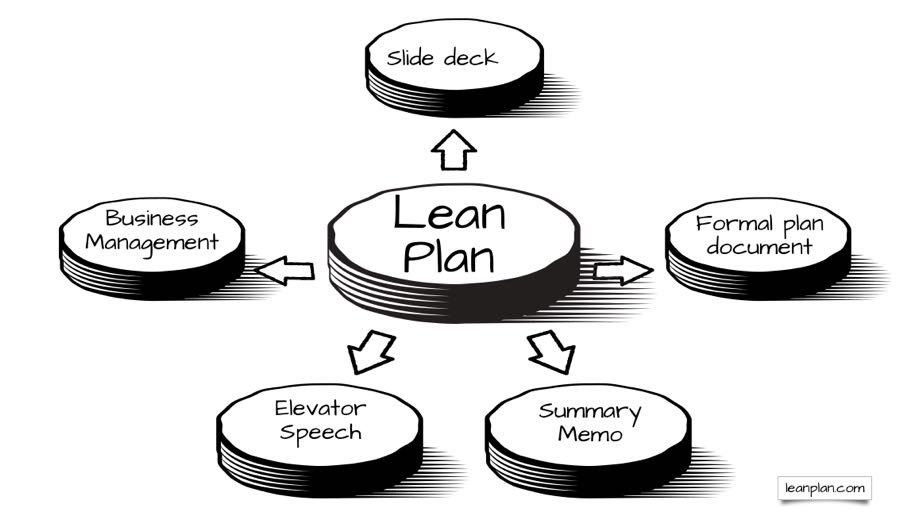
- Lean Business Plan: A concise, action-oriented strategic document, typically one page, that focuses on the next period (e.g., 90 days). It outlines what you aim to achieve, how you’ll do it, who is responsible, and how you’ll measure success.
- Key Performance Indicators (KPIs): The critical (usually 3-5) metrics that best indicate the health and progress of your business. These are not vanity metrics (like total website visits) but actionable metrics (like conversion rate of visitors to trial users).
- Milestones: Specific, tangible, and time-bound goals or checkpoints that mark significant progress. They are the “what” and “by when.”
- Action Items: The concrete tasks (“the how”) that need to be completed to hit your milestones. They are assigned to specific people with clear deadlines.
- Runway: The amount of time (usually in months) your business can survive before running out of cash, given its current burn rate. This is the anchor of all lean planning.
How It Works: Building Your One-Page Plan, Step-by-Step
Here is the exact framework I use with founders. Grab a document and follow along.
Step 1: Define Your Foundation (The Top of the Page)
- Business Name & Core Value Proposition: In one sentence, what do you do and for whom? Example: “Sherakat Consulting provides lean business planning workshops for first-time founders in the MENA region.”
- Target Customer: Be specific. Not “small businesses,” but “solo entrepreneurs in Saudi Arabia with an online service idea and less than 6 months in operation.”
- The Problem You Solve: What pain point or need does your customer have that you address?
- Your Solution: How does your product or service solve that problem?
Step 2: Set Your High-Level Goals (The “Why”)
- Long-Term Vision (3-5 years): A bold, aspirational statement. Where do you want the business to be?
- Medium-Term Objective (1 year): A significant, measurable goal for the year. (e.g., “Achieve $120,000 in annual recurring revenue” or “Launch Product Version 2.0”).
- Short-Term Milestones (Next 90 Days): List 3-5 critical, achievable goals for the next quarter. These must be S.M.A.R.T. (Specific, Measurable, Achievable, Relevant, Time-bound). Example: “Acquire 50 paying pilot customers by March 31st.”
Step 3: Outline Your Strategy & Actions (The “How”)
For each 90-day milestone, list the key strategies and specific action items.
- Milestone 1: Acquire 50 paying pilot customers.
- Strategy A: Content marketing via LinkedIn.
- Action Item 1: Publish 2 LinkedIn articles per week on lean planning. (Owner: Ali, Due: Every Friday)
- Action Item 2: Run a targeted LinkedIn ad campaign to a list of 5,000 entrepreneurs. (Owner: Sara, Due: Feb 15th)
- Strategy B: Partnership outreach.
- Action Item 3: Identify and contact 10 local business incubators. (Owner: Ali, Due: Jan 30th)
- Strategy A: Content marketing via LinkedIn.
Step 4: Define Your Key Metrics (The “Scoreboard”)
Identify 3-5 KPIs you will track weekly. These should directly reflect progress on your milestones.
- Customer Acquisition Cost (CAC)
- Monthly Recurring Revenue (MRR)
- Lead-to-Customer Conversion Rate
- Cash Runway (in months)
Step 5: Detail Your Financial Snapshot (The “Reality Check”)
This is a simplified, forward-looking summary.
- Revenue Forecast (Next 90 Days): A realistic projection of sales.
- Expense Budget (Next 90 Days): Categorized list of expected costs.
- Funding Needs/Status: Current cash position and any anticipated funding required.
Step 6: Acknowledge Your Challenges & Assumptions (The “Risk Radar”)
List your top 3 business risks (e.g., “Customer willingness to pay our price point”) and the key untested assumptions you are making (e.g., “We assume founders will attend a weekly workshop”). This section keeps you honest and prepared to pivot.
Why It’s Important: From Document to Operating System
A Lean Business Plan is important because it transforms planning from an academic exercise into your company’s operational system. It creates absolute clarity and alignment for you and any team members. It forces prioritization—you only have one page, so you must focus on what’s truly critical. Most importantly, it’s designed for regular review. This living document becomes the agenda for your weekly strategy check-ins, where you update numbers, mark completed actions, and adjust course based on what you’ve learned. It turns strategy into a continuous process, not a yearly event. For more on building the foundational partnerships that will support this plan, explore our guide to building a successful business partnership.
Sustainability in the Future: The AI-Enhanced Lean Plan
The future of the Lean Business Plan is integration with real-time data and AI. Imagine a digital one-page plan where your KPI boxes are automatically populated from your Stripe, Google Analytics, and CRM dashboards. AI could analyze your progress and highlight which assumptions are being invalidated or suggest adjustments to your strategies based on market data. By 2025, we’re seeing the emergence of tools that do just this, making the lean plan a dynamic, intelligent cockpit for your business, not just a passive document. Staying updated on such tools is easier when you follow insights on technology and AI innovation.
Common Misconceptions
- Misconception: “A one-page plan is just an abbreviated traditional plan.” Reality: It’s a fundamentally different tool. It’s for execution and learning, not just presentation. It includes actions, ownership, and dates—things rarely in a traditional plan.
- Misconception: “It’s too simple for a real business.” Reality: Its simplicity is its strength. Complexity often hides a lack of clarity. Distilling your strategy to one page requires deep understanding.
- Misconception: “Since it’s easy to change, I don’t need to commit to it.” Reality: The plan is a hypothesis to be tested, but you must commit fully to executing the agreed-upon actions for the review period to generate valid learning. It’s a disciplined process.
Recent Developments: The Quarterly Rolling Forecast
A major trend in 2024-2025 is the integration of the Lean Plan with a “Quarterly Rolling Forecast” (QRF). Instead of a static annual budget, you forecast in detail for the next quarter and at a higher level for the following three. Every quarter, you add a new detailed quarter and drop the one that passed. This creates a perpetual 12-month outlook that is constantly updated based on the actual results and learning from your lean plan. This hybrid approach offers both agility and longer-term vision.
Success Story: The Local Bakery Pivot
A client, “Leavened,” started with a plan to supply artisanal bread to high-end restaurants. Their one-page lean plan’s first 90-day milestone was “Secure contracts with 5 restaurants.” After a month of action (calls, samples), they hit a wall—chefs loved the bread but couldn’t consistently fit it into their menus. One key assumption—”Restaurants have flexible menu budgets”—was proven false. However, their KPI tracking showed overwhelming positive feedback from the chefs personally. In their weekly review, they pivoted. Their new 90-day milestone became “Launch a direct-to-consumer weekend subscription box.” They leveraged the chef relationships for testimonials. Within 60 days, they had 100 subscribers. Their lean plan allowed them to see the failure quickly and pivot to a more viable model without wasting a year.
Real-Life Examples
- Software as a Service (SaaS): A one-page plan focuses on MRR, churn rate, and feature adoption. A milestone might be “Improve user onboarding to increase Day-7 retention to 40%.” Actions would be specific A/B tests on the onboarding flow.
- Consulting Business: The plan focuses on pipeline, proposal win rate, and project profitability. A milestone could be “Generate $20,000 in signed contracts in Q2.” Actions include networking events, publishing case studies, and a defined outreach process.
- E-commerce Store: KPIs are conversion rate, average order value, and customer lifetime value. A milestone: “Reduce cart abandonment rate by 15%.” Actions: implement exit-intent pop-ups, streamline checkout, and test free shipping thresholds.
Conclusion and Key Takeaways
Your business plan should be a well-used map, not a framed museum piece. The one-page Lean Business Plan is that map—a practical, adaptable, and indispensable tool for navigating the uncertain journey of building a business. It brings clarity, enables agility, and fosters a culture of accountability and learning. Start yours today. The act of compressing your strategy onto a single page will force invaluable discipline and insight. Remember, a plan that fits on one page and is reviewed weekly is infinitely more valuable than a 50-page plan that sits untouched on a shelf.
Key Takeaways:
- Start Now: You can create the first draft of a lean plan in under two hours.
- Focus on the Next 90 Days: Long-term vision is crucial, but execution happens in quarters.
- Assign Every Action: A task without an owner and a deadline is just a wish.
- Track, Don’t Just Record: Your KPIs are for weekly analysis, not just monthly reporting.
- Embrace the Pivot: The plan is a hypothesis. Be ready to change it based on evidence.
For more actionable guides and resources, always visit the Sherakat Network blog and our full resources category.
Frequently Asked Questions (FAQs)
1. Isn’t a one-page plan too simplistic for seeking investment?
It can be an excellent starting point. Many modern investors, especially angels and early-stage VCs, prefer a clear, concise overview first. Your one-page plan can form the core of your pitch deck’s narrative. For formal due diligence, you may later need to expand on the details, but the lean plan proves you have strategic clarity.
2. How detailed should the financial snapshot be?
For the one-page plan, keep it high-level but meaningful. Include: Starting Cash, Projected Revenue (next 90 days), Projected Expenses (next 90 days), Projected Ending Cash, and Current Runway. The detailed spreadsheets live elsewhere but are summarized here.
3. How do I choose the right 3-5 KPIs?
Focus on metrics that are actionable, accessible, and auditable. They should directly correlate to your current milestones. If your goal is acquisition, track CAC and lead volume. If it’s retention, track churn rate and engagement scores. Avoid “vanity metrics” like social media followers.
4. How often should I update the plan?
The action items and KPI numbers should be reviewed and updated weekly. The overall plan—milestones, strategies, even the foundational elements—should be formally reviewed and potentially revised at the end of each 90-day cycle.
5. What if my team is just me? Do I still need this?
Absolutely. It’s perhaps even more critical for solopreneurs. It provides structure, prevents you from chasing shiny objects, and gives you a objective basis to assess your own progress. It’s your personal accountability system.
6. Can I use this for a non-profit or side project?
Yes. The framework is universal. For a non-profit, “Revenue” might become “Donations/Grants,” and KPIs could include “Cost per Beneficiary Reached.” For a side project, it helps you manage limited time effectively.
7. What’s the biggest mistake people make when first creating a lean plan?
Making the milestones too vague or not time-bound. “Grow sales” is bad. “Increase monthly sales by 20% by the end of Q2” is good. Also, failing to schedule the weekly review in their calendar, so the process dies.
8. How does this relate to the Business Model Canvas?
They are complementary tools. The Business Model Canvas is a great exercise to define your business model (customers, value, channels, etc.). The Lean Business Plan is how you execute and test that model over time. Many founders fill out the Canvas first, then use it to inform their Lean Plan.
9. What software should I use to create it?
Start simple. Use Google Docs, Google Sheets, or a slide. The medium is less important than the process. As you grow, tools like Trello, Asana, or dedicated lean planning software can help integrate actions and metrics.
10. My business is very operational (e.g., a laundromat). Does this still apply?
Yes. Your KPIs might be “Machine Utilization Rate,” “Customer Satisfaction Score,” and “Revenue per Square Foot.” Your 90-day milestone could be “Reduce utility costs by 5% through new equipment settings.” The framework adapts to any business.
11. How do I handle long-term projects that span multiple quarters?
Break them down. A milestone like “Launch New Product” is too big. The Q1 milestone could be “Complete prototype and user testing with 20 people.” Q2: “Finalize manufacturing specs and secure initial production funding.” Each quarter has its own actionable chunk.
12. Should I share this plan with my entire team?
Transparency is powerful. Sharing the one-page plan aligns everyone with the same goals, strategies, and priorities. It fosters a sense of ownership and collective responsibility for the KPIs.
13. What if I miss a milestone completely?
First, analyze why. Was the milestone unrealistic? Did an external event change? Did you fail to execute the actions? The learning from a missed milestone is often more valuable than the learning from an easily achieved one. Use the insights to set a more informed milestone for the next quarter.
14. How does this connect to daily to-do lists?
Your Lean Plan provides the strategic direction. Your weekly action items from the plan should feed directly into your daily or weekly task management system (like Todoist or ClickUp). The plan ensures your daily tasks are contributing to strategic goals.
15. Is there a template you recommend?
We provide a customizable template in our resources section. It follows the exact structure outlined in this article.
16. Can it help with personal productivity and goals?
The principles are directly applicable. Define your personal vision (e.g., “Become a published author”), set a 90-day milestone (“Complete first draft of 3 chapters”), list strategies and actions (“Write 500 words daily, 5 days a week”), and track a KPI (“Weekly word count”).
17. How do I prioritize which milestones to focus on first?
Use the “Runway” metric as a guide. If cash is low, your milestones must be heavily focused on activities that generate revenue or reduce burn. Also, prioritize testing your riskiest assumptions first—the things that, if wrong, would cause the business to fail.
18. What if my business is pre-revenue? What goes in the financials?
Forecast your expected expenses meticulously. Your “revenue” line might be $0, but that’s okay. Your key metric becomes “Burn Rate” and “Runway.” A milestone will almost certainly be “Generate First $1 in Revenue.”
19. How is this different from OKRs (Objectives and Key Results)?
They are closely related philosophies. OKRs are a goal-setting framework (Objective = inspirational goal, Key Results = measurable outcomes). A Lean Business Plan is broader; it incorporates OKR-like milestones and KPIs but also includes the strategies, specific actions, ownership, and financials. They can be integrated beautifully.
20. I have co-founders. How do we create this plan together?
Schedule a dedicated “Quarterly Planning Workshop.” Start by reviewing last quarter’s results, then collaboratively define the next quarter’s milestones and strategies. Debate and align. This process is invaluable for ensuring founder alignment, a topic we delve into deeply in our article on business partnership models.
21. What are some common KPIs for different business types?
- E-commerce: Conversion Rate, Average Order Value, Customer Lifetime Value, Return Rate.
- Mobile App: Daily/Monthly Active Users, Retention Rate (D7, D30), In-App Purchase Revenue.
- Service Business: Utilization Rate, Billable Hours, Client Satisfaction (NPS), Proposal Win Rate.
- Subscription Box: Monthly Recurring Revenue, Churn Rate, Subscriber Growth, Cost of Fulfillment per Box.
22. How long should the weekly review take?
For a small team, 30-60 minutes. Stick to the agenda: Review last week’s KPI data, check off completed actions, discuss blockers, and briefly look ahead to next week’s actions. Don’t let it become an operational meeting.
23. Can I use this if my industry is heavily regulated?
Yes, but your “Challenges & Assumptions” section will be critical. One of your key risks will be regulatory compliance. Your actions might include “Consult with compliance lawyer by X date” and a KPI could be “Zero compliance violations.”
24. How do I know when to pivot versus persevere?
Your weekly KPI data and the learning from your action items provide the signal. If, after a full quarter of disciplined execution on a milestone (e.g., “Acquire 100 users at $10/month”), you have only 5 users, and your customer interviews reveal a fundamental flaw in your value proposition, it’s time to seriously consider a pivot.
25. Where can I learn more about the Build-Measure-Learn loop?
Start with Eric Ries’ book The Lean Startup. For a more modern take with 2025 case studies, many resources are available in our blog category.
26. How does mental stamina factor into lean planning?
The relentless pace of quarterly cycles can lead to burnout. Building in “learning” and “adjustment” periods is crucial. Founders must manage their mental health as a key resource. For insights on maintaining wellbeing, this guide on psychological wellbeing is an excellent resource.
27. What if my market is very slow-moving (e.g., construction, manufacturing)?
The cycle time may be longer, but the principles remain. Your “90-day” plan might become a “6-month” plan, but it should still focus on the next actionable chunk. KPIs might be around process efficiency, supply chain reliability, or safety incidents.
28. How do I handle dependencies on external partners in my plan?
Clearly list them in your “Challenges & Assumptions.” Create specific action items to manage those relationships (e.g., “Weekly check-in call with Supplier X”). Understand that external dependencies increase risk and may require more buffer in your timelines.
29. Can this plan help me secure a small business loan?
For a very small loan or line of credit, a clear, concise one-page plan accompanied by solid personal and business credit might suffice for a community bank or credit union. For larger amounts, they will almost certainly require a more detailed traditional financial plan, but your lean plan will have given you the foundational understanding to create one easily.
30. What’s the final, non-negotiable rule for making this work?
Schedule the weekly review and do it without fail. Consistency in reviewing the plan is what transforms it from a document into a process. Put it on the calendar as the most important meeting of your week.
About the Author
Sana Ullah Kakar is an operational strategist obsessed with simplifying complexity. With a background in scaling tech startups and coaching small businesses, they have seen firsthand how “paralysis by planning” can kill great ideas. At the Sherakat Network, they lead workshops that help founders move from the anxiety of the blank page to the confidence of a clear, actionable roadmap. Their philosophy is that strategy must be lived, not just written. They believe the one-page plan is the most practical tool an entrepreneur can master, turning overwhelming visions into manageable weekly wins. When not geeking out over KPIs, they are advocating for sustainable work practices, recognizing that a founder’s health is the ultimate company asset. You can reach out for a conversation via our contact page.
Free Resources
From Sherakat Network:
- Downloadable Template: Get our editable One-Page Lean Business Plan template in our Resource Library.
- Deep Dive: For a comprehensive look at starting an online venture, read our Complete Guide to Start an Online Business in 2026.
- Expert Community: Join discussions and get feedback on your plan in our blog community here.
External Insights:
- Global Operations: Understand the broader context of managing a business with a guide to Global Supply Chain Management.
- Future of Work: Adapt your planning to modern workstyles with articles on Remote Work Productivity.
- Broader Impact: Consider how your business fits into larger societal and cultural trends.
Discussion
What’s the first 90-day milestone you would set for your business idea? Have you tried a one-page plan before, and what was your biggest challenge in sticking with it? Share your thoughts and questions below—let’s build a library of practical, real-world examples to learn from.
Your article helped me a lot, is there any more related content? Thanks!