



Introduction – Why This Matters
The story of Pakistani e-commerce isn’t one of Silicon Valley venture capital parachuting into a virgin market. It is, instead, a far more profound narrative of indigenous adaptation—a story of street-smart merchants, multi-generational family businesses, and savvy traders who looked at the internet not as a disruption, but as the ultimate mandi (marketplace). This matters because it reveals the true engine of economic transformation in emerging markets: not blind imitation of the West, but the evolution of deep-rooted commercial DNA using new tools. For the curious beginner, this is a masterclass in spotting opportunity in your own backyard. For the professional, it’s a strategic case study in logistics innovation, trust engineering in low-trust environments, and hybrid commerce models that defy textbook categorization.
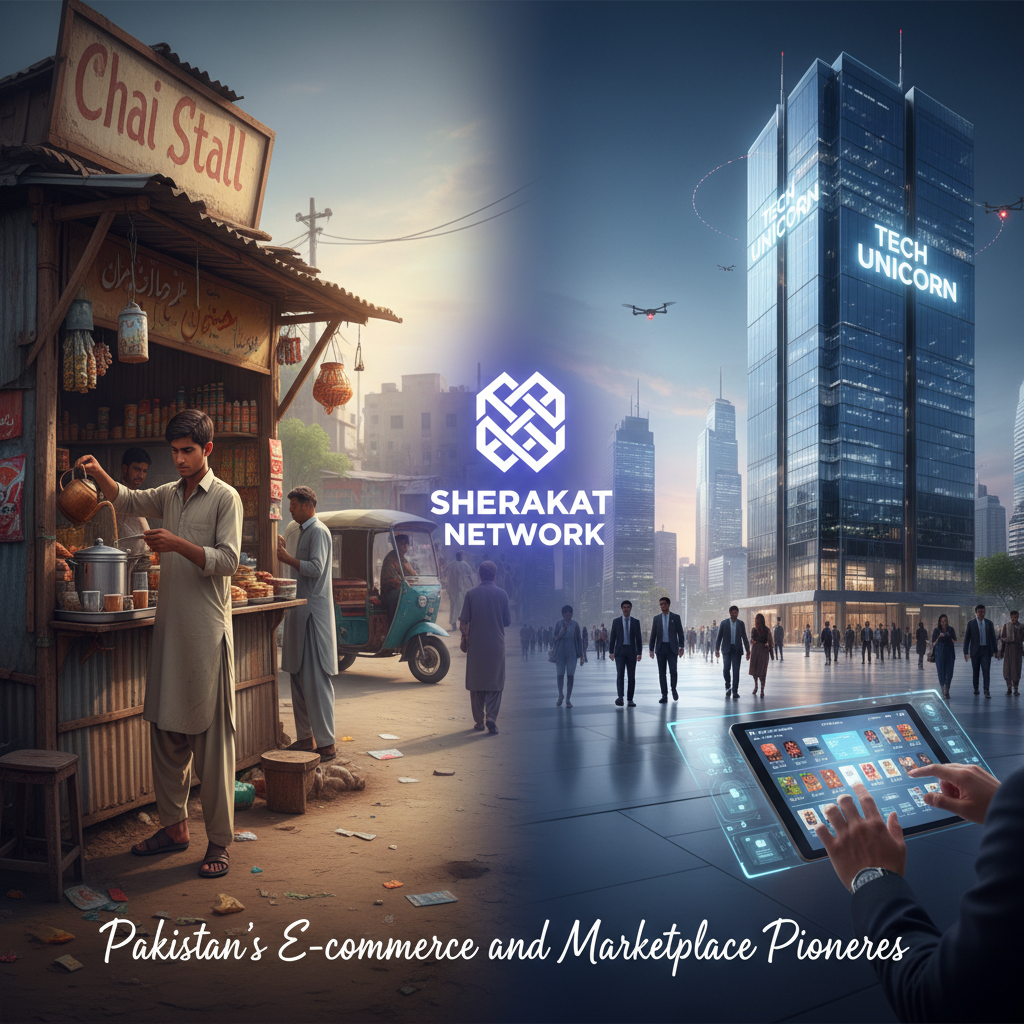
In my experience consulting with everything from Saddar’s textile wholesalers to Sialkot’s sporting goods manufacturers, I’ve seen a pattern. The most successful founders weren’t techies who learned commerce; they were commerce veterans who adopted tech. They understood the nuances of Pakistani consumer behavior—the desire for touch-and-feel, the centrality of bargaining, the importance of community endorsement—and they didn’t try to erase these traits. Instead, they built digital experiences around them. This journey from the chai stall (a metaphor for hyper-local, cash-based, relationship-driven trade) to managing a tech-enabled platform serving millions is the defining entrepreneurial saga of modern Pakistan.
Background / Context: The Soil from Which E-commerce Grew
To understand Pakistan’s e-commerce boom, one must first understand its commercial history. Pakistan has always been a nation of traders. From the ancient Indus Valley civilization to the Silk Road caravans, through the British Raj’s canal colonies, to the bustling bazaars of Anarkali, Liberty, and Jodia Bazaar, commerce is in the national bloodstream. The wholesale market (aapas ki mandi) is a complex, efficient, and trust-based ecosystem that has operated for centuries on handshakes and ledgers.
When the internet arrived, this ecosystem was initially skeptical. Early 2000s attempts at “pure-play” e-commerce, mimicking Amazon, faltered. The infrastructure was absent: low credit card penetration (under 2%), unreliable addresses, a distrust of online payments, and a postal service unfit for parcel delivery. The missing ingredient wasn’t demand—Pakistanis have always been voracious consumers—but appropriate intermediation.
The pivot came when entrepreneurs stopped trying to replace the bazaar and started trying to digitally enable it. They realized the key was not to build a walled-garden retail store, but to create a digital marketplace that connected existing buyers and sellers, solving for the friction (logistics, payments, discovery) while preserving the essence (choice, negotiation, social proof). This insight, married with the explosive growth of mobile broadband (from 3 million in 2010 to over 122 million in 2024), created the perfect storm. The COVID-19 pandemic acted as a forced mass adoption event, but the roots were already deep. For a deeper look at managing complex, evolving systems, our guide on Global Supply Chain Management offers relevant insights.
Key Concepts Defined
- Marketplace vs. Inventory-Led E-commerce: A marketplace (like Daraz, OLX) connects third-party sellers to buyers, taking a commission. An inventory-led model (like early HomeShopping) owns the stock and sells directly. Hybrid models are now prevalent.
- Cash-on-Delivery (COD): The payment method where the customer pays in cash when the product is delivered. It was the crucial trust-bridge for Pakistani e-commerce, constituting over 70% of transactions even in 2024, though now declining.
- Logistics-as-a-Service (LaaS): The backbone of e-commerce. Companies that provide pick-up, warehousing, sorting, last-mile delivery, and cash collection for online sellers. TCS, Leopards, Bykea, and Daraz’s own Daraz Express (DEX) are key players.
- Social Commerce: The use of social media platforms (especially Facebook and Instagram) to discover, discuss, and purchase products. It’s the natural digital evolution of the community-based bazaar recommendation.
- Cross-Border E-commerce: Selling products from Pakistani sellers to international customers (e.g., via Amazon, Etsy, or specialized B2B platforms). This turns Pakistan from a consumption market to a production hub for global retail.
- Fintech Integration: The embedding of financial services (digital wallets, buy-now-pay-later, micro-loans for sellers) within the e-commerce platform, creating a closed-loop ecosystem.
- Phygital Commerce: A blended model combining physical touchpoints (experience centers, kiosks, agent networks) with digital storefronts. This is critical in a market where many consumers are “digital curious” but not “digital native.”
- GMV (Gross Merchandise Volume): The total sales value of merchandise sold through a marketplace over a period. It’s the key metric for marketplace scale.
How It Works: The Anatomy of a Pakistani E-commerce Powerhouse (Step-by-Step)
Phase 1: The Foundational Insight – Solving for Local Friction
The founder identifies a specific, painful friction in a known commercial flow. For example:
- Friction: A Lahore garment manufacturer cannot easily sell to a retail customer in Karachi.
- Solution: Build a platform that handles product photography, listing, payment assurance, and most critically, reliable logistics.
The business model is designed backwards from removing this friction.
Phase 2: Building the Three-Sided Trust Platform
A successful marketplace must engineer trust among three parties who don’t know each other:
- Trust for the Buyer: Guaranteed via COD, easy returns policies, seller ratings, and platform-level guarantees (e.g., “Daraz Mall” for authenticated brands).
- Trust for the Seller: Guaranteed via secure & timely payment settlement (solving for post-COD reconciliation), protection from fraudulent chargebacks, and access to a vast new customer base.
- Trust for the Delivery Rider/Logistics Partner: Guaranteed via fair compensation, safety protocols, and digital tools for efficient routing.
Phase 3: The Logistics Moats – Beyond an App
While the front-end is an app/website, the real competitive advantage is built in warehouses and on motorbikes. Successful companies:
- Build a proprietary last-mile network in key cities for control over the customer experience.
- Develop algorithms for dynamic routing and cash collection optimization.
- Create Fulfillment by [Platform] services, where sellers send inventory to platform warehouses, and the platform handles packing, shipping, and customer service. This drastically improves delivery speed and reliability.
Phase 4: The Capital-Intensive Scaling Game
E-commerce is a game of scale. It requires massive upfront investment in:
- Technology: Robust platforms able to handle millions of users and transactions during sale events like 11.11.
- Marketing: Customer acquisition costs (CAC) are high. Blitz-scale marketing through TV, social media, and influencer partnerships is essential to achieve the network effects where buyers attract sellers, who attract more buyers.
- Working Capital: Financing inventory (for hybrid models) and bridging the float period for COD cash.
Phase 5: Evolution into an Ecosystem Player
The platform stops being just a store and becomes an economic operating system:
- Fintech Arm: Offers working capital loans to sellers based on their sales data, and buy-now-pay-later (BNPL) to buyers.
- Advertising Platform: Sells premium listing spots and promoted search results to sellers, becoming a media company.
- Services Marketplace: Starts offering home services, ticket booking, etc., becoming a “super-app.”
Phase 6: Going Global – The Cross-Border Leap
The final frontier is leveraging Pakistan’s manufacturing base (textiles, leather, surgical instruments) to feed global demand. This involves:
- Helping sellers with product compliance, international shipping, and localization.
- Building or partnering with overseas warehousing (fulfillment centers in the US/EU).
- Navigating complex international supply chains.
Why It’s Important: The Macroeconomic Multiplier Effect
The rise of homegrown e-commerce platforms is a national economic multiplier of staggering proportions.
- Formalizing the Informal: It brings millions of small, cash-only businesses into the formal digital economy, creating a traceable transaction history that can be used for credit scoring.
- Employment Generation: It creates jobs not just in tech, but in warehousing, logistics (hundreds of thousands of riders), customer service, photography, and digital marketing.
- Empowering SMEs & Women: It provides small and medium enterprises (SMEs) and home-based entrepreneurs (especially women) with a storefront to the entire nation without the cost of a physical shop. Jugnu, for instance, was built specifically for this.
- Export Growth: Cross-border e-commerce is a new, high-margin export channel, allowing Pakistani brands to build global recognition without traditional export intermediaries.
- Financial Inclusion: The push to convert COD to digital payments, and the provision of seller financing, is a powerful driver of digital financial inclusion.
What I’ve found is that these platforms have done more to teach basic digital literacy and formal business practices to millions of small merchants than any government initiative could have. They are accidental universities of the digital economy.
Sustainability in the Future: Beyond Discount-Driven Growth
The initial phase of Pakistani e-commerce was driven by deep discounts and customer acquisition at any cost. The future is about sustainable unit economics and value-added services.
- The Profitability Imperative: Investors now demand a path to profitability. This means optimizing marketing spend, improving logistics efficiency, and increasing take-rate (commission) from value-added services, not just subsidy-driven GMV.
- Hyper-Local & Social Commerce Fusion: The future is not a single national mega-app, but a network of hyper-local, community-driven commerce enabled by social platforms and lightweight logistics. Think of a digital version of your local kiryana store with instant delivery.
- AI-Personalization at Scale: Using AI to move beyond generic “deals” to personalized discovery, predicting what a customer in Faisalabad wants before they search, based on local trends and purchase history.
- Sustainability-Led Commerce: As consumer awareness grows, platforms that can verify and promote eco-friendly, ethically-made products will gain a competitive edge. This aligns with global cultural shifts towards conscious consumption.
- Interoperability & Open Commerce: Instead of walled gardens, we may see the rise of open protocols where a seller’s inventory is listed seamlessly across multiple platforms and social media, with decentralized logistics fulfilling the order.
The winners will be those who can deepen engagement rather than just broaden reach, turning a transaction platform into an indispensable commercial partner for both buyers and sellers.
Common Misconceptions
- Misconception 1: E-commerce is killing physical retail.
- Reality: It’s transforming it. Smart retailers are going omni-channel. They use the online store for discovery and reach, and the physical store for experience, instant fulfillment, and returns. The line is blurring.
- Misconception 2: It’s all about cheap Chinese imports.
- Reality: While imports were a big part of the early growth, there’s a massive surge in Made-in-Pakistan sales. Platforms are actively promoting local brands and manufacturers. During the import restrictions of 2022-23, local sellers saw record growth.
- Misconception 3: Only the urban, affluent youth shop online.
- Reality: Tier 2 and 3 cities (Gujranwala, Sargodha, Multan) are the fastest-growing segments. Affordable smartphones and data have democratized access. The typical online shopper is increasingly middle-class and family-oriented.
- Misconception 4: Building an e-commerce site is the hard part.
- Reality: The website/app is less than 10% of the battle. The real challenge is logistics, payments, customer service, and seller management—the unsexy, operationally heavy back-end.
- Misconception 5: It’s a winner-takes-all market.
- Reality: While marketplaces have network effects, there is immense room for vertical specialists (e.g., Roshni.pk for books, Goto.com.pk for event tickets) and D2C (Direct-to-Consumer) brands that build loyal communities.
Recent Developments (2024-2025): The Landscape Matures
- The “Amazonization” of Daraz: Since its acquisition by Alibaba, Daraz has aggressively built out its logistics (DEX), fintech (Daraz Wallet), and entertainment (Daraz Live) arms, following the Chinese “super-app” playbook. Its focus has shifted from pure GMV to ecosystem monetization.
- Rise of Quick Commerce (Q-commerce): Players like Airlift (before its closure) and now FoodPanda Mart and Cheetay pioneered 30-minute delivery of groceries and essentials. This has trained consumers to expect instant gratification, raising the bar for all e-commerce.
- B2B E-commerce Gains Traction: Platforms like Bazaar Technologies and Dastgyr are digitizing the massive wholesale trade, providing inventory procurement and financing to millions of small kiryana stores. This is arguably a larger market than B2C.
- Social Commerce Regulation: The SECP and FBR are grappling with how to regulate the massive, informal trade happening on Instagram and Facebook. Expect formalization efforts that could push social sellers towards managed marketplaces.
- Advanced AI Integration: Pakistani platforms are now using AI for: fraud detection in COD returns, dynamic pricing for sellers, computer vision for automated product categorization, and chatbots handling 70% of pre-sale queries.
- Cross-Border Logistics Specialists: Startups like Trademo and ShipRocket are emerging to simplify international shipping, customs, and compliance for Pakistani SMEs looking to sell on Amazon, eBay, and Shopify stores.
Success Stories & Real-Life Examples
**1. Muhammad Najam ul Hassan & Goto.com.pk (The Niche Specialist):
Before the era of mega-marketplaces, Najam identified a specific, high-frequency need: buying tickets. Goto started as an event ticketing platform. They mastered the unit economics of a low-margin, high-volume business by building robust fraud prevention and seamless delivery (often digital tickets). They then vertically integrated into experiences, offering deals on restaurants and activities. Instead of battling Daraz on general merchandise, they dominated a vertical, building a trusted brand for outings and entertainment. Their success proves the power of depth over breadth.
**2. Muneeb Maayr & Bykea (The Logistics-First Platform):
Bykea didn’t start as an e-commerce company; it started as a ride-hailing and logistics platform. This gave it a foundational advantage: a massive, digitally-managed fleet of bikes across major cities. When it pivoted to include parcel delivery and then quick commerce, the logistics network was already built. They understood the streets, the traffic patterns, and the rider economy better than anyone. Their model is a powerful lesson in building the infrastructure layer first, then layering commerce services on top. They turned every bike into a potential delivery vehicle for thousands of merchants.
3. The Sialkot Exporter on Amazon (The Global Micro-Multinational):
Consider “LeatherCraftPK,” a hypothetical but representative story. A second-generation leather goods manufacturer in Sialkot, supplying to local wholesalers and occasional European importers. In 2020, the third-gen son, educated abroad, sets up a branded Shopify store and an Amazon Seller Central account. He invests in professional product photography and SEO copy. He uses a cross-border logistics partner from Lahore. Within 18 months, his direct-to-consumer (DTC) sales to the US and Europe surpass his traditional B2B export revenue. He controls the brand, captures the full margin, and gets real-time customer feedback to improve designs. He represents thousands of such SMEs turning Pakistan into a DTC export powerhouse.
4. The Instagram Khadi Seller from Gujranwala (Social Commerce Pioneer):
A home-based entrepreneur, we’ll call her Ayesha, started making embroidered khadi (handwoven cotton) jackets. She created an Instagram account, posted high-quality reels of the making process, and used WhatsApp for orders and payment (initially via bank transfer). Her page grew through authentic storytelling. She now has 50,000 followers, employs five women, and uses a third-party logistics company for nationwide delivery. She’s never paid for a marketplace commission. Her entire business is built on social trust and community. Platforms are now creating tools to serve entrepreneurs like her, rather than compete with them.
Key Takeaway Box:
The Pakistani E-commerce Playbook:
- Don’t Disrupt, Digitize: Identify a friction in an existing, thriving commercial flow (wholesale, social selling, ticketing).
- Engineer Trust, Not Just Tech: COD, ratings, and guarantees are more important than a fancy UI in the early days.
- Own a Physical Moats: Competitive advantage is built in warehouses, on bikes, and in cash handling networks.
- Think Ecosystem, Not Storefront: Your endgame is to be a financial, logistical, and marketing partner to your sellers.
- Leverage Your Locality: Your deep understanding of Pakistani consumer psychology and commercial networks is your unbeatable asset against global giants.
Conclusion and Key Takeaways
The journey from chai stall to tech unicorn is a metaphor for Pakistan’s own economic modernization: pragmatic, hybrid, and rooted in its own genius. It proves that innovation is not about importing foreign models but about indigenizing technology to serve local realities.
Final Takeaways:
- Your Legacy is Your Leverage: A family business in textiles or manufacturing is not a liability; it’s a supply chain head-start for an e-commerce brand.
- Solve for Trust First: In an environment with low institutional trust, your platform’s primary product is reliability. Every feature should build credibility.
- Logistics is the Business: If you want to win in e-commerce, you must fall in love with the unsexy details of packaging, routing, and cash reconciliation.
- Capital is Fuel, Not a Engine: Venture capital can accelerate, but it cannot replace a fundamentally sound unit economic model. Path to profitability is now non-negotiable.
- Community is Your Co-Founder: Whether it’s a network of sellers or a loyal customer base on social media, cultivate it. They will provide your most valuable feedback and defense against competitors.
The future of Pakistani e-commerce is not a single dominant platform, but a vibrant, layered ecosystem comprising global marketplaces, local super-apps, vertical specialists, DTC brands, and millions of social sellers. There has never been a better time to be a merchant in Pakistan. To start your journey, explore our comprehensive guide on Starting an Online Business and learn about strategic Alliances to fuel your growth.
FAQs (30 Detailed Q&A)
1. What are the biggest logistical challenges for e-commerce in Pakistan?
- Addressing Systems: Non-standard addresses lead to failed deliveries. Solutions include geo-tagging and detailed pickup instructions.
- Cash Collection & Reconciliation: Handling, securing, and accurately accounting for massive amounts of COD cash is an operational nightmare.
- Reverse Logistics: Managing returns efficiently and cost-effectively, especially for large or fragile items.
- Inter-City Variability: Service levels and costs can vary dramatically between Karachi, Lahore, and a smaller city like Bahawalpur.
2. How do I choose between selling on a marketplace (Daraz) vs. my own website (Shopify)?
- Marketplace (Daraz/Amazon): Pros: Instant traffic, built-in trust, logistics support. Cons: High commissions, less control, you’re building their brand.
- Own Website (Shopify): Pros: Full control, higher margins, direct customer relationship. Cons: You must drive all traffic and build trust from scratch.
- Smart Strategy: Start on a marketplace to validate demand and generate cash flow, then use it to feed growth for your own DTC website. Run both in parallel.
3. What is the real cost of Cash-on-Delivery for a seller?
It’s not just the logistics fee. It includes: Cash handling fee (1-2%), risk of fraud (fake currency, runner theft), delayed cash flow (settlement can take 7-14 days after delivery), and a higher return rate (easier for customers to refuse). Overall, COD can be 5-10% more expensive than pre-paid digital payments.
4. How can a small seller compete with large, funded sellers on marketplaces?
- Niche Down: Don’t sell “men’s shirts.” Sell “premium linen shirts for tropical climates.”
- Master Content: Invest in exceptional product photos, videos, and descriptive copy. This is your storefront.
- Excel in Customer Service: Respond to queries instantly, package products beautifully, and handle returns gracefully to build 5-star ratings.
- Leverage Social Media: Drive your own community of followers to your marketplace storefront.
5. What are the tax implications of selling online in Pakistan?
If you are registered as a business, you must:
- Sales Tax: If your annual turnover exceeds PKR 10 million, you must register for and charge 18% Sales Tax (for tier-1 retailers).
- Income Tax: Declare your online sales income in your annual return. The FBR is increasingly data-matching with e-commerce platforms.
- Withholding Tax: Marketplaces may deduct withholding tax on your seller commissions.
6. Is it too late to start an e-commerce business in Pakistan in 2025?
Absolutely not. We are in the second inning. The first wave built the infrastructure and educated consumers. The second wave is about specialization, branding, and omni-channel experiences. Opportunities abound in underserved categories (e.g., premium pet supplies, ergonomic furniture for remote workers, eco-friendly products) and in serving tier 3/4 cities.
7. How does social commerce (Instagram/Facebook) actually work for payments and delivery?
It’s largely informal but follows a pattern:
- Customer DMs/comment to order.
- Seller shares bank account details for advance payment (50-100%) or arranges COD via a third-party courier like TCS/Leopards.
- Seller shares tracking info.
Trust is built through user-generated content (photos/videos of happy customers), live videos, and personal interaction.
8. What is “Buy Now, Pay Later (BNPL)” and is it safe for sellers?
BNPL allows customers to purchase and receive a product immediately but pay in 3-4 installments over a few months. For sellers, it’s safe if offered through a reputable platform (e.g., QisstPay on Daraz). The BNPL provider assumes the credit risk and pays the seller upfront (minus a fee), increasing conversion rates but at a cost.
9. How important is it to have a mobile app vs. a mobile-optimized website?
For discovery and browsing, a website is sufficient. For retention and repeat purchases, an app is critical. Push notifications, easier login, and a more immersive experience can increase customer lifetime value by 3-4x. However, developing and maintaining a high-quality app is expensive.
10. Can I export handmade crafts from Pakistan via e-commerce?
Yes, and it’s a massive opportunity. Platforms like Etsy are perfect for handmade, unique goods (embroidered textiles, pottery, jewelry). Key is: mastering product photography for a Western audience, understanding international shipping and customs, and storytelling about the artisan’s craft. PayPal is essential for payments.
11. What are the key metrics I should track as an e-commerce seller?
- Conversion Rate: % of visitors who buy.
- Average Order Value (AOV).
- Customer Acquisition Cost (CAC).
- Customer Lifetime Value (CLTV). CLTV should be >3x CAC.
- Return Rate.
- Net Promoter Score (NPS): Customer satisfaction.
12. How do I handle customer service for online sales?
- Use dedicated WhatsApp Business numbers and auto-replies.
- Set clear expectations on delivery times and return policies on your product page.
- Respond to queries and complaints publicly on marketplace reviews to show you care.
- Outsource to a specialized customer service agency as you scale.
13. What is “omnichannel retail” and how can a small business implement it?
It’s providing a seamless customer experience across online and offline channels. A small implementation: A clothing store in Gulberg can:
- Show real-time inventory on its website.
- Allow online purchase and in-store pickup.
- Use its physical store as a return/exchange hub for online orders.
- Use Instagram to drive footfall to the store for “exclusive previews.”
14. How is Artificial Intelligence (AI) changing e-commerce operations?
- Demand Forecasting: Predicting what will sell and in which region to optimize inventory.
- Dynamic Pricing: Automatically adjusting prices based on competitor pricing, demand, and inventory levels.
- Chatbots: Handling routine pre-sale queries (size, color, delivery time).
- Fraud Detection: Identifying patterns in fraudulent COD returns or payment fraud.
15. What legal agreements do I need if I’m starting a marketplace?
- Terms of Use (for buyers and sellers).
- Privacy Policy.
- Seller Agreement (detailing commissions, payment terms, prohibited items, IP rights).
- Return/Refund Policy.
Consult a lawyer specializing in tech/e-commerce. This is not a DIY area.
16. How does the mental strain of running an e-commerce business compare to a physical one?
It can be more intense due to the 24/7 nature (always-on customer queries, system alerts), the pace of change, and the pressure of online reviews. Founders must set strict boundaries, automate processes, and build a support team. The principles in this Mental Health Guide are highly applicable.
17. Can I run an e-commerce business as a side hustle while employed?
Yes, many start this way. Use a model with low upfront inventory (dropshipping, print-on-demand) or sell digital products/services. Be transparent with your employer about any conflict of interest, and dedicate specific, consistent hours to your venture.
18. What is “dropshipping” and is it viable in Pakistan?
Dropshipping is where you list products, and when you get an order, you purchase it from a supplier (often in China) who ships it directly to your customer. You never hold inventory.
- Viability: Challenging. Long shipping times (4-6 weeks) frustrate Pakistani customers. Marketing costs are high, and margins are thin. It’s a crowded space. More viable is local dropshipping—partnering with local wholesalers who hold inventory and fulfill for you.
19. How do I protect my brand and products from being copied online?
- Trademark your brand name/logo.
- Use unique product photography (not supplier stock photos).
- Build a community around your brand story; that’s harder to copy.
- Consider utility or design patents for truly innovative products (consult an IP lawyer).
- Monitor marketplaces and issue takedown notices for clear counterfeits.
20. What are the biggest mistakes new e-commerce sellers make?
- Underestimating Operational Costs: Logistics, packaging, marketing, and returns eat into margins.
- Skipping Market Validation: Investing heavily in inventory for a product no one wants.
- Neglecting Customer Service: One bad public review can sink a new store.
- Chasing Volume Over Profit: Discounting too deeply to get sales, leading to burnout.
- Ignoring Data: Not using analytics to understand what’s working.
21. How do I approach venture capital for an e-commerce startup in Pakistan?
VCs are now wary of pure GMV-play e-commerce. To attract funding:
- Show defensible technology (a unique algorithm, proprietary logistics software).
- Demonstrate strong unit economics (CAC < CLTV/3).
- Target a large, painful problem in the commercial stack (B2B, cross-border, fintech for commerce).
- Have a strong, complementary team with tech and ops experience.
Your pitch must show you’re building a tech company that enables commerce, not just another online store.
22. What is the role of content (blogs, videos) in e-commerce SEO?
Critical. Creating high-quality content (e.g., “How to style a Khadi jacket for summer,” “A guide to Pakistani spices”) attracts organic traffic from Google. This traffic has high intent and is cheaper than paid ads. It builds your brand as an authority. Each blog post should naturally link to relevant products.
23. How can I ensure my packaging is both cost-effective and brand-positive?
- Use sturdy, plain brown boxes/courier bags as the outer layer.
- Invest in a custom branded sticker or a small thank you card inside. This small touch has a high ROI on customer perception.
- Use biodegradable or recycled materials where possible—it’s a growing differentiator.
24. Is voice search relevant for e-commerce in Pakistan?
Not yet a primary channel, but growing with increased use of Google Assistant and Siri. Optimize your product titles and descriptions for natural language queries (e.g., “Where can I buy blue lawn suits in Lahore?” rather than just “blue lawn suit”).
25. How do I manage inventory across multiple sales channels (Daraz, Shopify, Instagram)?
Use a centralized inventory management software. Tools like Veeqo, TradeGecko, or even a well-maintained Google Sheets with APIs can sync stock levels across platforms to prevent overselling.
26. What are the cybersecurity risks for an e-commerce business?
- DDoS Attacks: Overwhelming your site with traffic.
- Data Breaches: Stealing customer information (names, addresses, partial payment info).
- Payment Fraud: Using stolen credit cards.
- Mitigation: Use a reputable hosting provider (e.g., Cloudways, AWS), keep software updated, use SSL certificates, and comply with PCI DSS standards if handling card data.
27. Can I use data analytics from my e-commerce store to inform a physical retail expansion?
Absolutely. Your online data tells you: Top-selling products by city/area, customer demographics, peak buying times, and price sensitivity. Use this to decide the location, inventory mix, and pricing for a physical store. This is the power of omnichannel data.
28. How is the rise of remote work affecting e-commerce demand patterns?
It’s creating new categories: home office furniture, ergonomic chairs, high-quality webcams, meal kits. It’s also spreading disposable income outside major city centers, as people move back to hometowns but shop online. Track these remote work trends.
29. What is the future of cryptocurrency in Pakistani e-commerce?
Given the State Bank’s current prohibitive stance, it’s not a viable payment method for domestic commerce in the near term. However, it could play a role in cross-border B2B transactions for exporters to bypass traditional banking channels, albeit with high regulatory risk.
30. What is the single most important piece of advice for someone starting today?
Start with a single, specific product you are passionate about and sell it to 100 people you know or can reach directly. Master the entire cycle—sourcing, listing, marketing, selling, packing, shipping, and serving—for that one product. That hands-on, small-scale experience will teach you more than any course or article. Then scale from there.
About the Author
Sana Ullah Kakar is a digital commerce strategist with over 15 years of experience building and advising online marketplaces and DTC brands across South Asia and the Middle East. Having worked with both billion-dollar platforms and solo founders running Instagram shops, they possess a unique ground-level and strategic view of the ecosystem. They are obsessed with the intersection of logistics, behavioral economics, and community in emerging market e-commerce.
Free Resources
- E-commerce Channel Selection Calculator (Spreadsheet): Input your product type, margins, and goals to get a data-driven recommendation on starting with Daraz, Shopify, Instagram, or a hybrid.
- Pakistani Logistics Company Comparison Table (2025): Rates, coverage, COD handling, and tech integration for TCS, Leopards, Bykea, DEX, and others.
- Checklist: Launching Your First Product on a Marketplace.
- Template: Customer Service SOP (Standard Operating Procedure) for handling queries, returns, and complaints.
(Access these by reaching out to the Sherakat Network community via our Contact Us page.)
Discussion
We want to hear from you!
- Are you a traditional business owner who has moved online? What was your biggest “aha” moment and your biggest struggle?
- As a consumer, what frustrates you most about shopping online in Pakistan, and what would your ideal experience look like?
- Which underserved product category or city do you think is the next big opportunity for e-commerce?
- For sellers: What one policy change by a marketplace or the government would most help your business grow?
Share your war stories, insights, and predictions below. Let’s map the future of Pakistani commerce together.
I very delighted to find this internet site on bing, just what I was searching for as well saved to fav
I am truly thankful to the owner of this web site who has shared this fantastic piece of writing at at this place.
I really like reading through a post that can make men and women think. Also, thank you for allowing me to comment!