


Introduction – Why This Matters
In my experience, when someone first hears the term “SEO,” they either think it’s magic or a myth. They see websites ranking at the top of Google and assume it’s either luck, a secret handshake, or a massive budget. What I’ve found is that the reality is much more grounded—and much more accessible.
We are living in an era where the digital landscape is not just crowded; it’s chaotic. Every day, millions of pieces of content are published. But here is the hard truth: if your website isn’t showing up on the first page of search results, for most practical purposes, it doesn’t exist. In 2026, search isn’t just about Googling anymore. It’s about AI assistants like ChatGPT and Gemini synthesizing answers, voice search through smart speakers, and visual searches via smartphones. Yet, the core engine that powers all of this discovery remains the same: the need for relevant, authoritative information.
This guide is your roadmap. Whether you are a business owner in Amman trying to attract local customers, a blogger hoping to share your passion with the world, or a marketing professional needing to update your skillset for 2026, you are in the right place. We aren’t just going to scratch the surface. We are going to build a foundation so solid that you can build a skyscraper of traffic on top of it. We will cover everything from the basic “what is SEO” to the latest trends shaping how AI consumes your content.
Background / Context
To understand where SEO is going, we need a quick snapshot of where it has been. In the early 2000s, SEO was essentially a game of trickery. You could stuff a keyword into your page hundreds of times (a practice known as “keyword stuffing”), and search engines, which were less sophisticated, would reward you. It was about manipulating the system.
Then, Google got smarter. Updates like Panda and Penguin in the early 2010s started punishing low-quality content and spammy links. The focus shifted from “search engine ranking” to “user experience.” By the 2020s, with the advent of machine learning (like Google’s RankBrain and BERT), search engines began understanding context, not just keywords.
Now, in 2026, we are in the era of Generative Engine Optimization (GEO) . This is a shift from simply getting clicks to being the source that AI trusts and uses to generate answers. When you ask an AI chatbot a question, it doesn’t just list links; it synthesizes an answer from various sources. Your goal in 2026 is to be one of those sources. This evolution makes understanding the fundamentals more critical than ever, because the fundamentals—clear writing, strong authority, and technical soundness—are the same things AI looks for.
Key Concepts Defined
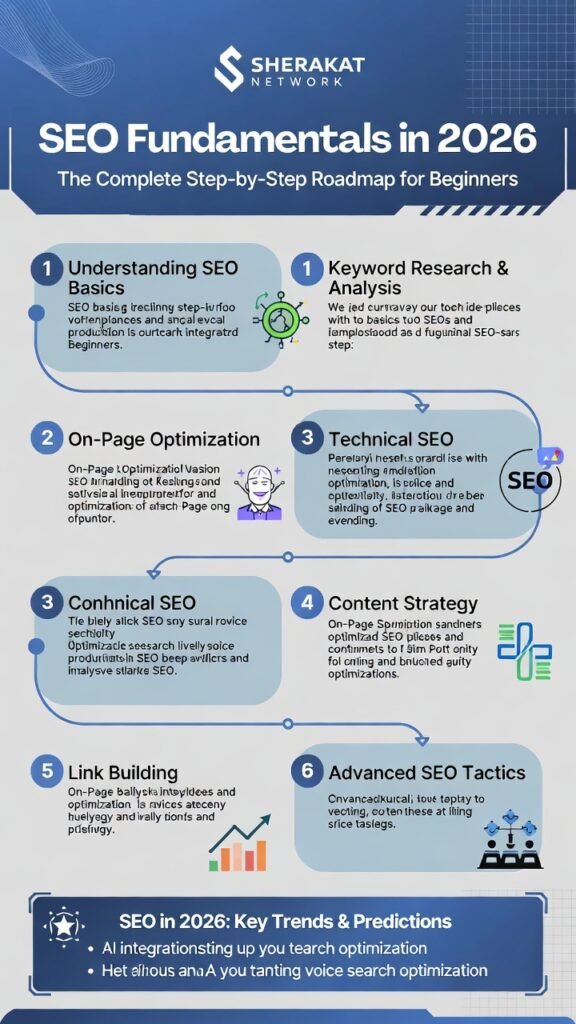
Before we build a house, we need to know what the bricks are called. Here are the core concepts of SEO, explained for 2026.
- Search Engine Optimization (SEO): The practice of improving the quality and quantity of traffic to your website from search engines through organic (non-paid) results.
- Search Intent: The “why” behind a search query. What does the user actually want? Are they looking to buy (“buy running shoes online”), to learn (“how to tie shoelaces”), or to navigate to a specific site (“Nike official site”)? Satisfying search intent is the number one ranking factor.
- Keywords: The words and phrases users type into search engines. In 2026, keywords are less about exact match and more about topics and entities (people, places, things). For example, instead of just the keyword “Apple,” we think about the entities “Apple Inc. the company” vs. “apple the fruit.”
- On-Page SEO: Optimizing elements on your website that you can control. This includes content, title tags, meta descriptions, headers, and images.
- Off-Page SEO: Actions taken outside of your website to impact your rankings. This is primarily about building backlinks (links from other websites to yours) and brand mentions, which act as “votes of confidence.”
- Technical SEO: Optimizing the infrastructure of your website so search engines can crawl (find) and index (store) your pages effectively. This includes site speed, mobile-friendliness, and site architecture.
- E-E-A-T: This stands for Experience, Expertise, Authoritativeness, and Trustworthiness. It’s a framework from Google’s Search Quality Rater Guidelines. In 2026, E-E-A-T isn’t just a guideline; it’s a gatekeeper. Content without visible experience and trust signals will struggle to compete.
How It Works (Step-by-Step Breakdown)
SEO can feel overwhelming, but it operates on a simple, three-step process that search engines use: Crawling, Indexing, and Ranking .
Step 1: Crawling
Search engines send out automated bots, often called “spiders” or “crawlers” (Googlebot is the most famous), to discover new and updated content. They follow links from one page to another, just like you might click from a blog post to an “About Us” page. If your site is well-structured with clear internal links, it’s easy for these crawlers to find all your pages.
Step 2: Indexing
Once a crawler finds a page, it tries to understand what it’s about. It analyzes the text, images, and video files, and stores this information in a massive database called the index. Think of the index as a giant digital library. If your page isn’t in the index, it cannot show up in search results. You can check if your pages are indexed by using a tool like Google Search Console.
Step 3: Ranking
When a user types a query, the search engine scours its index to find the most relevant pages. An algorithm ranks these pages based on hundreds of factors. It considers relevance (does the page match the search intent?), authority (does the page have reputable backlinks?), and usability (is the page fast and mobile-friendly?). The goal is to present the best possible answer to the user’s question.
Why It’s Important
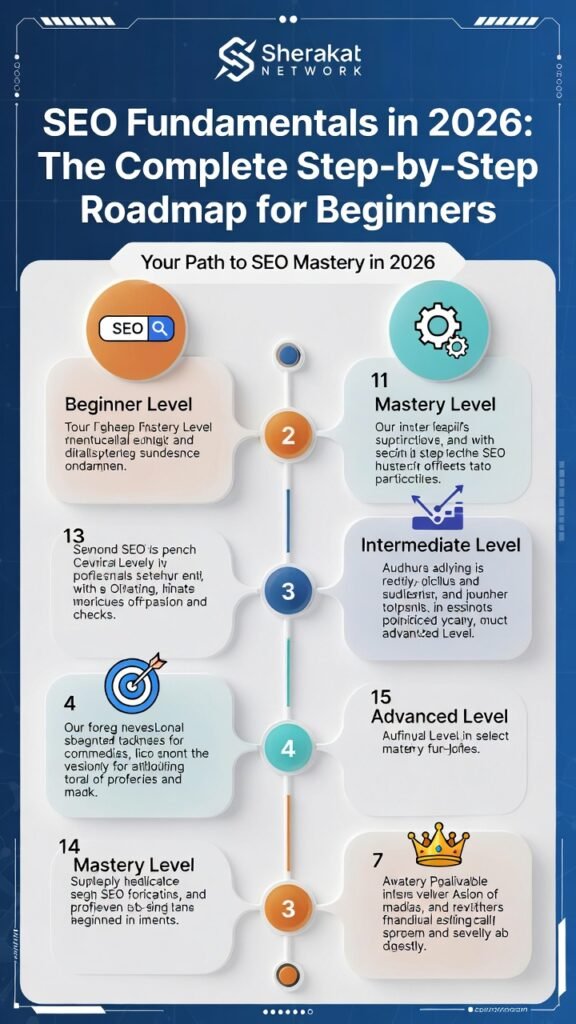
Why should you invest time and resources into SEO? The answer lies in the data.
- The First Page is the Only Page: Studies consistently show that the first page of Google captures over 90% of all web traffic. If you’re on page two, you are essentially invisible.
- The Power of Organic Traffic: Unlike paid advertising, which stops the moment you stop paying, organic traffic is an asset. According to recent 2025 data, sites that consistently update content and monitor technical SEO retain up to 40% higher rankings over two years compared to static sites . It’s the gift that keeps on giving.
- Credibility and Trust: Users trust organic results more than paid ads. Ranking highly signals to potential customers that you are a leader in your field. This aligns with the E-E-A-T principle, where trust is the ultimate currency.
- Cost-Effectiveness: While SEO requires an investment of time (and sometimes money for tools), the cost per acquisition is significantly lower than traditional outbound marketing or PPC (Pay-Per-Click) in the long run.
Sustainability in the Future
Is SEO a fad? Absolutely not. But it is evolving. The future of SEO is not about tricking algorithms; it’s about proving your value to both humans and machines.
In 2026 and beyond, sustainability in SEO means focusing on brand authority and omnipresence. As search fragments across platforms (TikTok, Reddit, Amazon, YouTube, and AI chat interfaces), your SEO strategy must adapt . It’s no longer just about ranking #1 on Google. It’s about being “answerable” everywhere.
The most sustainable strategy you can adopt is to build a genuine brand. Create content that showcases real experience. Invest in original research and data that AI models want to cite. When you build a brand that people search for by name (branded queries), you send a powerful signal to search engines that you are a trusted entity, ensuring your place in the future of search.
Common Misconceptions
The SEO world is riddled with myths that can waste your time and money. Let’s clear up a few, based on a 2026 reality check .
- Myth: “Keywords alone will boost my rankings.”
- Reality: This is perhaps the most persistent myth. In 2026, search engines are far too sophisticated for simple keyword matching. They use Natural Language Processing (NLP) to understand context. A 2025 SEMrush report found that pages optimized for user intent ranked 30% higher than those optimized solely for keyword frequency . It’s about covering the topic comprehensively, not just repeating a phrase.
- Myth: “More backlinks always mean better SEO.”
- Reality: Quality has completely replaced quantity. One link from a highly trusted, authoritative site in your niche (like a .edu or a well-respected industry publication) is worth hundreds of spammy links from irrelevant sites. In fact, spammy backlinks can get you penalized. Websites with fewer, high-quality backlinks see 50% higher referral traffic than sites with many low-quality links .
- Myth: “Once I rank #1, I’m done.”
- Myth: “I don’t need a website if AI provides the answers.”
Recent Developments
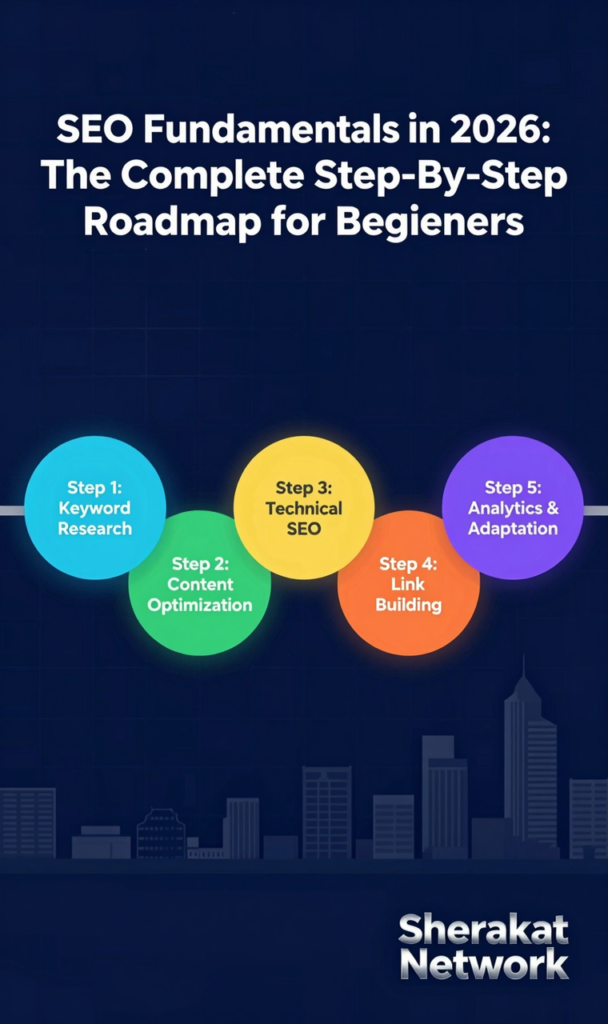
SEO is moving at breakneck speed. Here are the most significant developments shaping the landscape as we move through 2026.
- The Rise of Generative Engine Optimization (GEO): As mentioned, this is the big one. Marketers must now optimize for AI models like ChatGPT, Google’s Gemini, and Perplexity. This involves creating clear, well-structured content that these models can easily synthesize and cite as a source .
- E-E-A-T as a Core Ranking Factor: Google has doubled down on rewarding content that demonstrates first-hand experience. “About Us” pages, detailed author bios with credentials, and case studies are no longer optional. They are essential trust signals .
- Search Everywhere Optimization: Users are searching on YouTube, TikTok, and Reddit. In fact, many young people use TikTok as their primary search engine. SEO strategies in 2026 must account for visibility across these platforms, not just Google .
- The Power of Branded Search: When users search for your brand name specifically, it tells Google you are a recognized entity. This “brand demand” spills over into non-branded rankings, making brand building a core SEO activity .
- Core Web Vitals & Page Experience: While not new, these remain critical. With the majority of traffic being mobile, Google continues to prioritize sites that offer a smooth, fast, and stable experience. In fact, 53% of mobile users abandon pages that take longer than three seconds to load .
Success Stories (If Applicable)
While specific client data is confidential, a common success story in the SEO world follows a predictable pattern. I once consulted for a small, family-run restaurant supply company. They had a website built in 2010, rarely blogged, and wondered why they were losing business to national chains.
We didn’t have a massive budget. We focused on the fundamentals:
- Technical SEO: We optimized the site for mobile and improved its loading speed dramatically.
- Keyword Research: Instead of chasing the broad term “restaurant supplies,” we targeted long-tail keywords like “affordable commercial espresso machine repair in [City Name]” and “bulk eco-friendly takeout containers.”
- Content (E-E-A-T): We created a guide titled “How to Extend the Life of Your Commercial Oven,” written by a technician with 20 years of experience. This demonstrated real expertise.
Within 9 months, their organic traffic increased by 300%. They started ranking for those local, high-intent keywords and saw a direct increase in phone calls and quotes. They didn’t need to beat the big guys on the big terms; they just needed to be the best answer for the specific questions their neighbors were asking.
Real-Life Examples
Let’s look at two contrasting examples of a search in 2026.
Scenario A: Bad SEO (Low E-E-A-T)
A user searches for “best noise-canceling headphones.”
They find a blog post titled “Top 10 Headphones of 2026.” The post is written by “Admin.” It lists 10 headphones with generic descriptions like “great sound, good battery.” The affiliate links are obvious, and the user doesn’t trust the source. They bounce back to Google. The site gets a high bounce rate, signaling to Google that the content is not satisfying the user’s intent.
Scenario B: Good SEO (High E-E-A-T)
The user searches for the same term.
They land on an article from an audio engineering website. The article is written by a named sound engineer who reviews headphones for a living. It includes:
- Original audio samples recorded through the headphones.
- A video of the engineer testing the headphones on a plane.
- A clear comparison table of features.
- Honest opinions: “These are great for bass lovers, but if you want neutral sound for mixing, look at this other pair.”
The user reads the article, trusts the expert opinion, and clicks the link to buy. They stay on the page for 10 minutes. This positive user behavior signals to Google that this is high-quality content, reinforcing its authority.
Conclusion and Key Takeaways
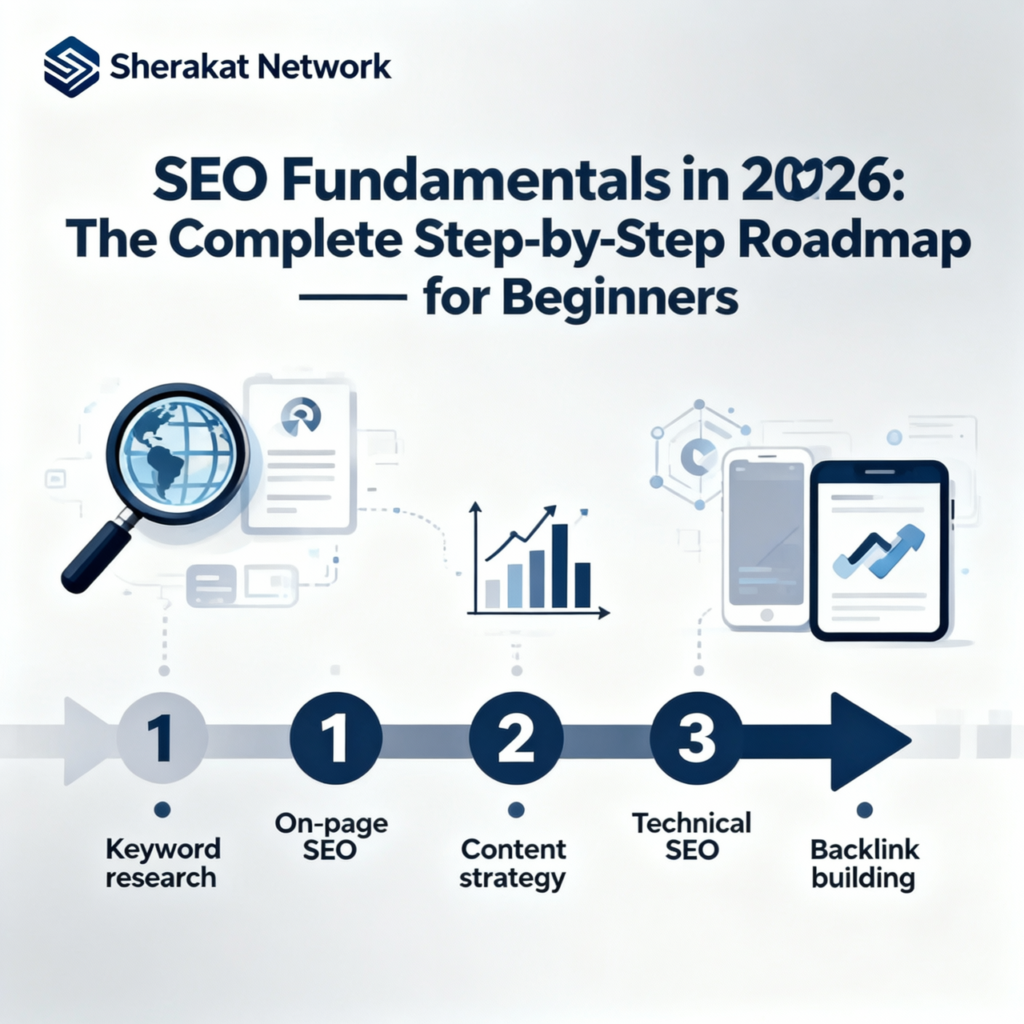
SEO in 2026 is both more complex and more straightforward than ever. It’s complex because the technology is advanced, but it’s straightforward because the path to success is clear: be a helpful, authoritative, and trustworthy resource.
Key Takeaways:
- SEO is now GEO: Optimize for AI synthesis by being clear, structured, and authoritative.
- Intent is King: Forget keyword stuffing. Understand what your user really wants and answer it completely.
- E-E-A-T is mandatory: Show your experience and expertise. Real people with real credentials build trust with both users and algorithms.
- Brand matters: A strong brand that people search for is a powerful SEO asset.
- Start with the fundamentals: Master on-page, technical, and off-page SEO. They are the foundation upon which all future success is built.
FAQs (Frequently Asked Questions)
Here are 25 detailed questions beginners have about SEO, answered for 2026.
- What is the difference between SEO and paid search?
SEO focuses on organic (free) traffic by optimizing your site, while paid search (like Google Ads) involves paying for traffic through advertisements. SEO builds long-term equity, while paid ads provide immediate, short-term visibility . - How long does it take to see results from SEO?
It typically takes 4-6 months to see meaningful results, and often 6-12 months to build significant, sustainable traffic. It’s a long-term strategy, not a quick fix. - Is SEO dead because of AI?
No, it’s evolving into GEO. The need to be found and cited by AI makes SEO more important, not less. It simply requires a shift from click-focused to visibility-focused strategies . - Do I need to be a coder to do SEO?
No. While understanding HTML and CSS helps with technical SEO, many aspects like content creation and basic on-page optimization require no coding skills. - What is a “backlink” and why is it important?
A backlink is a link from another website to yours. It acts as a “vote of confidence,” signaling to search engines that your content is valuable and trustworthy. - What is the first thing I should do to start with SEO?
Set up Google Search Console and Google Analytics 4. These free tools provide the data you need to understand how your site is performing and where to focus your efforts . - What are the best free SEO tools for beginners?
Google Search Console, Google Analytics, Google Keyword Planner, and the Website SEO Checker from Bluehost are excellent starting points. For WordPress users, Yoast SEO or Rank Math offer great free versions . - How do I choose the right keywords?
Focus on relevance and search intent. Think about what your ideal customer would type. Use tools to find terms with decent search volume but lower competition. Prioritize long-tail keywords (3-4 word phrases) as they are easier to rank for. - What is “search intent”?
It is the goal behind a user’s search query. The four main types are: Informational (seeking knowledge), Navigational (finding a specific site), Commercial (researching before a purchase), and Transactional (ready to buy). - What is the ideal length for a blog post for SEO?
There is no magic number, but comprehensive content tends to perform well. Aim to cover the topic fully. Some topics can be covered in 500 words, while others require 2,500+ words. A 2025 HubSpot report noted that posts between 1,500–2,000 words performed best for complex topics, but only if they matched user intent . - What is a meta description?
It’s the short summary (under 160 characters) that appears under the title in search results. While not a direct ranking factor, it heavily influences whether users click on your link . - What is the difference between a title tag and an H1?
The title tag is the clickable headline in search results (and the title on the browser tab). The H1 is the main headline on the actual page. They should be similar but can be optimized slightly differently. - How important is mobile-friendliness?
It is critical. Google uses mobile-first indexing, meaning it primarily uses the mobile version of your site for ranking and indexing. If your site isn’t mobile-friendly, it will struggle to rank . - What is a “404 error”?
It’s a message indicating that a page cannot be found (Page Not Found). Too many 404s create a poor user experience and waste crawl budget. - What is an XML sitemap?
A file that lists all the important pages on your website, helping search engines discover and crawl them more intelligently . - How do I optimize images for SEO?
Use descriptive file names (e.g., “red-leather-boots.jpg” instead of “IMG_502.jpg”) and fill in the alt text with a clear description of the image, including your keyword where natural. Also, compress images to improve page speed. - What are “Core Web Vitals”?
A set of specific factors that Google considers important for user experience. They measure loading performance (LCP), interactivity (INP), and visual stability (CLS). - Should I worry about duplicate content?
Yes. Duplicate content can confuse search engines and dilute your ranking power. Use canonical tags to tell search engines which version of a page is the master copy. - What is a “canonical tag”?
A piece of HTML code that helps prevent duplicate content issues by specifying the “primary” version of a web page. - How do I build backlinks as a beginner?
Start by creating genuinely link-worthy content (original research, infographics, ultimate guides). Then, practice “digital PR” by reaching out to bloggers, journalists, and industry websites to let them know your resource exists. Guest posting on reputable sites is another great method. - What is local SEO?
Optimizing your online presence to attract more business from relevant local searches. This involves claiming your Google Business Profile, managing reviews, and ensuring your name, address, and phone number (NAP) are consistent across the web. - Does social media help with SEO?
Not directly. Social signals (likes, shares) are not a ranking factor. However, social media is a powerful way to amplify your content, which can lead to more visibility, brand mentions, and backlinks—all of which do help SEO . - What is E-E-A-T and how do I improve it?
It stands for Experience, Expertise, Authoritativeness, and Trustworthiness. Improve it by having clear author bios with credentials, showcasing customer testimonials and case studies, linking to reputable sources, and keeping your content accurate and up-to-date . - What is the “Knowledge Graph”?
Google’s system for understanding real-world entities and their relationships. It’s what powers the information boxes you see on the right side of search results. Optimizing for entities (rather than just keywords) is key for appearing in these. - My site is new. Should I focus on short-tail or long-tail keywords?
Definitely focus on long-tail keywords. They have lower search volume but much higher conversion rates and are significantly easier for a new site to rank for. They allow you to build authority slowly. - How often should I update my old content?
Regularly. Review your top-performing pages at least once or twice a year. Update statistics, add new insights, and ensure all links are still working. This signals freshness to search engines. - What is “crawl budget”?
The number of pages a search engine will crawl on your site within a given timeframe. For large sites, optimizing crawl budget is crucial. For smaller sites, it’s rarely an issue. - What is structured data (schema markup)?
A type of code added to your website to help search engines understand your content better. It can enable rich results, like star ratings for reviews or prices for products . - Is it bad to use AI to write my content?
Not inherently, but publishing raw, unedited AI content is risky. It often lacks the “experience” component of E-E-A-T. The best approach is to use AI as an assistant for research and outlines, but to have a real expert infuse the content with personal insights and original ideas. - Where can I learn more?
Follow industry blogs like Search Engine Land, Moz, and Google’s official Search Central blog. The resources linked throughout this article are also a fantastic place to start.
About Author
Sana Ullah Kakar is a seasoned digital marketing strategist and SEO consultant with over a decade of experience helping businesses establish and scale their online presence. As the lead content contributor for the Sherakat Network, Sana specializes in translating complex digital marketing concepts into actionable strategies for entrepreneurs and professionals across the Middle East and beyond. His approach is rooted in data-driven decision-making and a deep understanding of how evolving search technologies, from AI-driven algorithms to voice search, impact real-world business growth. When he’s not analyzing search trends or mentoring the next generation of marketers, Sana is exploring the intersection of technology and human behavior to build more authentic and effective online experiences.
Free Resources
To help you on your SEO journey, don’t miss these excellent free tools and guides:
- Google Search Console: Your direct line to Google. Monitor your site’s performance.
- Google Analytics 4: Understand your audience and what they do on your site.
- Website SEO Checker: A free tool for quick site audits .
- Yoast SEO / Rank Math: Indispensable free plugins if you’re on WordPress.
- Google’s SEO Starter Guide: The official word from Google itself.
For more in-depth articles and resources, be sure to explore the Sherakat Network.
- Dive into our full collection of tools and templates at our Resources page.
- Read the latest industry news and tips on our Blog.
- If you’re just starting your entrepreneurial journey, our guide on how to Start an Online Business in 2026 is a must-read.
- Understand the intricacies of partnerships with our detailed piece on Business Partnership Models.
You can also broaden your understanding of the digital world with these external reads:
- Understanding user psychology is key; read The Complete Guide to Psychological Wellbeing to grasp how users think.
- For context on global business, check out this guide on Global Supply Chain Management.
- Stay ahead of the curve by exploring Artificial Intelligence & Machine Learning trends.
- As remote work reshapes business, learn about Remote Work Productivity.
- Understand the broader global context affecting markets via Climate Policy & Agreements.
Discussion
What are your biggest hurdles in learning SEO? Is it the technical side, creating content, or understanding how AI fits in? Have you seen any success (or failure) stories from trying to rank your site?
Share your thoughts and questions in the comments below. Let’s learn from each other and navigate the future of search together. If you have a specific topic you’d like us to cover in the future, let us know! And if you need personalized help, don’t hesitate to contact us.
Comments on “SEO Fundamentals in 2026: The Complete Step-by-Step Roadmap for Beginners”