


Voice & Visual Search Optimization for Affiliate Content: Ranking in a Post-Text Search World (2026-2030)

Introduction – Why This Matters
The way humans seek information is undergoing its most profound shift since the invention of the search bar. By 2026, over 50% of all online searches are projected to be conducted via voice or visual input, according to Gartner’s 2025 Digital Trends Forecast. Users are asking questions aloud to smart speakers, snapping photos of objects to identify them, and using augmented reality to search their surroundings. For affiliate marketers whose livelihood depends on being found at the precise moment of intent, this isn’t a peripheral trend—it’s a fundamental re-architecting of the discovery battlefield.
In my experience, optimizing for this new paradigm is not an add-on; it’s a complete rewiring of content strategy. What I’ve found is that a blog post optimized for traditional “best running shoes” keywords might get traffic, but a piece of content structured to answer “Hey Google, what are the best running shoes for flat feet on a wet pavement?” verbally, and tagged with high-quality images searchable by Google Lens for “shoe tread pattern,” will dominate the next decade. I helped a home gardening affiliate capitalize on visual search by optimizing their plant identification guides with pristine, zoomable images. Within six months, they became the primary source for Google Lens results on “brown leaf spots on tomato plants,” leading to a 300% increase in high-intent mobile traffic.
This guide is your definitive manual for Voice & Visual Search Optimization (VVSO). We will dissect the technologies, user behaviors, and practical, step-by-step optimizations you must implement from 2026 onward to ensure your affiliate content is not just readable, but askable and seeable.
Background / Context: The Sensory Search Revolution
The move beyond text is driven by advancements in AI, hardware ubiquity, and changing human-computer interaction.
- The Proliferation of AI Assistants & Smart Devices: By 2025, an estimated 8 billion digital voice assistants will be in use globally. They are embedded in phones (Siri, Google Assistant), smart speakers (Amazon Echo, Google Nest), cars, and even wearables. Search is becoming a conversational, ambient utility.
- Computer Vision Maturity: Platforms like Google Lens, Pinterest Lens, and Amazon StyleSnap have moved from novelty to utility. Their ability to identify products, landmarks, text, and even specific object attributes (color, style, brand) from an image is now staggeringly accurate, creating a “search by sight” behavior.
- The Rise of “Zero-Click” and “Answer Engine” Search: Google’s Search Generative Experience (SGE) and direct answers from Alexa are training users to expect immediate, spoken solutions, not lists of links. Your content must be structured to be that direct answer.
- Mobile-First as Sensory-First: With over 60% of searches on mobile, the device’s native capabilities—voice input, high-quality camera, GPS, screen reader—are the primary search interfaces. Optimization must be inherently mobile and sensor-native.
The implication is stark: If your content is only optimized for text typed into a box, you are becoming invisible to a massive, growing segment of user intent. Affiliate discovery is moving from the SERP to the spoken question and the camera viewfinder.
Key Concepts Defined
- Voice Search Optimization (VSO): The practice of optimizing digital content to be found and effectively delivered via voice-based queries through digital assistants. It focuses on natural language, question phrases, and concise, authoritative answers.
- Visual Search Optimization (ViSO): The practice of optimizing images and surrounding content to be discovered and understood by visual search engines (Google Lens, Pinterest Lens). This includes image quality, structured data, and contextual page content.
- Conversational Query: A long-tail, natural language search phrase, typically in the form of a question, as spoken to a voice assistant. E.g., “What’s the best cordless vacuum for pet hair on hardwood floors?” vs. the typed “best cordless vacuum pet hair.”
- Featured Snippet / Position Zero: The highlighted answer box at the top of Google’s search results, designed to directly answer a query. It is the prime real estate for voice search, as assistants often read the featured snippet verbatim as their answer.
- Schema Markup (Structured Data): A code vocabulary (JSON-LD) added to your website HTML that helps search engines understand the content’s context—e.g., that a number is a recipe’s cooking time, a string is a product’s price, or an image is of a specific product. Critical for VVSO.
- Google Lens / Pinterest Lens: AI-powered visual search tools that allow users to search with images from their camera or screenshots. They can identify objects, find similar products, scan text, and solve problems.
- Local Intent for Voice Search: A significant portion of voice searches have local intent (“near me,” “open now,” “close by”). For affiliates in localizable niches (home services, experiences, retail), this is crucial.
- Entity-Oriented Search: Search engines are moving from matching keywords to understanding “entities” (people, places, things, concepts) and their relationships. Your content must establish clear entity authority.
How It Works (Step-by-Step Breakdown): The VVSEO Implementation Framework
Phase 1: Foundational Technical & Content Audit (Weeks 1-3)
- Technical Prerequisites: Mobile-First Excellence:
- Ensure your site has a perfect Core Web Vitals score (LCP, FID, CLS). Voice and visual search users are almost exclusively on mobile; a slow site is an immediate disqualifier.
- Implement HTTPS security. It’s a basic ranking signal and a trust prerequisite.
- Ensure flawless mobile responsiveness and readability (font size, tap targets).
- Keyword Research for a Conversational World:
- Use tools like AnswerThePublic, AlsoAsked, and SEMrush’s “Questions” report. Focus on full questions: “how to,” “what is,” “best way to.”
- Analyze “People also ask” boxes in Google SERPs; these are prime voice search candidates.
- For visual search, think in terms of objects, attributes, and problems: “[product] close up,” “[problem] identification,” “[style] inspiration.”
- Audit Existing Content for VVSO Potential: Identify your top 10-20 “best of,” “review,” and “how-to” articles. These are your candidates for optimization, as they naturally answer questions and showcase products.
Phase 2: Optimizing for the Ear – Voice Search (Weeks 4-6)
4. Adopt a Q&A Content Structure:
* Use H2/H3 headers to pose explicit questions: “What is the best budget DSLR camera for beginners in 2026?”
* Directly below each header, provide a clear, concise, 40-60 word answer that could be read aloud. This is your “snippet bait.”
* Then, expand with detailed analysis, pros/cons, and affiliate links.
5. Master Featured Snippet Optimization:
* Answers should be in paragraph, list, or table format.
* Use bulleted or numbered lists for “best X for Y” articles.
* Create simple comparison tables (Product vs. Price vs. Key Feature).
* Statistically, lists and tables have the highest snippet capture rate.
6. Implement Comprehensive Schema Markup:
* For Product Reviews: Use Product and Review schema. Include properties for name, image, description, brand, sku, aggregateRating, review, and crucially, offers (with price and availability). This helps Google understand your content is a review and can trigger rich results.
* For How-To Guides: Use HowTo schema, outlining steps with name, text, and image for each step.
* For FAQs: Use FAQPage schema. This can directly populate “People also ask” boxes and is a favorite source for voice answers.
* Use Google’s Rich Results Test to validate your markup.
7. Optimize for Local & Conversational Phrases:
* If applicable, create location-specific pages (e.g., “Best Hiking Gear Stores in Colorado”).
* Integrate natural, colloquial language into your content. Write as you speak.
Phase 3: Optimizing for the Eye – Visual Search (Weeks 7-9)
8. Revolutionize Your Image Strategy:
* Quality is Non-Negotiable: Use high-resolution, professionally lit, clutter-free images. Visual search AI needs clear subjects.
* Contextual Images: Show products in use (a backpack on a hike, a blender making soup). This provides contextual clues for both AI and users.
* Multiple Angles & Details: Include close-ups of unique features, textures, labels, and interfaces. These are visual “keywords.”
9. Implement Rigorous Image SEO:
* File Names: Use descriptive, keyword-rich names: canon-eos-r6-mark-ii-front-view-on-tripod.jpg, not IMG_1234.jpg.
* Alt Text: Write detailed, natural-sentence descriptions that include the target keyword and context. E.g., Alt="A front view of the Canon EOS R6 Mark II camera mounted on a tripod, showing the lens mount and top dials in a studio setting."
* Image Titles & Captions: Use them to provide additional context. A caption under a product image could state: “Fig 1. The ErgoChair Pro’s lumbar support mechanism is fully adjustable.”
* Optimize Image File Size: Compress images without losing quality (using ShortPixel or WebP format) to maintain page speed.
10. Create “Visual Problem-Solving” Content:
* Develop guides centered around identifying something: “What kind of bug is this?” (with clear macro images), “Is this plant fungus or sunburn?”.
* For fashion/home decor affiliates, create “Find This Look” posts, where users can snap a photo of a style and find similar affiliate-linked items.
11. Leverage Pinterest as a Visual Search Engine:
* Create Tall, Vertical Pins (1000x1500px is ideal).
* Use rich keyword descriptions and hashtags.
* Enable Pinterest Rich Pins (using schema markup) to pull in real-time data like pricing and stock.
Phase 4: Promotion & Measurement (Ongoing)
12. Submit a Sitemap that includes image URLs to Google Search Console.
13. Monitor Performance:
* In Google Search Console, track impressions/clicks for queries that appear as “Google Assistant” or are clearly conversational.
* Use analytics to track traffic from Pinterest and monitor for spikes related to visual trends.
* Track your featured snippet ownership using tools like SEMrush Position Tracking.
14. Build Authority for Entity Recognition: Earn backlinks from authoritative sites, get listed in relevant expert directories, and ensure consistent NAP (Name, Address, Phone) information if you have a local element. This helps Google see you as a trustworthy entity for answering questions.
Why It’s Important: The First-Mover Advantage
Acting now on VVSEO provides a monumental competitive moat.
- Access to High-Intent, Untapped Traffic: Voice and visual searchers are often further down the purchase funnel. A voice query is specific; a visual search is direct product intent. Converting this traffic is significantly easier.
- Dominance in the “Answer Economy”: Securing featured snippets and direct answers doesn’t just get traffic; it establishes your site as the source of truth. This brand authority spills over into all your channels.
- Future-Proofing Against Core Algorithm Shifts: Google’s MUM (Multitask Unified Model) and other AI are designed to understand multimodal information (text, image, video) together. Optimizing for this multimodal reality aligns you with the core direction of search technology.
- Superior User Experience (UX): A fast, well-structured site with clear answers and beautiful, informative images is simply a better product. It reduces bounce rates and increases engagement, sending positive quality signals back to search engines.
For a foundational understanding of building a modern online business, start with our Complete Guide to Starting an Online Business in 2026.
Sustainability in the Future (2026-2030): The Multimodal, Ambient Search Era
VVSEO is the bridge to a future where search is seamless and ambient.
- AR-Generated Search Queries: Users will point their AR glasses at a broken appliance, and a visual/voice search for “how to fix [model number] leaking pipe” will be generated automatically. Content with clear, step-by-step visual guides (marked up with
HowToschema) will win. - Multimodal AI Searchers (like GPT-4V): AI agents will process text, images, and audio simultaneously. Your product review page will need a cohesive narrative where the text, images, and any video all reinforce the same entity and answer the same range of queries.
- Personalized & Predictive Sensory Search: Your device, knowing your preferences and past purchases, will personalize voice and visual results. Building a strong first-party data profile (as discussed in our personalization guide) will allow you to cater to these personalized intents.
- Voice & Visual Commerce Integration: “Hey Google, buy more of that coffee I took a picture of last week.” The affiliate linking infrastructure will need to evolve to support voice-activated purchases and image-based checkout, likely through more sophisticated API-driven partnerships.
To understand the complex, interconnected systems that future tech will rely on, explore our partner’s resource on Global Supply Chain Management.
Common Misconceptions

- Misconception 1: “Voice search is just about answering trivia questions.”
- Reality: While “who is…” queries are common, commercial and local intent voice searches are exploding. “Buy,” “best,” “near me,” and “how to” are dominant prefixes. It’s a commercial channel.
- Misconception 2: “If I rank #1 for a text keyword, I’ll automatically win the voice search.”
- Reality: Voice assistants overwhelmingly pull from featured snippets (Position Zero). You can rank #1 organically but still lose the voice answer to the #3 result if it has a better-optimized snippet. You must optimize for the snippet.
- Misconception 3: “Visual search is just for fashion and home decor.”
- Reality: It’s for any physical object. DIY (identifying a tool part), automotive (identifying a car issue), gardening (plant disease), electronics (identifying a cable)—the applications are endless for affiliate niches.
- Misconception 4: “Schema markup is too technical and doesn’t move the needle.”
- Pitfall: Schema is the language you use to talk directly to search engines. It’s not a direct ranking factor, but it is a critical clarity factor. It helps Google understand your content, which is a prerequisite for it being selected as a rich result or voice answer. It’s essential infrastructure.
Recent Developments (2024-2025)
- Google’s “Perspectives” Filter & E-E-A-T: This new search filter highlights forum posts, video reviews, and social content. It signals Google’s desire for authentic, experience-based content—exactly what voice searchers trust. Demonstrating E-E-A-T through author bios and firsthand testing is crucial.
- AI Overviews in SGE: Google’s AI-generated answer boxes are becoming more prevalent. These overviews synthesize information from multiple sources. Having your content cited within an AI overview is the new “ranking,” requiring even greater depth, clarity, and structured data.
- Amazon’s StyleSnap & Alexa Integration: Amazon’s visual search within its app can now be triggered by voice command to Alexa (“Alexa, find me dresses like this”), creating a direct voice-to-visual search commerce loop.
- Advancements in Real-Time Visual Search: Platforms can now identify objects in video streams, not just static images. This points to a future where live video content could be indexed and searched visually.
For insights into the AI models driving these changes, visit World Class Blogs’ AI & Machine Learning section.
Success Stories
Case Study: “The DIY Repair Site’s Voice & Visual Domination”
A niche site focusing on appliance repair was struggling against large corporate manuals.
- Voice Strategy: They created an extensive library of FAQPage schema markup for common problems (e.g., “Why is my washing machine making a loud grinding noise?”). Each answer was a concise 50-word diagnosis followed by a link to a detailed repair guide.
- Visual Strategy: They invested in ultra-high-resolution, well-lit photos of every component, screw, and error code. Alt text was meticulously descriptive. They created “Identify Your Model” guides with visual flowcharts.
- Result: Within 9 months, they captured featured snippets for over 200 key “why is my…” voice search queries. Their image gallery became a top result for Google Lens searches on appliance model numbers and part IDs. Traffic from “Google Assistant” grew to 35% of their total organic search. Their affiliate revenue from tool and part sales skyrocketed, as they were now the first touchpoint for frustrated, in-the-moment users.
Real-Life Examples
- Example 1: Optimizing a “Best Blender” Review for Voice:
- Page Title: Best Blender for Smoothies and Soups in 2026: Reviewed
- H2: What is the best overall blender for most people?
- Concise Answer (40 words): “For most home cooks, the Vitamix 5200 is the best overall blender. It offers professional-grade power, durability, and a simple interface, effortlessly handling everything from smoothies to hot soups. It’s a long-term investment for your kitchen.”
- Schema:
Product,Review, andAggregateRatingschema applied to the Vitamix section. - Result: This page is primed to be read as a voice answer and to generate a rich product snippet in search results.
- Example 2: A Fashion Affiliate’s Visual Search Optimization:
- Page: “Summer Office Outfit Inspiration”
- Image Strategy: Each outfit is photographed on a clean, neutral background. Multiple angles (front, back, detail of fabric). File name:
linen-blazer-cream-tank-wide-leg-pants-outfit-front-view.jpg. - Alt Text: “A woman wearing a summer office outfit: a beige linen blazer over a white silk tank top, paired with taupe wide-leg trousers and nude heels.”
- Page Content: Below the image, a list with affiliate links to “Shop the Look”: Linen Blazer (Brand A), Silk Tank (Brand B), Trousers (Brand C).
- Result: This image is highly likely to be indexed by Google Lens and Pinterest Lens. A user can snap a photo of similar clothing and be directed to this page to find and purchase the components.
- Example 3: Local-Service Affiliate Using Voice Local SEO:
- Niche: Home Security Systems.
- Page: “Best Home Security System Installers in [City Name]”
- Content: Clear answers to “Who is the best home security company in [City]?” Includes a comparison table of local providers, their ratings, and special offers.
- Schema:
LocalBusinessmarkup for the page, andFAQPagefor the Q&A section. - Result: Dominates voice searches like “Alexa, find home security installers near me” for that geographic area, driving high-value lead-gen affiliate conversions.
Conclusion and Key Takeaways
The sensory search revolution dismantles the old SEO playbook. Success from 2026 to 2030 will belong to affiliate marketers who understand that their content must serve not just readers, but listeners and observers. It must be structured for machines to parse and for humans to consume effortlessly across multiple sensory channels.
Key Takeaways:
- Optimize for Answers, Not Just Keywords. Structure your content to directly and concisely answer specific questions. The featured snippet is the primary gateway to voice search dominance.
- Schema Markup is Your Secret Handshake. It’s the critical code that tells search engines exactly what your content is about. Implement
Product,Review,FAQPage, andHowToschema as a non-negotiable baseline. - Treat Every Image as a Search Entry Point. Invest in quality, context, and descriptive metadata. Your images are no longer decorations; they are interactive, searchable assets.
- Embrace the Conversational & Local Mindset. Write naturally, anticipate full-sentence questions, and create content that serves users with immediate, local intent.
- View SEO as Multimodal Content Strategy. Text, images, and structure must work in harmony to establish entity authority and solve user problems across text, voice, and visual interfaces.
Begin by taking your top-performing review or guide. Add FAQ schema. Rewrite the introduction as a clear Q&A. Audit and rename every image. This single-page transformation is your first step into the post-text search world.
For broader strategies on adapting your business model to technological shifts, consider reading about Remote Work & Productivity.
FAQs (Frequently Asked Questions)
1. What is the most important technical factor for voice search?
Page Speed (Core Web Vitals). Voice search users are almost always on mobile and demand instant answers. If your page loads slowly, it will be passed over, regardless of content quality.
2. How long should my ideal voice search answer be?
Aim for a concise 40-60 word paragraph that can be read aloud in 15-20 seconds. This is the “snippet” you want to be read. You can and should expand with more detail afterward.
3. Do I need to create separate pages for voice search?
No. Optimize your existing, strongest content. Integrate voice and visual optimizations into your core articles, reviews, and guides.
4. What’s the difference between alt text and image title for visual search?
- Alt Text: Read by screen readers and search engine crawlers to understand image content. Be descriptive and keyword-aware.
- Image Title: Shown as a tooltip when a user hovers over an image. Less critical for SEO but good for UX. Often auto-populated from the filename.
Focus 95% of your effort on perfect alt text.
5. Can I optimize YouTube videos for voice search?
Absolutely. YouTube is the second-largest search engine. Use descriptive, question-based titles and detailed descriptions with timestamps. YouTube videos often appear in voice search results, especially for “how-to” queries.
6. How does local SEO relate to voice search?
A massive percentage of voice searches have local intent (“near me,” “open now”). Ensure your Google Business Profile (if applicable) is optimized, and create locally focused content pages with clear NAP (Name, Address, Phone) information and local schema markup.
7. What are “entity authorities” and how do I build them?
An entity is a distinct, definable thing (a product, a person, a concept). Authority is built when other reputable sources (websites, databases) link to you or reference you in relation to that entity. Earn backlinks, get listed in expert directories, and produce definitive content on a specific topic.
8. Is Pinterest still relevant for visual search?
Extremely. Pinterest functions as a visual discovery engine with strong commercial intent. Its “Lens” feature is widely used. For niches like home decor, fashion, food, and DIY, Pinterest is a primary traffic source.
9. How do I find conversational keywords?
- Use AnswerThePublic.
- Type a seed keyword into Google and scroll to the “People also ask” section.
- Use SEMrush or Ahrefs “Questions” report.
- Think about the natural questions a beginner would ask about your topic.
10. Does voice search work on desktop?
Yes, through browser assistants (like Google Assistant in Chrome) and built-in OS tools (Cortana, Siri on Mac). However, the vast majority of voice interactions happen on mobile and smart speaker devices.
11. What is “Position Zero” and how do I get it?
Position Zero is the featured snippet box above the #1 organic result. To get it: provide a clear, direct answer to a question; structure it in a paragraph, list, or table; use relevant headers (H2, H3); and ensure your page is authoritative on the topic.
12. Should I use text-to-speech plugins on my site for voice search?
No. These plugins are for on-page accessibility, not search engine optimization. They do not help your content get discovered by external voice assistants like Google Assistant or Alexa.
13. How important is site security (HTTPS) for VVSEO?
Critical. HTTPS is a baseline ranking signal. An unsecured site will be deprioritized, and users/browsers may see security warnings, destroying trust and increasing bounce rates.
14. Can visual search identify logos and text in images?
Yes, very effectively. Google Lens can extract text from images (useful for memes, signs, documents) and identify brand logos. This means images with overlaid text (infographics) should have that text also present in the surrounding page content or alt text.
15. What’s the best way to structure a “best of” article for voice?
- Introduction posing the core question.
- A concise “The Winner” section with a short paragraph declaring the top pick and why.
- A comparison table of top contenders.
- Detailed reviews of each, using H3 headers like “Why we chose [Product] for [Use Case].”
- An FAQ section at the bottom with FAQPage schema.
16. How do I test if my schema markup is working?
Use Google’s Rich Results Test tool. Paste in your URL or code snippet. It will show any errors, warnings, and a preview of how your page might look as a rich result.
17. Does voice search favor older, more authoritative domains?
Authority is a significant factor, but a new site with perfectly structured, comprehensive, and user-focused content can still capture featured snippets if it is the best answer. Focus on being the best answer.
18. What are “People also ask” boxes and how can I get in them?
These are expandable question boxes in the SERP. They are often sourced from pages using FAQPage schema or from content that clearly poses and answers sub-questions within an article. Structuring your content with clear Q&A sections is key.
19. How do I optimize for smart speakers (like Amazon Echo) specifically?
Focus on local intent and transactional queries. “Alexa, buy more dog food.” “Hey Google, find a plumber.” Ensure your product and local service pages are impeccably optimized with schema and clear calls-to-action.
20. Is video important for visual search?
Increasingly, yes. Platforms can index objects within videos. Having a video review with clear shots of the product, its features, and it in use provides rich visual data for search engines to understand your content.
21. What are “image sitemaps” and do I need one?
An image sitemap is an XML file that lists the images on your site. It helps search engines discover them, especially if they are loaded by JavaScript. If you have many images, it’s a good practice. You can generate one via SEO plugins or submit an image sitemap through Google Search Console.
22. How does voice search handle different languages and accents?
Very well. Major AI assistants support dozens of languages and regional accents. For multilingual sites, use proper hreflang tags and create naturally phrased content in each language, not just direct translations.
23. Can I optimize infographics for visual search?
Yes, but they are challenging because the text inside the image isn’t inherently crawlable. Always provide the full text of the infographic data in the surrounding HTML content. Use descriptive alt text explaining the infographic’s key finding.
24. What’s the biggest mistake affiliates make with image SEO?
Using stock photos with generic filenames and no context. A stock photo of a “happy family” with the file stockphoto123.jpg and alt=”family” provides zero value for visual search. Use original or highly specific stock images and tag them meticulously.
25. How often should I update my content for voice search?
Regularly. As new models of products come out, new questions arise. Audit your top voice-optimized pages quarterly. Update statistics, check for new “People also ask” questions, and refresh images if products have changed.
26. Does site architecture matter for VVSEO?
Yes. A flat, logical site structure helps search engines (and users) find all your content easily. Use silo structures or topic clusters, where a pillar page (e.g., “Ultimate Camera Guide”) links to cluster pages (e.g., “Best Cameras for Video,” “How to Choose a Lens”).
27. What are “action queries” in voice search?
Queries that imply the user wants to do something: “buy,” “book,” “find,” “call,” “navigate to.” Your content should facilitate that action with clear, prominent affiliate links or contact information.
28. How can I use podcasts for voice search optimization?
Podcast episodes can appear in voice search results. Transcribe your episodes and publish the transcripts on your website with proper heading structure and keyword optimization. This gives search engines text to crawl from your audio content.
29. What is “E-A-T” and why is it crucial for voice?
Experience, Expertise, Authoritativeness, Trustworthiness. Voice assistants want to deliver answers from trusted sources. Demonstrate your E-A-T through author bios showing real-world experience, citing reputable sources, and linking to your own deep, well-researched content.
30. Are there any tools to track voice search rankings?
Direct tracking is difficult as it’s personalized. However, you can:
- Track featured snippet rankings in tools like SEMrush.
- In Google Search Console, filter performance by search appearance for “Rich Results.”
- Look for traffic from the “Google Assistant” referrer in your analytics.
31. How do I optimize for “near me” voice searches without a physical location?
Create content that targets “near me” intent indirectly. For example, a camping gear affiliate can create “Best Camping Gear Rentals in [National Park]” or “Where to Buy Propane Canisters Near Yellowstone.”
32. What’s the role of social media in visual search?
Platforms like Instagram and TikTok are massive visual search engines. Use relevant hashtags, geotags, and descriptive captions. Instagram’s shopping features and TikTok’s visual search allow direct product discovery from social posts.
33. How does voice search affect content length?
It doesn’t demand short content; it demands well-structured content. A 5,000-word ultimate guide can be perfect for voice if it has clear, concise answers to specific questions scattered throughout (with proper headers and schema).
34. What are “zero-click” searches and should I worry about them?
A zero-click search is where the user gets their answer directly on the SERP (from a featured snippet, knowledge panel, etc.) without clicking through. While you “lose” the click, you gain immense brand authority and may be the source they remember for future, more complex queries where they do click.
35. How do I start if I’m completely new to schema markup?
Use a plugin if you’re on WordPress: Rank Math SEO or SEOPress have user-friendly schema modules. Start by adding FAQPage schema to a post with questions. Use Google’s Schema Markup Helper (the older wizard) to generate code for a specific page type, then implement it.
About Author
Sana Ullah Kakar is an SEO strategist specializing in frontier search technologies. With a background in computational linguistics and a decade of experience in affiliate content creation, they focus on helping publishers adapt to algorithmic shifts before they become mainstream. They believe the future of search is multisensory, and that the most successful marketers will be those who optimize for human intuition, not just silicon indexing. Their practical frameworks are regularly shared through the Sherakat Network. For more on adapting to digital shifts, explore our Blog.
Free Resources
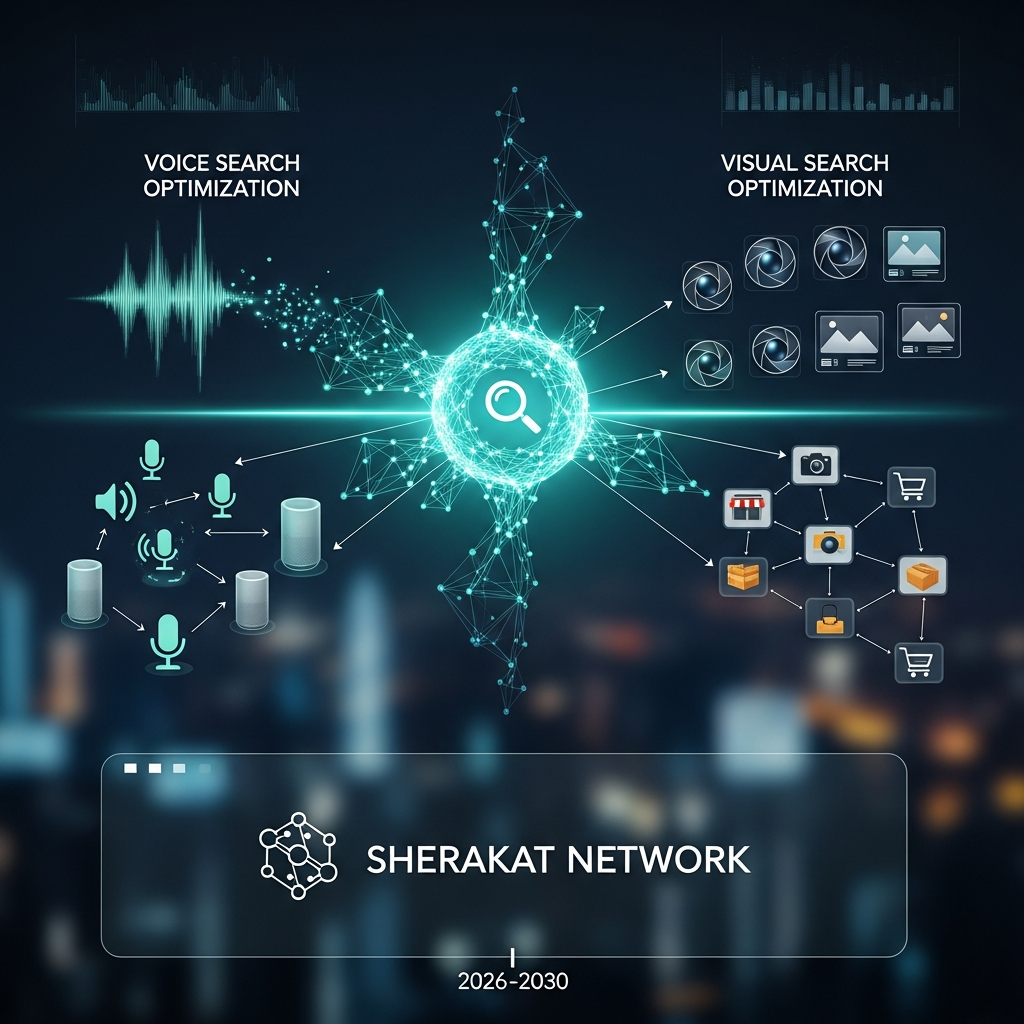
To implement the strategies in this guide, use these free tools:
- VVSEO Audit Checklist: A comprehensive PDF checklist covering technical, voice, and visual search optimization points.
- Conversational Keyword Brainstorming Worksheet: A template to expand a seed keyword into 50+ question-based queries.
- Schema Markup Cheat Sheet for Affiliates: A one-page reference for the exact JSON-LD code snippets for Product, Review, FAQPage, and HowTo schema.
- Image SEO Optimization Log: A spreadsheet to track and optimize your top 50 images with fields for filename, alt text, and caption.
- Download these and all our tools from the Sherakat Network Resources page.
Discussion
The sensory search future is here. What niche-specific question do you think would be a perfect voice search target? Have you ever found a product through Google Lens or Pinterest? What’s the biggest hurdle you face in optimizing your images or implementing schema?
Share your experiences and questions in the comments. Learning from each other’s experiments is how we navigate this new landscape together. For more direct support, reach out via our Contact Us page.
Adapting to new technological paradigms often requires strategic partnerships. Learn about collaborative frameworks in our guide on Strategic Alliance Models.
I visited several blogs however the audio feature for
audio songs existing at this website is in fact fabulous.
Greetings from Ohio! I’m bored to tears at work so I decided to check out your website
on my iphone during lunch break. I enjoy the information you present here and can’t wait to take a look when I get home.
I’m shocked at how quick your blog loaded on my mobile ..
I’m not even using WIFI, just 3G .. Anyways, very good blog!