



Introduction: Why This Matters
In my experience, the most expensive international SEO mistake is assuming that translation is research.
I’ve watched businesses spend six figures localizing websites into five languages—polished translations, professional copywriting, immaculate design—only to discover that nobody in those markets searches using the terms they translated. The German page ranked for nothing. The Japanese page attracted traffic that bounced immediately. The Spanish version competed with itself across three different countries because nobody validated whether Mexican and Spanish users search the same way.
What I’ve found is that international keyword research isn’t a translation problem. It’s a market intelligence problem. A direct translation of your top English keyword often produces a term with zero search volume—or worse, a term that means something entirely different in the target market . The words people use to describe their problems, the phrases they type into search engines, and the intent behind those queries are shaped by culture, language, local competition, and regional vocabulary in ways that no translation tool can capture.
This guide exists because international keyword research has become simultaneously more accessible (better tools, more data) and more dangerous (AI-generated translations that look right but perform terribly). The businesses that win in international markets are the ones that treat keyword research as a local discipline, not a global one.
By the end of this guide, you’ll understand how to find keywords that actually work in each target market, how to validate them with native sources, how to avoid the translation trap, and how to build a multilingual keyword strategy that ranks in every market you enter. Whether you’re a beginner planning your first international expansion or a professional auditing an underperforming global site, this framework will change how you approach international SEO. For broader context on building an online business across markets, explore our complete online business guide.
Background / Context: Why Translation Fails and Research Wins
International keyword research rests on a fundamental misunderstanding that most businesses make: the assumption that search behavior is universal.
It isn’t. A user in Germany looking for running shoes uses different terms and search structures than a user in the United States . A Spanish speaker in Mexico uses different vocabulary than a Spanish speaker in Spain. A Japanese user searching for a CRM might use a katakana transliteration, an English loanword, or a native term depending on their industry, age, and context. No translation plugin can capture these distinctions.
The data on why this matters is stark. According to CSA Research’s “Can’t Read, Won’t Buy” study, 76 percent of online shoppers prefer to buy products with information in their native language, and 40 percent will not buy from websites in other languages at all . If your site only ranks for translated English queries that nobody in the target market actually types, you are systematically excluding the majority of potential customers.
The translation trap in practice: A business translates “running shoes” into French as “chaussures de course.” Correct. But locals actually search for “chaussures running”—a hybrid term that reflects how language evolves in practice . The translation is accurate. The keyword is invisible.
The discovery failure: Sometimes a keyword tool returns hundreds of plausible terms for a new market, making the work feel complete. But the verified terminology—the official license name, the regulatory category, the industry-standard phrase—is absent entirely. The tool found what the descriptive route exposed, not what the market actually uses .
The market entry reality: International markets often have less competition for long-tail keywords, but they also have different search volume patterns, different competitive landscapes, and different user expectations . A keyword that’s low-competition in the US might be dominated by local incumbents in Germany. A phrase that’s zero-volume in one market might be the primary search term in another.
The result is a discipline that requires more than tools. It requires local knowledge, native validation, and a willingness to question every assumption your domestic keyword research has taught you. This mirrors patterns in other fields where context determines success. The global supply chain works differently in each region because logistics, regulations, and consumer expectations vary. Climate policy agreements require different approaches in different countries because political and economic contexts differ. International keyword research is no different: the framework is universal, but the execution must be local.
Key Concepts Defined
Before diving into the framework, let’s establish the language of international keyword research.
International Keyword Research: The process of identifying, validating, and prioritizing search terms for one or more target markets outside your domestic market. It differs from domestic keyword research in that it must account for language differences, cultural search behavior, local competition, and regional vocabulary.
Translation Trap: The mistake of assuming that a direct translation of a domestic keyword will perform in a target market. Translation produces accuracy; research produces relevance. They are not the same thing.
Local Search Intent: The underlying goal behind a query as understood by users in a specific market. A query that means “buy” in one country might mean “research” in another, or might have no equivalent at all.
Native Validation: Confirming keyword relevance and volume with native speakers, local practitioners, or market-specific data sources. Tools validate existence; natives validate relevance .
Artifact Seeding (Reverse Seeding): Starting keyword research from a specific artifact—a license name, regulatory code, product standard, or official category—rather than from a descriptive term. This reveals high-intent queries that descriptive research misses .
Geo-Modifiers: Location-based terms added to service or product keywords to capture local intent. Examples: “[service] in [city],” “[product] near me,” “[service] [state].” For multi-market businesses, each location needs its own geo-modifier set .
Hreflang: HTML attributes that tell search engines which language and regional version of a page to serve to users. Incorrect hreflang implementation causes indexing issues and content duplication penalties .
Market Entry Map: A pre-tool research document that captures the neutral description, occupational vocabulary, institutional terminology, and commercial language for a target market. Built before keyword tools are used, not after .
Discovery Failure: When a keyword tool returns a large list of plausible terms, making the research feel complete, but misses the verified terminology the market actually uses. The opposite of thin entry—deceptively abundant but inaccurate .
How It Works: The Step-by-Step Framework
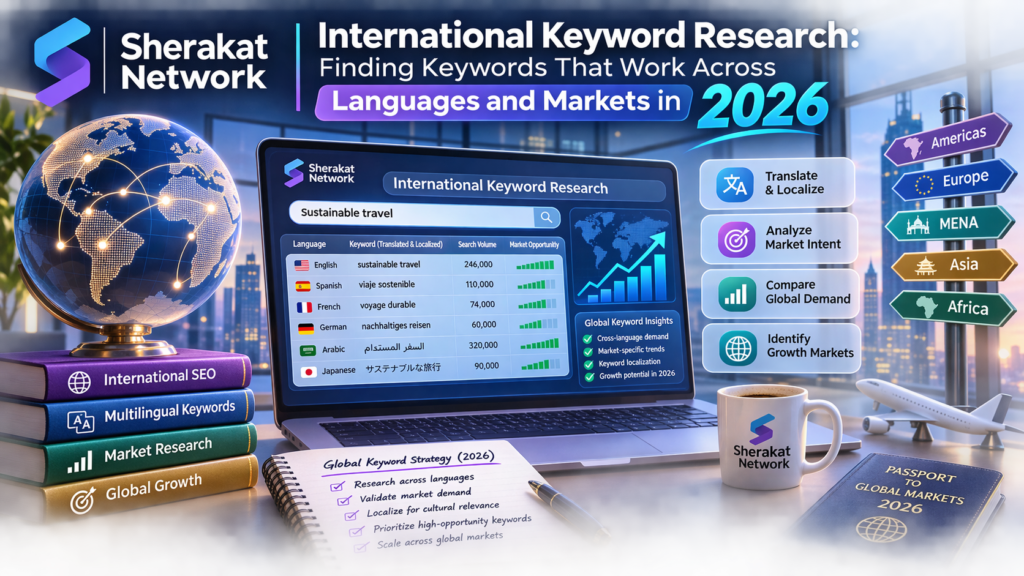
This is the core of the guide. Follow these steps in order. Each builds on the previous one.
Step 1: Build the Market Entry Map Before Opening Any Tool
The most important step in international keyword research happens before you touch a keyword tool.
Start with the neutral description. Write down what you sell or do in plain language. Not jargon. Not industry terminology. The simplest version: “I sell software that helps small teams manage projects” or “I provide accounting services for freelancers.”
Gather occupational vocabulary. How do practitioners in the target market describe what you do? Not how translators translate it—how locals say it. This requires native input: a local employee, a market consultant, a customer in the region, or a native-speaking freelancer.
Identify institutional terminology. Are there licenses, certifications, regulatory categories, or official standards that define your category in the target market? For a drone training business in the US, the artifact is “Part 107.” For mortgage training, it’s “NMLS” . For a healthcare service in Germany, it might be a specific certification or insurance category. These artifacts often serve as high-intent entry points that descriptive terms miss entirely.
Collect commercial language. What words do local competitors use? What language appears in customer reviews, support tickets, and sales conversations in that market? This is the closest you’ll get to how real buyers search .
Why this matters: If you start with a keyword tool, you’ll get what the tool’s database contains—which may be built from English-language patterns, translated poorly, or missing the artifacts that define your category in that market. The market entry map ensures you’re asking the right questions before you look for answers.
Step 2: Generate Seed Keywords from Local Sources
Once you have the market entry map, generate seed keywords from sources that reflect how people in that market actually search.
Source A: Google Autocomplete in the target language and country. Go to google.[country code] and type your seed terms. The autocomplete suggestions reflect real search behavior in that market, not translated behavior from your domestic market.
Source B: Local competitor analysis. Search your core terms in the target market’s Google. Who ranks on page one? What terms appear in their titles, headings, and meta descriptions? What categories do they use? These are validated keywords—competitors have already invested in ranking for them .
Source C: Local reviews and forums. Read reviews of local competitors on Google Maps, Trustpilot, or local equivalents. Read forum threads where people discuss their problems. The language they use is the language you need to target .
Source D: Artifact seeding. If the market entry map revealed artifacts—license names, regulatory codes, official categories—generate keywords from those artifacts directly. “Part 107 training” and “NMLS certification” are high-intent queries that descriptive terms like “drone pilot course” or “mortgage training” would miss entirely .
Source E: Local keyword tools. Tools like Semrush, Ahrefs, and KWFinder support country-specific databases. Use them to validate volume and difficulty in the target market—but only after you’ve generated seeds from local sources .
What you’re building: A seed list of 20-40 terms that reflect actual local search behavior, including at least one artifact-based seed family and one non-keyword source (reviews, forums, sales conversations).
Step 3: Validate with Native Speakers (Not Translation Tools)
Every seed keyword must be validated by someone who speaks the language natively and understands the market.
Why native validation matters: A term may look correct in a spreadsheet and still be wrong in practice . “Chaussures de course” is grammatically correct French for running shoes. “Chaussures running” is what people actually search. No translation tool will tell you this. A native speaker will.
Who can validate:
- A native-speaking employee or contractor
- A local market consultant
- A customer in the target market (ask them: “Would you search for this?”)
- A native-speaking freelancer on Upwork or Fiverr (budget-friendly for small businesses)
What to ask:
- “Would you type this into Google if you were looking for [problem]?”
- “Does this term sound natural, or does it sound translated?”
- “What would you actually search for?”
- “Are there regional differences within the country?” (Spanish in Mexico vs. Spain, French in Canada vs. France)
The hreflang implication: If your target market includes multiple regions with different vocabulary (e.g., Spanish for Mexico and Spain), you need separate keyword sets and separate hreflang implementation. Amazon differentiates French for France and Canada at the category level—menu labels differ significantly between the two markets .
Step 4: Run the Combinatoric Matrix for Multi-Market Businesses
For businesses targeting multiple cities, regions, or countries, keywords exist in a matrix: services × locations × modifiers.
The matrix formula: 10 services × 25 cities × 3 modifiers = 750 keyword combinations .
Don’t create a page for every combination. Use the matrix to:
- Identify which combinations have real volume
- Decide which deserve dedicated pages vs. which are covered by broader pages
- Find gaps where competitors have pages but you don’t
- Avoid cannibalization by ensuring one primary keyword per page
For multi-country businesses: Duplicate the matrix for each country. “Wedding photographer in Glasgow” and “wedding photographer in Edinburgh” are separate keywords for separate pages. “Wedding photographer in Mexico City” and “wedding photographer in Madrid” are separate markets entirely—different language variants, different competition, different intent .
Step 5: Classify Intent by Market, Not by Domestic Assumptions
Search intent does not translate perfectly. A query that means “ready to buy” in your domestic market might mean “still researching” in a target market—or might have no direct equivalent.
Reclassify every keyword in the context of the target market:
- Emergency/urgent: “emergency plumber now” → Is this urgent in the target market? Is there a local equivalent?
- Transactional: “plumber buffalo ny” → Does this query structure work in the local language? Or do locals search differently?
- Commercial investigation: “best plumber buffalo reviews” → Do local review sites exist? Do users search for reviews in the same way?
- Informational: “how to unclog drain” → Is this a common search in the target market? Or do people ask differently?
Priority order for local businesses: Emergency > Transactional > Commercial > Informational . But verify this order holds in the target market. In some cultures, commercial investigation (reading reviews, comparing options) is more prominent than direct transactional search.
Step 6: Handle the Thin Entry and Discovery Failure Problems
International keyword tools often fail in two predictable ways. Recognizing these failures prevents bad market-sizing decisions.
Thin entry: The tool returns a handful of rows with weak or zero volume estimates. The category may genuinely be small, but it may also be badly represented by your seed string. In this case, job listings, internal site search, paid-search query logs, customer language, and regulator terminology become especially valuable. The tool has given you too little evidence to stop, not enough to deprioritize the market .
Discovery failure: The tool returns hundreds or thousands of plausible keywords, so the work feels complete. Yet the verified license, exam, or qualification is absent. The next step is reverse seeding: start from the artifact, build its neighborhood, and measure what the descriptive route failed to expose .
The decision rule: No zero enters a market-sizing deck until at least one alternative seed family, one non-keyword source, and one second retrieval route have been checked .
Step 7: Map Keywords to Pages and Hreflang Architecture
Every keyword cluster maps to a specific page, and every page maps to a specific language-region combination.
Keyword-to-page mapping:
| Keyword Cluster | Target Page | Page Type |
|---|---|---|
| plumber buffalo ny, plumber in buffalo | /plumber-buffalo-ny/ | Service + city |
| emergency plumber, 24 hour plumber | /emergency-plumbing/ | Service (urgent) |
| drain cleaning [cities] | /drain-cleaning/ | Service page |
| how much does plumbing cost | /blog/plumbing-cost-guide/ | Blog/FAQ |
Hreflang implementation: Every localized page needs hreflang tags indicating language and region. Incorrect implementation causes indexing issues and content duplication penalties . A page targeting Spanish speakers in Mexico needs hreflang="es-MX". A page targeting Spanish speakers in Spain needs hreflang="es-ES". They cannot share the same URL or the same keyword set.
The self-cannibalization risk: Without proper hreflang and separate keyword sets, your localized pages will compete against each other in search results. A Mexican user might see the Spain page, or vice versa. Both rankings suffer. The fix is separate pages, separate keywords, and correct hreflang .
Step 8: Validate Volume and Competition in the Target Market
Only after seeding, native validation, and intent classification should you check volume and competition.
What to check:
- Local search volume: Use country-specific databases in tools. A keyword with 500 monthly searches in Germany is different from 500 in the US.
- Local competition: A low-difficulty keyword in your domestic market might be dominated by local incumbents in the target market. Check who ranks, not just the difficulty score.
- SERP features: Does the target market’s Google show local packs, AI Overviews, or different features? A keyword that’s AI-proof in the US might trigger an AI Overview in Germany.
- CPC data: If local competitors are bidding on a keyword, it has commercial value, even if organic volume looks modest .
What to expect: Local keyword sets will often differ significantly from your domestic list, and they may have much lower search volumes than the source market. That is normal. It usually means the market is different, the language is different, and the opportunity needs to be evaluated on local relevance rather than comparison with English .
Step 9: Track Performance and Iterate
International keyword research is not a one-time project. Search behavior evolves, competitors shift, and your understanding of the market deepens.
What to track:
- Rankings for target keywords in each market
- Conversion rates by market and keyword cluster
- Native feedback on whether the content sounds natural
- New artifacts or terminology emerging in the market
- Competitor movements in each market
The iteration cadence: Review quarterly for established markets, monthly for new markets. New markets require more frequent validation as you learn what works and what doesn’t.
Why It’s Important
International keyword research isn’t a nice-to-have for global businesses. It’s the difference between entering a market and actually competing in it.
The translation trap costs money. A business that translates 1,000 keywords and ranks for none of them has wasted the translation budget and the content production budget. A business that researches 200 keywords natively and ranks for 150 has built a market presence. The difference isn’t effort—it’s approach.
The competition opportunity. International markets often feature less competition for long-tail keywords . The businesses that do native research capture these opportunities before local competitors or other international entrants notice them. The head start compounds.
The trust factor. When users land on a page that feels native—the right vocabulary, the right tone, the right regional references—they engage longer and leave less often. These behavioral signals tell search engines that your content is valuable, pushing rankings higher . Poorly translated pages signal low quality to both users and search engines.
What happens if you ignore this: You translate your domestic keyword list. You publish localized pages. You wait for traffic. Nothing happens. The pages rank for translated terms nobody searches. The market entry fails—not because the market was wrong, but because the keywords were translated, not researched. The businesses that succeed internationally are the ones that treat every market as a new research project, not a translation task. For more on building a business across markets, see our guide to successful business partnerships.
Sustainability in the Future
International keyword research is evolving. Here’s what to watch.
AI-generated translations will become more common—and more dangerous. As translation tools improve, more businesses will assume that AI can handle localization. It can’t. AI can translate words. It cannot validate search behavior, cultural nuance, or local competition. The businesses that win will be the ones that use AI for efficiency while preserving native validation as a non-negotiable step.
Prompt research will complement keyword research in international markets. Users in every market are increasingly asking AI engines conversational questions rather than typing keywords. These prompts reveal intent and vocabulary that traditional tools miss. For a complete guide to prompt research, see our prompt-based keyword research article.
Artifact seeding will become standard practice. The discovery that starting from regulatory codes, licenses, and official categories reveals high-intent queries that descriptive research misses is too valuable to ignore . More teams will build market entry maps before opening keyword tools.
The sustainable approach: Treat every international market as a new research project. Build the market entry map. Generate seeds from local sources. Validate with native speakers. Map keywords to pages and hreflang architecture. Track performance and iterate. The framework doesn’t change—the execution does. For resources on building sustainable systems, explore our resources section.
Common Misconceptions
Misconception 1: “I can translate my domestic keyword list.” No. Translation produces accuracy. Research produces relevance. A translated keyword that nobody searches is worse than useless—it consumes content budget and produces no traffic.
Misconception 2: “Google Translate is good enough for keyword research.” Google Translate can help you understand what a term means. It cannot tell you whether people search for it, what intent it carries, or what local competitors rank for it.
Misconception 3: “If a keyword has volume in one market, it will have volume in another.” Search volume is market-specific. A term that’s popular in the US might be zero-volume in Germany, or might have a completely different meaning .
Misconception 4: “One Spanish page can serve all Spanish-speaking markets.” No. Spanish in Mexico, Spain, Argentina, and Colombia differ in vocabulary, search behavior, and competition. Amazon differentiates French for France and Canada at the category level—the same discipline applies to all languages .
Misconception 5: “International SEO is just translation plus hreflang.” Hreflang is necessary but insufficient. Without native keyword research, hreflang just ensures the wrong pages rank in the right places.
Misconception 6: “Keyword tools are reliable for international markets.” Tools are directional, not definitive. They can produce thin entry (too few results) or discovery failure (too many plausible results but missing the verified terminology) . Always validate with native sources.
Misconception 7: “I can do international keyword research once and be done.” Search behavior evolves. Competitors shift. New artifacts and terminology emerge. International keyword research requires ongoing monitoring and iteration.
Recent Developments
Three developments in 2025-2026 have reshaped international keyword research.
1. Artifact seeding emerged as a recognized technique. The discovery that starting from regulatory codes, licenses, and official categories reveals high-intent queries that descriptive research misses has changed how teams approach market entry. The “Part 107” and “NMLS” examples—where artifact-based seeds uncovered entire content systems that descriptive terms missed—are now cited as best practice .
2. Native validation became recognized as non-negotiable. As AI translation tools improved, the gap between translated content and native-validated content became more visible. Studies showing that 76% of shoppers prefer native-language information and 40% won’t buy from other-language sites reinforced the business case for native research .
3. Local SEO frameworks were adapted for international markets. Frameworks originally designed for local businesses—Google Maps-first research, geo-modifiers, competitor reverse-engineering—were recognized as applicable to international market entry. The discipline of starting with local sources and validating with tools, rather than starting with tools, became standard .
Success Stories
Case Study: The SaaS Company’s Artifact Discovery
A US-based compliance training company was planning expansion into Germany. Their initial keyword research, based on translating “compliance training” into German, produced a list of generic terms with high competition and modest volume.
The market entry map revealed something different: German businesses organize compliance training around specific regulatory artifacts—names of laws, certification codes, and official categories that American researchers wouldn’t know to search for. The team reverse-seeded from these artifacts, building keyword families around each regulatory requirement.
The result: content targeting queries that German competitors hadn’t addressed, because those competitors were also targeting descriptive terms rather than artifacts. Within six months, the company ranked page one for 14 artifact-based queries and generated more qualified leads from Germany than from any other international market.
The key insight: The most valuable keywords weren’t translations. They were artifacts that only local knowledge revealed.
Case Study: The E-commerce Brand’s Native Validation Save
An e-commerce brand selling kitchen products translated its top 50 US keywords into French for the Canadian market. The translations were accurate. The pages ranked for nothing.
Native validation revealed the problem: Quebec French speakers used different vocabulary for several key product categories. The translated terms were technically correct but not what people actually searched. The brand rebuilt the keyword list with native input, targeting the vocabulary real users typed.
Within three months, organic traffic from Quebec increased 180%. The products hadn’t changed. The keywords had.
The key insight: Translation is not validation. A native speaker would have caught the gap in an hour.
Case Study: The Local Service Business’s Multi-Market Matrix
A plumbing company expanding from one city to five cities in the same region built a combinatoric matrix: 8 services × 5 cities × 3 modifiers = 120 keyword combinations.
Instead of creating a page for every combination, they identified which combinations had real volume and which were covered by broader pages. They created dedicated pages for the top 20 combinations and optimized their service pages for the rest. They also built separate Google Business Profiles for each location, with consistent categories and service listings .
Within six months, they ranked in the local pack for 4 of 5 cities. The matrix approach prevented cannibalization and ensured every page had a clear purpose.
The key insight: The matrix reveals opportunity. The mapping prevents waste.
Real-Life Examples
Example 1: The “Running Shoes” Translation Trap
A sports brand translates “running shoes” into French as “chaussures de course.” The translation is correct. But locals search for “chaussures running”—a hybrid term that reflects how language evolves in practice. The translated page ranks for nothing. The native-validated page ranks for the actual query .
Example 2: The Regulatory Artifact
A drone training company targets “drone pilot training” in a new market. The term has volume but high competition. Artifact seeding reveals that the market organizes around a specific certification name—equivalent to “Part 107” in the US. Content targeting the certification name ranks quickly because competitors missed it. The artifact is the entry point, not the descriptive term .
Example 3: The Hreflang Cannibalization
An e-commerce brand launches Spanish pages for Mexico and Spain using the same URL and the same keywords. The pages compete against each other. Neither ranks well. The fix: separate pages, separate keyword sets, correct hreflang tags. The Mexican page targets “zapatos para correr.” The Spain page targets “zapatillas running.” Both rank .
Example 4: The Zero-Volume Artifact
A mortgage training company in the US discovers that “mortgage loan originator training” has volume but high competition. Artifact seeding reveals “NMLS” as the regulatory code. “NMLS training” and “NMLS exam prep” have lower volume but much higher intent and weaker competition. The company builds content around the artifact and captures buyers at the decision moment .
These examples connect to broader patterns in how information systems adapt across contexts. The global supply chain requires local knowledge for local execution. AI and machine learning systems perform differently depending on the data they’re trained on. International keyword research follows the same principle: the framework is universal, but the keywords are always local.
Conclusion and Key Takeaways
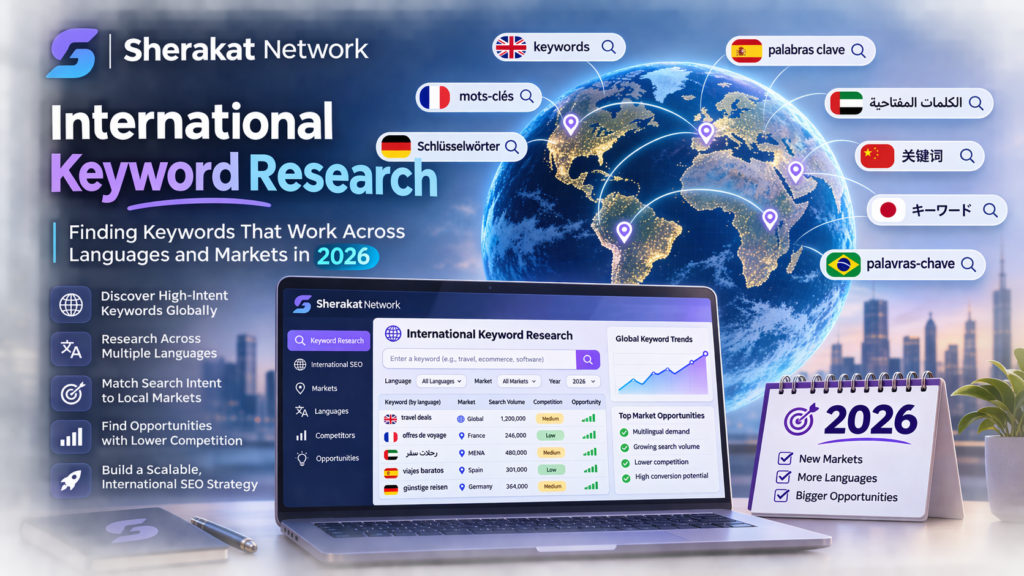
International keyword research isn’t translation. It’s market intelligence. The businesses that succeed internationally are the ones that treat every market as a new research project, not a translation task.
Key Takeaways:
- Build the market entry map before opening any keyword tool
- Generate seeds from local sources: autocomplete, competitors, reviews, and artifacts
- Validate every keyword with native speakers—translation tools cannot do this
- Artifact seeding reveals high-intent queries that descriptive research misses
- Handle thin entry and discovery failure with alternative seed families and non-keyword sources
- Classify intent by market, not by domestic assumptions
- Map keywords to pages and implement hreflang correctly to avoid cannibalization
- Expect local volume to differ from domestic volume—evaluate on local relevance
- Track performance and iterate; international markets evolve
Your next step: Pick one target market. Build the market entry map. Find one artifact—a license, a regulatory code, a local category—that defines your offering in that market. Search for it. If the results are weak, you’ve found your first international keyword opportunity. For more strategic guidance, explore our complete online business guide and our full SEO resource library.
Frequently Asked Questions (FAQs)
Q1: What is international keyword research?
A: Identifying, validating, and prioritizing search terms for markets outside your domestic market. It differs from domestic research because it must account for language differences, cultural search behavior, local competition, and regional vocabulary.
Q2: Why can’t I just translate my domestic keywords?
A: Translation produces accuracy; research produces relevance. A translated keyword that nobody searches is worse than useless. Locals often use different terms than direct translations—like “chaussures running” instead of “chaussures de course” in French .
Q3: What is the translation trap?
A: Assuming that a direct translation of a domestic keyword will perform in a target market. The translation may be grammatically correct but search-invisible because it doesn’t match how locals actually search.
Q4: What is artifact seeding?
A: Starting keyword research from a specific artifact—a license name, regulatory code, product standard, or official category—rather than from a descriptive term. This reveals high-intent queries that descriptive research misses .
Q5: How do I find artifacts in a new market?
A: Talk to local practitioners, read regulatory websites, examine competitor content, and ask native speakers what official terms define your category in their market.
Q6: What is thin entry in international keyword research?
A: When a keyword tool returns a handful of rows with weak or zero volume estimates. The category may be small, or it may be badly represented by your seed string. This requires checking alternative seed families and non-keyword sources .
Q7: What is discovery failure?
A: When a tool returns hundreds of plausible keywords, making the work feel complete, but misses the verified terminology the market actually uses. The solution is reverse seeding from artifacts .
Q8: Why is native validation necessary?
A: A term may look correct in a spreadsheet and still be wrong in practice. Native speakers catch vocabulary, tone, and intent mismatches that tools and translators miss .
Q9: How do I find native speakers for validation?
A: Employees, contractors, local consultants, customers in the target market, or native-speaking freelancers. Even a brief conversation can reveal gaps that tools miss.
Q10: What is hreflang, and why does it matter for keyword research?
A: HTML attributes that tell search engines which language-region version of a page to serve. Incorrect hreflang causes indexing issues and content duplication penalties .
Q11: Can one Spanish page serve Mexico and Spain?
A: No. Vocabulary, search behavior, and competition differ significantly. Amazon differentiates French for France and Canada at the category level—the same discipline applies to Spanish and all languages .
Q12: What is the combinatoric matrix for multi-market businesses?
A: Services × locations × modifiers = keyword universe. Use it to identify which combinations deserve dedicated pages and which are covered by broader pages .
Q13: How do I avoid cannibalization across international pages?
A: Separate pages for each market, separate keyword sets, correct hreflang implementation, and one primary keyword per page .
Q14: Should I use local keyword tools or global ones?
A: Both. Global tools with country-specific databases provide volume and difficulty estimates. Local tools, autocomplete, and competitor analysis reveal actual search behavior. Tools validate; local sources generate.
Q15: What if a keyword has zero volume in the target market?
A: Zero-volume can mean the tool doesn’t measure it, not that nobody searches. Check with native speakers and examine whether competitors are targeting it. Don’t ignore a natural-language query because a tool reports no volume .
Q16: How do I prioritize keywords for a new international market?
A: Emergency > Transactional > Commercial > Informational, but verify this order holds in the target market . Also prioritize artifact-based keywords and queries with weak competition.
Q17: What is a geo-modifier, and how do I use it?
A: Location-based terms added to service or product keywords. Examples: “[service] in [city],” “[product] near me.” Each location needs its own geo-modifier set .
Q18: How do I handle regional differences within one language?
A: Separate keyword sets, separate pages, and correct hreflang. Mexican Spanish and Spain Spanish are different markets. Canadian French and France French are different markets .
Q19: What is a market entry map?
A: A pre-tool document that captures the neutral description, occupational vocabulary, institutional terminology, and commercial language for a target market. Built before keyword tools are used .
Q20: How do I find local competitors in a new market?
A: Search your core terms in the target market’s Google. Who ranks page one? What terms appear in their titles and headings? What categories do they use? These are validated keywords .
Q21: What role do reviews and forums play in international keyword research?
A: They reveal the language real users use to describe their problems. This is often more valuable than tool data because it reflects actual search behavior .
Q22: How do I validate search volume in a new market?
A: Use country-specific databases in tools like Semrush, Ahrefs, or KWFinder. Check CPC data for commercial value. Verify with native speakers whether the term sounds like something people would actually search.
Q23: What if the target market’s search behavior is completely different from my domestic market?
A: That’s expected. Rebuild your keyword list from local sources. Don’t assume any domestic keyword transfers without validation.
Q24: How long does international keyword research take?
A: Initial research for one market: 2-4 weeks for a focused set of keywords. Ongoing monitoring: monthly or quarterly depending on market maturity.
Q25: Can I use AI tools for international keyword research?
A: AI can help with brainstorming and pattern recognition. It cannot replace native validation. Use AI for efficiency, but preserve native speakers as the final check.
Q26: What is the biggest mistake in international keyword research?
A: Translating instead of researching. The second biggest mistake is skipping native validation. Both produce keywords that look right and perform terribly.
Q27: How do I handle seasonal keywords across markets?
A: Check seasonality in each market separately. A product that’s seasonal in one country might be year-round in another. Use Google Trends with country filters.
Q28: What if I can’t afford native speakers for every market?
A: Start with one market. Validate the top 20 keywords with a freelancer or customer. Build from there. Native validation doesn’t require a full-time hire—it requires a conversation.
Q29: How do I measure success in international keyword research?
A: Rankings for target keywords in each market, organic traffic by market, conversion rates by market, and native feedback on content quality.
Q30: What’s the one thing I should do differently after reading this guide?
A: Before translating another keyword list, build a market entry map for one target market. Find one artifact—a license, a code, a local category—that defines your offering. Search for it. That’s your first real international keyword. For more guidance, explore our SEO category.
About Author
[Sana Ullah Khan Kakar, Content and Article Writing Specialist]
This guide was written based on hands-on experience conducting international keyword research for businesses expanding across Europe, Latin America, and Asia since 2016. The frameworks outlined here have been tested across dozens of market entry projects, from single-location service businesses to multi-national SaaS platforms.
Free Resources
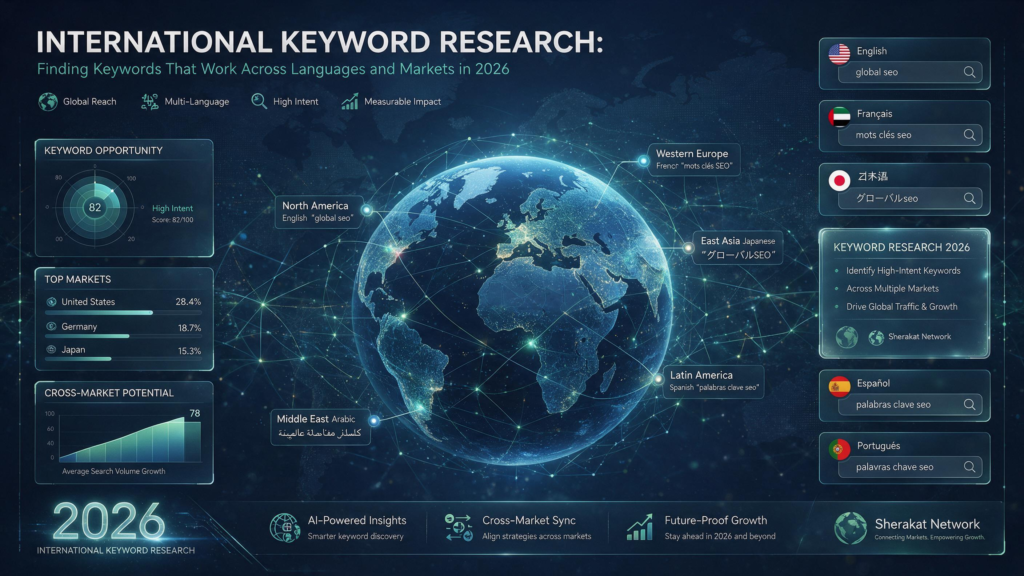
International Keyword Research Tools:
- Google Autocomplete (target country Google domains) — real local search behavior
- Google Trends with country filters — seasonality and regional interest
- Semrush, Ahrefs, KWFinder — country-specific volume and difficulty databases
- Local competitor analysis — validated keywords from page-one rankings
- Native speaker validation — freelancers, customers, local consultants
Recommended Reading on Sherakat Network:
- Start Online Business 2026 Complete Guide
- The Alchemy of Alliance: A Comprehensive Guide to Building a Successful Business Partnership
- SEO Category
- Resources Category
- Blog Category
External Resources:
- The Daily Explainer: Mental Health Complete Guide
- The Daily Explainer: Global Supply Chain Management Guide
- World Class Blogs: AI and Machine Learning
- World Class Blogs: Remote Work and Productivity
- World Class Blogs: Climate Policy Agreements
- World Class Blogs: Culture and Society
Discussion
What’s your experience with international keyword research? Have you fallen into the translation trap? Found artifacts that revealed opportunities descriptive research missed? Share your insights in the comments below.
If you found this guide helpful, consider sharing it with someone planning their first international expansion. The strategies here work—but only if you research instead of translate.
Have questions? Reach out via our contact page.