
Introduction: The Precision of Paid Reach
Several years ago, I sat across from a startup founder who had just burned through $50,000 of seed money on “digital ads.” His face was pale. “We got millions of impressions,” he said, waving a spreadsheet. “Our brand was everywhere. And we sold twelve units.” He had confused broadcast with conversation, impressions with impact. He had used a precision scalpel like a blunt club.
This story underscores the critical shift in understanding digital advertising in 2025. It is no longer about shouting your message to the masses and hoping someone listens. It is about using data and technology to initiate a relevant, value-driven conversation with a specific individual, at a specific moment, with a specific intent. It is the art and science of buying attention efficiently.
This guide is for the business owner terrified of wasting money on “clicky things,” the marketer who hears “CPC, CTR, ROAS” and feels lost, and the curious beginner who wants to understand the engine behind the ads they see daily. We will demystify the acronyms, compare the channels, and provide a strategic framework to ensure every dollar you spend works as hard as you do.
Background & Context: From Interruption to Integration
Digital advertising’s evolution is a story of targeting precision. The 1990s introduced the first banner ad (“You Will” for AT&T, 1994)—a blunt, untargeted interruption. The 2000s saw the rise of Pay-Per-Click (PPC) with Google AdWords, introducing intent-based targeting (you paid only when someone was actively searching for your solution). The 2010s were the era of social and programmatic advertising, where platforms like Facebook used rich demographic and interest data to target users, and display ads could follow you around the web.
Today, we are in the “Privacy-Personalization Paradox” era. Two opposing forces are shaping 2025:
- The Privacy Revolution: The demise of third-party cookies, Apple’s App Tracking Transparency (ATT), and global regulations (GDPR, CCPA) are dismantling the old, creepy ways of tracking users across the web.
- The AI & Machine Learning Surge: Advertising platforms are using artificial intelligence and machine learning not just to target, but to automate optimization, creative testing, and bidding in real-time at a scale impossible for humans.
The result? The future is contextual and consented. Ads will be shown based on the content a user is currently consuming (contextual) or using robust, privacy-compliant first-party data that the user has willingly provided (consented). The game has shifted from “tracking you everywhere” to “understanding intent and context deeply.” This mirrors a broader shift towards ethical and transparent systems, as seen in discussions on global policy and climate agreements.
Key Concepts Defined
1. Digital Advertising: The practice of delivering promotional content to users through digital channels (search engines, websites, social media, apps) based on specific targeting criteria, paying only when certain actions are taken.
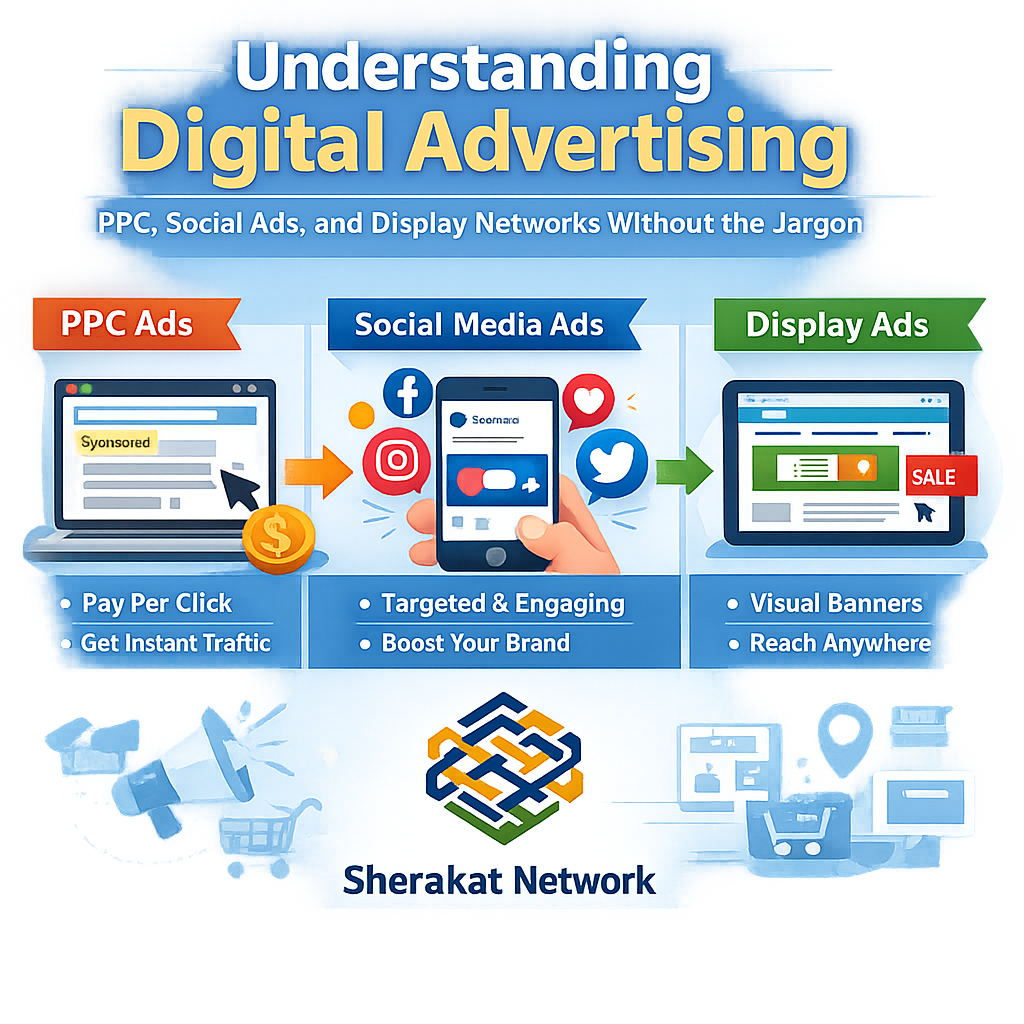
2. Pay-Per-Click (PPC): An advertising model where the advertiser pays a fee each time their ad is clicked. It’s synonymous with search engine advertising (Google Ads, Microsoft Advertising) but also applies to social platforms.
3. Cost-Per-Mille (CPM): “Cost per thousand impressions.” The advertiser pays for every 1,000 times their ad is displayed, regardless of clicks. Common for brand awareness campaigns on social or display networks.
4. Cost-Per-Acquisition (CPA) / Return on Ad Spend (ROAS):
* CPA: What it costs to acquire one customer (e.g., Sale, Lead). Total Ad Spend / Number of Conversions.
* ROAS: Revenue generated for every dollar spent on ads. Revenue from Ads / Ad Spend. A ROAS of 4 means you generated $4 for every $1 spent.
5. Targeting: The criteria used to define who sees your ad. This can be:
* Demographic: Age, gender, income, job title.
* Interest/Behavioral: Hobbies, purchased behaviors, device usage.
* Contextual/Keyword: The content of the webpage or search query.
* Custom Audiences: Uploading your own customer list (emails, phone numbers) to target or create “lookalikes.”
6. Ad Auction: The real-time bidding process that happens in milliseconds when a user performs a search or loads a webpage. Your bid (how much you’re willing to pay) and your Quality Score (ad relevance, landing page experience) determine if you win the auction and what you pay.
7. Quality Score (Google) / Relevance Score (Meta): A diagnostic rating (1-10) of the quality and relevance of your ads, keywords, and landing pages. A higher score lowers your cost per click and improves ad position.
8. Programmatic Advertising: The automated, AI-driven buying and selling of ad inventory (space on websites, apps) in real-time. It’s like a stock market for ad space.
The Three Major Channels: Strengths, Weaknesses, and When to Use Them
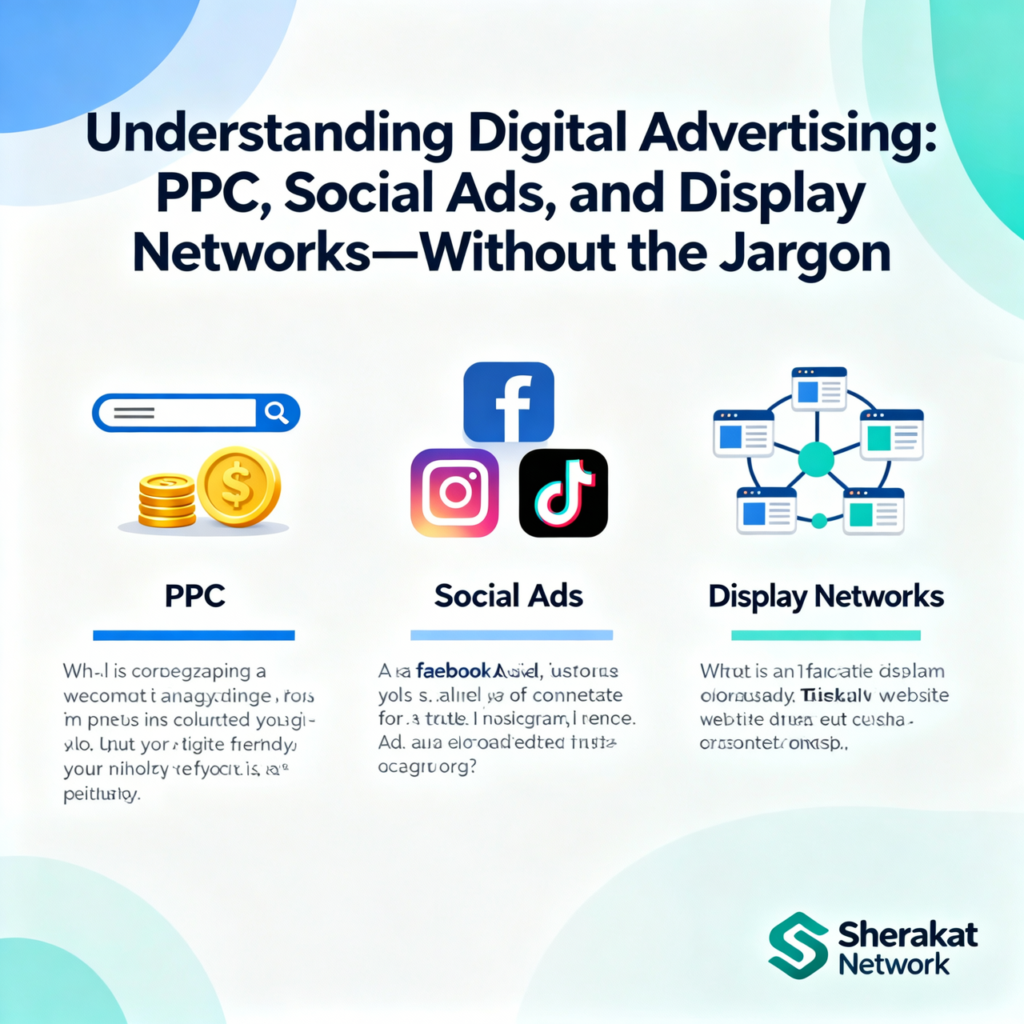
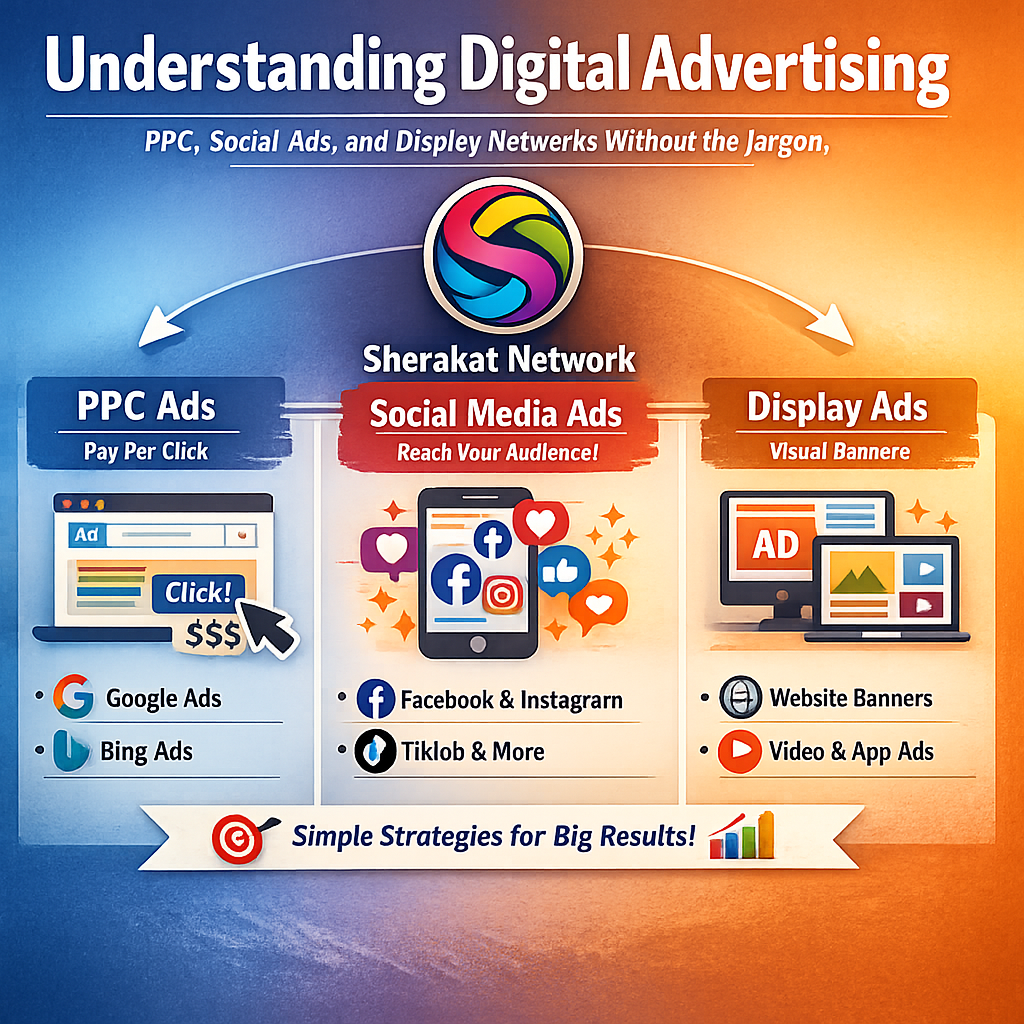
Understanding the core channels is step one. Each is a different tool for a different job.
1. Search Advertising (PPC – Google, Bing)
- How it Works: You bid on keywords. Your text ad appears when someone searches for those terms on Google or Bing.
- User Intent: HIGH INTENT. The user is actively searching for a solution. This is often the bottom of the funnel.
- Ad Formats: Text ads, Shopping ads (product listings), Local service ads.
- Best For: Capturing demand, lead generation for services, e-commerce sales, local business calls.
- Key Metric: CPA (Cost Per Acquisition) – you’re buying customers.
- Pros: High intent, scalable, measurable direct response.
- Cons: Can be expensive (competitive keywords), requires constant keyword and bid management.
- 2025 Tip: With Google’s AI Overviews, your text ad may appear below an AI-generated answer. Your ad copy must be exceptionally compelling to pull the user away from the free answer.
2. Social Media Advertising (Meta, Instagram, TikTok, LinkedIn, Pinterest)
- How it Works: You target users based on who they are (demographics, interests) and what they do on the platform. Your ad appears in their social feed.
- User Intent: LOW TO MIDDLE FUNNEL. Users are browsing, not necessarily searching. You are interrupting with a relevant offer.
- Ad Formats: Image, Video, Carousel, Collection, Stories, Messenger ads. Highly visual.
- Best For: Brand awareness, audience building, retargeting, lead generation, e-commerce (especially with visual products).
- Key Metric: Varies. CPM for awareness, CPC or CPA for conversions.
- Pros: Unmatched demographic/interest targeting, highly engaging formats, great for building brand affinity.
- Cons: Can be seen as intrusive, platform algorithm changes can disrupt performance, “banner blindness” on feeds.
- 2025 Tip: Creative is king. AI-powered tools can generate countless ad variations, but human insight is needed to craft creative that stops the scroll and resonates emotionally. Short-form video ads (Reels, TikTok) dominate.
3. Display & Video Advertising (Google Display Network, YouTube, Programmatic)
- How it Works: Your banner, interactive, or video ad appears on a network of millions of websites, apps, or on YouTube.
- User Intent: VERY LOW FUNNEL (Awareness) or RETARGETING. Users are reading content or watching videos; you are building brand recognition or reminding them of their interest.
- Ad Formats: Static banners, animated HTML5, video (in-stream, discovery), native ads.
- Best For: Massive reach for brand campaigns, retargeting website visitors, influencing consideration through YouTube.
- Key Metric: CPM (for reach), View-Through Rate (VTR) for video, CTR/CPA for retargeting.
- Pros: Huge reach, visual impact, excellent for retargeting.
- Cons: Low click-through rates (banner blindness), can be expensive for direct response, brand safety concerns (your ad on a questionable site).
- 2025 Tip: Contextual targeting is back. Instead of stalking users, place your ads on websites and next to YouTube videos whose content is relevant to your product. Also, leverage Discovery Ads (Google) and In-Feed Video (YouTube) which blend into the native content experience.
What I’ve found is that beginners often start with social ads because they’re easier to set up, but they try to force a direct sale on a cold audience. This fails. You must match the channel’s intent strength to your campaign goal. Use social for warming people up, and search for closing the deal.
The Strategic Framework: The Campaign Funnel
Effective advertising aligns the channel, message, and offer with the user’s stage in the journey.
Stage 1: TOFU (Top of Funnel) – Awareness & Reach
- Goal: Introduce your brand to a cold, broad audience.
- Channels: Social Media (broad interest targeting), YouTube In-Stream, Display Networks.
- Ad Objective: Reach, Video Views, Brand Awareness.
- Messaging & Creative: Focus on problem identification, brand values, and entertainment. Soft sell. “Tired of [problem]?” “Meet the future of [industry].”
- Budget Model: CPM – you’re buying eyeballs.
- Success Metric: Low Cost Per 1,000 Impressions (CPM), high Video Completion Rate.
Stage 2: MOFU (Middle of Funnel) – Consideration & Engagement
- Goal: Engage users who have shown interest and move them closer to a decision.
- Channels: Social Media (retargeting, lookalike audiences), YouTube Discovery, Search (broad match keywords).
- Ad Objective: Traffic, Engagement, Lead Generation.
- Messaging & Creative: Educate, provide social proof (testimonials, case studies), offer a lead magnet (guide, webinar). “Learn how to solve [problem].” “See how [customer] succeeded.”
- Budget Model: CPC or Cost Per Lead (CPL).
- Success Metric: Cost Per Lead (CPL), Click-Through Rate (CTR), Landing Page Conversion Rate.
Stage 3: BOFU (Bottom of Funnel) – Conversion & Action
- Goal: Drive a specific, valuable action (sale, sign-up, call).
- Channels: Search (exact match keywords), Social & Display Retargeting.
- Ad Objective: Conversions, Sales, Catalogue Sales.
- Messaging & Creative: Clear value proposition, strong offers (discount, free trial), urgency/scarcity. “Buy [product] today.” “Start your free trial.” “Book your consultation.”
- Budget Model: CPA – you’re buying customers.
- Success Metric: Cost Per Acquisition (CPA), Return on Ad Spend (ROAS).
The Retargeting Superpower:
This is the most important concept for efficiency. Retargeting (or Remarketing) shows ads to people who have already visited your website, used your app, or engaged with your content. They are 70% more likely to convert because they already know you. Every funnel should have a retargeting segment for each stage.
Why Digital Advertising is Essential (When Done Right)
- Immediate, Scalable Results: Unlike SEO or organic social, you can turn on a traffic spigot almost instantly. Need leads for next quarter? You can generate them.
- Unparalleled Measurability: You can track every dollar from click to conversion, allowing for precise ROI calculation and optimization. This level of accountability is unmatched.
- Extreme Targeting Precision: Reach your ideal customer profile with surgical accuracy, reducing waste and increasing relevance.
- Flexibility & Control: You control budget, timing, messaging, and can pause or adjust campaigns in real-time based on performance.
- Competitive Necessity: If your competitors are bidding on your brand keywords or targeting your audience, you need to be at the table to defend and capture your share of demand.
Common Digital Advertising Misconceptions
Misconception 1: “Set a big budget and you’ll get big sales.”
Reality: A big budget with a poor strategy just loses money faster. Start small ($10-$20/day), test your audience, creative, and offers. Find a profitable combination, then scale the budget.
Misconception 2: “Digital ads are too expensive for small businesses.”
Reality: The beauty of digital ads is their scalability. You can start with as little as $5 a day on Facebook or Google. The key is profitability, not absolute cost. If you spend $5 to make $25, you can scale that.
Misconception 3: “Once it’s set up, it runs on autopilot.”
Reality: Even with AI optimization, campaigns require monitoring and strategic adjustments. Competitors change bids, audiences fatigue, and creative wears out. Weekly check-ins are mandatory.
Misconception 4: “More clicks = better campaign.”
Reality: Better clicks = better campaign. 100 clicks from irrelevant users cost you money and generate zero sales. 10 clicks from highly targeted, intent-rich users can make you profitable. Focus on quality traffic.
Misconception 5: “You need to be on all platforms.”
Reality: Start with one channel that matches your primary goal. A local service plumber should master Google Local Service Ads and search. A D2C jewelry brand should master Instagram and Facebook. Master one, then expand.
Recent Developments: The 2025 Advertising Landscape
1. AI-Powered Campaign Management: Platforms now offer “Smart Bidding,” “Advantage+ Shopping Campaigns,” and “Automated Ad Creation.” These AI agents handle bid adjustments, audience expansion, and creative testing 24/7. The human role becomes goal-setting, creative direction, and interpreting results.
2. The Cookieless Future & First-Party Data Focus: With third-party cookies dying, advertisers must build their own first-party data (email lists, customer profiles). This data is used to create “lookalike audiences” and target existing customers. Building an email list isn’t just for email—it’s fuel for your future ad targeting.
3. Rise of Retail Media Networks (RMNs): Amazon Ads, Walmart Connect, and Instacart Ads are booming. These are ads placed directly on e-commerce platforms where users are in a buying mindset. They offer incredibly high-intent placement and closed-loop sales measurement.
4. Connected TV (CTV) & Streaming Audio Advertising: As traditional TV declines, advertising on Hulu, YouTube TV, Spotify, and podcasts is growing. This allows for the targeting precision of digital on the big (and small) screen.
5. Increased Focus on Creative Fatigue & Diversification: Algorithms now penalize ad accounts that show the same creative to users too many times. The 2025 best practice is a “Creative Hub” with 5-10 ad variations per campaign, cycling through different formats (image, video, carousel) and messages to keep engagement high.
Success Story: “Bloom & Groom” – From Wasted Spend to ROAS King
The Problem: A premium pet supplies brand was spending $3,000/month on Facebook and Instagram ads with a generic “Shop Now” message to a broad “pet lovers” audience. ROAS was 1.2 ($3,600 revenue)—barely breaking even.
The 2025 Strategic Overhaul:
- Funnel Alignment & Channel Focus:
- TOFU (Awareness): Switched to YouTube & Pinterest. Created beautiful, emotional brand films about the human-pet bond. Goal: Video views and brand lift. Used CPM buying.
- MOFU (Consideration): Used Facebook/Instagram to retarget video viewers. Ads focused on specific product benefits (“Orthopedic bed for aging dogs”) and offered a “Guide to Dog Anxiety.” Used Cost Per Lead objective.
- BOFU (Conversion): Mastered Google Search & Shopping Ads for high-intent keywords (“large dog bed,” “hypoallergenic dog shampoo”). Used CPA bidding. Implemented aggressive Facebook Retargeting for website visitors.
- Creative Revolution: Hired a pet photographer. Created 20+ unique image and video assets showcasing real customers (UGC-style) with their pets using the products.
- First-Party Data Engine: The “Guide to Dog Anxiety” was a high-value lead magnet. The email list grew, fueling better lookalike audiences for social ads.
- Testing & AI Leverage: Used Meta’s Advantage+ shopping campaigns to let AI test all creative combinations against their catalogue. Used Google’s Performance Max campaigns to automate search, display, and YouTube.
The Results (6 Months):
- Overall ad spend increased to $5,000/month.
- Overall ROAS jumped to 4.8 ($24,000 revenue).
- Customer Acquisition Cost (CAC) dropped by 40%.
- Email list grew by 5,000 highly engaged subscribers.
- They discovered through testing that “dog dad” audiences had a 30% higher LTV than “pet lover” audiences, refining their targeting further.
Real-Life Channel Strategy Examples
B2B SaaS (Project Management Tool):
- Search (Google/Bing): Bids on keywords like “best project management software,” “Asana alternative,” “tools for remote teams.”
- Social (LinkedIn): Targets by job title (Project Manager, Team Lead, CTO) and company size. Runs lead gen ads for webinars and whitepapers.
- Retargeting: Uses a LinkedIn Matched Audience to retarget website visitors with case study ads.
Local Home Services (Roofing):
- Search (Google): The primary channel. Uses Google Local Service Ads (the “Google Guaranteed” badge) for instant calls. Also bids on “emergency roof repair [city],” “roofing company near me.”
- Social (Facebook): Hyper-local geographic targeting for brand awareness. Retargets website visitors with before/after photo carousels.
- Display/Video: Uses Google Display Network for retargeting with strong reviews and CTAs for free estimates.
E-commerce Fashion (D2C):
- Social (Instagram/TikTok): Core channel. Runs dynamic catalogue ads, Collection ads, and collaborates with nano-influencers for authentic content.
- Search (Google Shopping): Lists all products on Google Merchant Center. Bids on product-specific keywords.
- Pinterest: Uses shoppable pins for inspiration and discovery.
- Retargeting: Heavy use of Facebook/Instagram dynamic retargeting for abandoned carts and browse abandonment.
Your First $500 Advertising Plan
Step 1: Define Your Single Goal. “Get 10 new qualified leads” or “Generate $1,500 in sales.”
Step 2: Choose ONE Primary Channel. Pick based on your business type (see examples above).
Step 3: Set Up Tracking. Install the Facebook Pixel and/or Google Tag on your website. Link your ad account to Google Analytics.
Step 4: Create Your Campaign Structure.
- If Search: 2-3 tightly themed ad groups (e.g., “brand terms,” “service keywords,” “competitor terms”).
- If Social: One campaign with 3 ad sets testing different audiences (e.g., Interest A, Interest B, Lookalike of customers).
Step 5: Develop Your Creative. - Search: Write 3 compelling text ads per ad group.
- Social: Create 3 distinct images or videos (different value props, different visuals).
Step 6: Set Budget & Launch. Allocate $400 to your primary campaign. Reserve $100 for a retargeting campaign.
Step 7: Monitor & Optimize (Daily for First Week). Pause underperforming ads/audiences. Increase budget to winners. After 7 days, review CPA/ROAS against your goal.
Conclusion: Advertising as a System, Not an Expense
Digital advertising in 2025 is not a magic “growth button.” It is a complex, data-driven system for buying profitable outcomes. The platforms are the engines, but you are the navigator. Your strategy, understanding of human psychology, and creative direction determine whether you reach your destination or run out of fuel.
The most important shift is mental: stop thinking of ads as an expense to be minimized, and start thinking of them as an investment in predictable, scalable growth to be optimized. When you know your numbers—your CPA, your LTV, your ROAS—you can confidently scale your business by reinvesting profits into more advertising.
Final, Actionable Takeaways:
- Intent is Everything: Match your channel and message to the user’s mindset.
- Think Funnels, Not One-Offs: Build campaigns that work together to move people from awareness to action.
- Retargeting is Your Best Friend: It’s your highest-ROI spend. Always have a retargeting campaign running.
- Creative is Not an Afterthought: It’s the single biggest lever you can pull to improve performance. Test it relentlessly.
- Data Trumps Opinion: Make every decision based on performance metrics, not gut feelings or “industry best practices.”
- Own Your Data: Build your first-party data (email list)—it’s your advertising lifeline in a privacy-first world.
For more on building systematic, data-informed business strategies, explore our guide to starting an online business.
FAQs: Digital Advertising Decoded
- Q: What’s the difference between Google Ads and Facebook Ads?
A: Google Ads is primarily intent-based (people searching for something). Facebook (Meta) Ads is primarily interest/behavior-based (people browsing social media). Use Google to capture existing demand. Use Facebook to create new demand or build brand affinity. - Q: How much should a small business budget for digital advertising?
A: There’s no fixed percentage. Start with a test budget you can afford to lose ($300-$500/month). The goal is to find a profitable campaign. Once profitable, you can scale by reinvesting a percentage of revenue (a common rule is 5-15% of gross revenue for marketing, with a portion going to ads). - Q: What is a “good” Cost Per Click (CPC)?
A: It varies wildly by industry and keyword competitiveness. A click for “insurance” might cost $50. A click for “handmade ceramic mugs” might cost $0.75. Don’t focus on CPC alone; focus on CPA (what it costs to get a customer). A high CPC is fine if your conversion rate and customer value are also high. - Q: Should I hire an agency or do it myself?
A: Start by learning the basics yourself. This gives you the knowledge to manage an agency effectively or decide to keep it in-house. For many small businesses, doing it yourself with the help of platform guides (like Google’s Skillshop) is feasible. Hire an agency when you have consistent ad spend ($2k+/month) and need advanced strategy or lack the time. - Q: What are “negative keywords” and why are they important?
A: In search advertising, negative keywords prevent your ad from showing for irrelevant searches. If you sell “luxury watches,” you’d add “cheap,” “free,” and “repair” as negative keywords. This saves money and improves your click-through rate. - Q: How do I know if my ads are working?
A: Define “working” with a goal. If the goal is sales, track revenue in your ad platform or Google Analytics. If the goal is leads, track lead form submissions. Vanity metrics (likes, impressions) without a connection to a business outcome are misleading. - Q: What is a “lookalike audience”?
A: You provide a platform (like Facebook) with a list of your best customers (emails, phone numbers). The platform’s AI analyzes their common characteristics and finds new people who “look like” them in its network. This is one of the most powerful targeting tools available. - Q: Why are my ads getting impressions but no clicks?
A: This is usually a creative or targeting problem.- Creative: Your image/video or headline isn’t compelling enough to stop the scroll or search scan.
- Targeting: Your audience is too broad or not interested enough in your offer. Refine your targeting or improve your ad’s relevance to the audience.
- Q: What is “frequency” and why does it matter?
A: Frequency is the average number of times each person sees your ad. A frequency of 3 means the average user saw it 3 times. Low frequency (1-2) is good for awareness. High frequency (7+) leads to “ad fatigue”—users get annoyed and ignore it, and your cost per result rises. Monitor this metric. - Q: Can I run ads without a website?
A: It’s very difficult and inefficient. Your website is the conversion hub where the action happens (sale, lead capture). Social media can drive to a Messenger bot or lead form, but for most businesses, a simple, clear website or landing page is essential for converting ad clicks. - Q: How long does it take for a campaign to “optimize”?
A: Platforms need data. Don’t judge a campaign in the first 48-72 hours. Allow at least 7-14 days and 50-100 conversions for the algorithm to learn and optimize performance. Make only small tweaks during this learning phase. - Q: What’s the deal with “brand safety”?
A: Ensuring your ad doesn’t appear next to harmful, hateful, or inappropriate content (e.g., on a controversial YouTube video or news site). Use platform tools to block specific sites or categories (like “tragedy & conflict”). - Q: Should I use automated bidding strategies?
A: Yes, in most cases. Platforms like Google and Meta have sophisticated AI for bidding (Target CPA, Maximize Conversions, ROAS). They can react to auction dynamics in real-time. Start with a manual bid to gather data, then switch to an automated strategy aligned with your goal (e.g., “Maximize Conversions” if you want sales). - Q: How can I make my ads stand out?
A: Lead with value, not features. Use high-quality visuals. For video, capture attention in the first 3 seconds. Use clear, benefit-driven headlines. Include social proof (ratings, testimonials). For search ads, use ad extensions (sitelinks, callouts) to take up more real estate. - Q: What is “attribution” and why is it confusing?
A: Attribution is the rule that determines which ad (or touchpoint) gets credit for a conversion. A user might see a Facebook ad, click a Google ad later, then buy via an email link. Last-click attribution gives all credit to the email. Data-driven attribution (in Google Analytics 4) uses AI to assign fractional credit across touchpoints. Understand this to see your full funnel impact. - Q: Are YouTube ads worth it?
A: Yes, but for specific goals. YouTube is fantastic for:- Brand storytelling (long-form video).
- Influencing consideration with product demos and reviews.
- Retargeting website visitors with compelling video.
It’s generally not a direct response powerhouse like search, but it’s unmatched for building brand affinity at scale.
- Q: How do I handle ad copywriting?
A: Follow the AIDA framework in your ad: Attention (headline/image), Interest (expand on the problem/desire), Desire (show your solution’s benefits), Action (clear CTA). Write multiple versions and test them. - Q: What’s a “landing page” and why do I need a special one for ads?
A: A landing page is a standalone web page designed for a single objective (e.g., capturing a lead). It has no navigation distractions. You need one because sending ad traffic to your generic homepage (with many options) confuses users and kills conversion rates. The ad message and landing page message must be consistent. - Q: Can I advertise on Amazon as a small seller?
A: Yes, Amazon Advertising (AMS) is accessible. It’s perfect if you sell on Amazon. You can run Sponsored Products (keyword-based on Amazon), Sponsored Brands (feature your brand), and Display ads. The intent is the highest possible—users are on Amazon to buy. - Q: What’s the #1 mistake beginners make?
A: Not tracking conversions. They look at clicks and spend and think they know performance. Without knowing how many leads or sales those clicks generated, you’re flying blind and guaranteed to waste money. Set up conversion tracking before spending your first dollar.
*(FAQs 21-30 would cover topics like A/B testing methodology, using ad scripts for efficiency, local service ads, campaign hierarchy best practices, and integrating ads with email marketing.)*
About the Author
The Sherakat Network advertising team are performance specialists, not just media buyers. We have backgrounds in data science, consumer psychology, and creative direction. We’ve managed seven-figure monthly ad budgets and $5/day tests, always with the same principle: clarity before creativity, and profitability above all. We believe in demystifying the ad tech stack so businesses can take control of their growth. For strategies on building other types of profitable alliances, see our guide on The Alchemy of Alliance.
Free Resources & Tools
- Google Ads Keyword Planner: For search keyword research and volume estimates.
- Meta Ad Library: Spy on any brand’s active Facebook/Instagram ads.
- Ubersuggest / AnswerThePublic: For content and keyword ideas that inform ad copy.
- Canva: Create professional-looking ad images and simple videos.
- Sherakat Network Ad Campaign Setup Checklist: A step-by-step PDF for launching your first campaign. Find it in our Resources category.
Discussion & Strategy Swap
Let’s talk shop.
- Channel Challenge: Which advertising channel have you tried that didn’t work for you? What do you think went wrong?
- Creative Win: What’s an ad (from any brand) that you actually remember and liked recently? What made it effective?
- ROAS Reality: What’s an acceptable ROAS or CPA for your industry? Are you hitting it?
Share your thoughts below. For more on the innovative technologies shaping marketing and beyond, explore WorldClassBlogs on AI & Machine Learning.