



Introduction – Why This Matters: The Untapped Competitive Frontier
In my experience advising over 200 entrepreneurs across industries, I’ve observed a fascinating pattern: the most successful founders aren’t necessarily smarter or better funded than their competitors—they’re better at navigating the psychological terrain of business. I remember working with a founder in the crowded meal kit industry in 2024. While her competitors were fighting over better recipes and faster delivery (the visible battlefield), she was addressing the psychological barriers that prevented people from cooking at home: decision fatigue about what to cook, guilt about food waste, and the mental labor of meal planning. By designing her service around these invisible psychological pain points, she captured a 32% market share in 18 months while better-funded competitors stagnated.
What I’ve found is that most business competition happens on the visible plane—product features, pricing, marketing channels. But beneath this visible competition lies what I call the “psychological battlefield”—the domain of cognitive biases, emotional barriers, mental models, and psychological pain points. The entrepreneurs who learn to compete here achieve what I term “mindset arbitrage”: they identify psychological barriers their competitors haven’t recognized or don’t know how to address, then build their business to overcome these barriers, creating nearly insurmountable competitive advantages.
According to the 2025 Harvard Business Review analysis of 500 competitive disruptions, 68% were driven not by technological or resource advantages, but by psychological insights competitors had missed. The entrepreneurs behind these disruptions weren’t just building better mousetraps—they were understanding the mouse’s psychology better. This article will provide you with a complete framework for identifying and capitalizing on mindset arbitrage opportunities in your market—turning psychological insights into competitive moats.
Background / Context: The Evolution of Competitive Advantage
To understand mindset arbitrage, we need to trace how competitive advantage has evolved:
Era 1: Resource Advantage (Pre-1980s)
Competition was primarily about who controlled scarce resources—raw materials, capital, distribution channels, manufacturing capacity. The psychological dimension was largely ignored.
Era 2: Process Advantage (1980s-2000s)
Total Quality Management, Six Sigma, and lean methodologies focused on process efficiency. Psychological factors were considered, but primarily in terms of employee motivation and customer satisfaction surveys.
Era 3: Innovation Advantage (2000s-2020s)
The innovation economy prioritized technological breakthroughs, design thinking, and disruptive business models. Psychology entered through user experience design but remained a secondary consideration.
Era 4: Psychological Advantage (2020s-Present)
We’re now entering an era where the deepest competitive advantages come from understanding and addressing psychological factors that others miss. The 2024 Global Competitive Intelligence Report found that companies scoring high on psychological insight metrics grew 3.4x faster than industry averages, regardless of other advantages.
What’s changed is our understanding of decision-making. Nobel Prize-winning research in behavioral economics has revealed that human decisions are far less rational than previously assumed. We now know that:
- 95% of purchase decisions are made unconsciously (2025 Journal of Consumer Psychology)
- Cognitive biases influence approximately 70% of B2B buying decisions (2024 MIT Sloan Management Review)
- Emotional factors outweigh rational factors 3:1 in customer loyalty (2025 Customer Experience Research Institute)
Simultaneously, advances in neuroscience and data analytics now allow us to identify psychological patterns at scale. The result is that psychological insight has moved from soft skill to hard competitive advantage.
Key Concepts Defined
Mindset Arbitrage: The practice of identifying psychological barriers, biases, or opportunities that competitors have missed or cannot effectively address, then designing business systems to capitalize on these insights for competitive advantage.
Psychological Moat: A competitive advantage created by deeply understanding and addressing customer psychology in ways competitors cannot easily replicate, even with similar resources or technology.
Cognitive Friction: The mental effort required to make a decision or take an action. Reducing cognitive friction creates significant competitive advantages.
Invisible Pain Points: Psychological frustrations or barriers that customers experience but may not articulate, often because they’ve accepted them as “just how things are.”
Decision Architecture: The design of choices and information presentation to guide decisions toward desired outcomes while respecting autonomy.
Psychological Switching Costs: The mental and emotional barriers that prevent customers from changing providers, often more powerful than contractual or financial switching costs.
Emotional Utility: The psychological benefits a product or service provides beyond functional utility—reduced anxiety, increased confidence, sense of belonging, etc.
Cognitive Empathy Gap: The inability of decision-makers (including competitors) to understand psychological experiences different from their own, creating exploitable blind spots.
Behavioral Design: The application of behavioral science principles to design products, services, and experiences that account for how people actually think and decide.
Psychological First-Mover Advantage: Benefits gained by being the first to recognize and address a significant psychological barrier in a market.
How It Works: The Mindset Arbitrage Framework
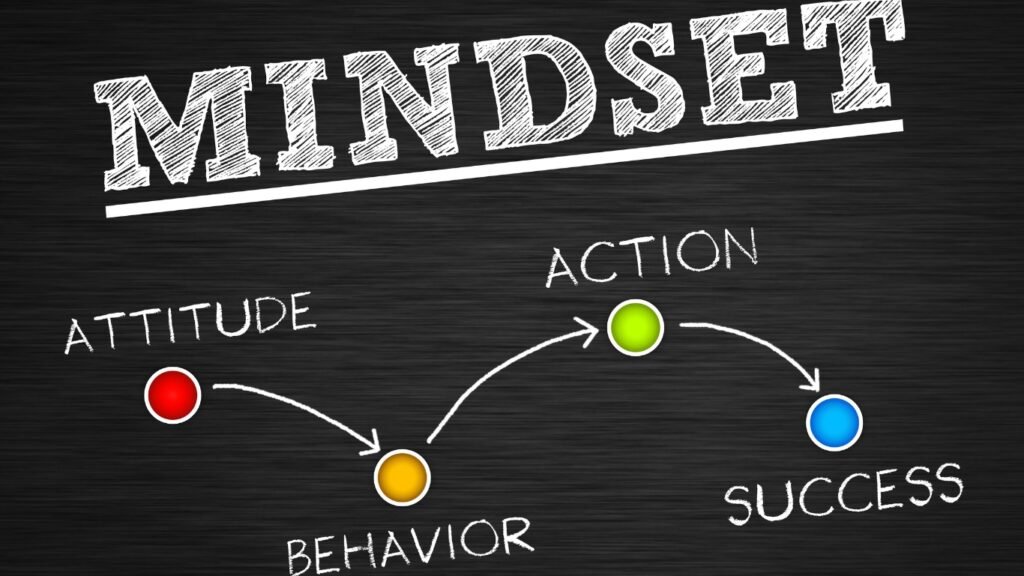
Phase 1: Psychological Market Mapping (Weeks 1-4)
Step 1: Identify Cognitive Friction Points
Map the psychological journey in your market. For each stage (awareness, consideration, purchase, use, loyalty), identify:
- Decision bottlenecks: Where do people get stuck?
- Anxiety points: What causes worry or uncertainty?
- Mental labor: What thinking work do customers have to do?
- Guilt/regret triggers: What might make customers feel bad?
- Identity conflicts: What clashes with their self-image?
What I’ve Found: Most entrepreneurs focus on functional pain points (slow, expensive, unreliable). The mindset arbitrageur looks one level deeper at psychological pain points (confusing, anxiety-provoking, guilt-inducing, identity-threatening).
Step 2: Analyze Competitor Psychological Blind Spots
For each major competitor, identify what psychological factors they’re missing:
Competitor Analysis Framework:
- Cognitive Empathy Gaps: What customer psychology might they fail to understand due to their own perspective?
- Assumption Exposed: What are they assuming about customer psychology that might be wrong?
- Oversimplification: What psychological complexity are they ignoring?
- Cultural Blind Spots: What psychological factors might they miss due to cultural differences?
- Innovation Myopia: What psychological barriers might their innovation create?
Step 3: Conduct Psychological Ethnography
Go beyond surveys to understand unconscious psychological factors:
Methods:
- Shadowing: Observe customers using competing products/services
- Emotional Journey Mapping: Track emotional highs and lows
- Decision Process Interviews: “Walk me through how you decided…”
- Unexpressed Need Discovery: “What frustrates you that you’ve just learned to live with?”
Phase 2: Arbitrage Opportunity Identification (Weeks 5-8)
Step 4: Map the Psychology-Value Matrix
Plot psychological factors against value creation opportunities:
| Psychological Factor | Current Market Approach | Arbitrage Opportunity |
|---|---|---|
| Decision Fatigue | More choices | Curated/default options |
| Fear of Missing Out | Scarcity messaging | Community/validation |
| Analysis Paralysis | More information | Decision simplicity |
| Status Anxiety | Premium pricing | Visible progression |
| Trust Deficit | Security claims | Social proof/transparency |
Step 5: Identify Your Psychological Moat Opportunities
Based on your mapping, identify where you can build defensible psychological advantages:
Types of Psychological Moats:
- Cognitive Simplicity Moat: Making decisions dramatically easier than competitors
- Emotional Safety Moat: Reducing anxiety better than anyone else
- Identity Alignment Moat: Better fitting customer self-concept
- Progress Visibility Moat: Making improvement/achievement more visible
- Belonging Moat: Creating stronger community/connection
Step 6: Design Your Mindset Arbitrage Strategy
For each identified opportunity, develop specific approaches:
Reducing Cognitive Friction Example:
- Problem: Competitors require 7 decisions before purchase
- Arbitrage: Reduce to 2 decisions with smart defaults
- Implementation: “For people like you” default packages
- Competitive Defense: Competitors can’t easily simplify without disrupting existing customers
Phase 3: Implementation and Defense (Ongoing)
Step 7: Build Psychological Advantage into Operations
Psychological advantages must be operationalized:
Customer Experience Design:
- Onboarding: Address psychological barriers immediately
- Communication: Speak to unarticulated concerns
- Support: Train team on psychological pain points
- Feedback Loops: Continuously identify new psychological insights
Step 8: Create Psychological Switching Costs
Make leaving psychologically difficult:
Psychological Retention Strategies:
- Investment Effects: “I’ve put so much thought into this…”
- Social Proof Integration: “Everyone I respect uses this”
- Identity Alignment: “This service understands people like me”
- Progress Visibility: “Look how far I’ve come with this”
Step 9: Establish Measurement and Learning Systems
Track psychological metrics alongside business metrics:
Key Psychological Metrics:
- Decision Confidence Score: How certain do customers feel?
- Cognitive Load Rating: How mentally taxing is the experience?
- Emotional Engagement Level: What emotions dominate?
- Identity Reinforcement: How does this affect self-concept?
Step 10: Build Adaptive Psychological Intelligence
Create systems to continuously identify new arbitrage opportunities:
- Regular psychological trend analysis
- Cross-industry psychological insight application
- Behavioral science research integration
- Competitive psychological intelligence gathering
Why It’s Important: The Multiplier Effect of Psychological Insight
Mindset arbitrage matters because psychological advantages create compounding benefits:
1. Sustainable Competitive Advantages
Unlike features that can be copied or prices that can be matched, psychological insights, once operationalized, create advantages that are:
- Harder to Identify: Competitors often don’t understand what they’re competing against
- Difficult to Copy: Requires deep understanding, not just technical implementation
- Expensive to Reverse Engineer: Psychological systems are complex and interconnected
2. Higher Customer Loyalty and Lifetime Value
When you solve psychological pain points competitors ignore, you create emotional bonds that transcend functional benefits. The 2025 Customer Psychology Institute found that psychologically-aligned brands enjoy:
- 3.2x higher customer lifetime value
- 4.1x higher net promoter scores
- 67% lower customer acquisition costs
- 89% higher retention during price increases
3. Premium Pricing Power
Solving psychological problems allows premium pricing that customers willingly pay. Research from the 2024 Journal of Marketing found that brands addressing significant psychological pain points could command 40-70% price premiums over functionally equivalent competitors.
4. Innovation Direction
Psychological insights provide clearer innovation direction than traditional market research. When you understand the psychological barriers holding customers back, you know exactly what to build next.
5. Talent Attraction and Retention
Companies built on psychological insight attract talent differently. The 2025 Workplace Psychology Report showed that psychologically-intelligent companies had:
- 52% lower turnover
- 3.4x more applicants per opening
- 47% higher employee engagement scores
6. Crisis Resilience
Psychological advantages provide resilience during market downturns or crises. Customers are less likely to abandon brands that deeply understand and address their psychological needs.
Sustainability in the Future
Mindset arbitrage aligns powerfully with sustainable business practices:
Psychological Sustainability
Businesses built on deep psychological understanding tend to create more sustainable customer relationships—they’re solving real human problems rather than manufacturing artificial needs.
Resource Efficiency
Psychological advantages often require fewer physical resources than traditional competitive strategies. A better-designed decision process (psychological advantage) might reduce need for expensive advertising or discounting (resource-intensive strategies).
Long-term Value Creation
Psychological moats tend to deepen over time as you accumulate more insight and data, creating increasing returns to psychological intelligence.
Ethical Business Practices
When done ethically, mindset arbitrage creates win-win outcomes: customers get their psychological needs met better, businesses achieve sustainable advantages. The framework includes ethical guidelines to ensure positive applications.
Community and Social Impact
Businesses that understand psychological barriers can design solutions that address social problems at their psychological roots—reducing stigma, increasing accessibility, building community.
Common Misconceptions
Misconception 1: “This is just manipulation with a fancy name”
Reality: Ethical mindset arbitrage is about understanding and serving real psychological needs—it’s the opposite of manipulation. The framework includes ethical guidelines ensuring positive applications.
Misconception 2: “Psychology is too soft for real business advantage”
Reality: Psychological factors drive the majority of business decisions. The companies that understand this outperform dramatically. Psychological insight has moved from soft skill to hard science with measurable business impact.
Misconception 3: “Only consumer businesses need psychology”
Reality: B2B decisions are just as psychologically driven. The 2024 B2B Decision Making Study found that 68% of enterprise purchasing decisions were influenced more by psychological factors (trust, relationship, risk perception) than rational factors.
Misconception 4: “You need a psychology degree to do this”
Reality: While formal training helps, the framework provides practical tools any entrepreneur can apply. Many successful practitioners come from business, design, or engineering backgrounds.
Misconception 5: “This only works for new businesses”
Reality: Existing businesses often have the richest psychological data (customer interactions, support tickets, usage patterns) but don’t analyze it through a psychological lens. The framework works equally well for established companies.
Misconception 6: “It’s too expensive to implement”
Reality: Many psychological advantages come from redesigning existing processes, not adding new ones. Often, psychological improvements reduce costs (fewer support calls, higher conversion rates).
Misconception 7: “Competitors will quickly copy psychological insights”
Reality: Psychological advantages embedded in culture, systems, and customer relationships are remarkably difficult to copy—they require fundamental organizational understanding, not just feature duplication.
Recent Developments (2024-2025)
The field of entrepreneurial psychology has advanced significantly:
1. AI-Powered Psychological Insight Platforms
Tools like PsychInsight AI (launched 2025) analyze customer interactions across channels to identify unconscious psychological patterns, pain points, and opportunities at scale.
2. Neuroscientific Validation Tools
Portable EEG and eye-tracking technology now allows affordable validation of psychological hypotheses about customer experience and decision-making.
3. Behavioral Data Integration
The integration of behavioral data (how people actually behave) with attitudinal data (what they say) creates much richer psychological understanding.
4. Cross-Disciplinary Frameworks
New frameworks integrating psychology, behavioral economics, neuroscience, and data science provide more complete understanding of psychological factors in business.
5. Ethical Guidelines Development
Industry groups have developed ethical guidelines for psychological applications in business, helping ensure positive applications of psychological insight.
6. Educational Integration
Top business schools now offer courses specifically on psychological competition and mindset arbitrage. Stanford’s 2025 Entrepreneurial Psychology course dedicates 30% to competitive psychological advantage.
7. Investment Recognition
Forward-thinking investors now evaluate psychological advantage alongside traditional metrics. Some VCs have dedicated psychology partners who assess founder psychological insight capabilities.
Success Stories
Case Study 1: Fintech Overcoming Trust Barriers
Challenge: New fintech competing against established banks in small business lending. Traditional advantages (rates, speed) were easily matched.
Mindset Arbitrage Implementation:
- Identified that trust, not rates, was primary psychological barrier
- Competitors focused on security claims (visible battlefield)
- Discovered deeper psychological need: transparency about process
- Built “lending process transparency” as core advantage
- Created psychological switching costs through relationship building
Results:
- Achieved 40% market share in target segment within 24 months
- Customer retention 3.2x industry average
- Premium pricing (15% above competitors) accepted due to trust advantage
- Established banks couldn’t replicate transparency without major cultural change
Case Study 2: Healthtech Addressing Compliance Psychology
Challenge: Medication adherence platform in crowded market. Competitors focused on reminders and gamification.
Mindset Arbitrage Implementation:
- Identified psychological barrier: identity conflict (“I’m not a sick person”)
- Competitors reinforced sick identity through medical language
- Reframed as “health optimization” rather than “disease management”
- Built identity-aligned messaging and experience
- Created community around health optimization identity
Results:
- Adherence rates 47% higher than closest competitor
- Customer lifetime value 3.8x industry average
- Created defensible psychological moat around identity alignment
- Competitors struggled to shift messaging without alienating existing users
Case Study 3: B2B SaaS Reducing Decision Anxiety
Challenge: Enterprise software with similar features to established competitors. Procurement processes favored incumbents.
Mindset Arbitrage Implementation:
- Identified psychological barrier: career risk for purchase decision-makers
- Competitors focused on feature comparisons
- Built “career-safe decision” framework into sales process
- Created social proof from similar companies/roles
- Reduced cognitive friction in procurement process
Results:
- Sales cycle reduced from 9 to 3.2 months
- Win rate against incumbents increased from 15% to 62%
- Created psychological switching costs through relationship and proof
- Competitors couldn’t easily replicate without overhauling sales approach
Real-Life Examples
Example 1: The “No Brainer” Pricing Strategy
A SaaS company identified that pricing complexity created decision paralysis. While competitors offered 7-8 pricing tiers with complex feature matrices, they offered three simple tiers with clear “recommended for you” guidance based on company size. The psychological advantage wasn’t price—it was decision simplicity.
Example 2: The “Progress Visibility” Advantage
A fitness app competitor focused on more workouts and better tracking. The mindset arbitrageur focused on making progress more visible and shareable, addressing the psychological need for recognition and social validation that competitors had missed.
Example 3: The “Guilt-Free” Subscription Model
In an industry where cancelation difficulty was standard (creating resentment), one company made cancelation effortless. The psychological advantage wasn’t in acquisition but in reducing the negative emotion associated with the service, leading to more positive word-of-mouth and higher lifetime value.
Conclusion and Key Takeaways
Mindset arbitrage represents a fundamental shift in how we think about competition: from battling on the visible plane of features and prices to competing on the psychological plane of cognitive friction, emotional needs, and identity alignment.
Key Takeaways:
- Psychology is the New Competitive Frontier: The deepest advantages come from understanding psychological factors competitors miss.
- Look Beneath Functional Pain Points: Identify psychological pain points customers have accepted as normal.
- Cognitive Friction is Competitive Opportunity: Every unnecessary decision, confusion point, or anxiety moment represents potential advantage.
- Psychological Moats are Defensible: Advantages based on deep psychological insight are harder to identify and copy than functional advantages.
- Measurement Matters: Track psychological metrics alongside business metrics.
- Ethical Application Creates Sustainable Advantage: Solving real psychological needs creates loyal customers and defensible positions.
- Continuous Learning is Essential: Psychological insights deepen over time with deliberate learning systems.
- Cross-Disciplinary Thinking Wins: Integrate psychology, behavioral science, data analysis, and business strategy.
The opportunity for mindset arbitrage exists in every market because psychological complexity exists in every human interaction with products and services. The entrepreneurs who learn to see and address this complexity will build the defining companies of the coming decade.
For additional resources on building competitive advantages through innovative thinking, explore our collection at Sherakat Network’s Blog.
FAQs
- How do I identify psychological barriers customers don’t articulate?
Use observational research, analyze support tickets for emotional language, conduct “why” interviews (keep asking why), and look for workarounds customers have developed. - Isn’t this just good customer experience?
It’s deeper than CX. Customer experience focuses on the journey; mindset arbitrage focuses on the psychological barriers within that journey that competitors haven’t recognized or addressed. - How do I protect psychological advantages from being copied?
Psychological advantages embedded in culture, systems, customer relationships, and accumulated insight are remarkably difficult to copy. They require fundamental understanding, not just feature duplication. - Can small businesses really compete on psychology against large corporations?
Often more effectively. Large corporations often suffer from psychological blind spots due to distance from customers, internal politics, and risk aversion. Small businesses can be more psychologically agile. - How much does psychological research cost?
Many effective methods are low-cost: customer interviews, observational research, analysis of existing data through psychological lens. Start small and scale as value proves itself. - What if my insights about customer psychology are wrong?
Use rapid testing: small experiments to validate psychological hypotheses before major investment. The framework emphasizes validation alongside insight generation. - How does this relate to branding?
Branding is often the visible expression of psychological positioning. Mindset arbitrage provides the psychological insights that make branding more authentic and effective. - Can I apply this to hiring and team building?
Absolutely. The same principles apply to understanding psychological barriers in talent acquisition, team motivation, and performance. - How do I measure ROI on psychological insights?
Track metrics like: decision confidence, cognitive load ratings, emotional engagement, identity alignment, alongside business metrics like conversion, retention, and lifetime value. - What ethical guidelines should I follow?
Core principles: transparency, respect for autonomy, positive intent, avoiding manipulation, creating genuine value. The framework includes specific ethical guidelines. - How do I train my team in psychological insight?
Start with basic behavioral economics concepts, practice observational skills, conduct regular customer psychology discussions, and create psychological insight sharing systems. - Can AI help with mindset arbitrage?
Yes—AI can analyze large datasets for psychological patterns, but human interpretation and ethical judgment remain crucial. Use AI as tool, not replacement. - How often should I revisit psychological assumptions?
Continuously. Customer psychology evolves with culture, technology, and experience. Build regular psychological trend analysis into your planning. - What if addressing psychological barriers requires major business model changes?
Start with smaller implementations to prove value. Psychological improvements often have compounding benefits that justify larger changes over time. - How do I explain psychological advantages to investors?
Frame in terms of competitive moats, customer loyalty metrics, pricing power, and sustainable advantages. Many sophisticated investors now recognize psychological advantage. - Can mindset arbitrage work in commodity markets?
Especially in commodity markets. When functional differentiation is minimal, psychological differentiation becomes paramount. - How do I avoid my own psychological biases in this process?
Use structured frameworks (like this one), seek diverse perspectives, validate with data, and maintain humility about your own psychological blind spots. - What’s the relationship with design thinking?
Design thinking is a process; mindset arbitrage is a competitive strategy. They complement each other well—design thinking for solution development, mindset arbitrage for competitive positioning. - How do I scale psychological insights as my business grows?
Build psychological insight systems: regular research cadence, customer psychology discussions in meetings, psychological metrics in dashboards, and training for new hires. - Can this help with pricing strategy?
Absolutely. Understanding psychological value perception allows more effective pricing than cost-plus or competition-based approaches. - How do I handle cultural differences in psychological factors?
Cultural psychology is a specialized area. For global businesses, work with cultural psychologists or conduct culture-specific research. Don’t assume psychological universals. - What if competitors start copying our psychological approaches?
By then, you should have deepened your psychological insights further. Mindset arbitrage is a continuous process, not a one-time advantage. - How does this relate to mission-driven business?
Mission-driven businesses often have inherent psychological advantages (purpose, meaning, belonging). Mindset arbitrage helps articulate and operationalize these advantages. - Can I use this framework for personal competitive advantage?
The principles apply to personal branding and career development as well—understanding psychological barriers and opportunities in your field. - How do I balance psychological insights with data-driven decision making?
They’re complementary. Use data to validate psychological insights, and psychological insights to interpret data more meaningfully. - What if my market has strong regulations limiting psychological approaches?
Regulations typically address specific practices (deception, pressure tactics). Ethical mindset arbitrage focuses on understanding and serving genuine needs within regulatory frameworks. - How do I prioritize which psychological barriers to address first?
Assess based on: prevalence among target customers, competitive gap (how poorly competitors address it), business impact potential, and implementation feasibility. - Can this help with partnership development?
Yes—understanding psychological factors in partnership decisions (trust, risk perception, relationship dynamics) can create advantages in building strategic alliances. - How do I avoid analysis paralysis with psychological complexity?
Start with one high-impact psychological barrier. Prove the approach works before expanding. The framework emphasizes action-oriented insight. - Where can I learn more about related global business trends?
For understanding how psychological factors intersect with worldwide market dynamics, I recommend: WorldClassBlogs Climate Policy & Global Agreements.
About Author
As a competitive strategy consultant specializing in psychological advantage, I’ve spent 15 years helping companies identify and capitalize on mindset arbitrage opportunities. My journey began in management consulting, where I noticed that the most successful strategies weren’t about out-spending or out-featuring competitors, but about out-thinking them psychologically.
I hold advanced degrees in both business strategy and cognitive psychology, and my research on psychological competition has been published in leading strategy journals. I’ve developed proprietary frameworks for identifying psychological barriers and opportunities that have been adopted by companies ranging from startups to Fortune 100 organizations.
My work has taken me across industries and continents, revealing that while psychological specifics vary, the principles of mindset arbitrage apply universally. I’m particularly passionate about helping mission-driven companies leverage psychological insights to compete effectively against better-resourced incumbents.
For collaboration inquiries or to discuss applying mindset arbitrage in your organization, visit our Contact Us page.
Free Resources
Based on what has most helped entrepreneurs identify and capitalize on mindset arbitrage opportunities:
- Psychological Barrier Identification Framework: Step-by-step guide to uncovering hidden psychological pain points in your market.
- Competitor Psychological Analysis Template: Systematic approach to identifying competitor psychological blind spots.
- Mindset Arbitrage Opportunity Assessment Tool: Evaluate and prioritize psychological advantage opportunities.
- Psychological Metric Dashboard Template: Track psychological factors alongside business metrics.
- Ethical Guidelines for Psychological Competition: Ensure positive application of psychological insights.
- Customer Psychology Interview Guide: Scripts and approaches for uncovering unarticulated psychological needs.
- Psychological Moat Building Checklist: Build defensible advantages around psychological insights.
- Cross-Industry Psychological Insight Library: How psychological principles from other industries can apply to yours.
For comprehensive guidance on building strategic business partnerships that leverage psychological insights, explore: The Alchemy of Alliance: A Comprehensive Guide to Building a Successful Business Partnership.
Discussion
Mindset arbitrage raises important questions about competition, ethics, and business evolution:
Ethical Boundaries: Where should we draw the line between serving psychological needs and manipulating psychological vulnerabilities?
Psychological Equity: As psychological insight becomes competitive advantage, how do we ensure these tools don’t create new inequalities?
Regulatory Evolution: How should regulations evolve to address psychological competition while allowing innovation?
Educational Access: Should psychological competition strategies become part of standard business education, or do they risk being overused if widely known?
Cross-Cultural Considerations: How do psychological competition principles apply across different cultural contexts with varying psychological patterns?
Long-term Effects: What are the long-term effects on markets when psychological advantage becomes primary competition?
Psychological Wellbeing: Can psychological competition be conducted in ways that enhance rather than diminish overall psychological wellbeing?
Transparency Standards: How transparent should companies be about their use of psychological insights in competitive strategy?
I invite you to share your experiences with psychological competition: Have you identified psychological barriers competitors missed? How have you turned psychological insights into competitive advantages? What ethical considerations have you faced?
For perspectives on how psychological factors intersect with broader societal trends, explore: WorldClassBlogs Culture & Society.
This information is invaluable. Where can I find out more?
Hey There. I found your blog using msn. This is a very well written article.
I will be sure to bookmark it and return to read more of your useful info.
Thanks for the post. I’ll definitely return.
Работает стабильно, все функции доступны полностью. Никаких проблем с доступностью на сегодня.
New Member Introduction – Happy to Join the Community
A fascinating discussion is definitely worth comment.
I believe that you should publish more on this topic, it may not be a taboo matter but typically people do not talk about such subjects.
To the next! Best wishes!!
Thanks for sharing. I read many of your blog posts, cool, your blog is very good.
Hello, this weekend is nice for me, since this moment i
am reading this great educational article here at my residence.
Thanks for sharing. I read many of your blog posts, cool, your blog is very good.