


Introduction: The Crisis Beneath the Crisis
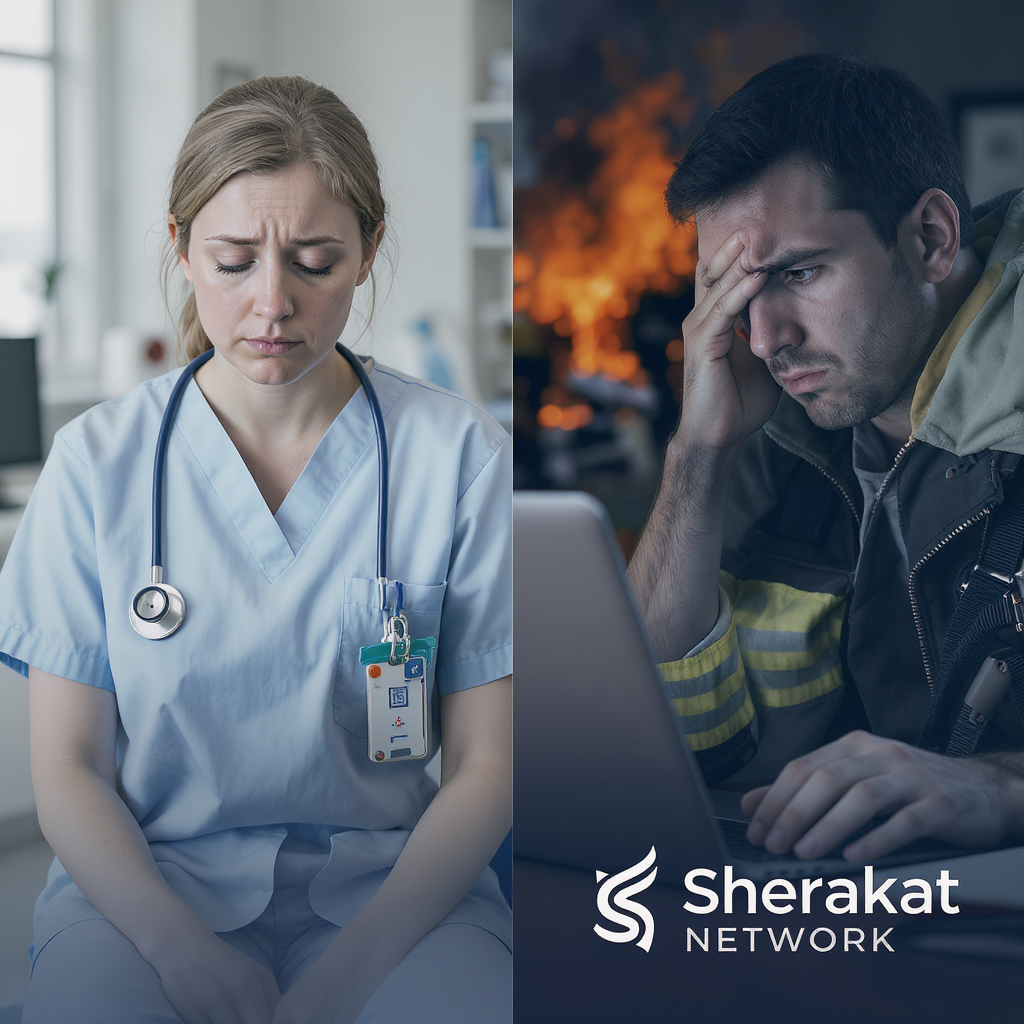
We are navigating what the World Health Organization has officially classified as a global burnout epidemic—but what if we’ve been mislabeling a deeper, more insidious wound? For years, the term “burnout” has been the catch-all diagnosis for the profound exhaustion plaguing our healthcare workers, first responders, educators, and corporate professionals. The prescription? More self-care: mindfulness apps, yoga, better boundaries. Yet, these solutions often fall painfully short because they treat a symptom while ignoring the root cause.
In my experience as a consultant working with overwhelmed hospital teams and nonprofit leaders, I’ve seen the limits of the burnout framework. What I’ve found is that when a veteran nurse says, “I’m not just tired; I feel like I’m violating my oath every day because I can’t give patients the care they deserve,” or when a social worker describes the soul-crushing weight of allocating insufficient resources among desperate clients, we are witnessing something distinct. This is not burnout. This is Moral Injury.
Moral injury is a psychological, social, and spiritual wound that results from perpetrating, failing to prevent, or witnessing acts that transgress one’s deeply held moral beliefs and expectations. It’s the damage done to one’s conscience when, constrained by circumstances, you are forced to make choices that betray your core ethical code. While burnout says, “I have nothing left to give,” moral injury asks, “What have I become in order to survive this system?”
This article will dissect the critical, often-overlooked distinction between moral injury and burnout. We will explore its neuroscience, its unique symptoms, and why our current wellness-industrial complex fails to address it. Most importantly, we will provide a tangible, multi-level roadmap for healing—for individuals, teams, and organizations. This isn’t about better stress management; it’s about moral repair.
Background & Context: From Battlefield to Boardroom
The concept of moral injury originated in military psychiatry. Dr. Jonathan Shay, who worked with Vietnam veterans, first coined the term to describe the severe psychological distress soldiers experienced after following or witnessing orders that violated their moral compass—not from fear for their own lives, but from the betrayal of “what’s right.” Unlike PTSD, which is a fear-based response to a threat, moral injury is a guilt, shame, and anger-based response to a moral transgression.
A landmark 2024 study in The Lancet Psychiatry revealed a startling transfer of this concept. Researchers found that the prevalence of moral injury symptoms among civilian healthcare workers post-pandemic (peaking at 62%) now surpasses rates historically recorded in combat veterans. The triggering events were not enemy fire but systemic failures: triaging ventilators, dying patients isolated from families, working with inadequate protective equipment due to institutional decisions.
This phenomenon has rapidly seeped into other high-stakes, resource-constrained professions. Teachers forced to use curriculum they believe harms children. Financial advisors pushed to sell predatory products. Tech engineers designing addictive algorithms against their ethical judgment. The modern workplace, with its frequent clashes between profit motives, efficiency metrics, and human values, has become a potent breeding ground for moral injury.
The cost is catastrophic. A 2025 report by the National Institute for Occupational Safety and Health (NIOSH) linked untreated moral injury in workplaces to a 300% higher turnover intention, a significant increase in medical errors in healthcare, and a direct, quantifiable loss in organizational innovation and psychological safety.
Key Concepts Defined
- Moral Injury: The profound psychological distress that results from actions, or the lack of them, which violate one’s core moral values. It centers on feelings of guilt, shame, betrayal, and spiritual crisis.
- Burnout: A state of emotional, physical, and mental exhaustion caused by prolonged or excessive stress. It is characterized by three dimensions: emotional exhaustion, depersonalization (cynicism), and reduced personal accomplishment. It is primarily about capacity depletion.
- Moral Distress: The initial, acute feeling of discomfort that arises when one knows the ethically right action to take but feels powerless to take it due to institutional constraints. Moral injury is the trauma that can result from chronic, unresolved moral distress.
- Compassion Fatigue/Vicarious Trauma: The gradual lessening of compassion and empathy from repeated exposure to the suffering of others. It is a form of burnout specific to caregiving roles.
- Systemic Betrayal: A core component of moral injury, where the harm is exacerbated by a perceived betrayal by leadership, an institution, or society that should have provided support, safety, and ethical leadership.
- Moral Resilience: The capacity to maintain or restore one’s integrity in response to moral complexity, distress, or adversity. It is the antidote we must build.
How It Works: The Anatomy of a Soul-Wound (Step-by-Step)

Moral injury is not a personality flaw or a lack of resilience. It is a specific psychological process with identifiable stages.
Step 1: The Ethical Event
A situation arises where an individual’s deeply held moral beliefs clash with reality. This could be:
- Act of Commission: Doing something that violates ethics (e.g., a manager laying off loyal employees to meet a quarterly target they know is arbitrary).
- Act of Omission: Failing to prevent something wrong (e.g., a teacher watching a bullied child slip through the cracks due to overwhelming caseloads).
- Witnessing: Seeing others commit unethical acts without the power to stop it (e.g., a junior employee watching executives conceal safety data).
Step 2: The Internal Transgression
The individual, constrained by systemic forces (lack of time, resources, authority, or fear of reprisal), acts—or fails to act—in a way that they themselves perceive as morally wrong. This key point is critical: the judgment comes from within, based on their own moral code.
Step 3: The Neurobiological Cascade
The brain registers this as a profound threat, but not primarily in the fear-based amygdala (as in PTSD). Instead, it heavily involves:
- The Anterior Cingulate Cortex (ACC): Conflict monitoring. It lights up with the “error signal” of a moral violation.
- The Prefrontal Cortex (PFC): Responsible for judgment and reasoning. It can become impaired, leading to black-and-white thinking (“I am completely bad”).
- The Default Mode Network (DMN): Involved in self-referential thought. It goes into overdrive, fueling relentless rumination and self-condemnation (“Why did I do that? I’m a fraud.”).
The body’s stress response is activated, releasing cortisol and adrenaline, but tinged with shame rather than pure fear.
Step 4: The Symptom Emergence
The unresolved conflict manifests as a cluster of symptoms distinct from burnout:
| Moral Injury Symptoms | Burnout Symptoms |
|---|---|
| Primary Emotions: Guilt, shame, moral outrage, disgust. | Primary Emotion: Emotional exhaustion, numbness. |
| Self-View: “I am bad/a betrayer/complicit.” | Self-View: “I am ineffective/empty.” |
| View of System: “The system is corrupt/evil/betraying.” | View of System: “The system is draining/demanding.” |
| Behavioral Drive: Withdrawal from community, self-punishment, or aggressive moral crusading. | Behavioral Drive: Disengagement, reduced productivity. |
| Spiritual Impact: Crisis of meaning, loss of trust, shattered worldview. | Spiritual Impact: Cynicism, loss of idealism. |
Step 5: The Cycle of Alienation
To cope with the intense shame, individuals often withdraw from the moral community (family, colleagues, faith groups) that could offer perspective and forgiveness, believing they are now “tainted.” This isolation deepens the injury, creating a vicious cycle.
Why It’s Important: The Cost of Misdiagnosis
Treating a moral injury as simple burnout is like treating a fracture with a band-aid. It’s not only ineffective; it can be harmful.
- Individual Harm: Prescribing “more self-care” to someone suffering moral injury implicitly places the burden of repair solely on them. It sends the message: “Your distress is because you’re not resilient enough,” which can deepen shame and self-blame, potentially worsening depression and suicidal ideation.
- Organizational Blindness: By focusing on individual resilience training, organizations ignore the systemic, structural pathologies that cause the injury: unethical policies, impossible workloads, toxic leadership, and profit-over-people mandates. This allows the injurious systems to persist.
- Societal Impact: When our most critical professions—healthcare, education, social work—are hollowed out by untreated moral injury, we lose seasoned professionals. We are left with systems staffed by the disillusioned or the novice, eroding the quality of care, education, and service for everyone. For entrepreneurs and business leaders, understanding this is key to sustainable operations. Explore related insights on building ethical systems in our guide to Business Partnership Models.
- A Matter of Justice: Labeling it “burnout” depoliticizes the suffering. Calling it “moral injury” correctly identifies the source: a failure of the environment, not the individual. It demands accountability and systemic change.
Sustainability in the Future: Building Morally Resilient Systems
A sustainable future of work is not just carbon-neutral; it is ethically sustainable. This requires a paradigm shift from “How do we make individuals tougher?” to “How do we create systems that do not routinely injure the humans within them?”
- For Professions: Medical and business schools must integrate ethical stamina training, teaching future professionals to navigate gray areas, advocate within systems, and process moral distress in real-time.
- For Organizations: Metrics must evolve. Beyond Key Performance Indicators (KPIs), we need Moral Performance Indicators (MPIs)—tracking ethical climate, perceived systemic betrayal, and moral distress scores in employee wellness surveys.
- For Society: We need public recognition and discourse. Just as we have awareness campaigns for mental health, we need to name moral injury, destigmatize it, and create pathways for restitution, much like truth and reconciliation processes.
Common Misconceptions
- “It’s just PTSD.” No. PTSD is a fear-conditioned response to a threat to one’s life or safety. Moral injury is an identity-based wound rooted in guilt, shame, and betrayal. A soldier can have both PTSD from being shot at and moral injury from causing civilian casualties.
- “Only ‘weak’ people get it.” False. Moral injury often strikes the most idealistic, conscientious, and morally engaged individuals. Their high standards make the violation more acute.
- “If you have strong values, you won’t get injured.” The opposite is true. Strong, rigid moral codes can be more easily shattered. The work is not in having fewer values, but in developing moral flexibility—the ability to navigate complex ethical landscapes without breaking.
- “Talking about it will just make people feel worse.” Avoidance is the fertilizer of shame. In my experience, facilitated, structured dialogue in a safe setting (often called “moral injury groups”) is the single most powerful first step toward healing, as it breaks the isolation and normalizes the experience.
Recent Developments (2024-2025)
- Diagnostic Recognition: The upcoming ICD-12 (2025) will include a provisional code for “Moral Injury – Occupational,” a monumental step toward legitimizing it as a clinical condition worthy of specific treatment protocols.
- AI & Ethical Stress: A 2024 study from MIT identified a new category: Algorithmic Moral Injury. Tech workers are reporting profound distress from training AI systems they fear will be used for deception, discrimination, or displacement, feeling complicit as “cogs in a machine.”
- Corporate Liability: The first precedent-setting lawsuit was filed in late 2024 by a group of nurses against a hospital chain, alleging that negligent systemic conditions (chronic understaffing leading to patient harm) caused psychological damage amounting to moral injury, seeking damages for emotional distress.
- Pharmacological Research: Early-stage trials are exploring the use of psilocybin-assisted therapy for severe, treatment-resistant moral injury, focusing on its ability to disrupt rigid shame narratives and promote a sense of interconnectedness and self-compassion.
Success Stories & Real-Life Examples
Example 1: The “Ethics Rounds” Model (Healthcare Success)
A major Boston teaching hospital, facing a staff exodus, replaced generic “resilience workshops” with mandatory, monthly Protected Ethics Rounds. In these sessions, clinicians present real, anonymized cases causing them moral distress (e.g., “We continued aggressive cancer treatment on a patient with no chance of recovery because the family was in denial”). A trained ethicist facilitates, but the goal isn’t to find the “right” answer. The goal is shared narrative processing. Within 18 months, units using this model saw a 25% drop in turnover and significant improvements in self-reported moral distress scores. The intervention cost less than the recruitment fees for a single new physician.
Example 2: Corporate Transparency Initiative
A mid-sized FinTech company, after an employee survey revealed high levels of cynicism and shame around sales practices, took radical action. The CEO instituted “Why We Choose” All-Hands meetings. Before launching any major product or feature, the lead team must publicly present not just the business case, but the ethical case: potential harms, mitigations, and why they believe it’s aligned with company values. Employees vote in an advisory poll. While not binding, this act of procedural justice—giving people a voice—dramatically reduced feelings of betrayal and complicity.
Personal Anecdote: The Social Worker
“Anya,” a child protection social worker I coached, was drowning. She described the unbearable weight of removing children from homes she knew were failing due to poverty, not malice, and placing them into an overburdened foster system. “Burnout resources told me to meditate,” she said. “It felt like an insult.” We reframed her distress as moral injury—a rightful response to an impossible system. We worked not on stress techniques, but on integrity-preserving actions. She started small: she meticulously documented systemic failures in every case file, creating an undeniable paper trail. She joined a peer-led advocacy group. The work didn’t get easier, but her shame lessened. “I stopped feeling like a betrayer. I started feeling like a witness and an advocate trapped in a broken system. The enemy shifted from me to the structures I’m now working to change.”
Conclusion and Key Takeaways
Moral injury is the signature psychological wound of systems in conflict with humanity. It reveals the high cost of working in environments that force us to choose between our values and our viability. Distinguishing it from burnout is the first critical step toward meaningful healing—healing that must occur at the individual, team, and systemic levels.
We must move beyond the commodification of wellness and toward the hard work of ethical system redesign. This means creating spaces for truth-telling, embedding ethical checks into business processes, and holding leaders accountable for the moral climates they foster.
Final Key Takeaways:
- Moral Injury is an identity wound rooted in shame and betrayal; Burnout is a state of capacity depletion rooted in exhaustion.
- The source of moral injury is systemic failure, not individual weakness. Healing therefore, requires systemic change.
- The core treatment is not stress reduction but moral repair: rebuilding trust, processing shame, and restoring a sense of integrity through community.
- Sustainable organizations of the future will measure and prioritize psychological and ethical safety with the same rigor as financial safety.
- Naming moral injury is an act of justice—it transfers the burden of proof from the suffering individual to the injurious environment.
Your distress at work may not be a sign that you are failing to cope. It may be a sign that your conscience is intact, and the system is broken. Listen to that signal. It is the first step toward repair, for yourself and for the work you believe in.
For more on building sustainable, human-centric professional frameworks, explore our foundational piece on The Alchemy of Alliance: A Guide to Successful Business Partnership.
FAQs (25 Detailed Q&A)
Q1: What’s the simplest way to tell if I’m experiencing moral injury or burnout?
A: Ask yourself the core question: “What is the source of my pain?” If the answer is “I am completely exhausted and feel I can’t do anything well,” lean burnout. If the answer is “I feel ashamed, guilty, or like I’ve betrayed my values because of what I did or saw at work,” lean moral injury. They often co-exist, but the primary emotion is your guide.
Q2: Can you have moral injury from a single event, or is it always chronic?
A: It can be both. A single, acute transgression (e.g., a police officer making a fatal split-second decision they later morally question) can cause profound injury. More commonly in workplaces, it’s the result of chronic, compounding micro-transgressions (daily compromises of care, quality, or honesty) that eventually erode one’s moral foundation.
Q3: I’m a manager. What’s one thing I can do tomorrow to reduce moral injury risk on my team?
A: Implement “Blame-Free Debriefs.” After a difficult project or decision, gather your team and ask three questions: 1) What did we intend to happen? 2) What actually happened? 3) Where did our values and our actions feel aligned or in conflict? Facilitate without judgment. This creates a container to process moral distress before it hardens into injury.
Q4: Is moral injury recognized as an official diagnosis for disability or workers’ compensation?
A: Not yet as a standalone diagnosis, but this is rapidly changing. The 2025 ICD update includes a code, which is the first step. Currently, symptoms of moral injury (severe depression, anxiety, PTSD) are often what is cited in claims. The precedent-setting lawsuits happening now could force legal recognition of the injury itself.
Q5: How do treatments for moral injury differ from treatments for burnout or PTSD?
A:
- Burnout Treatment: Focus on stress reduction, workload management, boundary setting, and restoring energy (CBT for stress, relaxation training).
- PTSD Treatment: Focus on processing fear memories and reducing hyperarousal (Trauma-Focused CBT, EMDR, exposure therapy).
- Moral Injury Treatment: Focus on processing shame, restoring trust, and re-narrating the event with compassion. Therapies like Adaptive Disclosure Therapy and Acceptance and Commitment Therapy (ACT) are used, often in group settings to combat alienation.
Q6: Can an organization be “morally injured”?
A: While the term is clinically individual, organizations can develop a culture of moral silence or decay that mirrors the symptoms: collective shame, loss of public trust, corrosive cynicism, and an inability to act with integrity. The “cure” is similar: public truth-telling, leadership accountability, and symbolic acts of repair.
Q7: What role does spirituality or religion play in healing?
A: A significant one for many. Moral injury is often a spiritual crisis—a rupture in one’s understanding of justice, meaning, or relationship with a higher power or community. Chaplains, pastoral counselors, and mindfulness-based interventions that address forgiveness (of self and others) and meaning-making are often integral to the healing process.
Q8: Are some personality types more susceptible?
A: Research suggests individuals high in conscientiousness and neuroticism may be at greater risk. Their high standards and deep feeling for right and wrong make the transgression more acute, and their tendency to ruminate can deepen the shame cycle.
Q9: Can moral injury happen in personal life, not just work?
A: Absolutely. It can arise from family dynamics (e.g., making a terrible end-of-life decision for a parent), personal relationships (betraying a friend), or witnessing community trauma. The principles of guilt, shame, and violated ethics are the same.
Q10: What’s an example of a “moral performance indicator” (MPI) a company could track?
A: Example MPIs: 1) “I feel safe to report ethical concerns without retaliation” (5-point scale). 2) “Leadership’s decisions are consistent with our stated values.” 3) Frequency of ethics consultations requested by staff. 4) Voluntary turnover rate after high-stakes, ethically complex projects.
Q11: I feel morally injured but can’t leave my job. What can I do?
A: Focus on integrity-preserving practices. 1) Find a “Witness”: Confide in one trusted colleague. Shared reality reduces shame. 2) Document Systemically: Note the constraints (understaffing, bad policy) that forced the choice. This externalizes the cause. 3) Small Acts of Restoration: If you couldn’t help everyone, choose one small area where you can enact your values fully (e.g., mentoring a junior employee ethically). 4) Seek external community through professional associations or online support groups.
Q12: What’s the difference between guilt and shame in moral injury?
A: Guilt is “I did something bad.” It focuses on behavior and can be adaptive, motivating repair. Shame is “I am bad.” It focuses on the core self and is toxic, leading to hiding and self-punishment. Moral injury often twists guilt into pervasive shame. Treatment works to convert shame back to guilt (“You made a hard choice in a broken system”) and then to accountable action.
Q13: How can leaders avoid causing moral injury?
A: Practice Ethical Leadership: 1) Be transparent about the why behind difficult decisions, acknowledging the moral trade-offs. 2) Share the burden. Say “This is a terrible choice, and I, as the leader, own the responsibility for putting us in this position.” 3) Create and visibly use ethical “off-ramps”—clear, safe procedures for employees to opt out of work they find unconscionable without career penalty.
Q14: Is there a link between moral injury and addiction?
A: Yes, a strong one. The unbearable psychic pain of shame and self-loathing is a primary driver of substance use as a form of self-medication and escape. Treating addiction in professions with high moral injury risk requires concurrently addressing the underlying moral pain.
Q15: Where can I find a therapist trained in moral injury?
A: Look for therapists specializing in occupational trauma, PTSD, or addiction in high-stress professions. In your consultation, ask directly: “Are you familiar with the concept of moral injury, and do you incorporate approaches like Adaptive Disclosure or ACT to address shame?” Organizations like the Moral Injury Project (based at Syracuse University) also maintain referral lists.
Q16: How does this relate to “quiet quitting” and the “Great Resignation”?
A: Moral injury is a potent, under-discussed driver of both. “Quiet quitting” is often a form of self-protective disengagement after moral betrayal—a refusal to invest more of one’s soul into a perceived corrupt system. The “Great Resignation” was, for many, a mass act of moral flight from injurious environments.
Q17: Can AI or technology help mitigate moral injury?
A: Potentially, if designed ethically. Tools could include: AI-driven workload distribution to prevent impossible ethical choices, anonymous ethics reporting platforms with real-time analytics for leaders, and VR simulations for practicing difficult moral conversations. However, tech deployed solely for surveillance or productivity hacking will worsen it. For a broader look at AI’s role, consider this resource from World Class Blogs on AI & Machine Learning.
Q18: What about in education? How do teachers experience this?
A: Profoundly. Teachers experience moral injury when forced to “teach to a test” they know harms child development, when they can’t protect or adequately support students in crisis due to caseloads, or when they implement disciplinary policies they view as racially biased or developmentally inappropriate.
Q19: Is forgiveness necessary for healing?
A: Self-forgiveness is a critical component. Forgiveness of others (the institution, leaders) is not required, but releasing the relentless anger that binds you to the injurer is part of moving forward. This is different from condoning the wrong; it’s about reclaiming your energy from the event.
Q20: How do I start a conversation about this at my workplace without seeming accusatory?
A: Use data and shared purpose. Frame it as a systemic risk and quality issue: “I’ve been reading about how moral distress can affect decision-making and retention in our field. Could we explore adding a question or two about it to our next engagement survey, so we can understand if it’s a factor here and support our team’s integrity?” For more on fostering healthy professional dialogue, visit our Blog for related strategies.
Q21: Are there physical symptoms of moral injury?
A: Yes, due to chronic shame and stress. Common ones include: somatic symptoms with no clear medical cause (e.g., chronic pain, GI issues), severe fatigue that sleep doesn’t fix, tension headaches, and a weakened immune system leading to frequent illnesses.
Q22: What’s the role of narrative in healing?
A: Central. Moral injury traps you in a stuck, self-condemning story (“I am the villain”). Healing involves, with support, re-authoring that narrative to include context, constraint, and complexity (“I was a caring person in an impossible situation who made a painful choice. Here’s what I’ve learned and how I live differently now”). Writing and sharing this revised story is powerfully therapeutic.
Q23: Can a company’s business model itself be morally injurious?
A: Yes. Business models based on predatory lending, data exploitation, planned obsolescence, or environmental degradation inherently place employees in roles where they must act against the common good to perform their jobs. This creates a foundational, widespread moral injury risk. Evaluating and evolving your model is key. Start with our guide on How to Start an Online Business in 2026 for a values-driven foundation.
Q24: How is this relevant to global affairs and policy?
A: At a macro level, populations can experience a form of moral injury from national trauma, betrayal by institutions, or involvement in unjust wars. Healing requires transitional justice, public truth commissions, and symbolic acts of national atonement. For a global perspective on systemic challenges, see World Class Blogs: Global Affairs & Policy.
Q25: Where can I get more free resources and support?
A: The Sherakat Network is committed to providing actionable resources. Explore our Resources section for toolkits on ethical leadership and psychological safety. For a deep dive into overall psychological wellbeing, this external guide is excellent: Mental Health: The Complete Guide.
About the Author
Sana Ullah Kakar is an organizational psychologist and ethics consultant specializing in occupational trauma and sustainable workplace design. With a decade of experience working inside healthcare systems, tech startups, and Fortune 500 companies, they have witnessed firsthand the shift from burnout to moral injury as the primary driver of professional exodus. They hold certifications in Moral Injury Recognition & Response and Trauma-Informed Leadership. Their mission is to help build organizations where integrity is sustainable and psychological wounds are prevented, not just patched.
Free Resources
- The Moral Distress Thermometer & Action Guide: A one-page PDF to help individuals identify their level of moral distress and choose appropriate, immediate next steps.
- “Facilitating a Blame-Free Debrief” Leader’s Script: A step-by-step guide with exact phrasing to help managers host safe, productive sessions after ethically complex work.
- Moral Injury Reading List: Curated list of key academic papers, accessible books, and podcasts for deeper learning.
- Values Clarification Workbook: A digital workbook to help teams and individuals identify their core non-negotiable values, a critical first step in recognizing when they are being transgressed.
- Crisis Support Directory: A compiled list of hotlines and organizations specializing in support for high-risk professions (healthcare, first responders, humanitarian aid).
Discussion
We want to hear from you.
Has this framework given you a new lens to understand your own work experience? Do you see evidence of moral injury in your field? What challenges do you foresee in addressing it systemically?
Share your thoughts, questions, or stories in the comments below. Let’s foster a conversation that moves from silent suffering to shared strategy and repair.
For further reading on Sherakat Network:
- To understand how to build alliances that reinforce, rather than compromise, your values, read our in-depth guide: The Alchemy of Alliance.
- For a comprehensive look at operational models that consider human sustainability, review our piece on Business Partnership Models.