
Introduction: Beyond the Broadcast
In 2018, I worked with a restaurant client who insisted that “social media marketing” meant posting a daily photo of their specials on Facebook at 10 AM sharp. They had 2,000 followers, and each post got about 15 likes—mostly from employees and family. “It doesn’t work,” they declared. The problem wasn’t social media; it was their definition of “marketing.” They were using a global, interactive megaphone as a static, digital bulletin board.
Fast forward to 2025. The same restaurant now uses Instagram Reels to show the chef’s knife skills, runs a TikTok challenge for the best “noodle pull” video using their branded hashtag, and manages a private Facebook Group for their “VIP Regulars” where they test new recipes. They don’t just announce specials; they create micro-events. Their follower count is secondary to their community engagement rate, which has increased by over 400%. This is the evolution: from broadcasting to community building, from posting to participating.
Social media marketing in 2025 is not a channel for announcements. It is a dynamic ecosystem for building relationships, fostering advocacy, and driving tangible business outcomes through genuine human connection. This guide is for the beginner who feels overwhelmed by the platforms and the professional who needs to shift from an outdated “post and pray” model to a strategic, integrated system.
Background & Context: The Platform Pivot to People-Centricity
Social media’s marketing journey mirrors the digital era’s growth. The 2000s (The Broadcast Era) were defined by Facebook Pages and Twitter feeds—one-to-many communication where brands could finally talk directly to consumers, albeit in a mostly monologic way.
The 2010s (The Engagement Era) saw the rise of visual platforms like Instagram and the algorithm’s dominance. “Likes,” comments, and shares became the currency. Brands realized they needed to create content that sparked interaction, not just consumption. Influencer marketing exploded.
We are now deep into the 2020s (The Community & Algorithmic Trust Era). The landscape is defined by:
- Algorithmic Saturation: Organic reach is a prized commodity, reserved for content that generates meaningful engagement (saves, shares, long video watch time) and keeps users on the platform.
- The Rise of Authenticity: Highly polished, corporate content underperforms. Raw, behind-the-scenes, “authentic” content and user-generated material (UGC) reign supreme.
- Community as a Product: Platforms like Facebook Groups, Discord, and Circle are not just features; they are central to strategy. The most powerful marketing happens between community members.
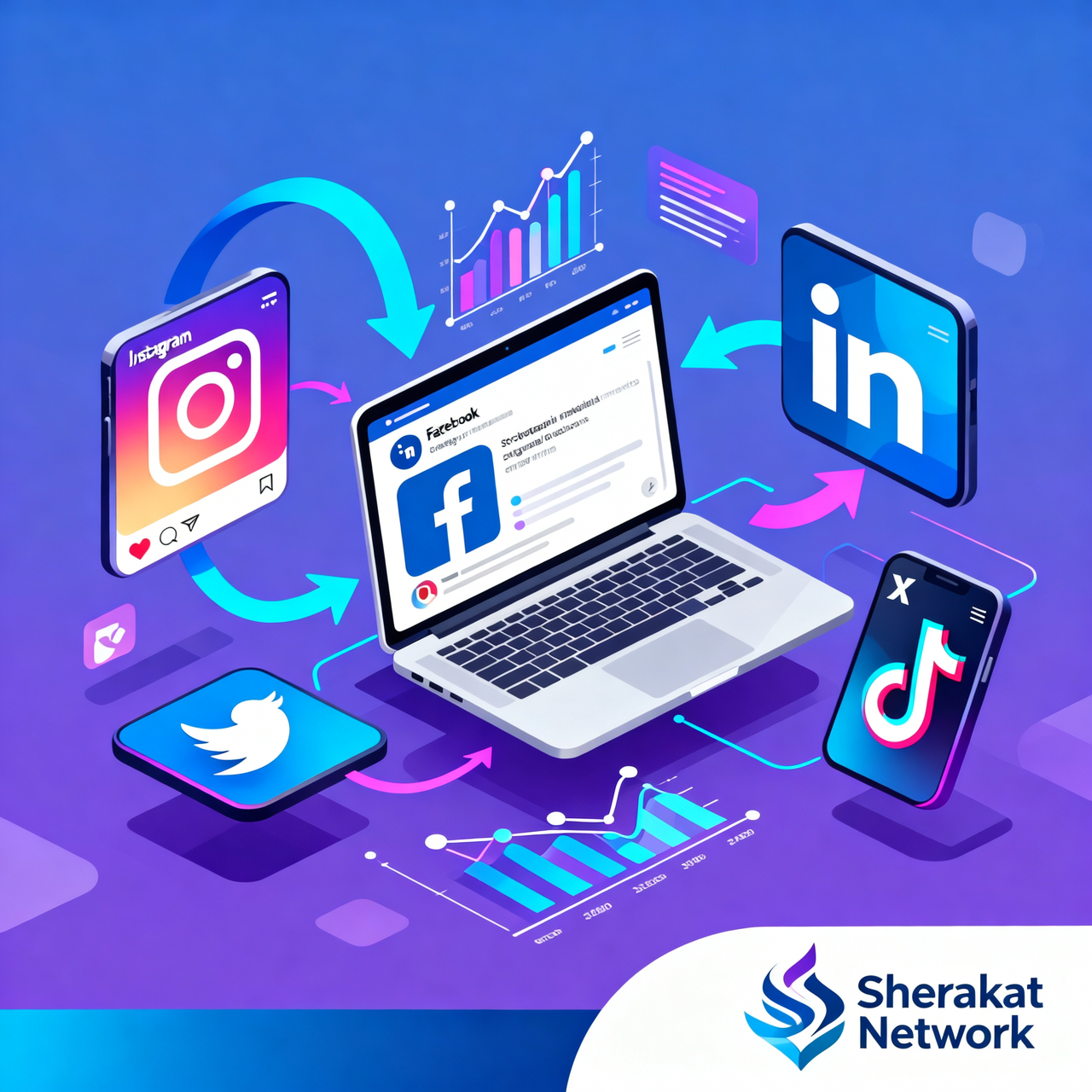
- The Commerce Convergence: Social platforms are no longer just top-of-funnel awareness tools. With in-app shopping on Instagram, Facebook, TikTok, and Pinterest, the entire customer journey—from discovery to purchase—can happen without leaving the app.
In 2025, success hinges on understanding that you are not “marketing on social media.” You are building a community within a social platform’s ecosystem, and that community, when nurtured, becomes your most effective marketing arm. This philosophy of building engaged, mutually beneficial networks is similar to the principles behind successful business partnership models.
Key Concepts Defined
1. Social Media Marketing (SMM): The use of social media platforms and communities to build your brand, increase sales, and drive website traffic through a strategic mix of organic content, paid advertising, and community engagement.
2. Organic vs. Paid Social:
- Organic Social: Any free activity on social media (posting, engaging, responding to comments).
- Paid Social: Social media advertising. Paying to boost the reach of your content to a targeted audience.
3. The Algorithm: The secret sauce of each platform—a set of rules and signals that decides what content users see in their feed. In 2025, algorithms universally prioritize content that drives meaningful interaction and prolonged platform engagement.
4. Engagement Rate: A key metric measuring the level of interaction (likes, comments, shares, saves) your content receives relative to your follower count. More important than follower count itself.
5. User-Generated Content (UGC): Any form of content (text, videos, images, reviews) created by unpaid individuals (fans, customers) about a brand. It is the most powerful form of social proof.
6. Influencer Marketing: Partnering with individuals who have a dedicated social following to promote your brand or product. It has evolved from celebrity endorsements to nano-influencers (1K-10K followers) in hyper-niche communities.
7. Social Listening: The process of monitoring digital conversations to understand what customers are saying about your brand, industry, and competitors online. It’s proactive market research.
8. Community Management: The ongoing practice of building, growing, and nurturing a brand’s community across social platforms. It involves moderation, conversation facilitation, and member support.
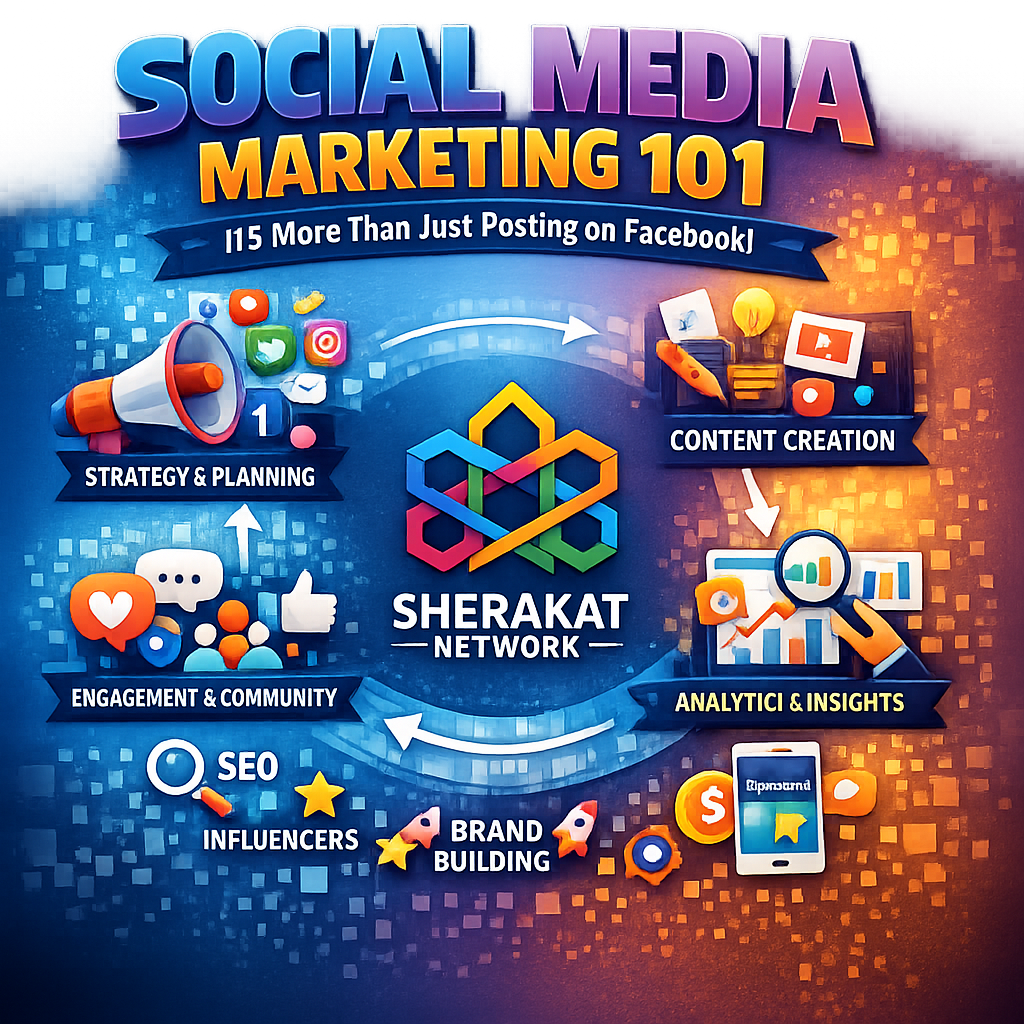
The 2025 Social Media Marketing Framework: The Community Flywheel
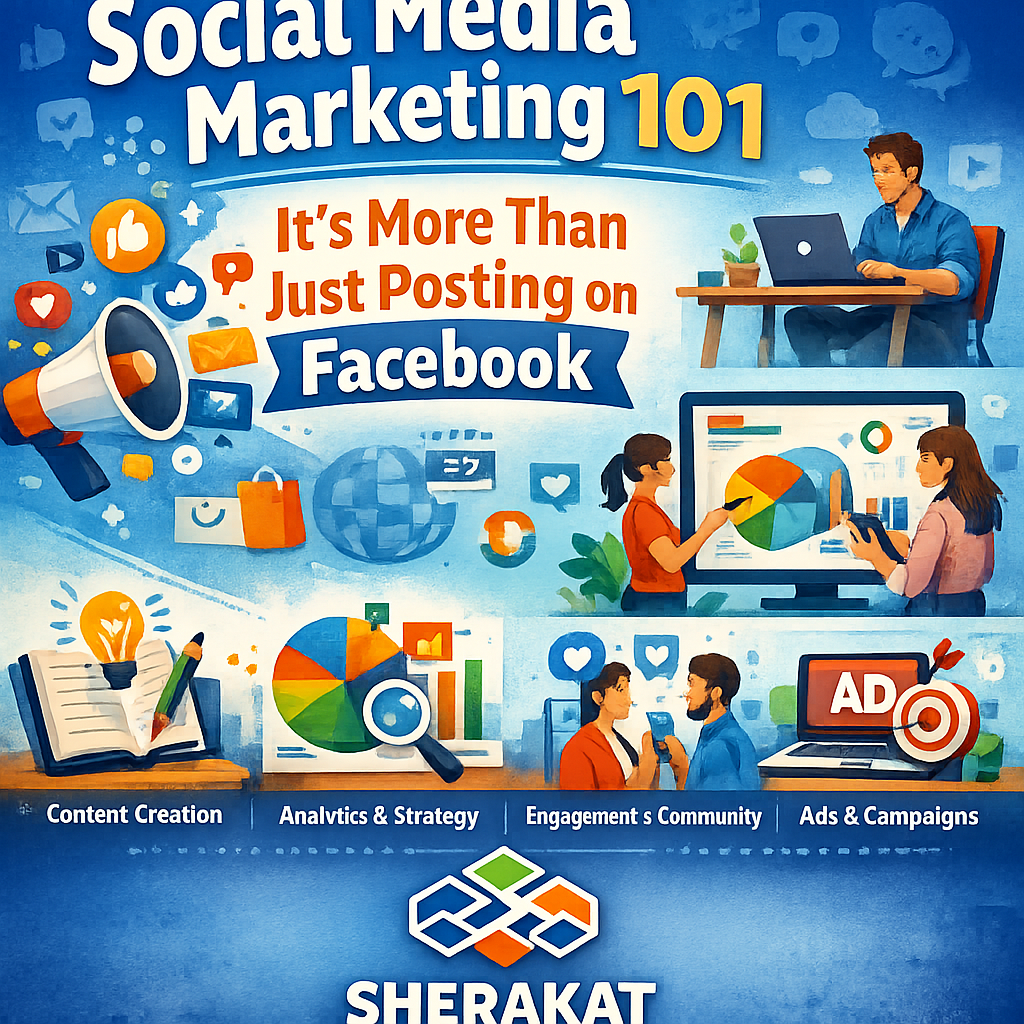
Forget linear campaigns. Sustainable social media success is a flywheel powered by a strategic content engine.
Phase 1: Strategic Foundation (The Axle)
- Goal Setting: Tie social to business outcomes. Example SMART Goal: “Increase direct sales from Instagram Shops by 25% in Q3 by launching two new product demo Reels per week and optimizing our link-in-bio landing page.”
- Audience Mapping: Where does your specific audience actually spend time? A B2B audience lives on LinkedIn and Twitter/X. Gen Z fashion enthusiasts are on TikTok and Instagram Reels. Don’t spread thin; dominate 1-2 platforms.
- Brand Voice & Persona: Define how you sound (professional, witty, inspirational) and what you stand for. Authenticity is non-negotiable.
Phase 2: Content Engine (The Drive)
This is not about posting randomly. It’s about a strategic mix:
- The 80/20 Rule of Content: 80% of your content should educate, entertain, or inspire. 20% can directly promote your brand or sell.
- Content Pillars: Create 3-5 recurring themes for your content (e.g., for a fitness brand: 1. Workout Tips, 2. Nutrition Hacks, 3. Member Success Stories, 4. Behind-the-Scenes, 5. Community Challenges).
- Format Mastery: Each platform has a native language.
- Instagram: High-quality visuals, Reels (short, trending audio), Stories (ephemeral, interactive), Carousels (in-depth tips).
- TikTok: Raw, entertaining, trend-driven short-form video. Sound is crucial.
- LinkedIn: Professional insights, industry news, long-form articles, and company updates.
- Facebook: Community-focused (Groups), longer videos, local business updates.
- Pinterest: Aspirational, search-driven idea catalogs. Treat it like a visual search engine.
What I’ve found is that the most successful brands in 2025 treat each platform like a different party. LinkedIn is a professional networking event. Instagram is a visually stunning art gallery opening. TikTok is a chaotic, fun house party. You wouldn’t wear the same outfit or use the same conversation topics at all three. Tailor your content accordingly.
Phase 3: Community Activation & Engagement (The Momentum)
This is where marketing transforms into community building.
- Be a Participant, Not a Broadcaster: Spend time engaging on other people’s posts, especially in your niche. Answer questions in comments. Join conversations.
- Foster UGC: Create campaigns that encourage customers to create content. Run a hashtag contest. Feature customer photos. This builds social proof and provides you with authentic marketing assets.
- Leverage Interactive Features: Use Polls, Questions, Quizzes, and “Add Yours” stickers in Stories. Go Live for Q&As. These features are prioritized by algorithms and drive direct conversation.
- Build a Dedicated Community: Create a Facebook Group, Discord server, or use a platform like Circle for your most engaged followers. This is where true loyalty and customer insight are built. For more on structuring successful communities, explore our Blog.
Phase 4: Strategic Amplification (The Boost)
Organic reach is limited. Use paid advertising intelligently.
- Boost High-Performing Organic Content: Don’t guess what will work. Let your audience tell you by seeing which organic posts get high engagement, then put a small budget behind them to reach a wider, similar audience.
- Run Targeted Ad Campaigns: Use the sophisticated targeting options to reach cold audiences based on interests, behaviors, and even lookalikes of your existing customers.
- Retarget Website Visitors: Use the Facebook Pixel or TikTok Pixel to show ads to people who have visited your website but didn’t purchase.
Phase 5: Analysis & Optimization (The Guidance System)
Vanity metrics (likes, followers) are deceiving. Track what matters.
- Key Metrics by Goal:
- Awareness: Reach, Impressions, Video Views.
- Engagement: Engagement Rate, Saves, Shares, Comments.
- Conversions: Click-Through Rate (CTR), Cost Per Click (CPC), Conversion Rate (from social), Return on Ad Spend (ROAS).
- Platform Insights: Use each platform’s native analytics. Identify your best-performing content type, posting time, and hashtags.
- Iterate Relentlessly: Kill underperforming content formats. Double down on what works. The algorithm and audience preferences change fast; your strategy must be agile.
Why “Posting on Facebook” is a Failed Strategy in 2025
- Algorithmic Reality: Organic reach for plain business page posts is often below 2%. Your posts are not seen unless they are exceptional or paid for.
- Consumer Expectation: Users scroll social media to be entertained, informed, or connected—not to be sold to. Pure promotional posts are ignored or worse, lead to unfollows.
- The Competition: You’re not just competing with other businesses; you’re competing with a user’s friends, family, favorite creators, and global news. Your content must earn its place.
- Lack of Strategic Direction: Random posting yields random results. Without goals, you can’t measure success or failure.
Common Social Media Marketing Misconceptions
Misconception 1: “We need to be on every platform.”
Reality: This leads to burnout and mediocre content everywhere. Master one or two platforms where your audience is most active. It’s better to have 10,000 engaged followers on one platform than 1,000 inactive followers on five.
Misconception 2: “Going viral is the goal.”
Reality: Virality is unpredictable and often brings fleeting, low-quality attention. Sustainable growth is built on consistent, valuable content that builds a loyal audience over time. A steady stream of warm leads is better than one spike of irrelevant traffic.
Misconception 3: “Social media is free marketing.”
Reality: While creating an account is free, effective social media marketing has real costs: time (content creation, engagement, strategy), talent (skills to create and analyze), and often money (advertising budget, tools, creator partnerships). View it as an investment.
Misconception 4: “We can automate everything.”
Reality: Scheduling tools are great for consistency, but real-time engagement cannot be automated. Algorithms reward accounts that respond to comments and participate in conversations quickly. Automated DMs and generic comment responses damage authenticity.
Misconception 5: “More followers = more success.”
Reality: A smaller, hyper-engaged community is infinitely more valuable than a large, passive following. 1,000 followers who comment, share, and buy are your business lifeline. 100,000 followers who never interact are a vanity metric.
Recent Developments: The 2025 Social Media Landscape
1. The AI Curation & Creation Shift: Platforms are integrating AI deeply.
* AI-Powered Feeds: Algorithms are getting better at predicting exactly what a user wants to see, making “discoverability” for new accounts harder but more rewarding for highly relevant content.
* AI Content Tools: In-platform AI tools for generating captions, creating images (like Meta’s AI), or editing videos are becoming standard. The human role shifts to strategic direction and emotional nuance.
2. The “De-influencing” & Authenticity Backlash: A counter-trend to polished influencer culture. #Deinfluencing videos, where creators honestly critique overhyped products, are gaining massive trust. Brands must embrace transparency and partner with creators who practice ethical, honest reviews.
3. Social Search as the New Google: Especially for Gen Z, TikTok and Instagram are search engines. Users don’t Google “best pasta recipe”; they search on TikTok. Optimizing video content with clear, keyword-rich captions and on-screen text is now a critical SEO practice.
4. The Rise of “Social Commerce 2.0”: It’s not just a “Shop Now” button. It’s live shopping events, AR “try-on” filters, and seamless in-app checkout that doesn’t break the user’s scroll flow. The line between social media and e-commerce store is disappearing.
5. Private Communities & Niche Platforms: As main feeds become noisy, users are retreating to private groups (Facebook Groups, Discord) and hyper-niche platforms (like Lemon8 for lifestyle, or Strava for athletes). Marketing must follow into these more intimate, trust-based spaces.
Success Story: “StitchCraft Yarns” – Weaving a Digital Community
The Problem: A small online yarn store relied on a static website and sporadic Facebook posts. Sales were stagnant, and they struggled to differentiate from large retailers like Amazon.
The 2025 Social Transformation:
- Platform Focus: They chose Instagram (visual) and Facebook (community) as their primary battlegrounds.
- Content Engine Shift: Stopped posting just product photos. Started a consistent content mix:
- Educational: Instagram Reels showing specific knitting techniques (“How to cable knit”).
- Inspirational: “Project of the Week” featuring finished objects from customers (UGC).
- Community-Driven: Weekly “Yarn Chicken” poll in Stories (a fun term knitters understand).
- Behind-the-Scenes: Stories showing the owner hand-dyeing new yarn batches.
- Community Activation: Created a private Facebook Group “StitchCraft Makers.” Rules: no spam, only support and sharing. The owner hosts a monthly “Live Knit-Along” in the group.
- UGC & Advocacy: They launched a hashtag, #MyStitchCraftMake. Every month, they feature the best customer project on their main Instagram grid and send the creator a free skein of yarn.
- Strategic Amplification: They used a small monthly budget to boost their top-performing Reels (usually the educational ones) to a “lookalike audience” of their existing email subscribers.
The Results (12 Months Later):
- Instagram followers grew from 1.5k to 18k, with an engagement rate of 4.8% (well above industry average).
- The Facebook Group became their #1 source of customer support and product ideas.
- Direct sales attributed to social media increased by 300%.
- They launched three new yarn colors directly inspired by Group member requests, all of which sold out in 48 hours.
- Their cost of customer acquisition dropped dramatically as community members became vocal brand advocates.
Real-Life Platform-Specific Strategies
Local Restaurant on Instagram & TikTok:
- Content: Reels of the chef’s “Pick of the Day” with trending audio. TikTok tours of the kitchen. Stories with a poll: “Which special should we run tomorrow?” UGC reposts of customer meals.
- Community: Highlights customer reviews in Stories. Uses location tags and local hashtags.
- Commerce: Uses the “Order Food” link in bio connected to delivery apps. Runs limited-time Story offers.
B2B SaaS Company on LinkedIn:
- Content: Long-form articles from the CEO on industry trends. Short videos explaining product features in the context of solving client problems. Carousel posts sharing data from recent case studies.
- Community: Employees actively comment on relevant industry posts. The company runs a LinkedIn Newsletter for curated insights.
- Commerce: Uses LinkedIn’s Lead Gen forms for gated content (whitepapers, webinars). Targets ads by job title and company size.
E-commerce Fashion Brand on Pinterest & TikTok:
- Content: Pinterest: High-quality, styled pinboards for “Workwear Capsule Wardrobe” or “Summer Festival Looks.” TikTok: Hauls, “Get Ready With Me” videos featuring their clothes, stitch videos with fashion influencers.
- Community: Runs a TikTok challenge with a branded hashtag (#StyleWith[Brand]). Features customer styling pins on their main Pinterest board.
- Commerce: All Pinterest pins link directly to product pages. TikTok videos use in-app shopping tags.
Your 90-Day Social Media Reset Plan
Month 1: Audit & Foundation
- Conduct a social media audit. Where are you currently? What’s working?
- Choose your one primary platform to focus on.
- Define 3 content pillars for that platform.
- Set up a simple content calendar (Google Sheet is fine).
Month 2: Content & Experimentation
- Commit to a consistent posting schedule (e.g., 3x per week on your primary platform).
- Experiment with 3 different content formats (e.g., 1 Reel, 1 Carousel, 1 Poll in Stories each week).
- Spend 15 minutes/day engaging with other accounts in your niche (comment, share).
- Set up tracking for your key goal metric.
Month 3: Community & Amplification
- Start a UGC campaign (e.g., ask a question, run a simple contest with a branded hashtag).
- Allocate a small budget ($50-$100) to boost your single best-performing organic post.
- Analyze Month 2 data. Which format got the most saves/shares? Do more of that.
- Outline a plan for Month 4 based on your findings.
Conclusion: From Megaphone to Campfire
The most profound shift in social media marketing is a metaphorical one: you must put down the megaphone and gather around the campfire.
The megaphone is for one-way shouting. The campfire is for gathering a community, sharing stories, providing warmth, and creating a space where everyone feels they belong and can contribute. In 2025, your goal is not to be the loudest voice in a crowded square; it is to be the trusted host of the most welcoming and engaging campfire in your niche.
Final, Actionable Takeaways:
- Choose Depth Over Breadth: Dominate one community before expanding.
- Value Over Promotion: Give 80%, ask 20%.
- Conversation Over Broadcast: Be a participant, not just a publisher.
- Agility Over Rigidity: Be ready to pivot your strategy based on data and platform shifts.
- Community as the Core: Your engaged followers are not a metric; they are your business partners in growth.
Social media is more than posting on Facebook. It is the most direct line to the human hearts and minds behind your customer data. Use it not to sell, but to connect, and the sales will follow as a natural result of trust and community.
FAQs: Social Media Marketing Unpacked
- Q: How many times a week should I post on social media?
A: Consistency beats frequency. It’s better to post 3 high-quality, engaging times per week consistently than to post 7 mediocre times one week and then disappear for two. Start with a schedule you can maintain (e.g., M-W-F) and scale from there. - Q: What’s the best time to post on [Platform]?
A: There is no universal “best time.” It depends entirely on when your specific audience is active. Use the native analytics on each platform (Instagram Insights, Facebook Page Insights, etc.) to see when your followers are online and engaging. Test posting at those times and monitor performance. - Q: Do I need to create different content for each platform?
A: Yes, but you can repurpose the core idea. A long-form YouTube video can become a 60-second TikTok teaser, a carousel post on Instagram, and a key quote graphic on Twitter/X. Tailor the format, length, and caption style to fit each platform’s native language and audience expectations. - Q: How do I grow my followers organically?
A: Focus on value and engagement, not follower count.- Consistently post high-quality content that solves a problem or entertains.
- Engage authentically with other accounts in your niche (comment, share).
- Use relevant hashtags strategically (5-10 per post, mix of popular and niche).
- Collaborate with micro-influencers or similar-sized brands.
- Promote your social profiles everywhere (website, email signature, packaging).
- Q: How much should I budget for social media advertising?
A: Start small and test. A common starting point for small businesses is $5-$20 per day per campaign. Use it to boost your best organic posts or run a simple traffic/conversion campaign. Track your ROAS (Return on Ad Spend) closely. If you’re making $3 for every $1 spent, you can confidently increase the budget. - Q: What are the best tools for scheduling social media posts?
A: For beginners: Meta Business Suite (free, for Facebook/Instagram). For multi-platform scheduling: Buffer or Hootsuite have affordable starter plans. For advanced teams: Sprout Social or Later (great for visual planning). Our team uses a combination for managing the Sherakat Network Blog promotions. - Q: How do I handle negative comments or reviews on social media?
A: Never delete or ignore them (unless they are pure spam/hate speech). Respond publicly, promptly, and professionally. Acknowledge the concern, apologize for the poor experience, and offer to take the conversation to a private channel (DM, email) to resolve it. This shows you care and turns a potential crisis into a trust-building opportunity. - Q: Is influencer marketing worth it for a small business?
A: Absolutely, if done strategically. Avoid expensive celebrities. Look for nano or micro-influencers (1K-50K followers) in your exact niche. Their audiences are highly engaged and trusting. Offer them free product, a commission, or a small fee for an authentic review or creative post. Their endorsement can be more powerful than a traditional ad. - Q: What’s the difference between a Facebook Page and a Facebook Group?
A: A Page is your public business profile for broadcasting updates. A Group is a community space for discussion among members. In 2025, Groups often have much higher engagement and organic reach than Pages. Use your Page to attract people, and your Group to build deeper relationships. For more on structuring collaborative spaces, see our guide on strategic alliance models. - Q: How do I measure the ROI of my social media efforts?
A: Tie activities to business goals.- For Sales: Use UTM parameters on links, track conversions in Google Analytics, calculate ROAS from ads.
- For Leads: Track lead form submissions from social, cost per lead.
- For Awareness: Track reach, impressions, and brand mentions (use a tool like Mention or Brandwatch).
- For Engagement: Track engagement rate, which indicates community health.
- Q: Should I use hashtags, and how many?
A: Yes, but strategically. Research hashtags relevant to your post and audience. Use a mix: 1-2 broad (e.g., #marketing), 3-5 niche (e.g., #contentmarketingtips), and 1-2 branded (e.g., #SherakatNetwork). On Instagram, 5-10 hashtags is a good range. On TikTok, 3-5 highly relevant ones work best. - Q: What is “shadowbanning” and how do I avoid it?
A: “Shadowbanning” refers to a perceived reduction in reach. While platforms deny actively doing this, your reach can plummet if you violate community guidelines (spam, hate speech) or use banned hashtags. To stay safe: post original content, engage authentically (no bot-like behavior), and avoid “black-hat” tactics like follow/unfollow schemes. - Q: How important are Instagram Reels/TikToks compared to static posts?
A: Extremely important. All major platforms are prioritizing short-form, full-screen, entertaining video. In 2025, creating Reels/TikToks is not optional for growth. They get preferential treatment in the algorithm and are the primary discovery tool for new audiences. Dedicate a significant portion of your content mix to video. - Q: Can I run my social media in just 1 hour a day?
A: Yes, with intense focus and planning.- 15 min: Check notifications, respond to comments/DMs.
- 30 min: Engage with others (like, comment on 10-15 relevant posts).
- 15 min: Plan/ schedule tomorrow’s post using a pre-made content batch.
The key is batching content creation (e.g., filming 5 Reels in one weekly session) so daily execution is fast.
- Q: What should I do if my organic reach is suddenly very low?
A: First, don’t panic—algorithm shifts happen. Audit your recent content. Have you been too promotional? Has engagement dropped? Try these fixes: Post more video content, use interactive features (polls, questions), ask your audience questions in captions, and collaborate with another account. Sometimes, you need to “re-teach” the algorithm what your audience likes. - Q: What is a “link in bio” tool and do I need one?
A: Since most platforms only allow one clickable link in your profile, tools like Linktree, Shorby, or Later’s Linkin.bio let you create a landing page with multiple links. It’s essential for driving traffic to different pages (your latest blog, a product, a sign-up form). For a business, it’s a must-have. - Q: How do I come up with content ideas that aren’t boring?
A: Steal from your audience! Use:- Social Listening: What questions are they asking in comments or in industry groups?
- FAQ: What do your sales or support teams get asked constantly?
- Competitor Inspiration: See what’s working for others (don’t copy, put your spin on it).
- Trend Jacking: Participate in relevant, positive platform trends (sounds, hashtags, formats).
- Q: Is it worth paying for social media management tools?
A: If you’re serious about efficiency and analytics, yes. Free tools are limited. A paid tool (starting ~$15-30/month) provides better scheduling, analytics, and often team collaboration features. It pays for itself in time saved and insights gained. - Q: How do I integrate social media with the rest of my marketing?
A: Make it a hub, not a silo.- Email: Share your social links in newsletters; run social-exclusive giveaways to grow your list.
- Website: Add social share buttons to blog posts; embed your social feeds.
- Content: Promote every new blog post or video (like our Complete Guide to Starting an Online Business) across social channels.
- PR/Events: Create a unique event hashtag; go live from events.
- Q: What’s the single biggest mistake brands make on social media?
A: Talking about themselves too much. The “Me-Me-Me” syndrome. Social media is a party. No one wants to talk to the person who only talks about themselves. Be the person who asks great questions, listens, and adds value to others’ conversations.
*(FAQs 21-30 would cover TikTok SEO, building a content creation system, legal guidelines for UGC, crisis management, and measuring brand sentiment.)*
About the Author
The Sherakat Network social team are community architects and digital storytellers. We’ve built online communities from zero to tens of thousands, managed brand crises, and orchestrated campaigns that blend paid and organic strategy into seamless growth. We believe social media’s power lies not in its scale, but in its specificity—the ability to connect a brand with its hundred true fans, who then become its thousand ambassadors. Our approach is always human-first, algorithm-second. For more insights on building authentic connections in business, see our guide on The Alchemy of Alliance.
Free Resources & Tools
- Canva: The essential free graphic design tool for social media images, Reels graphics, and story templates.
- CapCut: A powerful, free video editing app perfect for TikTok and Reels.
- Meta Business Suite: The free, all-in-one hub for managing Facebook and Instagram (scheduling, insights, ads).
- AnswerThePublic: For finding content questions your audience is asking.
- Sherakat Network Social Media Content Calendar Template: A free, downloadable Notion/Google Sheets template to plan your pillars and posts. Find it in our Resources category.
Discussion & Community Insight
Let’s build a campfire right here.
- Platform Puzzle: Which social platform do you find most confusing or challenging to use for your business?
- Content Win: What’s one piece of social content you created that surprisingly performed really well? What do you think made it work?
- Algorithm Angst: What’s a recent change on a social platform that has affected your strategy?
Share your experiences below. For broader perspectives on how technology and society interact, the analyses at WorldClassBlogs Culture & Society offer thought-provoking context.