


Introduction – Why This Matters
In my experience, there’s a moment when a successful local or national business realizes that its potential audience extends far beyond its borders. They’re getting occasional traffic from other countries. They’re receiving inquiries in different languages. They know there’s demand for their products or services globally, but they’re not sure how to tap into it.
What I’ve found is that international SEO is often viewed as overwhelmingly complex by beginners. Hreflang tags, ccTLDs, geotargeting, cultural adaptation—it sounds like a lot. And yes, it’s more complex than SEO for a single market. But the opportunity is enormous. Consider these facts:
- Over 50% of Google’s traffic comes from outside the United States.
- 60% of consumers rarely or never buy from English-only websites.
- 75% of users prefer to buy products in their native language.
- The global middle class is expanding rapidly, with most growth in non-English speaking markets.
If you’re only optimizing for one language or one country, you’re leaving money on the table. International SEO is how you claim that opportunity.
But international SEO isn’t just about translating your content. It’s about understanding that different markets have different search behaviors, different cultural contexts, and different competitive landscapes. It’s about ensuring that search engines understand which version of your site to show to which users. And it’s about providing a user experience that feels local, even to someone on the other side of the world.
In this guide, we’re going to cover everything you need to know about international SEO in 2026. We’ll start with the strategic decisions—which markets to target and how to structure your site. Then we’ll dive into the technical implementation, including hreflang tags, URL structures, and geotargeting. Finally, we’ll cover content adaptation, local link building, and measurement. By the end, you’ll have a complete roadmap for taking your SEO global.
Background / Context
To understand international SEO, we need to look at how search engines handle multi-regional and multilingual content. In the early days of the web, serving international audiences was simple: you either had one site for everyone, or you created separate sites for different countries (often with ccTLDs like .fr for France, .de for Germany).
As the web grew more global, so did the complexity. Google introduced tools to help site owners indicate which country or language a page was intended for. The hreflang attribute was introduced in 2011 to help with language and regional targeting. Google Search Console added international targeting reports. And Google’s algorithms became better at understanding the geographic intent of content.
Today, in 2026, international SEO is a sophisticated discipline. Google’s algorithms can often detect language without explicit signals, but providing clear signals still helps. Search is increasingly personalized based on user location and language preferences. And with the rise of voice search and mobile, local intent is more important than ever—even in global markets.
International SEO intersects with many of the principles you’ve already learned:
- Keyword research becomes multi-lingual keyword research.
- Technical SEO involves hreflang implementation and URL structure decisions.
- Content writing becomes content adaptation and localization.
- Link building becomes local link building in each target market.
- E-E-A-T must be demonstrated in each market, often requiring local expertise signals.
Key Concepts Defined
Before we dive into the how-to, let’s establish the key vocabulary of international SEO.
- International SEO: The practice of optimizing your website to attract organic traffic from different countries and in different languages.
- Geotargeting: The practice of showing different content or versions of your site to users based on their geographic location.
- Hreflang Attribute: An HTML attribute (
rel="alternate" hreflang="x") that tells search engines which language and regional version of a page to show to users based on their language and location. This is the most critical technical element of international SEO. - ccTLD (Country Code Top-Level Domain) : A domain extension specific to a country, such as
.frfor France..deGermany,.jpor Japan. ccTLDs send strong geotargeting signals to search engines. - gTLD (Generic Top-Level Domain): Domain extensions like
.com,.org,.net. These are not country-specific and require additional signals (like hreflang) for geotargeting. - Subdomain with gTLD: Using a subdomain for different countries, such as
fr.example.comfor France. This is a common approach. - Subdirectory with gTLD: Using subdirectories for different countries, such as
example.com/fr/for French content. This consolidates domain authority. - Language Tagging: Using HTML language attributes (like
lang="fr") to indicate the language of a page. This helps browsers and assistive technologies, but is less important for SEO than hreflang. - x-default Hreflang: A special hreflang value that specifies a default page for users whose language and region don’t match any specific version.
- Canonical Tags: Used in international SEO to indicate the preferred version of a page when duplicate content exists across different language versions.
- Localized Content: Content that has been adapted for a specific market, not just translated. This includes cultural references, units of measurement, currency, and local examples.
- Local Search Engines: While Google dominates globally, other search engines are important in certain markets (Baidu in China, Yandex in Russia, Naver in South Korea, Seznam in the Czech Republic).
- Geotargeting in Google Search Console: A setting that allows you to tell Google which country your site (or a specific version) is intended for.
- International Keyword Research: The process of finding keywords that people use in different countries and languages, accounting for translation, local terminology, and search behavior differences.
- Cultural Adaptation: Modifying content to be appropriate and effective in a specific cultural context. This goes beyond translation to include images, colors, examples, and cultural references.
How It Works (Step-by-Step Breakdown)
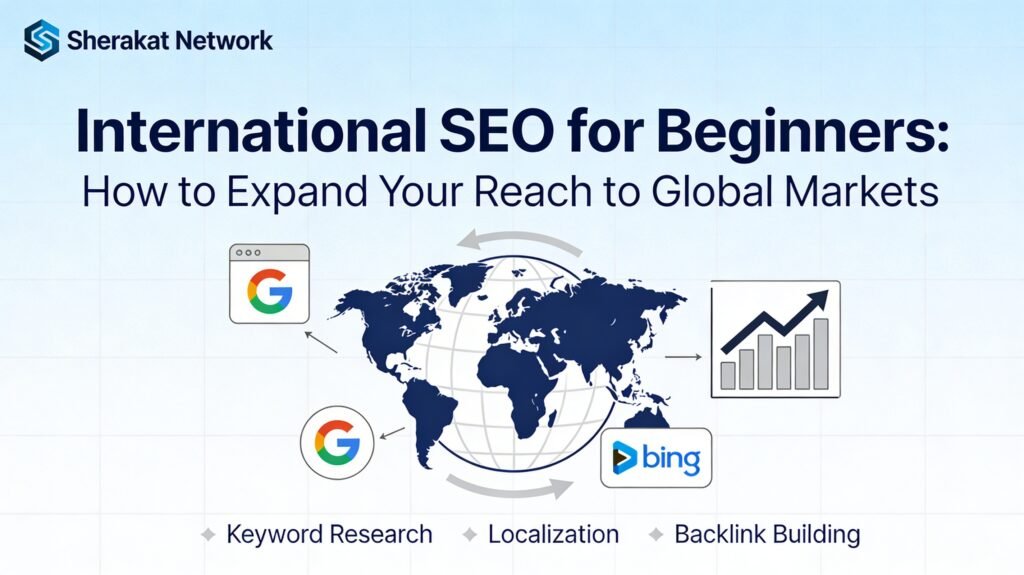
International SEO requires a systematic approach to strategy, structure, and implementation. Here’s a step-by-step breakdown.
Step 1: Define Your International Strategy
Before you implement any technical changes, you need a clear strategy. Rushing into international expansion without planning leads to wasted effort and poor results.
Key strategic questions:
- Which markets should you target? Look at your analytics. Which countries are already sending you traffic? Where are your inquiries coming from? Consider market size, competition, and your ability to serve the market.
- Which languages should you support? A country may have multiple languages (e.g., Canada has English and French). Decide which you’ll support.
- What’s your business model? Can you actually serve customers in these markets? Do you need local payment processing, shipping, and customer support?
- What’s your competition? Research the competitive landscape in each target market. A market that seems attractive may be dominated by strong local competitors.
- What’s your budget? International SEO requires investment in translation, localization, technical implementation, and ongoing content creation.
Prioritization: Start with 1-3 high-priority markets. Get them right before expanding further.
Step 2: Choose Your URL Structure
Your URL structure sends signals to search engines about your geographic targeting. There are three main options, each with pros and cons.
Option 1: Country Code Top-Level Domains (ccTLDs)
- Example:
example.frfor France,example.defor Germany - Pros: Strongest geotargeting signal. Users trust country-specific domains. Clear separation of sites.
- Cons: Expensive (multiple domains to register and maintain). Dilutes domain authority across multiple domains. More complex to manage.
- Best for: Large companies with significant investment in each market, or when local presence is critical.
Option 2: Subdomains with gTLD
- Example:
fr.example.comfor France,de.example.comfor Germany - Pros: Easier to set up than ccTLDs. Clear separation of content. Can be hosted in different locations.
- Cons: Search engines may treat subdomains as separate entities, diluting authority. Less strong geotargeting signal than ccTLDs.
- Best for: Companies wanting clear separation without the cost of multiple domains.
Option 3: Subdirectories with gTLD
- Example:
example.com/fr/for French content,example.com/de/for German content - Pros: Consolidates domain authority on a single domain. Easiest to manage. Strong geotargeting possible with hreflang.
- Cons: Less strong geotargeting signal than ccTLDs. May not feel as “local” to users.
- Best for: Most companies, especially those starting international expansion. Google’s recommended approach for most situations.
Option 4: URL Parameters (Not Recommended)
- Example:
example.com?lang=fr - Pros: None significant.
- Cons: Parameters can cause technical issues, dilute authority, and provide poor user experience.
- Best for: Avoid this approach.
My recommendation for most beginners: Start with subdirectories (example.com/fr/, example.com/es/). It’s the easiest to implement, consolidates authority, and works well with hreflang.
Step 3: Conduct International Keyword Research
Keyword research for international markets is more complex than domestic research. It’s not just translation—it’s understanding how people actually search in different languages and cultures.
How to approach international keyword research:
- Don’t just translate: Direct translation often misses the mark. People in different countries may use different terms for the same thing. For example, “apartment” in US English is “flat” in UK English.
- Use local keyword tools: Google Keyword Planner allows you to target specific countries. Use tools like Ahrefs, SEMrush, or local equivalents with country-specific databases.
- Search in the local language: Go to Google in your target country (e.g., google.fr) and search for your core terms. Look at autocomplete suggestions and related searches.
- Analyze local competitors: See what keywords your competitors in each market are targeting.
- Consider search volume differences: A term that’s popular in one country may have little volume in another. Adjust your priorities accordingly.
- Think about intent: Search intent may differ across markets. The same term might be informational in one country and commercial in another.
Example: For a site selling running shoes, you’d need to research:
- English for US, UK, Australia, Canada (each with variations)
- Spanish for Spain and Latin American countries (with regional variations)
- French for France, Canada, Belgium, Switzerland
- And so on for each target market
Step 4: Implement Hreflang Tags
Hreflang tags are the most critical technical element of international SEO. They tell search engines which language and regional version of a page to show to users based on their language and location.
How hreflang works:
You add tags to each page indicating all the language/region versions of that page. For example, if you have an English page for the US and a Spanish page for Spain, each page would include tags pointing to both versions.
Hreflang tag syntax:
html
<link rel="alternate" hreflang="en-us" href="https://example.com/us/" />
<link rel="alternate" hreflang="en-gb" href="https://example.com/uk/" />
<link rel="alternate" hreflang="es-es" href="https://example.com/es/" />
<link rel="alternate" hreflang="x-default" href="https://example.com/" />
Key points:
- Language and region codes: Use ISO language codes (en, es, fr) and optional region codes (us, gb, es). Format:
en-us,en-gb,es-es. - x-default: Use this for a default page when no specific language/region matches. Often the homepage or a language selector.
- Bidirectional: Each page must link to all other versions, including itself. If you have 3 language versions, each page must have 3 hreflang tags (one for each version).
- Consistency: If page A links to page B, page B must link back to page A. Inconsistent implementation causes errors.
- Implementation methods: You can implement hreflang in HTML
<head>, HTTP headers (for non-HTML files), or XML sitemaps. Sitemap implementation is often easiest for large sites.
Common hreflang mistakes to avoid:
- Missing return links (page A links to B but B doesn’t link to A)
- Incorrect language or region codes
- Using hreflang without actually having content in that language
- Conflicting signals (hreflang vs. canonical tags)
- Not including all language versions
Step 5: Set Up Geotargeting in Google Search Console
For each version of your site (or each subdirectory), you can tell Google which country you’re targeting.
How to set up geotargeting:
- In Google Search Console, select the property for the site version.
- Go to Settings → International Targeting → Country.
- Select the target country.
- Note: This is only available for ccTLDs and for subdomains/subdirectories with gTLDs that have been verified separately.
Important: Geotargeting in Search Console is a signal, not a directive. Google may still show your site in other countries if it’s relevant.
Step 6: Create Localized Content, Not Just Translated
Translation is the minimum. Localization is what wins hearts, minds, and rankings in international markets.
What localization includes:
- Language: Use native speakers for translation. Avoid machine translation for important content (though AI tools have improved, human review is essential).
- Cultural references: Adapt examples, metaphors, and cultural references to be appropriate for each market. What works in the US may fall flat in Japan.
- Units of measurement: Use local units (metric vs. imperial, currency, date formats, time zones).
- Images and visuals: Consider whether your images are culturally appropriate. A image that’s fine in one culture may be offensive in another.
- Colors: Color meanings vary across cultures. For example, white symbolizes purity in Western cultures but mourning in some Eastern cultures.
- Local regulations and legal requirements: Ensure your content complies with local laws (privacy policies, terms of service, disclaimers).
- Local examples: Use case studies and examples from the local market.
Demonstrating local E-E-A-T:
- Use local authors or translators with bylines showing local expertise.
- Include local credentials and certifications where relevant.
- Reference local sources and authorities.
- Show understanding of local context and issues.
Step 7: Adapt Your On-Page SEO for Each Market
Each language version needs its own on-page optimization, building on the on-page SEO checklist you’ve already mastered.
Elements to localize:
- Title tags: Include local keywords, not just translated keywords.
- Meta descriptions: Write compelling descriptions in the local language.
- Headings (H1, H2, etc.): Structure content with local keywords.
- URL slugs: Use local language in URLs where appropriate (e.g.,
example.com/fr/chaussures-de-coursevs.example.com/fr/running-shoes). - Alt text: Describe images in the local language.
- Internal links: Link to other local content within the same language version.
Step 8: Build Local Links
Link building is important for all SEO, but for international SEO, you need links from each target market. A link from a French site is much more valuable for ranking in France than a link from a US site.
Local link building strategies:
- Local outreach: Reach out to bloggers, journalists, and influencers in each target market.
- Local PR: Engage with local media. This may require working with local PR firms.
- Local partnerships: Partner with complementary businesses in each market.
- Local directories: Get listed in reputable local business directories.
- Local content marketing: Create content specifically relevant to each market that will attract local links.
- Social media: Build a local presence on social platforms popular in each market.
Cultural considerations: Link building approaches that work in one country may not work in another. Research local norms and adapt your outreach accordingly.
Step 9: Optimize for Local Search Engines
While Google dominates globally, other search engines are important in specific markets.
Major non-Google search engines:
- Baidu (China): The dominant search engine in China. Requires different optimization approaches, including hosting in China and complying with local regulations.
- Yandex (Russia): Popular in Russia and neighboring countries. Has its own webmaster tools and ranking factors.
- Naver (South Korea): South Korea’s leading search engine. Has a unique search environment.
- Seznam (Czech Republic): Important in the Czech market.
- DuckDuckGo: Growing globally with privacy-focused users.
For each target market, research:
- Which search engines are popular?
- Do they have specific optimization requirements?
- Do you need to submit to their webmaster tools?
Step 10: Handle Duplicate Content Across Language Versions
Duplicate content concerns often arise in international SEO, especially when content is similar across languages. However, content in different languages is not considered duplicate by search engines. Google understands that the same content in different languages serves different audiences.
That said, be careful about:
- Same language, different countries: Content for the US and UK in English may be very similar. Use hreflang to indicate they’re intended for different audiences.
- Machine-translated content: Poor machine translation can result in unnatural text that may be considered low quality, not duplicate.
- Near-identical content: If your French and Canadian French content are identical except for currency, use hreflang to differentiate.
Step 11: Optimize Site Speed for International Users
Site speed is critical everywhere, but international users may face additional latency. A user in Australia accessing a server in the US will experience slower load times.
International site speed strategies:
- Use a Content Delivery Network (CDN) : CDNs distribute your content across servers worldwide, serving users from the closest location.
- Consider local hosting: For large markets, consider hosting locally or using local servers.
- Optimize images and code: The technical SEO principles still apply.
- Test from different locations: Use tools like GTmetrix or Pingdom to test load times from various global locations.
Step 12: Create a Language Selector
Make it easy for users to choose their preferred language and region. A clear language selector improves user experience and can help with hreflang implementation.
Language selector best practices:
- Make it visible: Don’t hide it. Common locations include header, footer, or a dedicated page.
- Use country flags carefully: Flags represent countries, not languages. Using the French flag for French content may confuse users in Switzerland or Canada who speak French.
- Use language names in their native script: “Français”, not “French”, for French speakers.
- Remember user preference: Once a user selects a language, remember it for future visits (using cookies or user accounts).
- Include an “x-default” option: A neutral page or language selector can serve as the x-default.
Step 13: Monitor International Performance
Use the measurement techniques you’ve already learned, segmented by country and language.
Key metrics to track:
- Traffic by country: In Google Analytics, go to Audience → Geo → Location to see traffic by country.
- Traffic by language: Segment users by browser language settings.
- Rankings in each market: Track rankings for target keywords in each country (may require country-specific rank tracking).
- Conversions by country: Are users from different countries converting at different rates?
- Hreflang errors: In Google Search Console, check the International Targeting report for hreflang issues.
- Crawl stats by country: Ensure Google can crawl your international versions.
Step 14: Iterate and Expand
International SEO is an ongoing process. Start with your highest-priority markets, get them right, then expand.
After launching new markets:
- Monitor performance closely.
- Gather feedback from local users.
- Refine your content and approach.
- Consider adding more languages or regions.
- Keep up with local search trends and algorithm updates.
Why It’s Important
International SEO isn’t just for large corporations. Any business with global potential can benefit.
- Access to New Markets: The global middle class is growing, especially in non-English speaking countries. International SEO opens doors to these markets.
- Diversified Traffic: Relying on a single market makes you vulnerable to economic downturns, algorithm changes, or increased competition in that market. International traffic diversifies your risk.
- Competitive Advantage: Many businesses, especially smaller ones, avoid international expansion because it seems complex. Doing it well gives you a significant advantage.
- Brand Building: A global presence builds brand authority and recognition, even in markets you’re not actively targeting.
- Economies of Scale: Content created for one market can often be adapted for others, spreading your content investment across multiple audiences.
- Seasonal Balance: Different markets have different seasons and buying cycles. International presence can smooth out seasonal fluctuations.
Sustainability in the Future
International SEO will continue to evolve. Here’s what the future looks like.
- AI-Powered Translation and Localization: AI translation tools will continue to improve, making it easier to create content for multiple languages. However, human oversight and cultural adaptation will remain essential for quality and trust.
- Voice Search in Multiple Languages: Voice search is growing globally, with different voice assistants popular in different markets. Optimizing for voice in multiple languages will become increasingly important.
- Visual Search Across Cultures: Visual search tools like Google Lens work across languages. Optimizing images for international audiences will matter more.
- Local Search Engines’ Evolution: Non-Google search engines will continue to evolve, with unique features and ranking factors in different markets.
- Hyperlocal Intent: Even within countries, search is becoming more local. Understanding regional variations within target countries will be important.
- E-E-A-T Across Borders: Demonstrating expertise and trustworthiness in multiple markets will require local signals—local links, local citations, local author credentials.
Common Misconceptions
Let’s clear up some myths that can derail your international SEO efforts.
- Myth: “Translation is enough for international SEO.”
- Reality: Translation is the minimum. True localization—adapting content to local culture, search behavior, and user expectations—is what drives results.
- Myth: “I can use the same keywords in all markets.”
- Reality: Keyword research must be done separately for each market. Direct translation often misses the mark, and search behavior varies significantly across cultures.
- Myth: “Hreflang tags are optional.”
- Reality: If you have content in multiple languages targeting different regions, hreflang is essential. Without it, you risk showing the wrong version to users and diluting your SEO efforts.
- Myth: “ccTLDs are always the best choice.”
- Reality: ccTLDs send strong geotargeting signals, but they also dilute domain authority and require more maintenance. For many businesses, subdirectories with hreflang are a better starting point.
- Myth: “Google treats all countries the same.”
- Reality: Google’s algorithms operate globally, but ranking factors may vary by market due to different competitive landscapes, user behaviors, and local search features.
- Myth: “I can just use machine translation for all my content.”
- Reality: Machine translation has improved dramatically, but it still makes errors and lacks cultural nuance. For important content, human review and localization are essential for quality and E-E-A-T.
Recent Developments
International SEO in 2026 is shaped by several key developments.
- Hreflang in Sitemaps: Google now strongly supports hreflang implementation via XML sitemaps, making it easier for large sites to manage international targeting.
- AI Translation Integration: Google’s search results increasingly offer automatic translation, but this doesn’t replace the need for properly optimized local content.
- Local Search Features: Google’s local search features (local packs, Google Business Profiles) are now available in most countries, making local SEO an important part of international strategy.
- Mobile-First Indexing Globally: Mobile-first indexing is now standard worldwide, making mobile optimization critical in all markets.
- Core Web Vitals International: Page experience signals matter in all countries. Ensuring good Core Web Vitals for international users may require CDN and local hosting strategies.
- E-E-A-T Localization: Google’s emphasis on E-E-A-T applies globally, but demonstrating it requires local signals—local expertise, local citations, local authority.
Success Stories
The E-Commerce Store That Went Global
A few years ago, I worked with an e-commerce store selling specialty tea. They had a successful US business but were getting occasional orders from Europe and Australia. They decided to expand internationally.
We started with three target markets: the UK, Germany, and Australia. We chose a subdirectory structure (example.com/uk/, example.com/de/, example.com/au/) to consolidate authority. We conducted keyword research for each market, discovering that search behavior varied significantly—for example, what Brits call “tea,” Germans search for with more specific terms.
We created localized content for each market, adapting product descriptions, using local currency and measurements, and including local shipping information. We implemented hreflang tags and set up geotargeting in Search Console. We built local links through outreach to tea bloggers in each country.
Within 18 months, international traffic grew to 40% of their total, with the UK and Germany becoming their second and third largest markets. The investment in proper international SEO paid off many times over.
The B2B Software Company That Targeted Europe
A B2B software company wanted to expand into European markets. They had content in English but knew they needed localized versions for key markets.
We prioritized Germany, France, and Spain. We didn’t just translate—we adapted content to local business contexts, using local case studies and examples. We created separate landing pages for each market with local testimonials. We implemented hreflang and used subdirectories.
The results were dramatic. Organic traffic from Germany increased 300% in the first year. The company closed deals with several major German companies, attributing the success to their localized online presence. They’ve since expanded to Italy and the Netherlands.
Real-Life Examples
Example 1: Subdirectory Structure with Hreflang
Scenario: A US-based blog wants to expand to Spanish-speaking markets.
Poor Implementation:
- Creates a single Spanish version using machine translation.
- No hreflang tags.
- Hosts all content on
example.com/es/but doesn’t differentiate between Spain and Latin America.
Good Implementation:
They do the following:
- Research shows different Spanish variations for Spain vs. Mexico vs. Argentina.
- Creates separate subdirectories:
example.com/es-es/for Spain,example.com/es-mx/for Mexico,example.com/es-ar/for Argentina. - Uses native speakers to adapt content for each market, adjusting vocabulary, cultural references, and local examples.
- Implements hreflang tags in sitemaps, linking all versions, including the original English.
- Sets up geotargeting in Search Console for each subdirectory.
- Creates an x-default language selector page.
Result: Users in Spain see content tailored to their dialect and culture. Search engines understand which version to show to which users. The blog grows in all three Spanish markets.
Example 2: ccTLD vs. Subdirectory Decision
Scenario: A French company wants to expand to Belgium and Switzerland, both with French-speaking populations but distinct markets.
Poor Approach:
- Uses the same
.frdomain for all French-speaking users, with no differentiation.
Good Approach:
They analyze the situation:
- Belgian and Swiss French speakers have some vocabulary differences and different cultural contexts.
- However, creating separate ccTLDs (
.be,.ch) would dilute authority and increase maintenance. - They choose subdirectories:
example.fr/be/andexample.fr/ch/. - They create slightly adapted content for each market (local spelling, local examples, local contact information).
- They implement hreflang tags linking the French, Belgian, and Swiss versions.
- They set up geotargeting in Search Console for each subdirectory.
Result: They maintain the authority of their main .fr domain while still serving Belgian and Swiss users with appropriately localized content.
Example 3: Handling Multiple Languages in One Country
Scenario: A Canadian business needs to serve both English and French speakers.
Good Approach:
- Uses subdirectories:
example.ca/en/andexample.ca/fr/. - Creates fully localized content in both languages, not just translated.
- Implements hreflang tags linking the English and French versions.
- Uses language detection (with user override) to direct users to the appropriate version.
- Ensures both versions are fully functional, with contact information in both languages.
Result: The business serves both linguistic communities effectively, with search engines understanding which version to show to which users based on browser language and location.
Conclusion and Key Takeaways
International SEO is the practice of optimizing your website to attract organic traffic from different countries and in different languages. It’s a complex but rewarding discipline that can open up new markets and diversify your traffic.
You’ve now built an enormous SEO foundation across thirteen comprehensive guides. You understand the fundamentals. You can research keywords. You know how to optimize pages. You can fix technical issues. You understand link building and E-E-A-T. You can measure success. You know how to dominate local search. You can optimize e-commerce sites. You understand mobile SEO. You know how to optimize video content. You’ve mastered content writing. And now, you know how to take it all global.
Key Takeaways:
- Start with strategy: Research which markets to target, prioritize them, and understand your ability to serve them.
- Choose your URL structure wisely: Subdirectories with a gTLD are often the best starting point for beginners. ccTLDs are powerful but more complex.
- Do international keyword research: Don’t just translate—research what people actually search for in each market.
- Implement hreflang correctly: This is the most critical technical element. Ensure bidirectional linking and correct language/region codes.
- Localize, don’t just translate: Adapt content to local culture, units, and context. Demonstrate local expertise.
- Build local links: Links from each target market are essential for ranking there.
- Consider local search engines: Google isn’t the only player in some markets.
- Monitor performance by country: Use segmentation in analytics to track your international performance.
- Iterate and expand: Start with a few key markets, get them right, then grow.
Remember, international SEO is a long-term investment. It takes time to build authority in new markets, earn local links, and understand local search behavior. But for businesses with global potential, the rewards are enormous. Start with one new market, apply these principles, and watch your global presence grow.
FAQs (Frequently Asked Questions)
1. What is international SEO?
International SEO is the practice of optimizing your website to attract organic traffic from different countries and in different languages. It involves technical implementation (like hreflang), content localization, and market-specific strategies.
2. Do I need international SEO if my site is in English?
If you’re targeting users in multiple English-speaking countries (US, UK, Australia, etc.), you should consider international SEO. Search behavior, spelling, and cultural context vary across these markets.
3. What’s the best URL structure for international SEO?
There’s no single “best” option—it depends on your resources and goals. For most beginners, subdirectories with a gTLD (e.g., example.com/fr/) offer the best balance of simplicity and effectiveness.
4. What are hreflang tags?
Hreflang tags are HTML attributes that tell search engines which language and regional version of a page to show to users based on their language and location. They’re essential for international SEO.
5. How do I implement hreflang?
You can implement hreflang in HTML <head>, HTTP headers, or XML sitemaps. Sitemap implementation is often easiest for large sites. Ensure bidirectional linking—each page must link to all versions, including itself.
6. What’s the difference between hreflang and canonical tags?
Hreflang indicates language/region alternatives. Canonical tags indicate the preferred version when duplicate content exists. They serve different purposes and can be used together.
7. What is x-default in hreflang?
x-default is a special hreflang value that specifies a default page for users whose language and region don’t match any specific version. Often used for a language selector page.
8. Should I use ccTLDs or subdirectories?
ccTLDs (like .fr) send the strongest geotargeting signals but require more investment and dilute authority. Subdirectories (like example.com/fr/) consolidate authority and are easier to manage. Start with subdirectories unless you have strong reasons for ccTLDs.
9. How do I do keyword research for different countries?
Use country-specific settings in keyword tools, search Google in the target country, analyze local competitors, and work with native speakers to understand local terminology and search behavior.
10. Can I just translate my content?
Translation is a starting point, but true localization is better. Adapt content to local culture, units of measurement, currency, examples, and context. Demonstrate local expertise.
11. How do I handle the same language in multiple countries (e.g., Spanish for Spain and Mexico)?
Create separate versions with hreflang targeting each country (e.g., es-es for Spain, es-mx for Mexico). Adapt content for local variations in vocabulary and context.
12. What about non-Google search engines?
Research which search engines are popular in your target markets. For China, optimize for Baidu. For Russia, consider Yandex. Each has its own webmaster tools and ranking factors.
13. How do I build links in other countries?
Use local outreach, local PR, local partnerships, and local directories. Work with native speakers for outreach. Consider local link-building agencies for major markets.
14. Will my site speed suffer for international users?
It can, if your hosting is far from users. Use a CDN to serve content from servers close to your users. Consider local hosting for major markets.
15. How do I handle currency and pricing across countries?
Display prices in local currency. Be clear about shipping costs and taxes. Consider whether you need different pricing strategies for different markets.
16. What about legal requirements (GDPR, etc.)?
Ensure your site complies with local laws in each market. This includes privacy policies, cookie consent, terms of service, and any industry-specific regulations.
17. How do I set up Google Search Console for multiple countries?
Create separate properties for each URL version (e.g., example.com/fr/ as a property). Use the International Targeting report to set country targeting and check hreflang.
18. How do I avoid duplicate content across language versions?
Content in different languages is not considered duplicate by search engines. For similar content in the same language (e.g., US and UK English), use hreflang to indicate they’re for different audiences.
19. What’s the biggest mistake in international SEO?
The biggest mistake is treating international SEO as an afterthought—translating content without localization, skipping hreflang, or assuming what works in one market will work in another.
20. How long does international SEO take to show results?
It varies by market and competition. Generally, expect 6-12 months to see significant results in new markets. Building authority and earning local links takes time.
21. Do I need separate hosting for each country?
Not necessarily. A good CDN can serve content quickly worldwide. For very large markets, local hosting may provide a slight speed advantage.
22. How do I handle language selection on my site?
Use a clear language selector, preferably with language names in their native script. Consider remembering user preferences with cookies. Don’t rely solely on automatic detection.
23. What’s the difference between international SEO and local SEO?
International SEO targets users in different countries. Local SEO targets users in a specific local area (city, region) within a country. They can overlap—for example, targeting a specific city in another country.
24. How do I measure international SEO success?
Segment your analytics by country and language. Track traffic, rankings, and conversions for each market. Monitor hreflang errors in Search Console.
25. What markets should I target first?
Start with markets that already send you traffic, where you have some competitive advantage, or where demand for your products/services is high. Research market size, competition, and your ability to serve the market.
About Author
Sana Ullah Kakar is a seasoned digital marketing strategist and SEO consultant with over a decade of experience helping businesses establish and scale their online presence. As the lead content contributor for the Sherakat Network, Sana specializes in translating complex digital marketing concepts into actionable strategies for entrepreneurs and professionals across the Middle East and beyond. His approach is rooted in data-driven decision-making and a deep understanding of how evolving search technologies impact real-world business growth. When he’s not analyzing search trends or mentoring the next generation of marketers, Sana is exploring the intersection of technology and human behavior to build more authentic and effective online experiences.
Free Resources
To help you implement everything we’ve covered, here are valuable free resources:
- Google’s International SEO Guide: Official best practices from Google. (Search “Google international SEO guide”)
- Google Search Console: Use the International Targeting report to check hreflang and set country targeting. (https://search.google.com/search-console/)
- Hreflang Tags Generator Tool: Free tools to generate hreflang tags. (Search “hreflang tags generator”)
- Hreflang Testing Tool: Check your hreflang implementation. (Search “hreflang testing tool”)
- Google Keyword Planner: Target specific countries for keyword research. (https://ads.google.com/home/tools/keyword-planner/)
- Ahrefs Free Backlink Checker: Check backlinks in different countries. (https://ahrefs.com/backlink-checker)
- GTmetrix: Test site speed from different global locations. (https://gtmetrix.com/)
- Cloudflare Free CDN: Free CDN service to improve global site speed. (https://www.cloudflare.com/)
- Google Trends: Compare interest across countries. (https://trends.google.com/)
For more in-depth resources, explore the complete Sherakat Network SEO for Beginners series:
- Start with the SEO Fundamentals in 2026
- Master Keyword Research for Beginners
- Follow the Complete On-Page SEO Checklist
- Get your site healthy with Technical SEO for Beginners
- Build authority with Link Building for Beginners
- Understand quality with E-E-A-T Explained
- Track progress with Measuring SEO Success
- Dominate locally with Local SEO for Beginners
- Optimize your store with SEO for E-commerce
- Master mobile with Mobile SEO for Beginners
- Grow with Video SEO for Beginners
- Write better with SEO Content Writing
Then, continue your journey:
- Browse our Resources page for tools and templates
- Read the latest insights on our Blog
- Learn how to Start an Online Business in 2026
- Explore more SEO articles
- Understand Business Partnership Models
Expand your knowledge with these external resources:
- Mental Health: The Complete Guide to Psychological Wellbeing
- Global Supply Chain Management: The Complete Guide
- Artificial Intelligence & Machine Learning
- Remote Work Productivity
- Climate Policy & Agreements
- Culture & Society
Discussion
Now I’d love to hear from you. Have you considered expanding your website to international markets? What’s holding you back? If you’ve already started, what challenges have you faced with hreflang, localization, or link building?
Share your experiences, questions, and insights in the comments below. Let’s learn from each other’s journeys in taking SEO global.
If you need personalized help with your international SEO strategy or have a specific project in mind, don’t hesitate to contact us. We’re here to help you succeed.
Your advice is exactly what I needed right now.
Thank you for sharing this! I really enjoyed reading your perspective.
This was a great reminder for me. Thanks for posting.
This post cleared up so many questions for me.
Thanks for making this so reader-friendly.
I always look forward to your posts. Keep it coming!
I’ve read similar posts, but yours stood out for its clarity.
I hadn’t considered this angle before. It’s refreshing!
You’ve clearly done your research, and it shows.
I’ll be sharing this with a few friends.
I appreciate the real-life examples you added. They made it relatable.
There is definately a lot to find out about this subject. I like all the points you made
I started writing down one thing at the end of every day — what I actually managed to do. Not a to-do list, not plans. Just one small win. It’s surprising how quickly it shifts your perspective.